Artwork
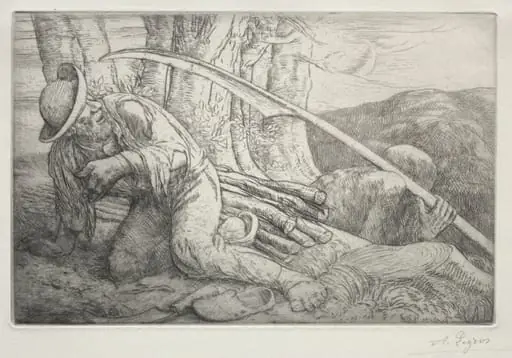
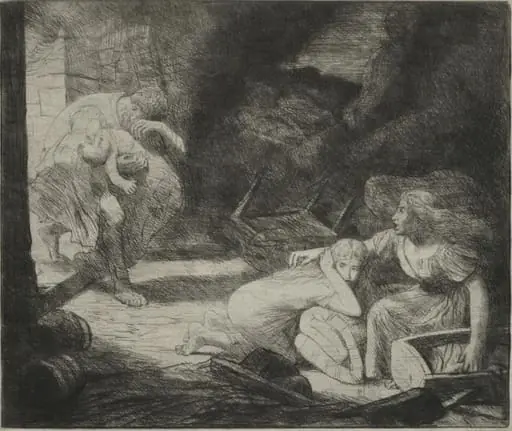
Triomphe de la Mort: La Mort chez une famille de Marins
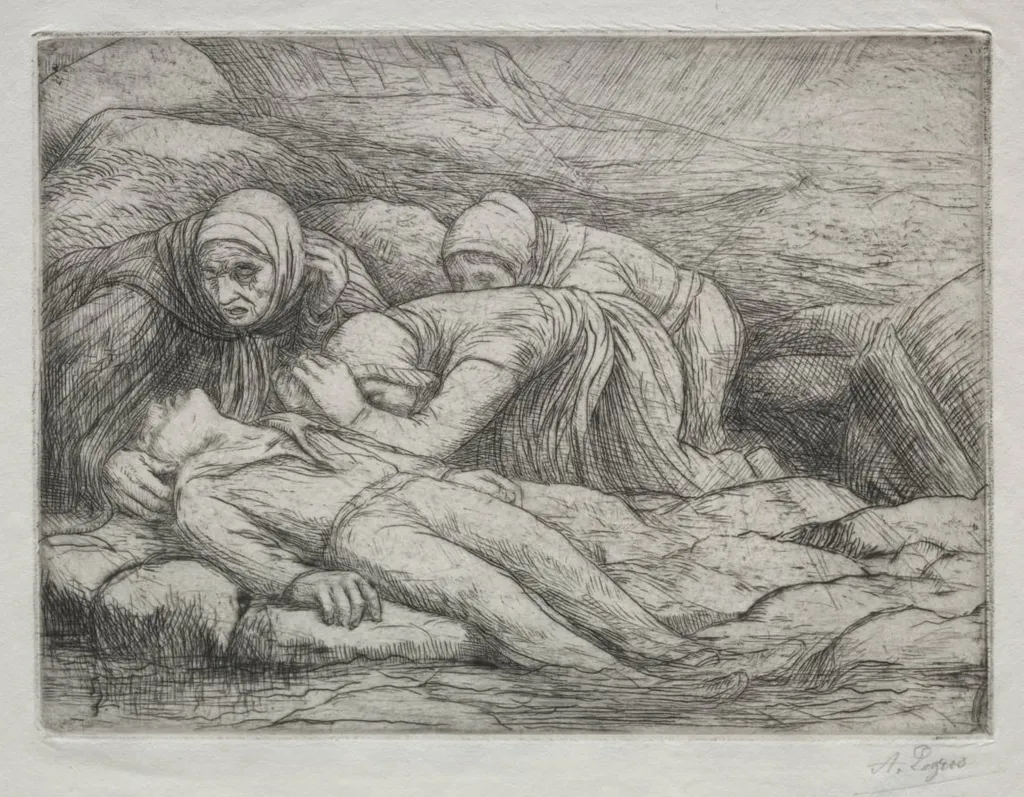
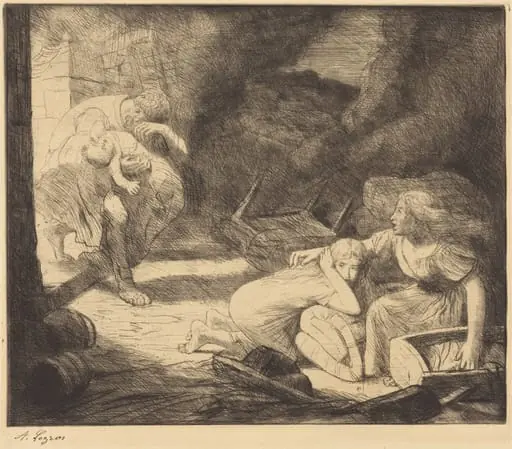
Triomphe de la Mort: La Mort chez une famille de Marins is a print by the Impressionist artist Alphonse Legros. It dates from 1884 and is held in the collection of the Cleveland Museum of Art.
About this work
Overview
The work is part of a broader series titled Triomphe de la Mort and is held in the collection of The Cleveland Museum of Art.
Created in 1884 by Alphonse Legros, this black-and-white print depicts a somber scene of death among a family of sailors. The work is part of a broader series titled Triomphe de la Mort and is held in the collection of The Cleveland Museum of Art. Rendered with stark tonal contrasts and expressive linework, it conveys emotional weight without color or embellishment, focusing on the quiet aftermath of loss.
Subject & Meaning
The image shows three figures sprawled on the ground, their postures suggesting exhaustion or surrender. One face is turned toward the viewer, expression hollow with grief; the others are turned away, withdrawn. The title links the scene to the broader medieval theme of Death’s triumph, here localized to the domestic sphere of seafaring families, where loss was a recurring reality.
Technique & Style
Legros employed drypoint etching to achieve a rough, tactile surface, using dense hatching and deep shadows to model form and mood. The absence of color intensifies the emotional gravity. Lines are uneven and urgent, mirroring the instability of life and the abruptness of death. The textured sky above the figures adds a sense of oppressive atmosphere, reinforcing the scene’s heaviness.
History & Provenance
The print was produced during Legros’s time in England, where he was influential in the revival of printmaking. It entered The Cleveland Museum of Art’s collection through established acquisition channels in the 20th century. Its preservation reflects early institutional interest in European graphic works that engaged with social and existential themes beyond mere decoration.
Context
In the late 19th century, artists across Europe turned to realism to depict the unvarnished conditions of labor and mortality. Legros’s work aligns with this trend, drawing from both French social realism and the Northern European tradition of memento mori. The sailor family’s plight reflects broader anxieties about industrialization, maritime danger, and the fragility of domestic life.
Legacy
Though not widely exhibited today, the print remains a significant example of Legros’s commitment to emotional honesty in graphic art. It influenced later generations of printmakers who sought to convey psychological depth through monochrome techniques. Its quiet intensity continues to resonate within studies of 19th-century print culture and the representation of grief.
Artist & collection

Artist
Alphonse Legros (French pronunciation: ; 8 May 1837 – 8 December 1911) was a French, later British, painter, etcher, sculptor, and medallist.