Artwork
The Washing Place, called The Washerwomen (Le Lavoir, Dite "Les Laveuses")
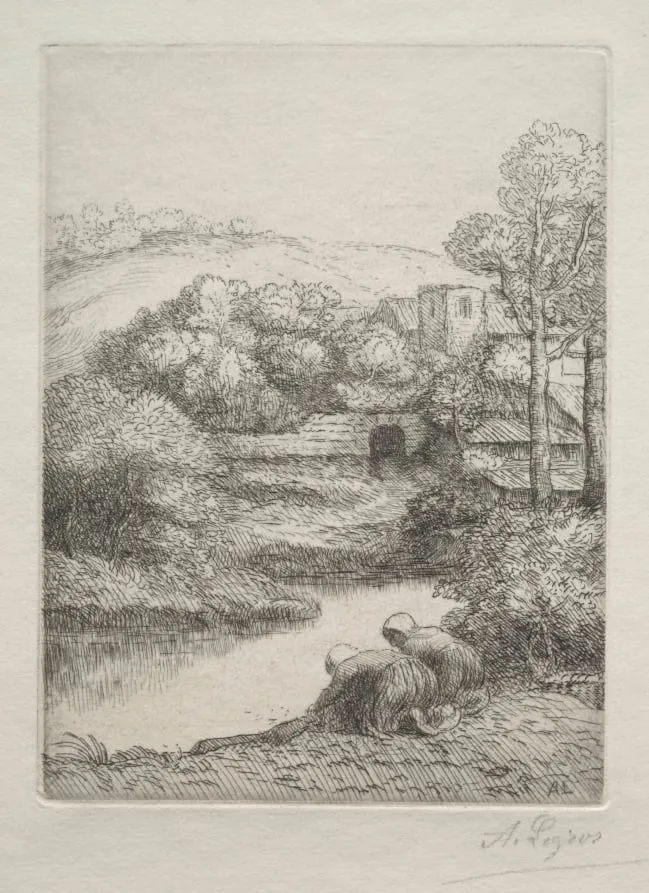
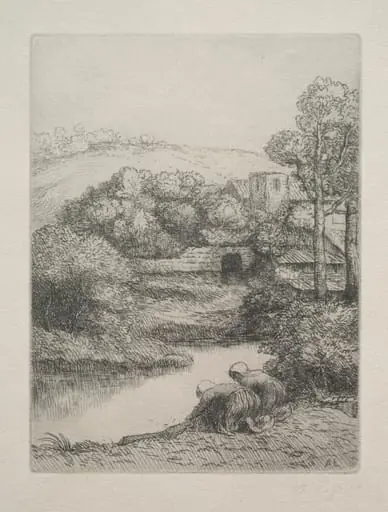
The Washing Place, called The Washerwomen (Le Lavoir, Dite "Les Laveuses") is a print by the Impressionist artist Alphonse Legros. It dates from 1884 and is held in the collection of the Cleveland Museum of Art.
About this work
Overview
The Washing Place, called The Washerwomen (Le Lavoir, Dite "Les Laveuses") is a monochrome print created by Alphonse Legros in 1884, currently part of The Cleveland Museum of Art's collection.
Subject & Meaning
The print depicts two women engaged in laundry by a small river, one actively scrubbing clothes while the other appears to rest. Their postures convey exhaustion, yet the serene river and surrounding landscape imbue the scene with calmness.
Technique & Style
Executed solely through lines and shading, the work relies on chiaroscuro to achieve a realistic effect, aligning with the principles of Realism by portraying everyday life in a straightforward manner.
History & Provenance
Created in 1884 by French artist Alphonse Legros, the print is now housed at The Cleveland Museum of Art, though specific details of its acquisition or previous ownership are not provided here.
Context
Part of the broader Realist movement, this work reflects the era's focus on depicting common, working-class life with honesty and attention to detail, eschewing romanticization.
Artist & collection

Artist
Alphonse Legros (French pronunciation: ; 8 May 1837 – 8 December 1911) was a French, later British, painter, etcher, sculptor, and medallist.

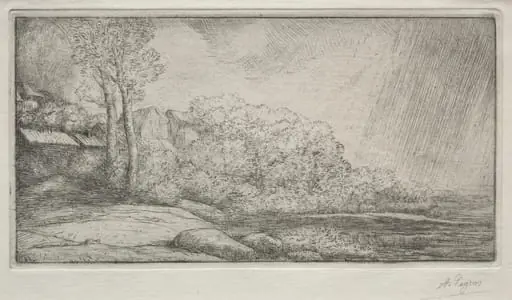 Landscape with Two Trees (Paysage aux deux Arbres)
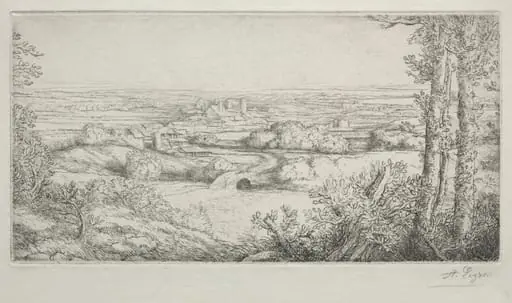 A Valley in Burgundy
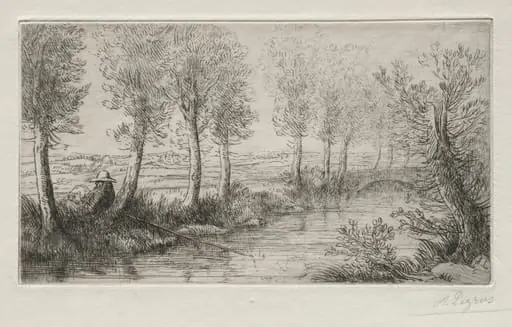 Near the Mill
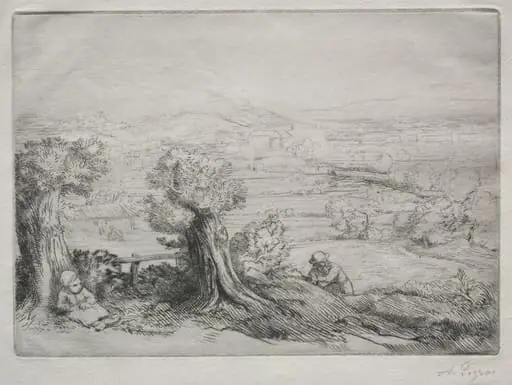 Souvenir d'un Vallée en Bourgogne
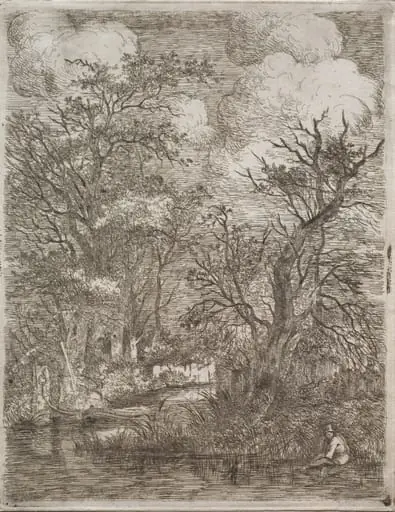 Back of the Mills
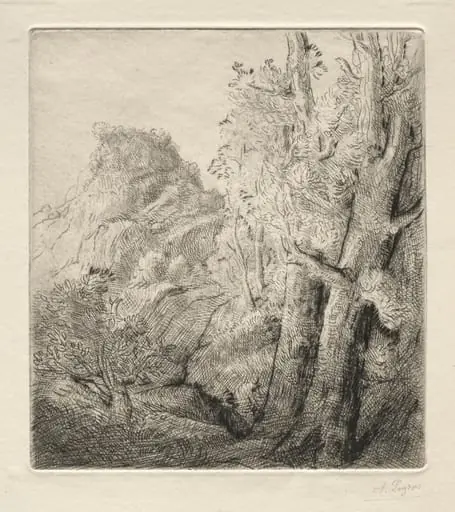 The Old City
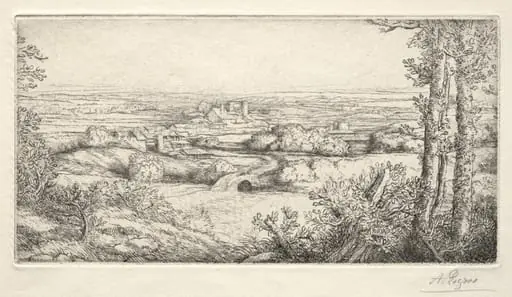 A Valley in Burgundy (Une Vallée en Bourgogne)
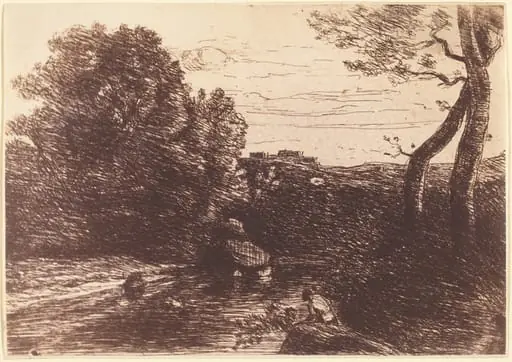 Shepherd's Bath (Le Bain du berger)
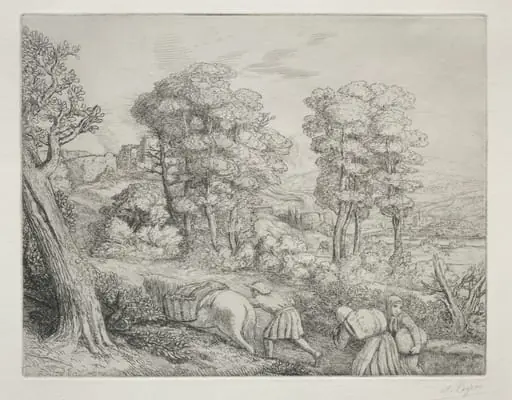 The Return to the Farm (Le Retour à la Ferme)
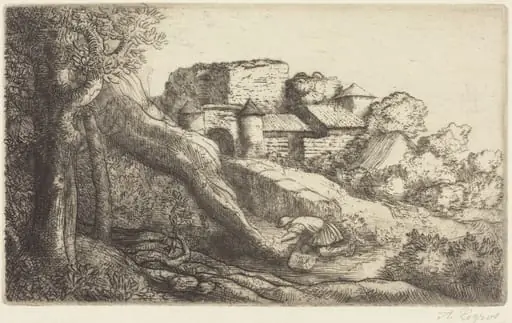 Little Burner of Grass (Le petit bruleur d'herbe)
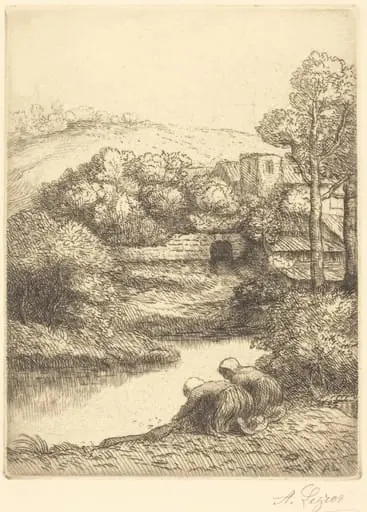 Wash-house, called "The Washerwomen" (Le lavoir, dite "Les Laveuses")
 The Wash House