Artwork
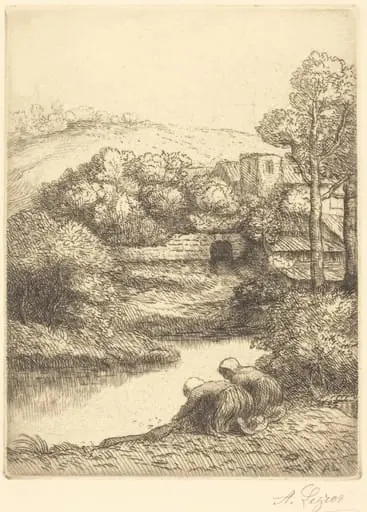
The Wash House
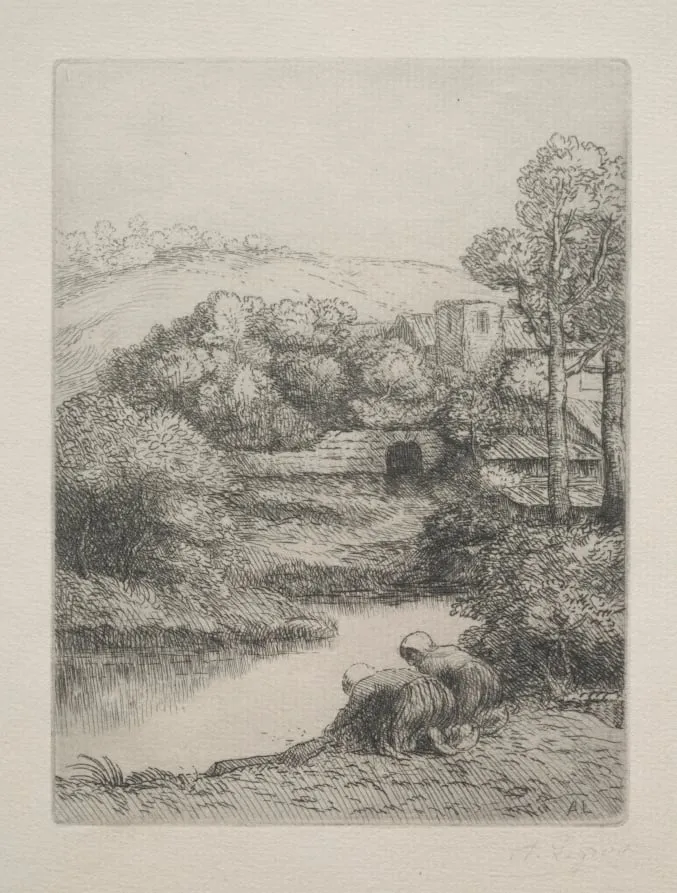
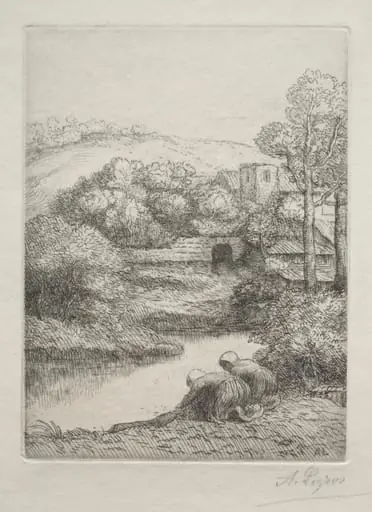
The Wash House is a print by the Impressionist artist Alphonse Legros. It dates from 1884 and is held in the collection of the Cleveland Museum of Art.
About this work
Overview
Created in 1884 by Alphonse Legros, The Wash House is a pencil drawing on paper that captures a quiet rural moment by a riverbank. It is part of the collection at The Cleveland Museum of Art. The work belongs to a broader 19th-century tradition of depicting daily labor with quiet dignity, avoiding idealization in favor of observed reality.
Subject & Meaning
The scene portrays two figures engaged in laundry by the water—one leaning forward to scrub garments, the other seated nearby. The setting suggests a modest, working-class environment, with a stone bridge and distant buildings hinting at a small village. The composition emphasizes routine labor as a natural part of life, without drama or sentimentality.
Technique & Style
Legros employed fine, controlled pencil lines to model form and suggest shifting light across fabric, skin, and stone. The delicate gradations of tone create a sense of atmospheric calm, while the lack of heavy shading preserves the sketchlike immediacy. This restrained technique aligns with Realist principles, prioritizing observation over theatrical effect.
History & Provenance
The drawing entered The Cleveland Museum of Art’s collection in the 20th century, though its earlier ownership history is not widely documented. Legros, a French artist active in both France and England, produced numerous works focused on rural and domestic life during this period, many of which were held in private collections before institutional acquisition.
Context
In the late 19th century, Realist artists turned away from historical and mythological subjects to focus on ordinary people and their environments. Legros, influenced by Courbet and the Barbizon painters, contributed to this shift by portraying laborers with unembellished attention, reflecting broader social interest in the lives of the working class.
Legacy
The Wash House exemplifies Legros’s commitment to quiet, unadorned observation. While not widely exhibited, it remains a representative example of how European draftsmen of the period used line and tone to elevate mundane moments. Its preservation in a major museum underscores its role in documenting the visual culture of everyday life.
Artist & collection

Artist
Alphonse Legros (French pronunciation: ; 8 May 1837 – 8 December 1911) was a French, later British, painter, etcher, sculptor, and medallist.

 Wash-house, called "The Washerwomen" (Le lavoir, dite "Les Laveuses")
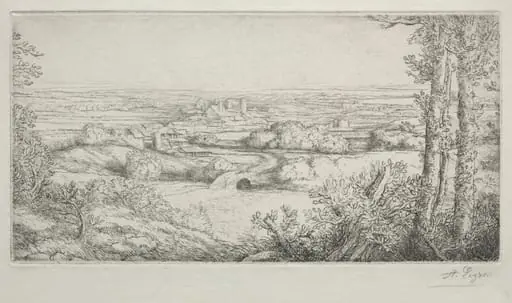 A Valley in Burgundy
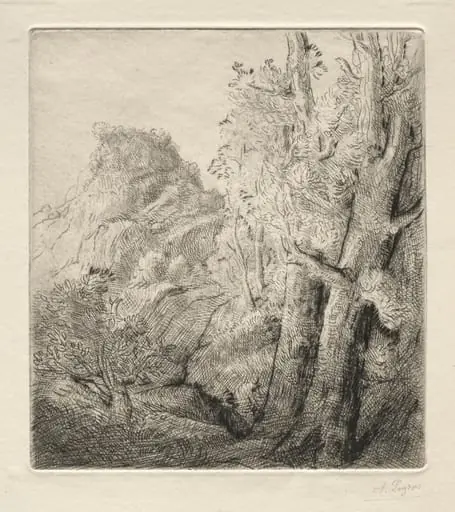 The Old City
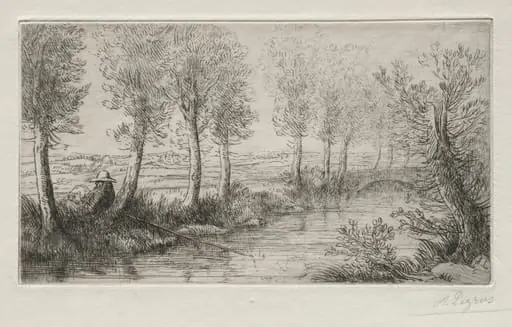 Near the Mill
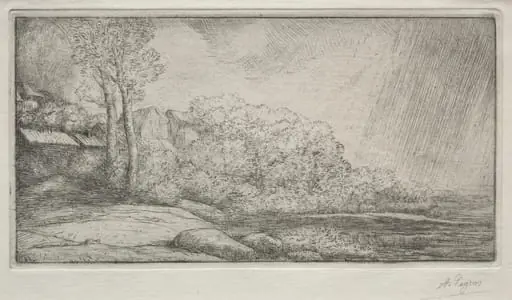 Landscape with Two Trees (Paysage aux deux Arbres)
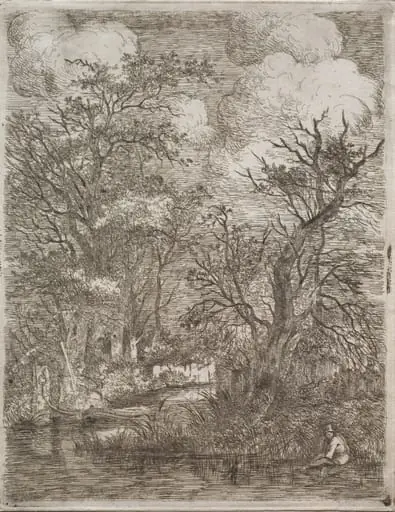 Back of the Mills
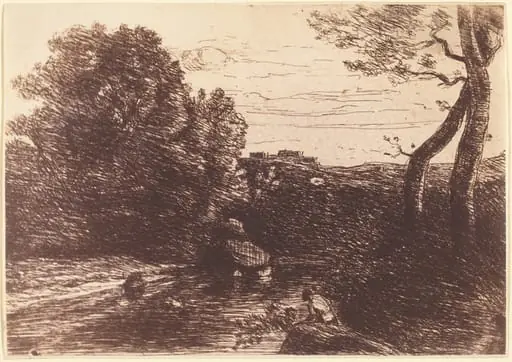 Shepherd's Bath (Le Bain du berger)
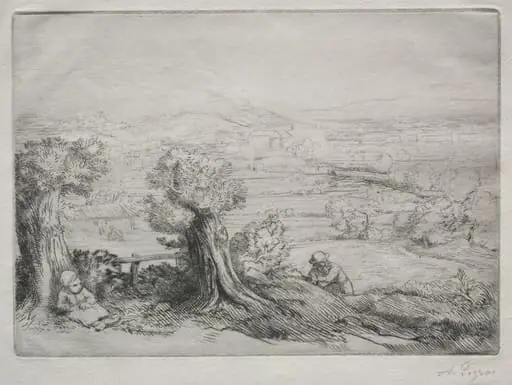 Souvenir d'un Vallée en Bourgogne
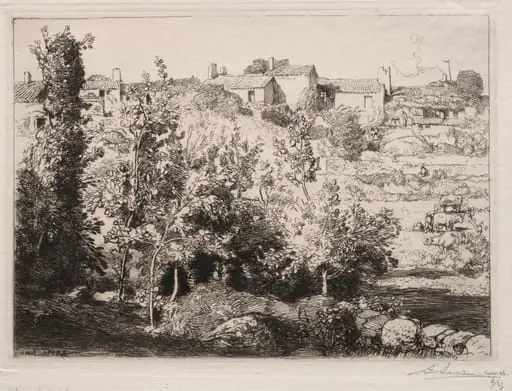 Village of Meule
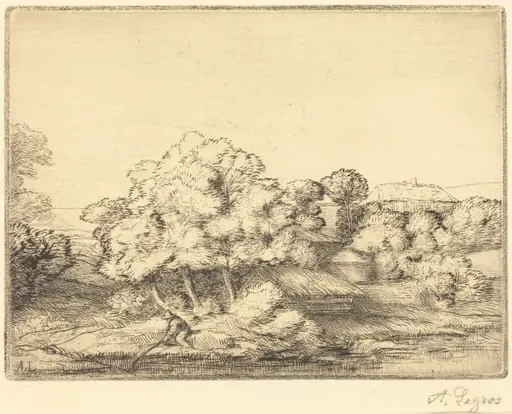 Hamlet near the Lake (Le hameau pres du lac)
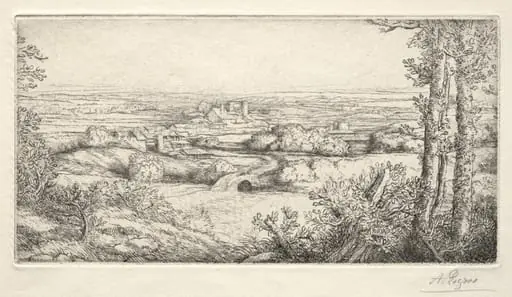 A Valley in Burgundy (Une Vallée en Bourgogne)
 The Washing Place, called The Washerwomen (Le Lavoir, Dite "Les Laveuses")