Artwork
The Holy Kinship
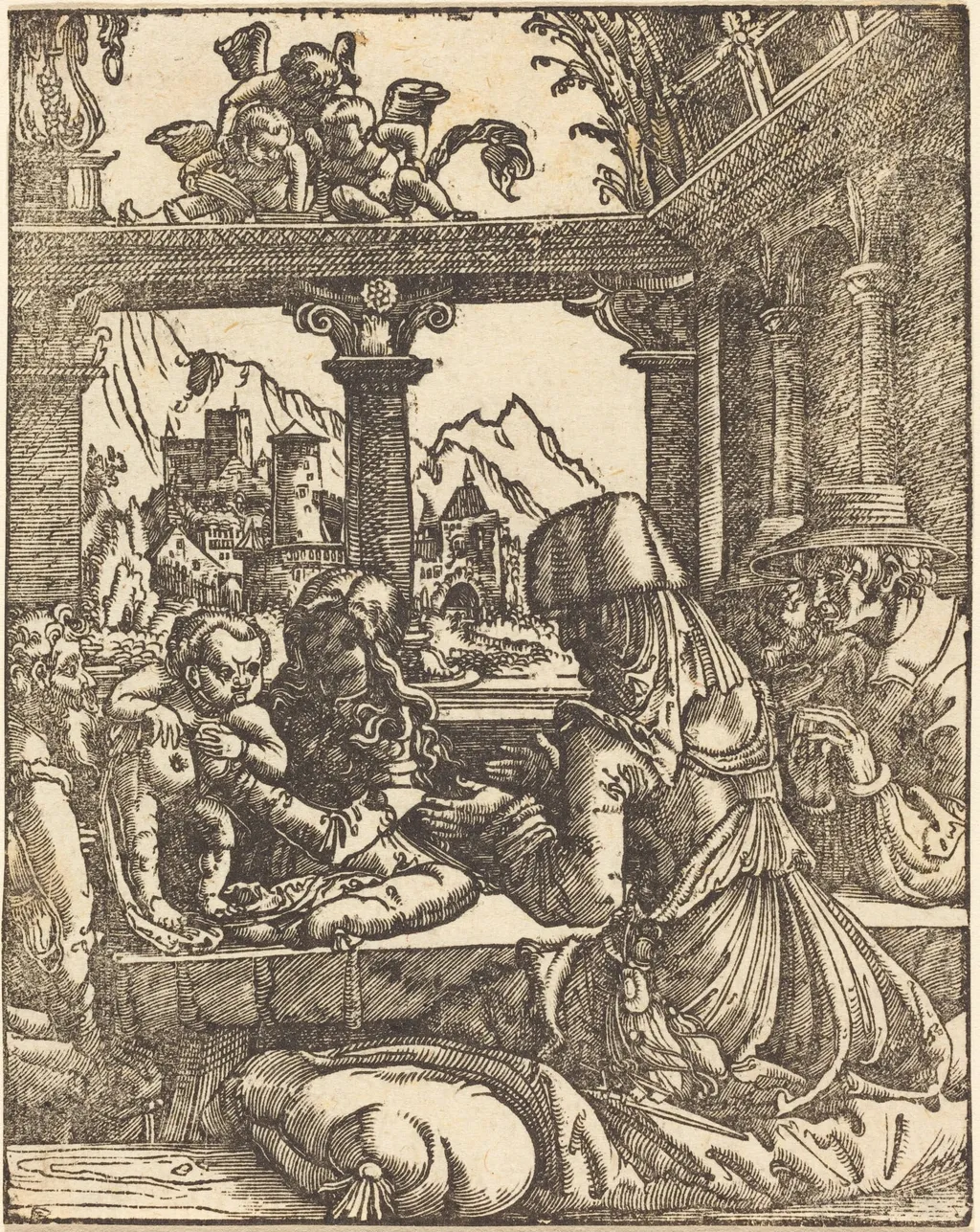
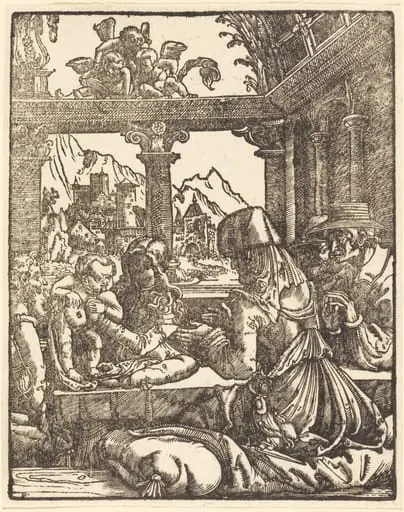
The Holy Kinship is an ink print by the Renaissance artist Albrecht Altdorfer. It dates from 1520 and is held in the collection of the National Gallery of Art.
About this work
Overview
Albrecht Altdorfer’s *The Holy Kinship* is a woodcut print executed on laid paper in 1520. The work presents a densely populated scene rendered in black and white, with numerous figures gathered around a central throne and a detailed urban backdrop featuring towers and a bridge.
Subject & Meaning
The composition depicts the extended family of the Virgin Mary, a theme known as the Holy Kinship, showing saints, relatives and attendants in a devotional gathering. The crowded arrangement emphasizes the communal aspect of the sacred lineage.
Technique & Style
Altdorfer employs fine, incisive lines characteristic of early 16th‑century woodcuts, delineating folds in garments, architectural elements and intricate background details. The print’s busy surface and rhythmic line work reflect the precision typical of the Nuremberg Little Masters.
History & Provenance
Created during Altdorfer’s mature period in Regensburg, the print aligns with his reputation as a leading figure of the Danube School, a movement noted for integrating expressive landscapes into religious narratives.
Context
The Danube School, to which Altdorfer belonged, was among the first to treat landscape as an autonomous element within composition. Although *The Holy Kinship* focuses on a narrative scene, its background cityscape demonstrates this emerging interest in natural and built environments.
Artist & collection
Artist
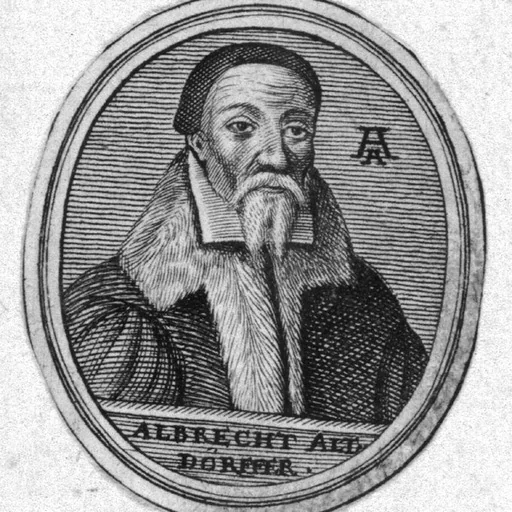
Albrecht Altdorfer (c. 1480 – 12 February 1538) was a German painter, engraver and architect of the Renaissance working in Regensburg. Along with Lucas Cranach the Elder and Wolf Huber he is regarded to be the main…


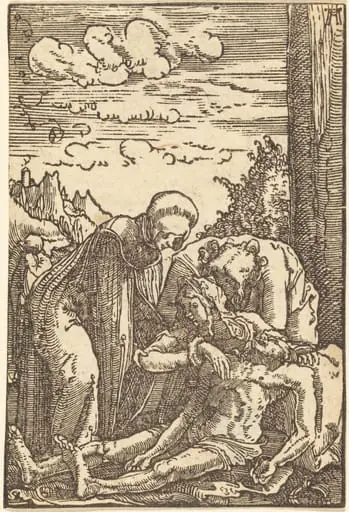 The Lamentation of Christ
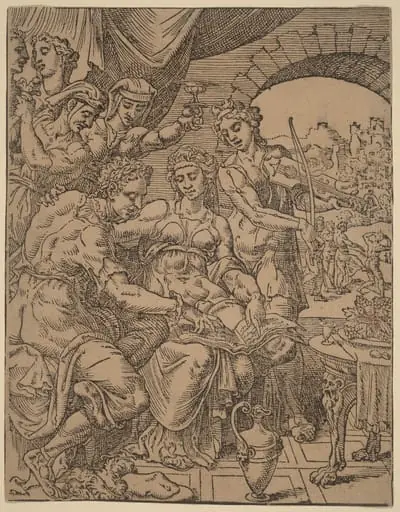 The Prodigal Son Squandering His Inheritance on Harlots
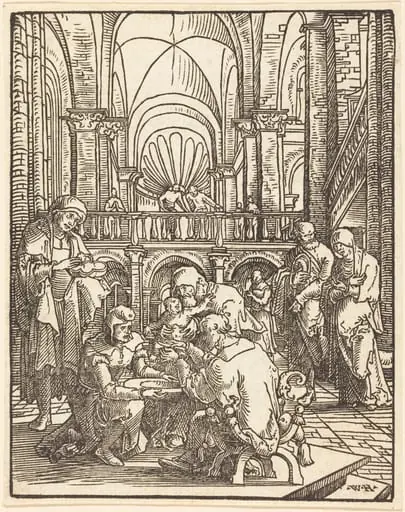 The Circumcision
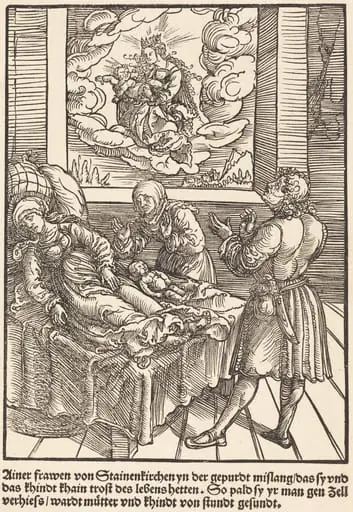 Ainer frawen von Stainerkirchen ...
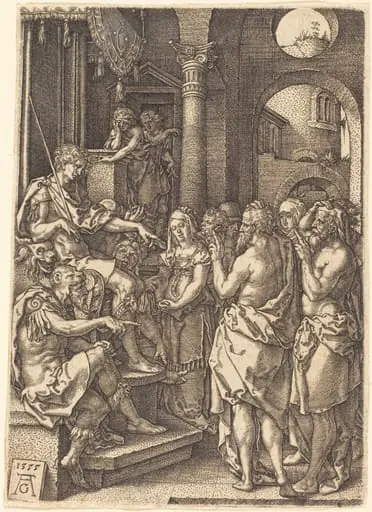 The Two Elders Before the Judge
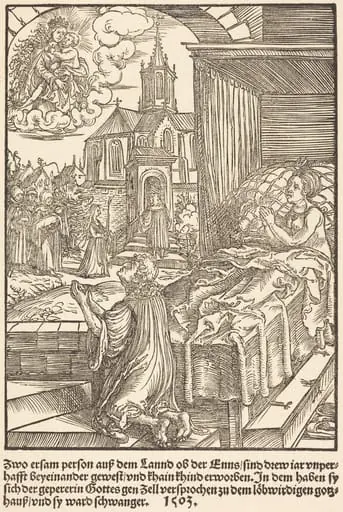 Zwo ersam person auf dem Lannd ...
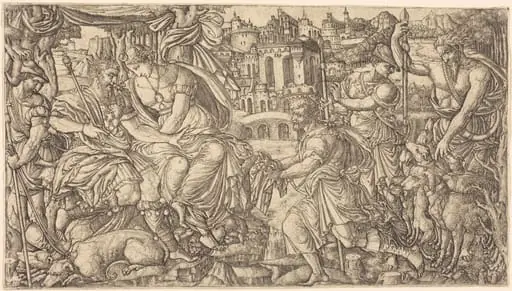 A King and Diana Receiving Huntsmen
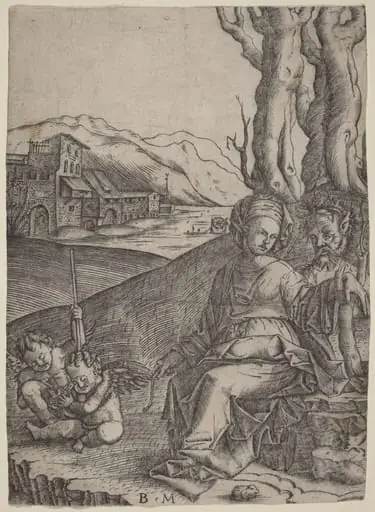 Woman and Satyr with Two Cupids
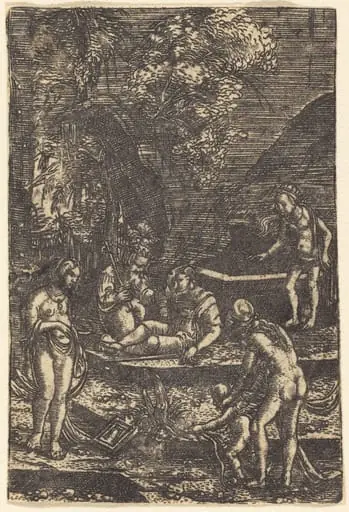 The Judgment of Paris
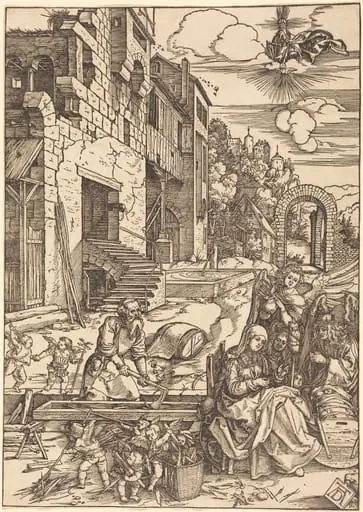 Sojourn of the Holy Family in Egypt
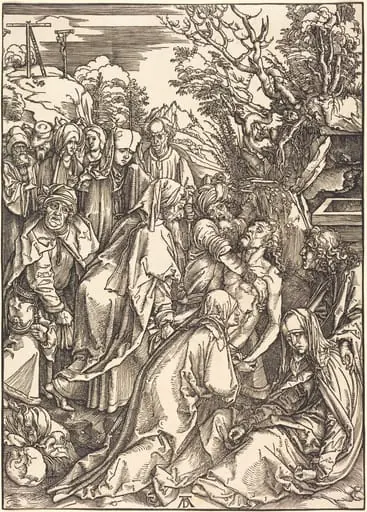 The Deposition
 The Holy Kinship