Artwork
Cutout of Animals
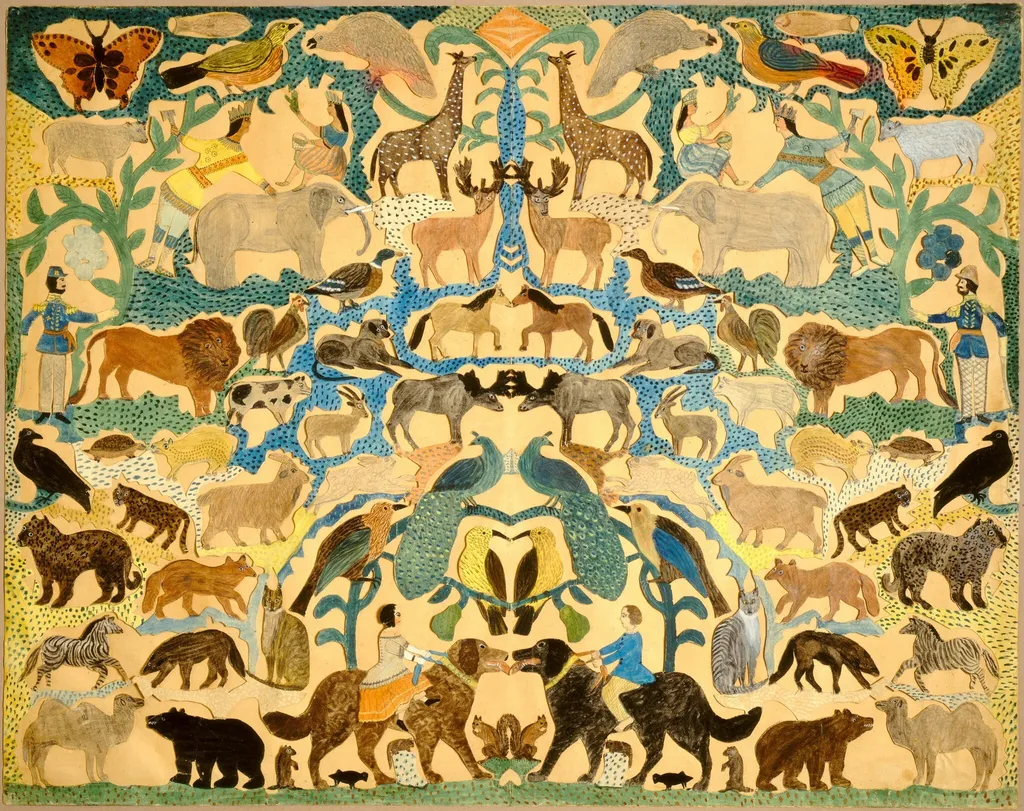
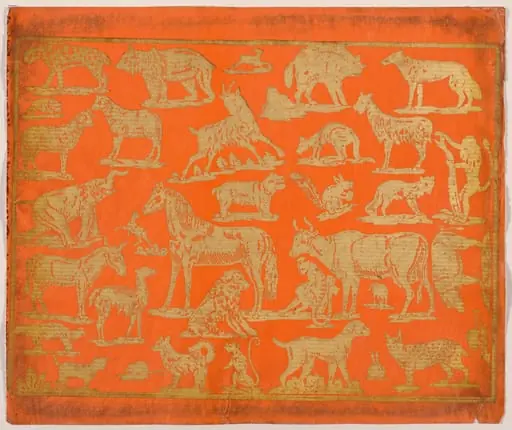
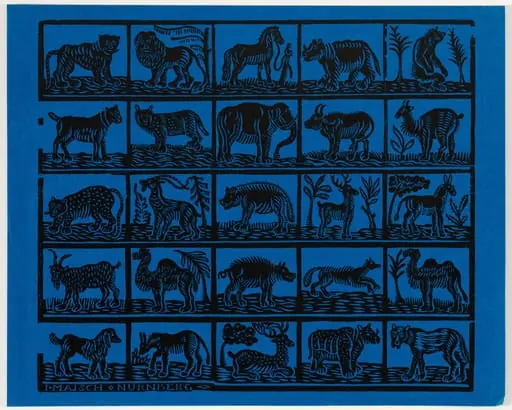
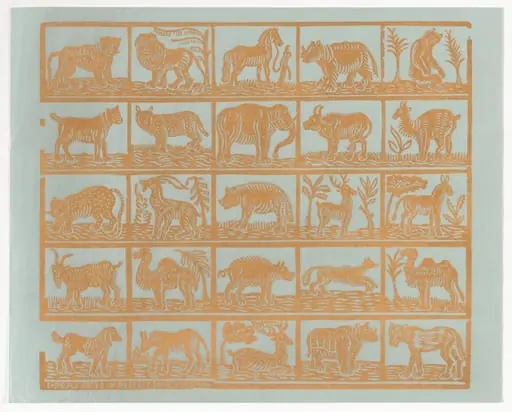
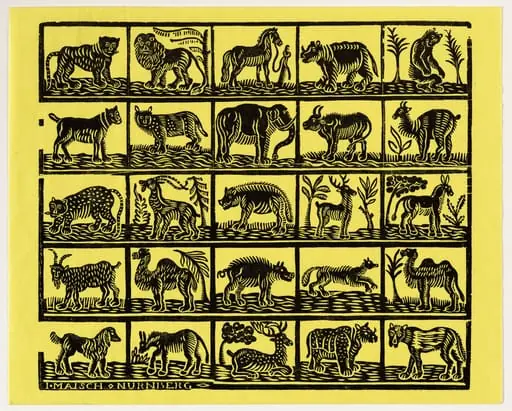
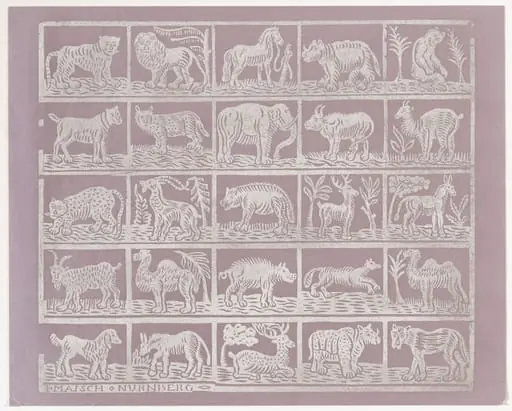
Cutout of Animals is a watercolor drawing by the Romanticist artist American 19th Century. It dates from 1801 and is held in the collection of the National Gallery of Art. This work combines cut paper silhouettes with watercolor to depict a dense assembly of wildlife.
About this work
Overview
The interplay of flat, brightly colored paper and the textured, layered background creates a dynamic yet cohesive scene.
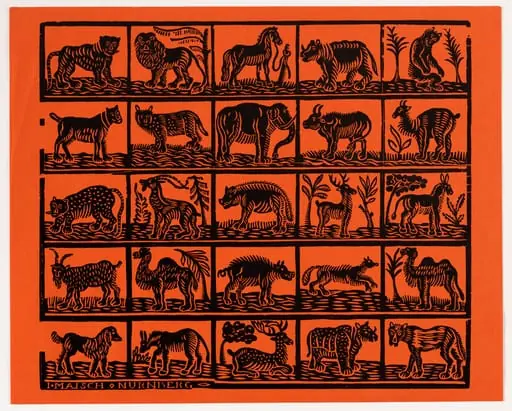
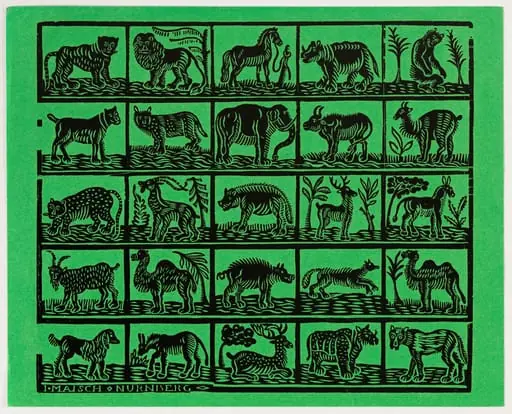
This work combines cut paper silhouettes with watercolor to depict a dense assembly of wildlife. Animals—including lions, zebras, giraffes, and birds—are arranged across a vibrant, painted surface. The composition balances stillness and implied motion, with figures positioned amid stylized vegetation. The interplay of flat, brightly colored paper and the textured, layered background creates a dynamic yet cohesive scene.
Subject & Meaning
The artwork presents a crowded menagerie of African and other fauna, suggesting a vision of untamed nature. The animals, rendered in profile or partial view, occupy a shared space without hierarchy, evoking a sense of coexistence. The absence of human presence reinforces a focus on the natural world, while the dreamlike arrangement may imply a constructed or idealized vision of wilderness rather than a literal depiction.
Technique & Style
Executed in cut paper adhered to a watercolor ground, the work merges collage with painting. The paper shapes are crisp and flat, contrasting with the soft, stippled backdrop achieved through glazing. Bright, unmodulated hues dominate, while the composition’s density and overlapping forms generate visual rhythm. This approach emphasizes bold outlines and simplified forms, aligning with decorative rather than naturalistic representation.
History & Provenance
Details of the work’s creation and early ownership remain unspecified. Its materials and technique suggest a modern or mid-20th-century origin, though the exact date is unrecorded. The integration of cut paper and watercolor reflects an experimental approach to drawing, potentially influenced by earlier collage traditions or folk-art practices. Further research may clarify its place within the artist’s oeuvre or broader stylistic movements.
Context
The work’s emphasis on animal subjects and decorative execution situates it within a tradition of narrative or symbolic depictions of wildlife. Similar techniques appear in both fine art and applied design, where cut paper has been used to explore pattern, movement, and storytelling. The bright palette and stylized forms may reflect mid-century aesthetic trends, though the absence of human figures distinguishes it from more overtly allegorical or political works of the period.
Legacy
While its direct influence is undocumented, the work exemplifies the enduring appeal of collage as a medium for exploring composition and color. Its combination of cut paper and watercolor offers a precedent for later artists experimenting with mixed-media techniques. The dense, lively arrangement of animals continues to resonate with viewers, demonstrating how simplified forms and bold hues can convey both energy and harmony.
Own this work as a print
Artist & collection

Artist
This artist painted everyday American life in the 1800s. Look at *Farmhouse in Mahantango Valley*—a quiet, sunlit scene of rural Pennsylvania. *Boy and Girl* shows two children standing close, their faces turned toward…