Artwork
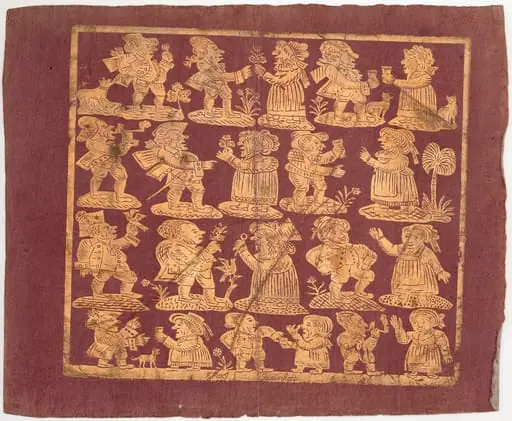
Endpaper with Animals and Figures
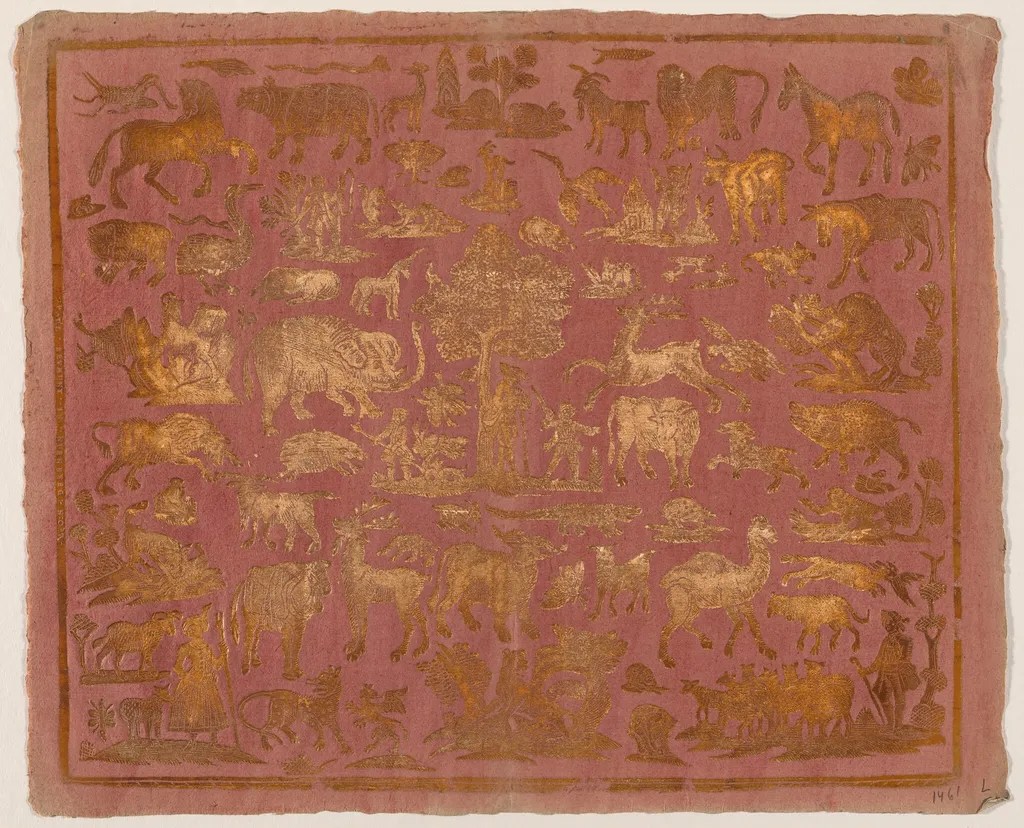
Endpaper with Animals and Figures is an ink print by the Baroque artist German 18th Century. It dates from 1750 and is held in the collection of the National Gallery of Art.
About this work
Overview
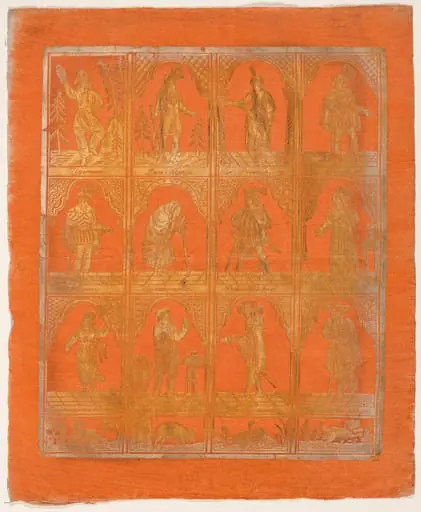
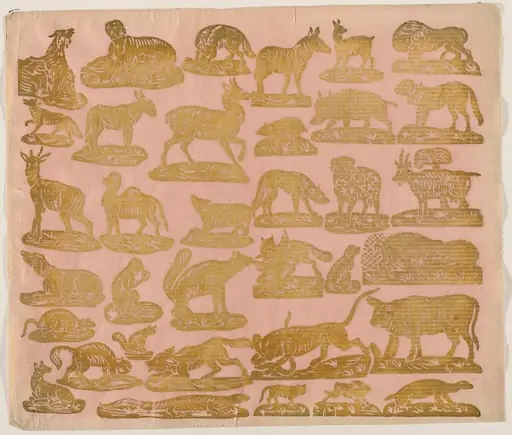
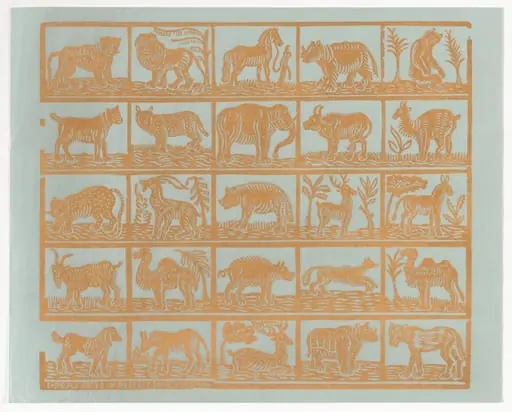
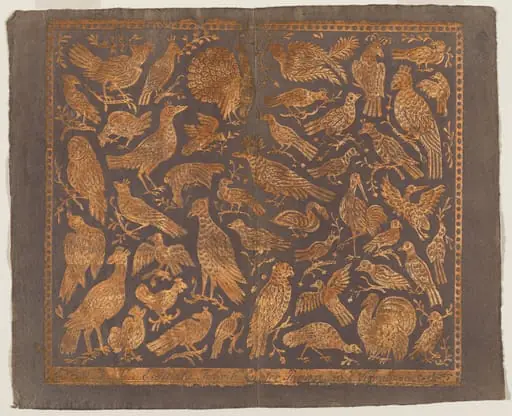
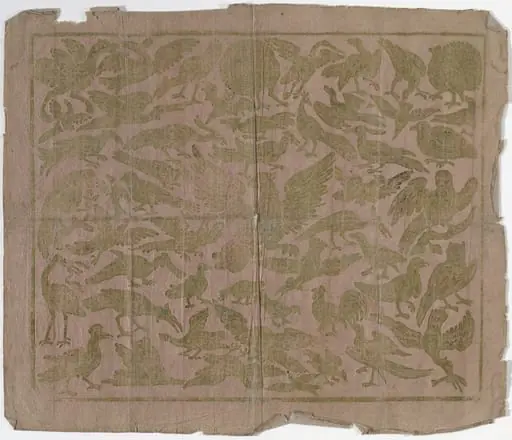
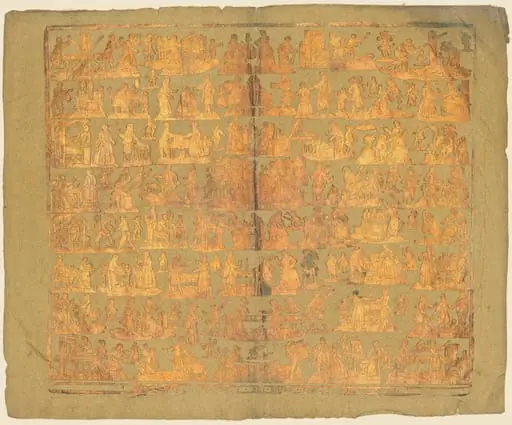
This printed endpaper features a dense arrangement of animals—lions, deer, and birds—rendered in gold metallic ink on rose-colored hand-washed paper.
This printed endpaper features a dense arrangement of animals—lions, deer, and birds—rendered in gold metallic ink on rose-colored hand-washed paper. The composition is tightly packed, with figures overlapping and varying in scale to create rhythmic movement across the surface. The soft pink background enhances the luminosity of the gold lines, while the worn edges suggest frequent use in a bound volume.
Subject & Meaning
The animals depicted appear in a stylized, non-naturalistic arrangement, suggesting symbolic rather than literal representation. Their interwoven forms may evoke themes of harmony, hierarchy, or the natural world’s interconnectedness, common in decorative arts of the period. No human figures are present, focusing attention on the animal kingdom as a self-contained, ornamental realm.
Technique & Style
Executed as a woodcut, the design was carved into a wooden block and printed with metallic gold ink, a technique requiring precision to maintain fine lines and avoid smudging. The sharp contrast between the gold and the rose paper highlights the intricate contours of each figure. The irregular edges and slight wear indicate hand-printing and manual handling, typical of artisanal bookbinding practices.
History & Provenance
Such endpapers were commonly used in luxury bindings during the late medieval or early Renaissance period, often in liturgical or scholarly volumes. The use of gold ink and hand-washed paper points to a high-status object, likely produced in a monastic or courtly workshop. Its survival with worn edges suggests it was part of a frequently consulted book, not merely a display item.
Context
This piece reflects a broader tradition in European book arts where decorative endpapers served both functional and symbolic roles—protecting pages while conveying the volume’s importance. Similar animal motifs appear in illuminated manuscripts and textile designs of the time, reinforcing a shared visual language among elite crafts.
Legacy
Though likely created for a specific book, this endpaper survives as a standalone artifact of early printmaking and bookbinding craftsmanship. It offers insight into the aesthetic priorities of its time: ornamentation as a form of reverence, where pattern and material conveyed value beyond textual content.
Artist & collection
Artist
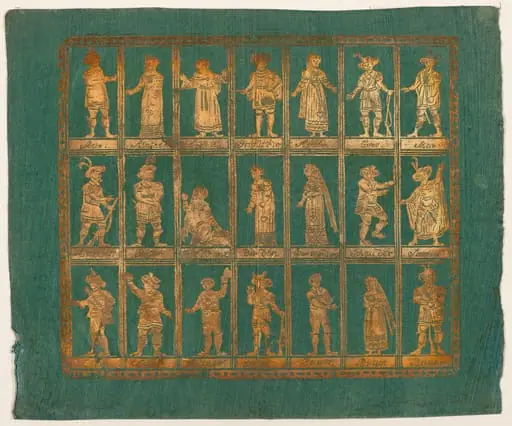
This artist kept meticulous endpapers—like secret notebooks—filled with tiny gold figures standing in a row.