Artwork
Entrance to Kauterskill Clove, Catskill Mountains
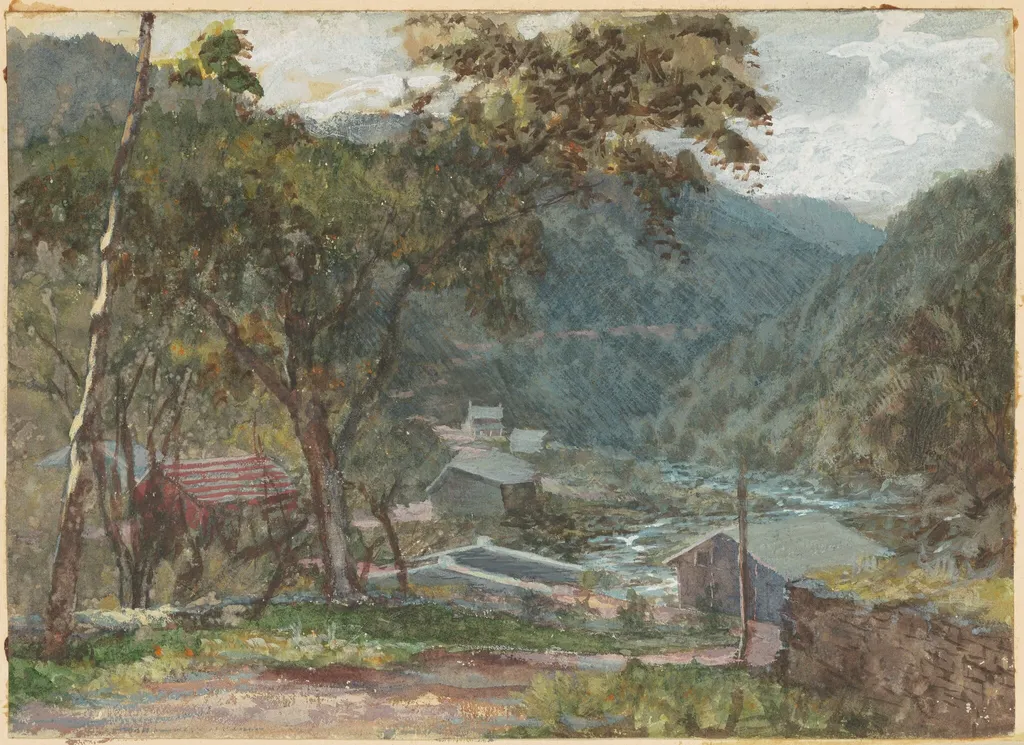
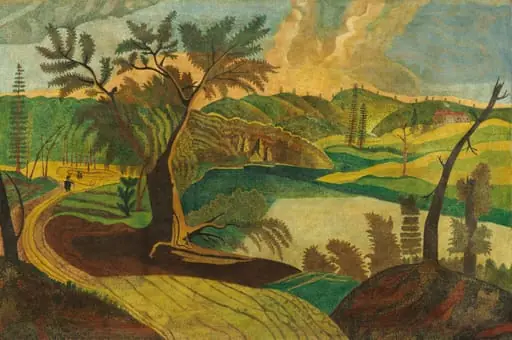
Entrance to Kauterskill Clove, Catskill Mountains is a gouache drawing by the Romanticist artist American 19th Century. It dates from 1801 and is held in the collection of the National Gallery of Art.
About this work
Try the same view at the National Gallery of Art, Washington.
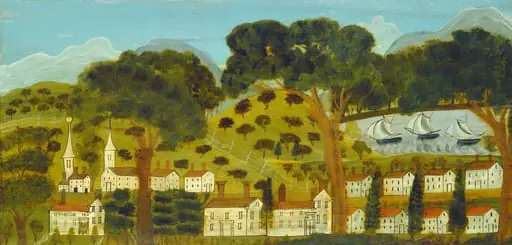
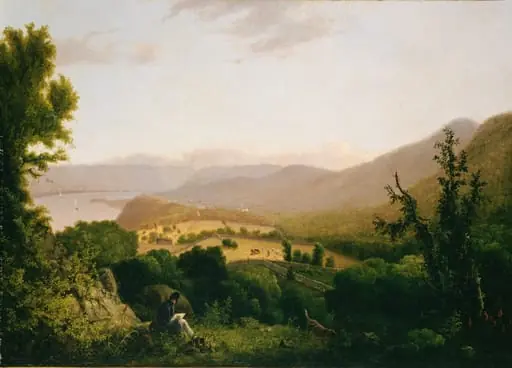
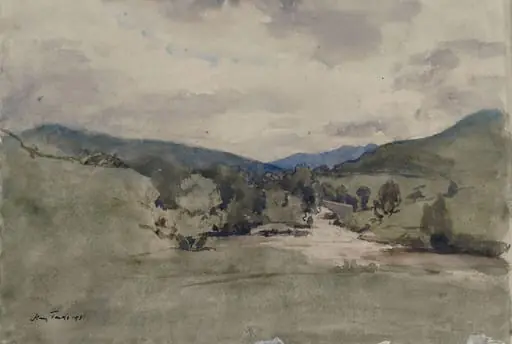
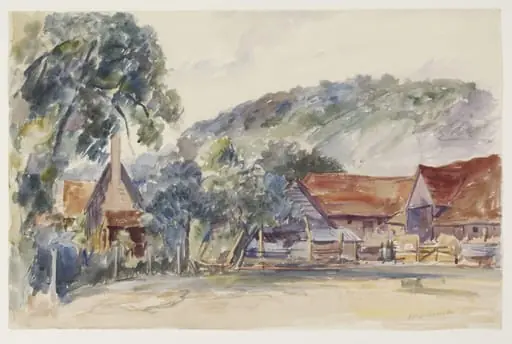
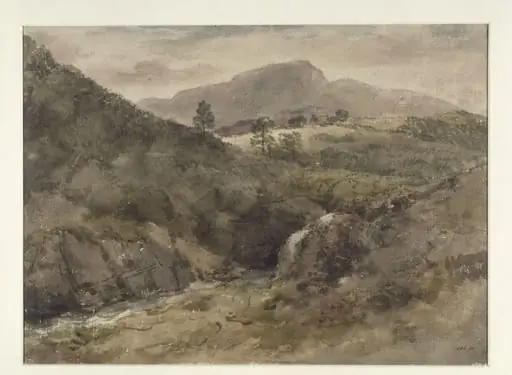
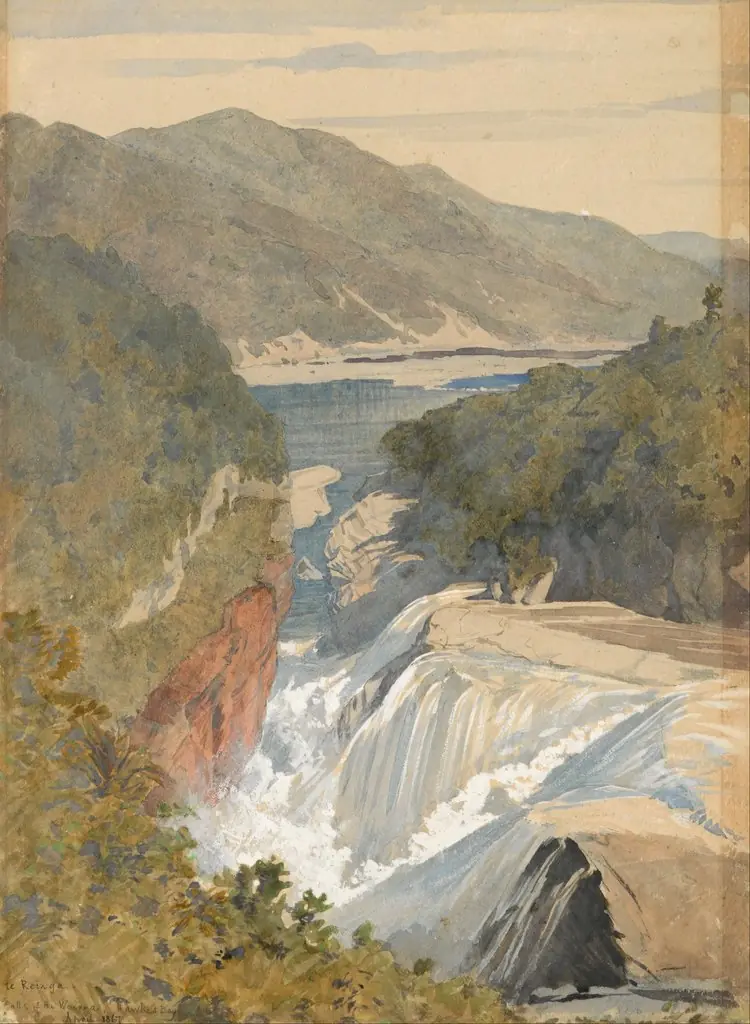
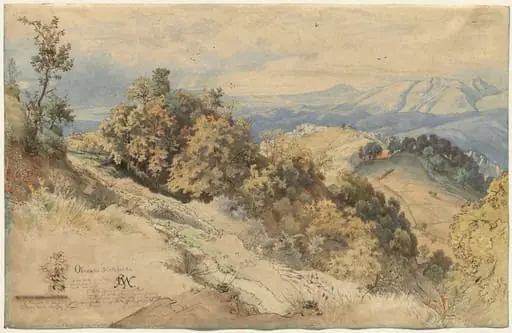
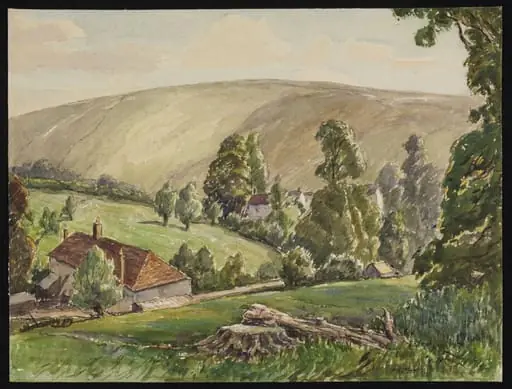
You see a quiet valley from above. A stone wall cuts the green. Red-roofed houses dot the land. Water glints below. Trees frame the scene. The colors feel soft, almost dreamy.
Kensett painted this in 1835. He used watercolor and a technique called glazing. This means he layered thin, see-through washes of color. It gives the scene a glowing look.
This work feels simple but deep. Look closely at the sky’s soft pinks. See how light touches the leaves. Try the same view at the National Gallery of Art, Washington.
Overview
John Frederick Kensett created this watercolor and gouache drawing in 1835, capturing a quiet valley in the Catskill Mountains from a high vantage point. The composition balances natural elements—stone walls, clustered dwellings, and winding water—with a restrained palette and delicate brushwork. The use of glazing techniques, applying thin transparent layers, produces a luminous, atmospheric effect that softens the landscape into a contemplative whole.
Subject & Meaning
The scene presents a secluded valley framed by trees, with a stone wall dividing the foreground from the distant terrain. Red-roofed buildings suggest modest human presence, harmonizing rather than dominating the environment. The stillness of the water and the gentle gradations of light imply a quiet reverence for nature, reflecting a 19th-century American ideal of landscape as a space of peace and moral clarity.
Technique & Style
Kensett employed watercolor with gouache highlights and multiple glazes to build subtle tonal shifts. By layering translucent washes, he achieved a luminous quality in the sky and foliage, where light appears to emanate from within the paper. The brushwork is precise yet fluid, defining texture without overt detail—leaves, water, and stone are suggested rather than rendered literally.
History & Provenance
Executed in 1835, this work belongs to Kensett’s early period, before he became associated with the Hudson River School’s grander compositions. It reflects his formative interest in atmospheric effects and intimate landscapes. The piece remained in private collections until entering the National Gallery of Art’s holdings, where it is now preserved as part of a broader study of American watercolor traditions.
Context
Painted during a time when American artists were turning to domestic scenery for subject matter, this work aligns with a growing cultural interest in the Catskills as a site of natural beauty and spiritual retreat. Kensett’s approach, less monumental than contemporaries like Cole, emphasizes quiet observation over dramatic narrative, reflecting a more personal engagement with the landscape.
Legacy
Though modest in scale, this drawing illustrates Kensett’s developing mastery of light and atmosphere, foreshadowing his later, more celebrated works. Its restrained aesthetic influenced later American watercolorists who favored subtlety over spectacle. Today, it stands as an early example of how American artists used watercolor to convey emotional resonance through understated naturalism.
Own this work as a print
Artist & collection

Artist
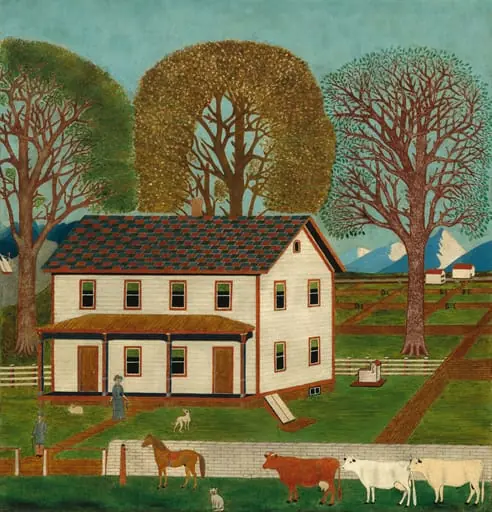
This artist painted everyday American life in the 1800s. Look at *Farmhouse in Mahantango Valley*—a quiet, sunlit scene of rural Pennsylvania. *Boy and Girl* shows two children standing close, their faces turned toward…