Artwork
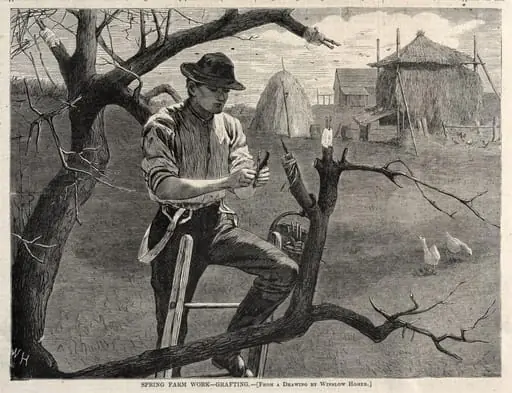
Spring Farm Work - Grafting
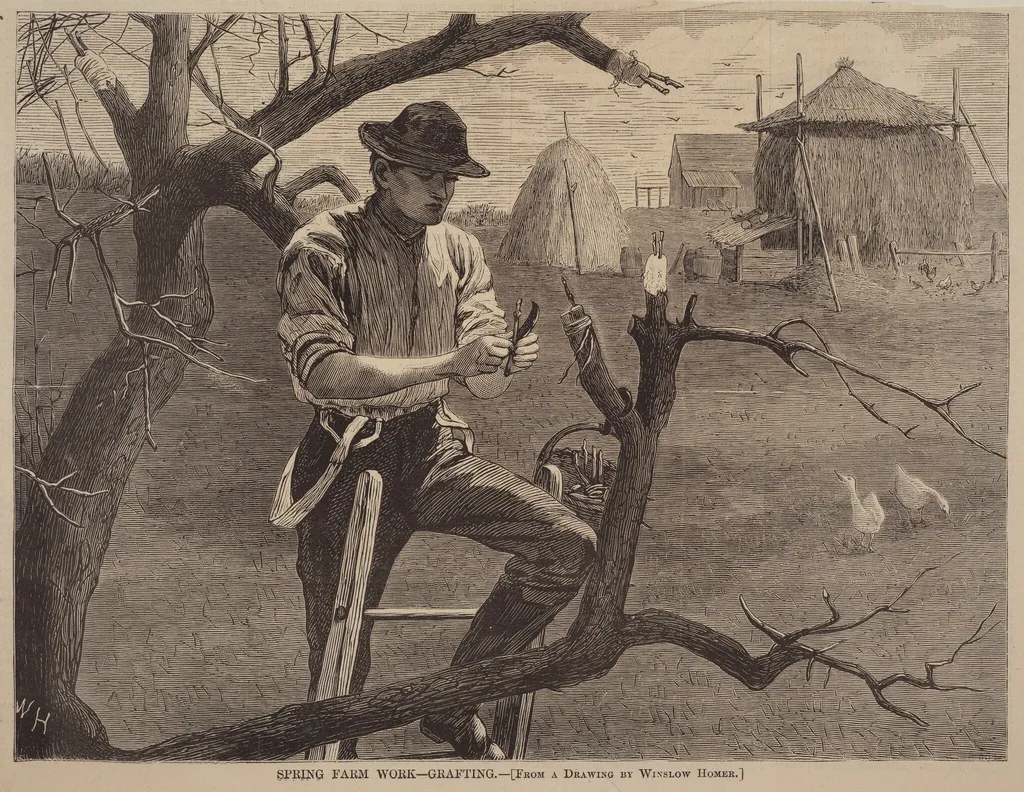
Spring Farm Work - Grafting is an ink print by the Impressionist artist American 19th Century. It dates from 1870 and is held in the collection of the National Gallery of Art. This wood engraving depicts a rural laborer engaged in the precise task of grafting fruit trees.
About this work
Overview
This wood engraving depicts a rural laborer engaged in the precise task of grafting fruit trees. Rendered with fine, controlled lines, the scene captures a quiet moment of agricultural work under bare winter trees. The artist emphasizes texture and atmosphere through subtle tonal contrasts, suggesting cool, early spring weather and the quiet solitude of farm labor.
Subject & Meaning
The figure, hunched and focused, performs grafting—a horticultural technique that joins plant tissues to cultivate desired fruit varieties. The act symbolizes patience and knowledge passed through generations. The barren trees and distant farm buildings frame the labor as part of a cyclical, unglamorous yet essential rural economy, grounded in seasonal rhythms rather than spectacle.
Technique & Style
Executed as a wood engraving, the image relies on meticulously carved lines to model light and form. The artist uses fine cross-hatching and delicate stippling to define the man’s coat, the texture of bark, and the soft gradations of shadow. The precision of the medium enhances the tactile realism of the scene, drawing attention to the delicacy of the grafting process.
History & Provenance
The print originates from a 19th-century tradition of illustrating rural life for educational or periodical use. While the artist’s identity is not specified, the work aligns with contemporary efforts to document agricultural practices. Its survival suggests it was likely reproduced in farming manuals or illustrated journals of the time, valued for its clarity and detail.
Context
In the 1800s, grafting was a vital skill for orchard management, especially in regions expanding fruit cultivation. This image reflects a broader cultural interest in documenting practical knowledge, as industrialization reshaped rural economies. The quiet dignity of the laborer contrasts with romanticized depictions of nature, offering a grounded view of agricultural life.
Legacy
As a technical illustration rendered in fine detail, the engraving contributes to the historical record of pre-industrial farming methods. It remains a quiet testament to the skill required in horticultural labor, preserved not as art for display but as a functional record—valued today for its authenticity and understated observation of everyday work.
Artist & collection

Artist
This artist painted everyday American life in the 1800s. Look at *Farmhouse in Mahantango Valley*—a quiet, sunlit scene of rural Pennsylvania. *Boy and Girl* shows two children standing close, their faces turned toward…


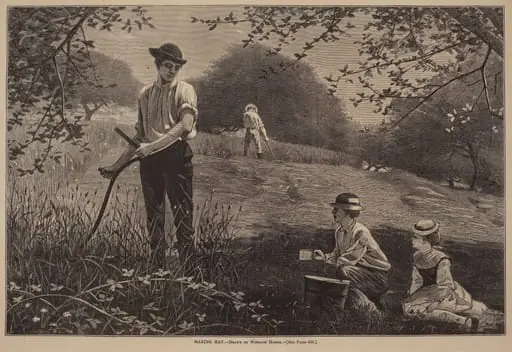 Making Hay
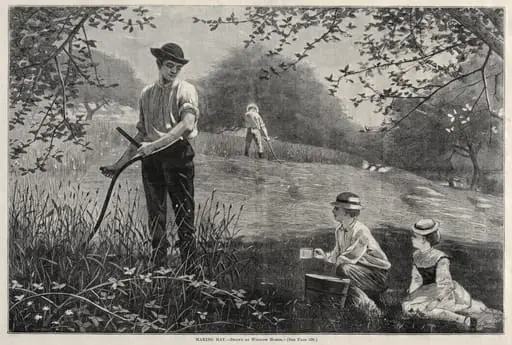 Making Hay
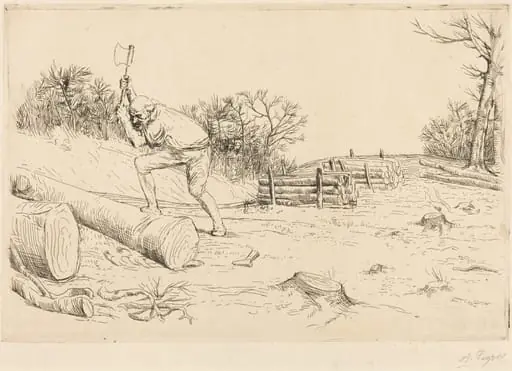 Woodcutter (Le bucheron)
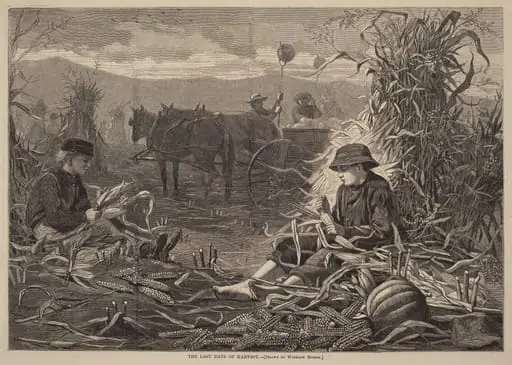 The Last Days of Harvest
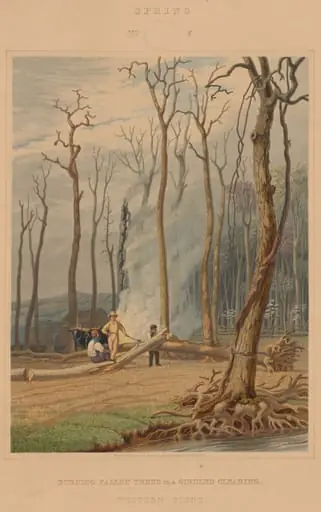 Spring--Burning Fallen Trees in a Girdled Clearing. Western Scene
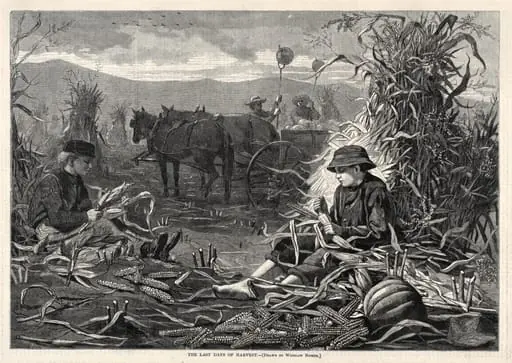 The Last Days of Harvest
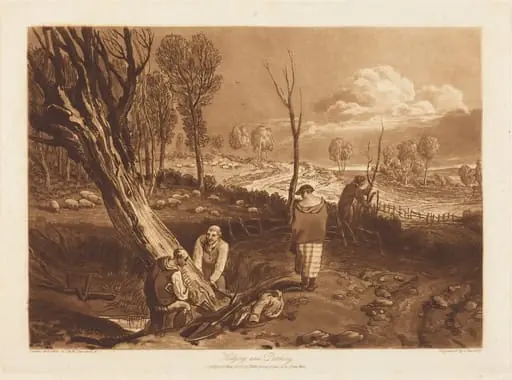 Hedging and Ditching
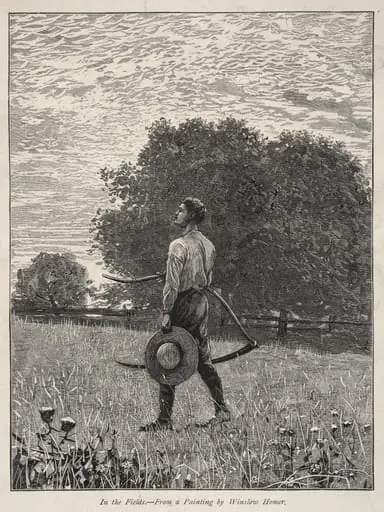 In the Fields
 The Army of the Potomac - A Sharp-Shooter on Picket Duty
 The Day Before the Election
 Thanksgiving in Camp
 Spring Farm Work - Grafting