Artwork
The Hierarchy of the Heavens
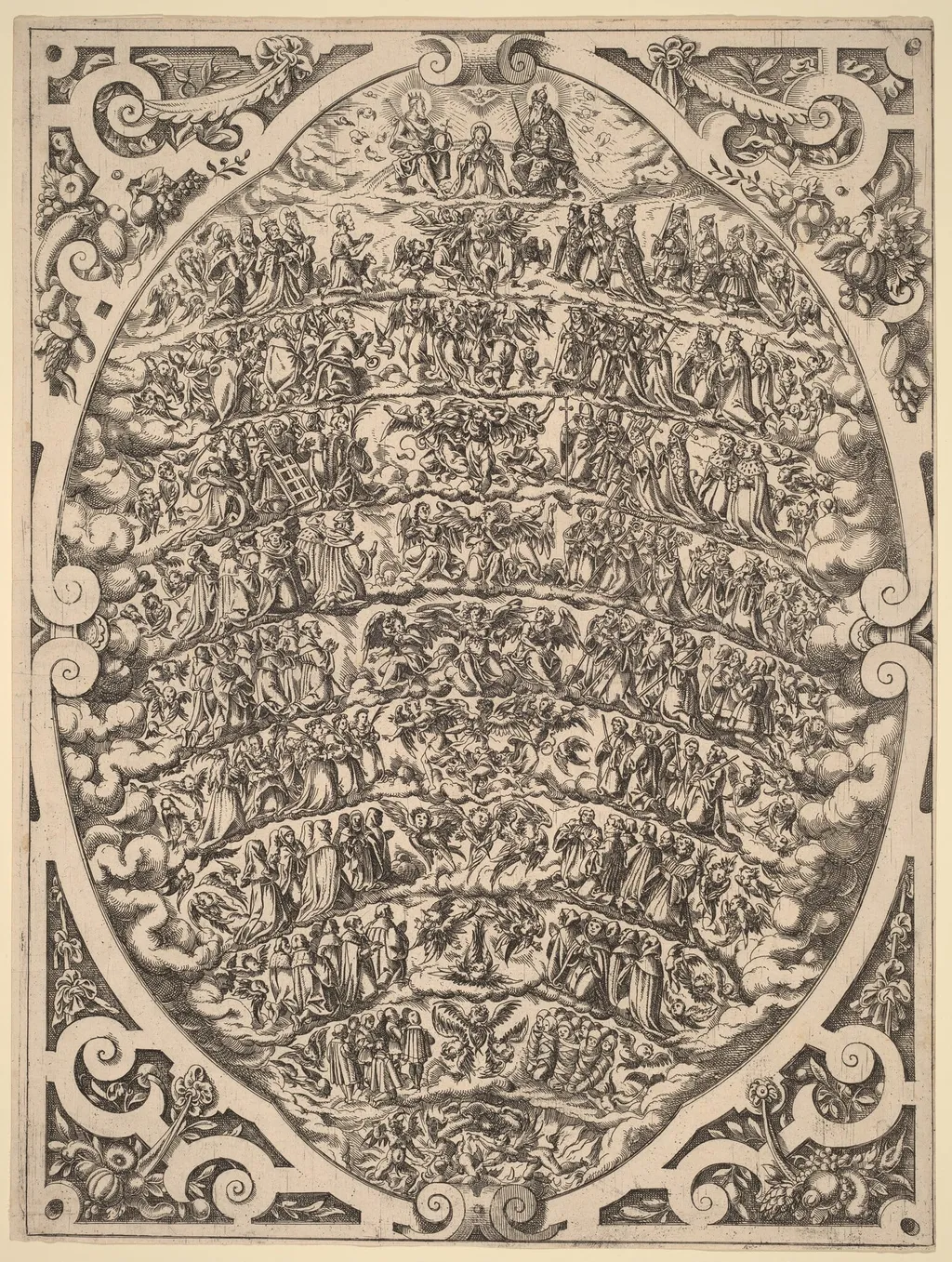
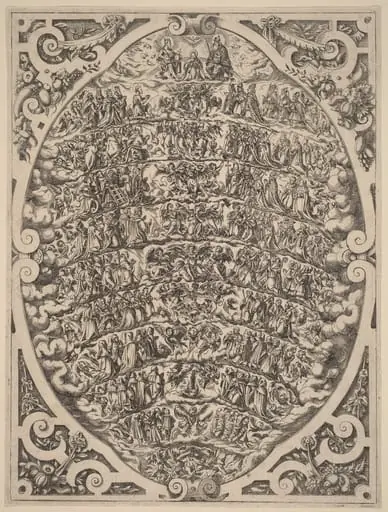
The Hierarchy of the Heavens is an ink print by the Renaissance artist Jost Amman. It dates from 1579 and is held in the collection of the National Gallery of Art.
About this work
Overview
Rendered on laid paper, the composition presents a vertical arrangement of figures, from celestial beings at the summit to laboring souls below.
Created in 1579 by Jost Amman, this etching depicts a celestial order through a dense network of finely incised lines. Rendered on laid paper, the composition presents a vertical arrangement of figures, from celestial beings at the summit to laboring souls below. The scene is enclosed by decorative borders bearing inscriptions, reinforcing its function as a structured vision of divine hierarchy rather than a literal landscape.
Subject & Meaning
The image organizes spiritual and earthly roles into a ranked cosmology. Larger figures atop clouds represent angels or saints, while smaller, numerous figures below engage in varied activities—riding, writing, crafting—suggesting souls assigned to different stations in the afterlife. The arrangement reflects contemporary theological ideas of order, where proximity to the divine correlates with status and function, transforming heaven into a structured, almost bureaucratic realm.
Technique & Style
Amman employed etching to achieve intricate detail, using acid to bite fine lines into a metal plate. The contrast between the airy, lightly worked upper zone and the densely packed, heavily inked lower region creates visual depth. Delicate linework renders individual gestures and costumes, lending the scene a sense of bustling motion. The ornamental border, integrating text and scrollwork, frames the composition as both a theological diagram and a printed curiosity.
History & Provenance
Produced during the late Renaissance, the print circulated among educated audiences familiar with religious symbolism and cosmological models. As a work by Amman, a known illustrator of trades and social types, it aligns with his broader interest in categorizing human roles. Its survival in multiple institutional collections suggests it was valued for its intellectual complexity and technical precision, rather than as devotional imagery.
Context
In the late 16th century, visual representations of heaven often drew from medieval and early modern theological texts, blending scripture with allegorical tradition. Amman’s print reflects a period when print culture enabled the dissemination of complex ideas to a wider public. Similar hierarchies appeared in woodcuts and manuscripts, but this etching stands out for its precision and the sheer density of its populated cosmos.
Legacy
The print remains a rare example of a secularized celestial hierarchy rendered in print form, distinct from liturgical art. It influenced later emblem books and allegorical engravings, particularly in Northern Europe. While not widely reproduced, its meticulous execution and conceptual clarity have ensured its continued study among historians of print, religion, and visual taxonomy.
Artist & collection


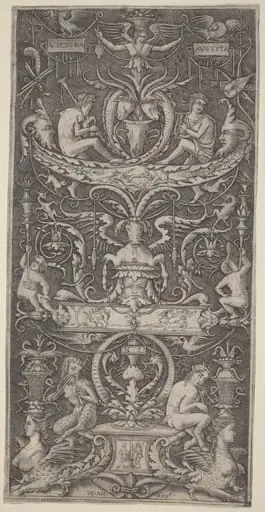 Ornamental Panel Inscribed "Victoria Augusta"
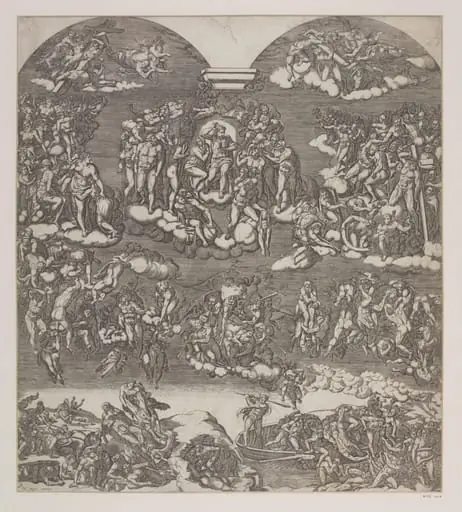 Last Judgment
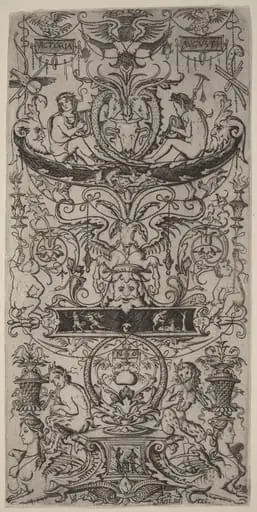 Ornament Panel: Victoria Augusta
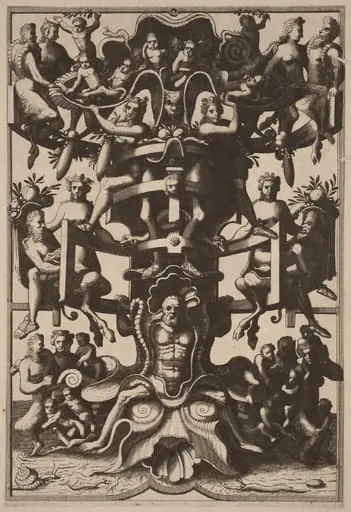 Man Sitting on an Auricular Mask, Supporting a Strapwork Frame on his Shoulders
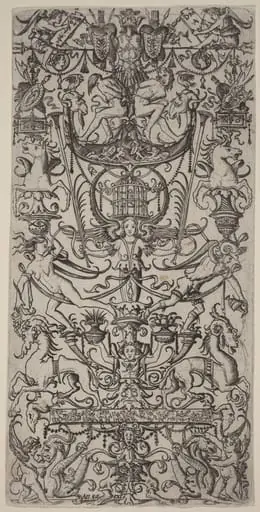 Ornament Panel with a Birdcage
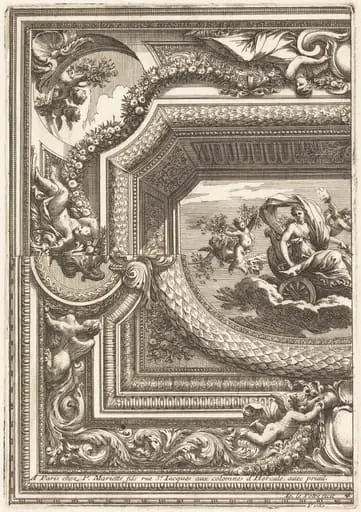 Quarts de plafons
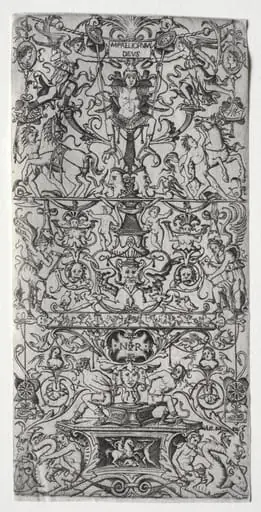 Ornament Panel: Mars, God of Battles
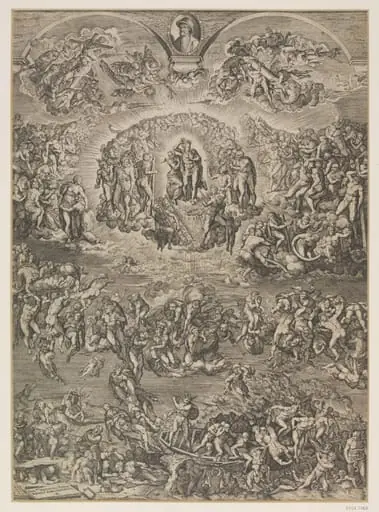 Last Judgment
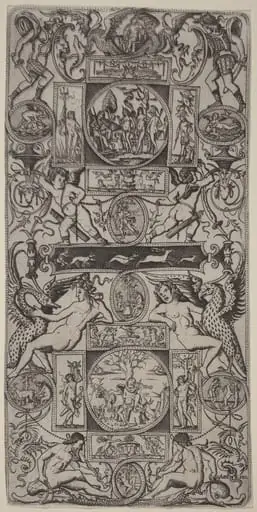 Ornament Panel with Orpheus and the Judgment of Paris
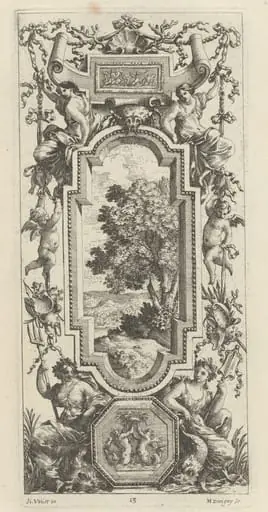 Ornamental Panel Surmounted by a Maritime Scene and a Shell
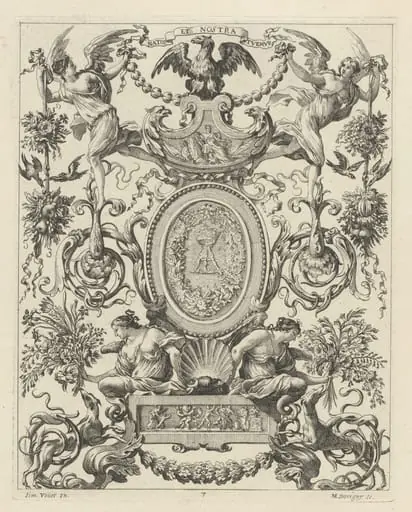 Ornamental Panel Surmounted by an Eagle and the Motto NATOS ET NOSTRA TUEMUR