Artwork
Gladiadores victoriosos ofreciendo las armas a Hércules guardián
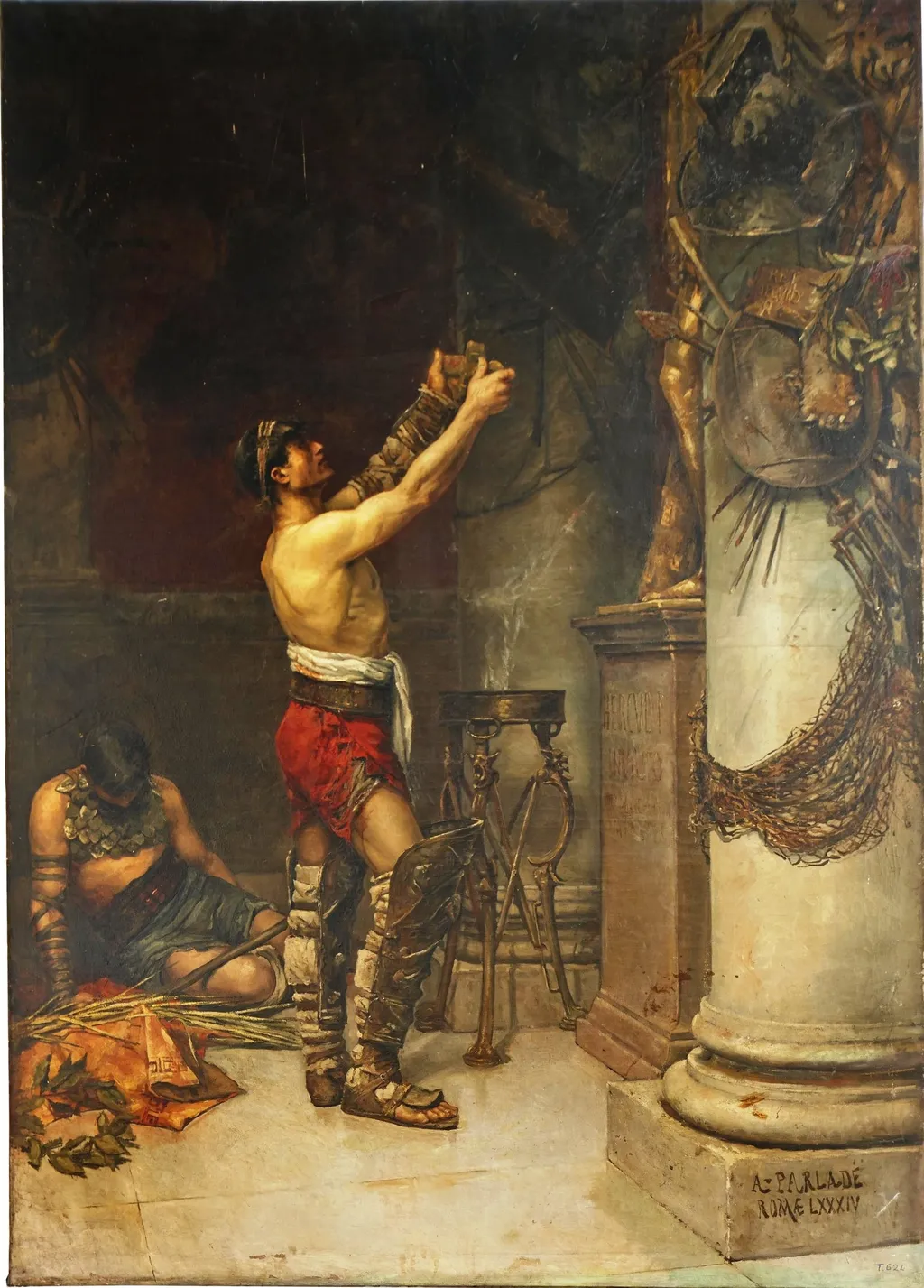
Gladiadores victoriosos ofreciendo las armas a Hércules guardián is an oil painting by the Post-Impressionist artist Andrés Parladé. It dates from 1892 and is held in the collection of the Museo del Prado.
About this work
Overview
Andrés Parladé y Heredia’s 1892 oil painting *Gladiadores victoriosos ofreciendo las armas a Hércules guardián* presents a dramatic encounter between two nude warriors and a marble statue. The composition is set on a stone floor within a dimly lit interior, where the victorious fighters appear to present their arms to a guardian figure modeled after the mythic Hercules.
Subject & Meaning
The work juxtaposes contemporary, shirtless combatants with a classical representation of Hercules, suggesting a ritual of homage or surrender. One figure, clad only in a red drape and leg armor, extends a spear toward the statue, while a second, seated with a bow and quiver, looks downward, emphasizing a moment of reverence toward the heroic ideal.
Technique & Style
Parladé employs a chiaroscuro scheme, using deep shadows to isolate the muscular forms and the sculptural details against a muted backdrop. The contrast of light on flesh and marble creates a three‑dimensional effect, while the painter’s post‑impressionist sensibility appears in the loose handling of color on the drapery and the atmospheric ambience.
History & Provenance
Although best known for hunting scenes, Parladé ventured into mythological genre with this piece, aligning with late‑19th‑century Spanish interest in classical themes. The painting entered the collection of the Museo del Prado, where it remains part of the institution’s holdings of 19th‑century Spanish art.
Own this work as a print
Artist & collection
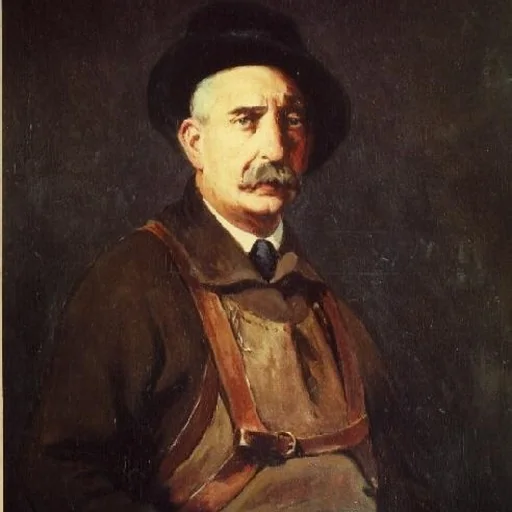
Artist
Andrés Parladé y Heredia, after 1903, the third Count of Aguiar (1 June 1859, Málaga - 4 April 1933, Seville) was a Spanish genre and portrait painter who is best remembered for his hunting-related scenes, many of which feature dogs.

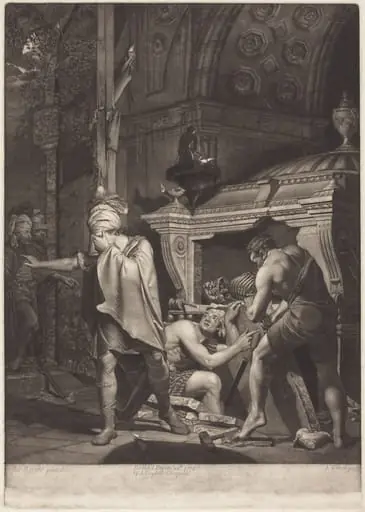 Miravan Opening the Tomb of His Ancestors
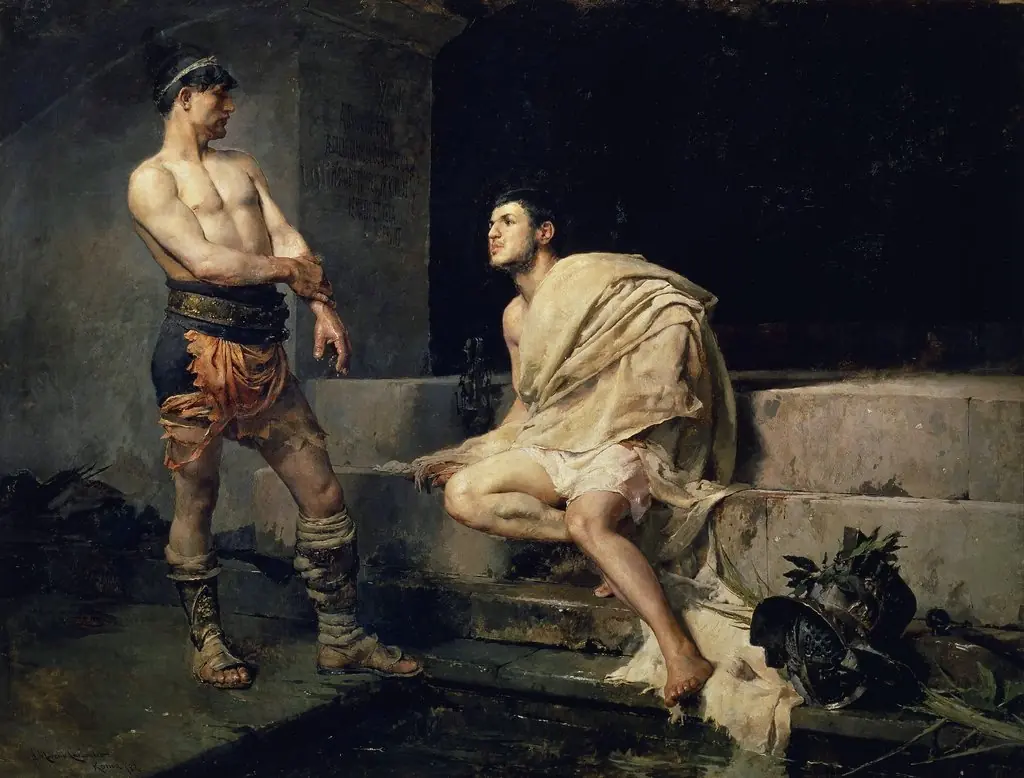 The Gladiators
 Bloody feast of Count Gero
 Mucius Scaevola Confronting King Porsenna
 Saint Francis of Paola
 Jason and the Golden Fleece
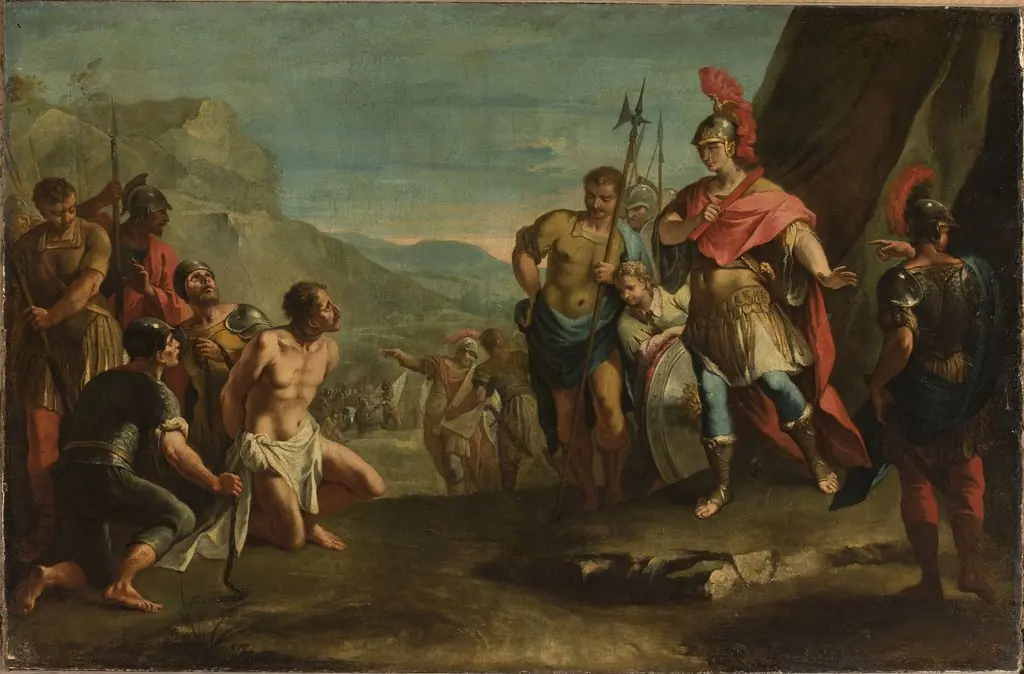 Killer of Darius before Alexander (King Porus and Alexander the Great)
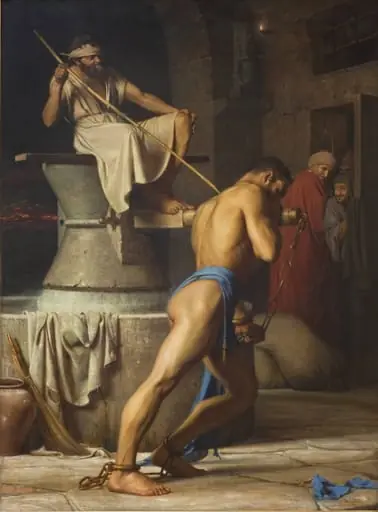 Samson and the Philistines
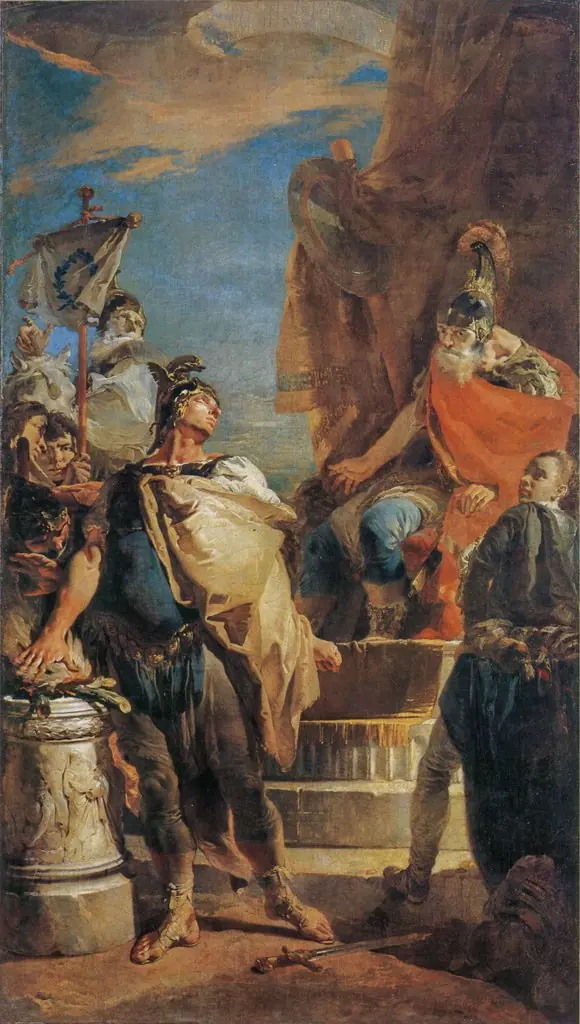 Mucius Scaevola before Porsenna
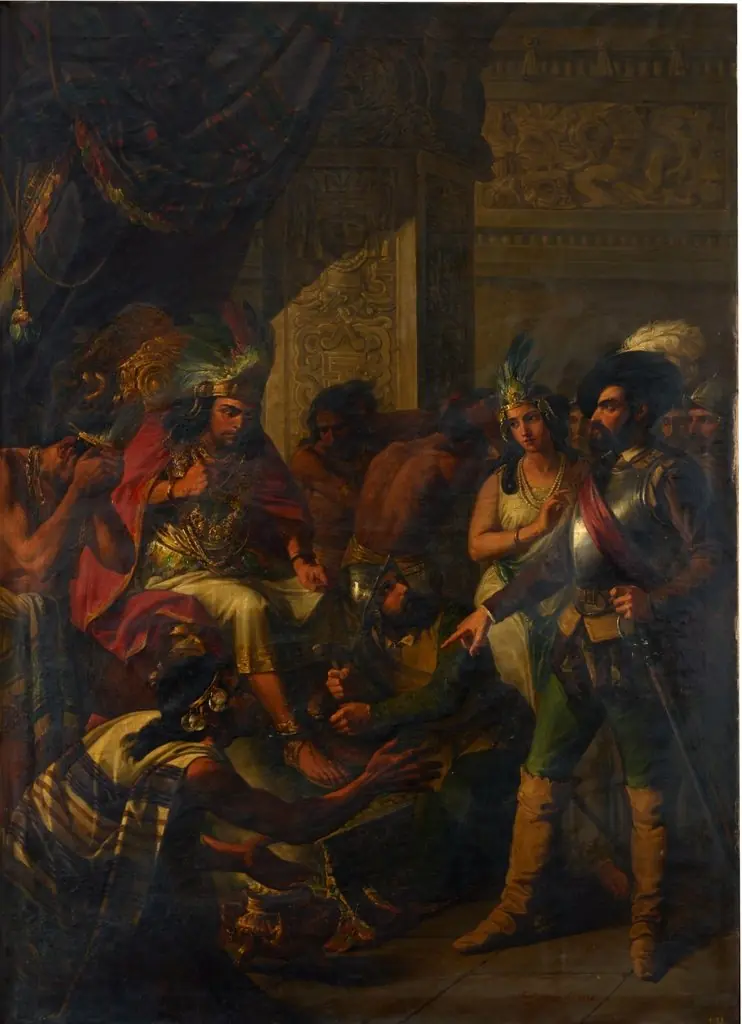 Hernán Cortés el célebre conquistador de Méjico entra con la intérprete doña Marina y tres o cuatro de sus capitanes en el aposento de Moctezuma y con imperio y resolución le manda poner unos grillos
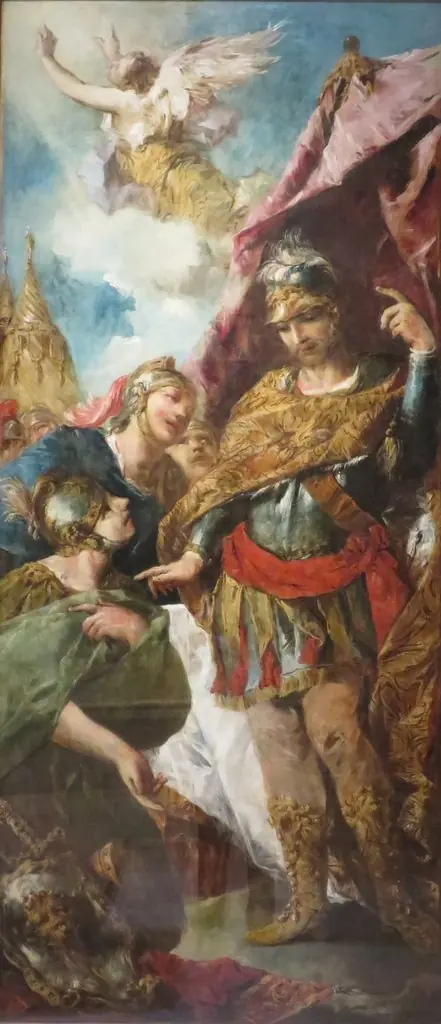 Godfrey of Boulogne Summons His Chiefs to Council
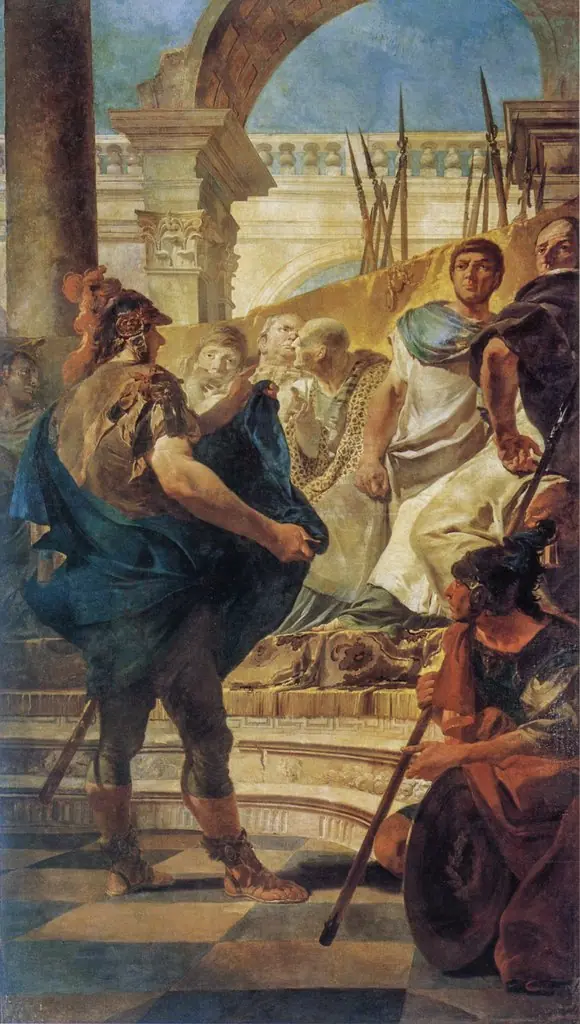 Quintus Fabius Maximus Before the Senate of Carthage