Artwork
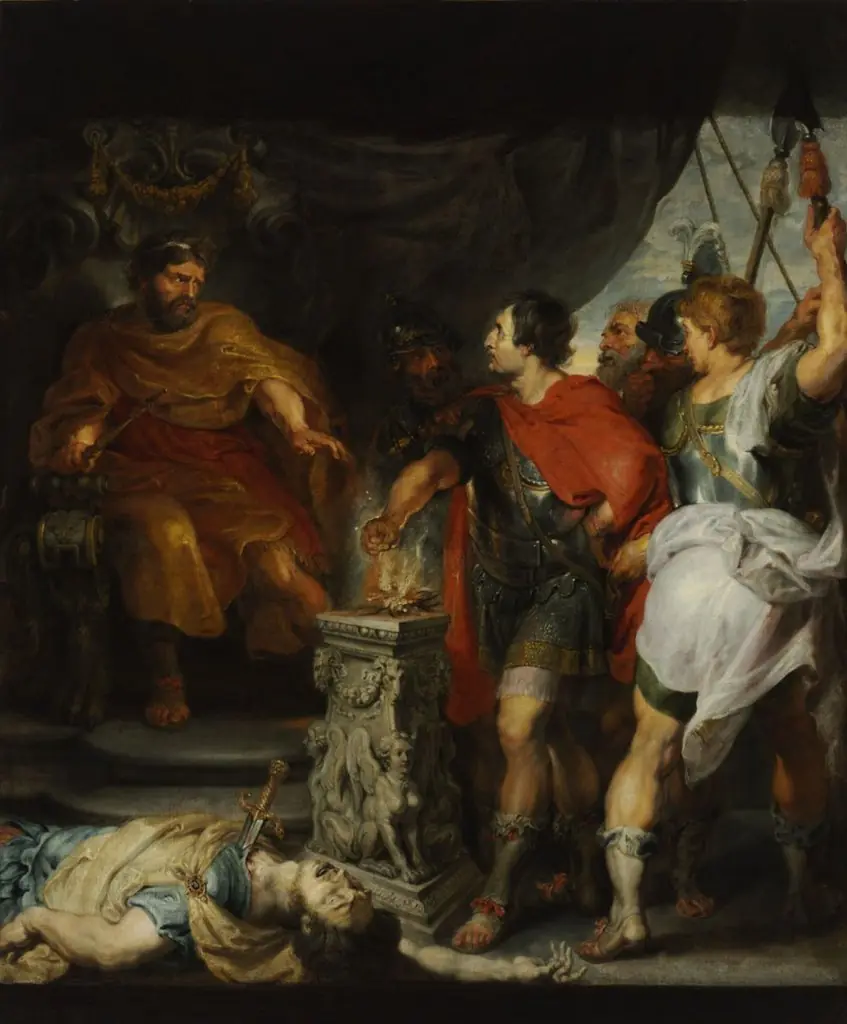
Mucius Scaevola Confronting King Porsenna
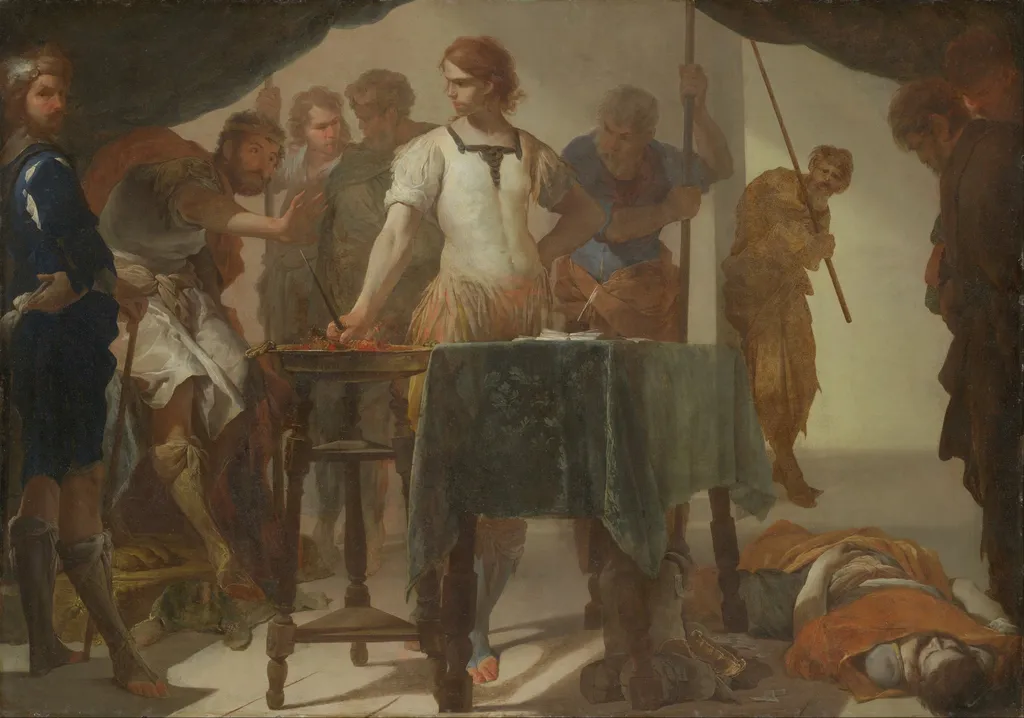
Mucius Scaevola Confronting King Porsenna is an oil painting by Bernardo Cavallino. It dates from 1650 and is held in the collection of the Kimbell Art Museum.
About this work
Overview
Cavallino, active in Naples, fused the dramatic lighting of tenebrism with a refined, almost lyrical sensibility.
Painted around 1650 by Bernardo Cavallino, this work depicts the Roman legend of Mucius Scaevola on a copper support, a favored surface for its smoothness and luminous finish. Cavallino, active in Naples, fused the dramatic lighting of tenebrism with a refined, almost lyrical sensibility. His training under Massimo Stanzione and exposure to Van Dyck’s portraiture shaped his distinctive approach, balancing intensity with elegance in a style rooted in Roman Baroque traditions.
Subject & Meaning
The scene illustrates the moment Mucius Scaevola, a Roman youth, demonstrates his resolve by holding his right hand in a flame to prove his fearlessness to King Porsenna of Etruria. His calm gaze and steady posture convey stoic courage, transforming physical agony into a political statement. The act was meant to deter Porsenna from attacking Rome, symbolizing the power of personal sacrifice over brute force in early Roman moral narratives.
Technique & Style
Cavallino employed chiaroscuro to sculpt the figure against a dim, atmospheric background, enhancing the three-dimensionality of the central form. The flame’s glow casts sharp highlights on the hand and fabric, contrasting with the deep shadows that engulf surrounding figures. His brushwork on the copper surface achieves a polished, almost enamel-like finish, while the richly colored drapery adds a tactile richness that softens the scene’s brutality.
History & Provenance
The painting emerged during Cavallino’s mature period in mid-17th century Naples, a time when religious and historical subjects were favored by local patrons. Its survival through centuries suggests it remained in private collections, likely within southern Italy or among collectors drawn to Neapolitan Baroque. No definitive public record of its early ownership exists, but its condition indicates careful preservation.
Context
In mid-17th century Naples, artists often turned to classical antiquity to explore themes of virtue and endurance amid political instability. Cavallino’s treatment of Mucius reflects a broader cultural interest in Roman heroism, filtered through Counter-Reformation ideals of moral fortitude. The painting’s intimacy and psychological focus distinguish it from grander public histories, aligning it with private devotional and intellectual tastes of the era.
Legacy
Though less widely known than his contemporaries, Cavallino’s work influenced later Neapolitan painters through his synthesis of emotional restraint and visual poetry. *Mucius Scaevola* exemplifies how Baroque drama could be contained within quiet intensity, offering an alternative to the more exuberant styles of Rome or Venice. The painting remains a key reference for understanding the nuanced evolution of Baroque narrative painting in southern Italy.
Own this work as a print
Artist & collection

Artist
Bernardo Cavallino (25 August 1616 – 1656) was an Italian painter and draughtsman.

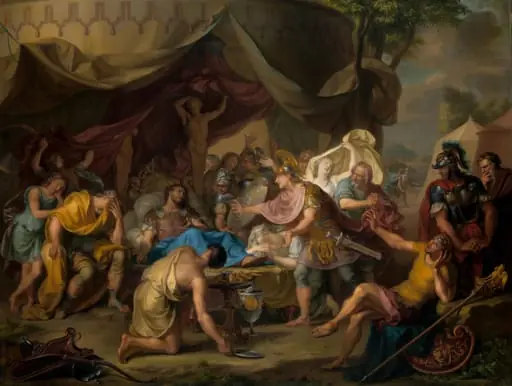 Het sterfbed van Epaminondas
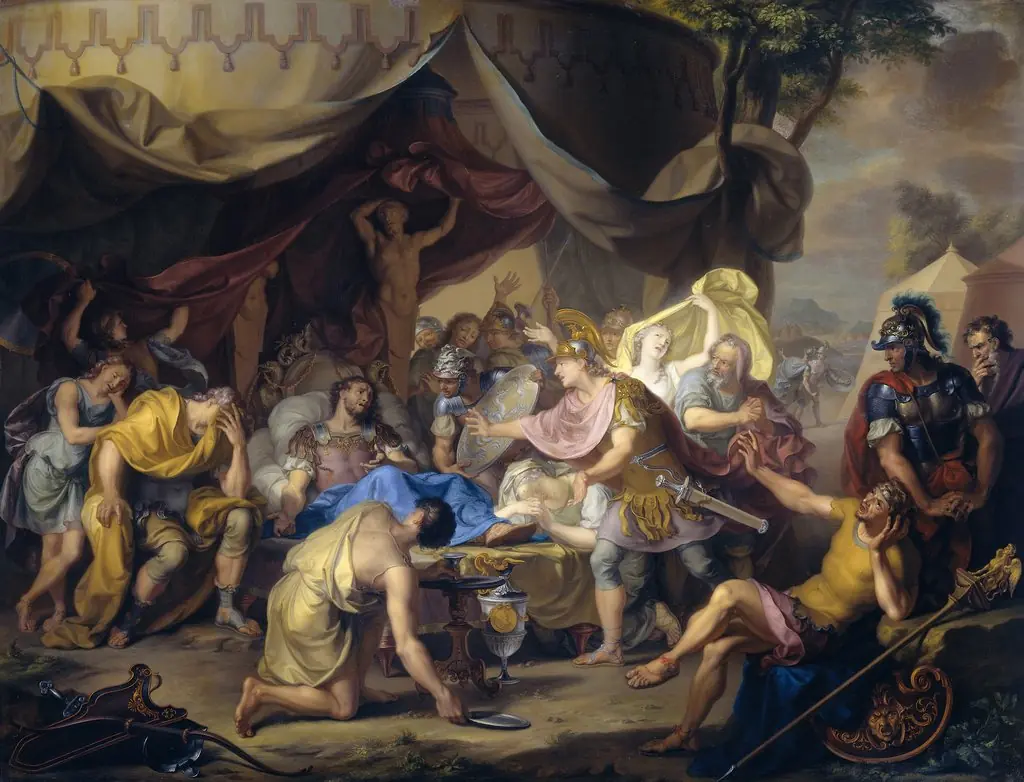 The Death of Epaminondas
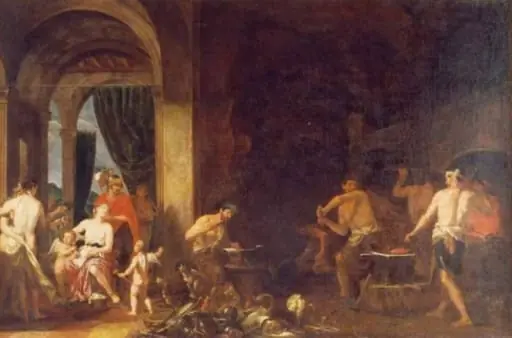 Atelierul lui Vulcan
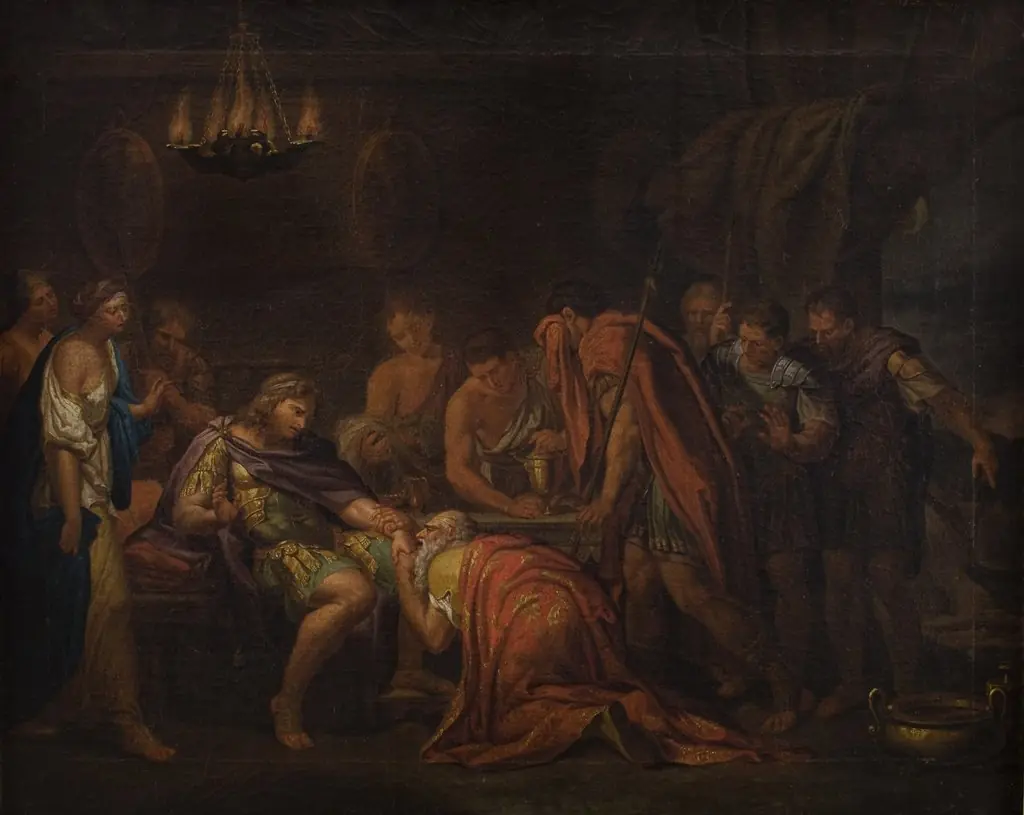 Priam Pleading with Achilles for the Body of Hector
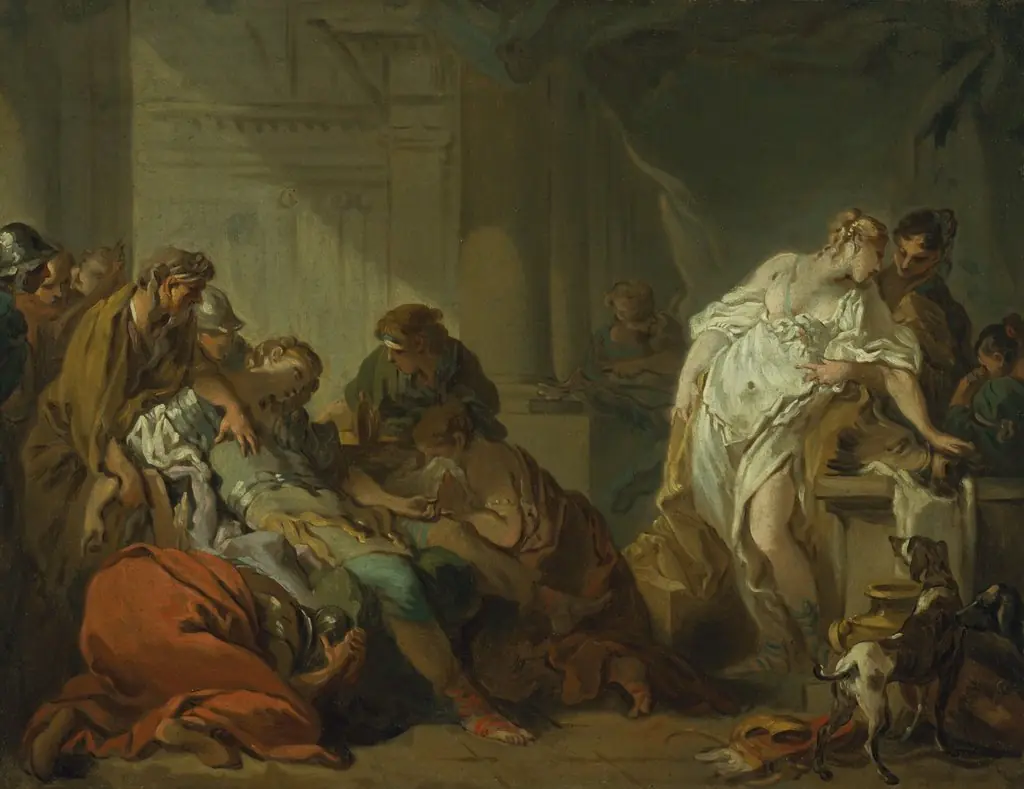 Death of Meleager
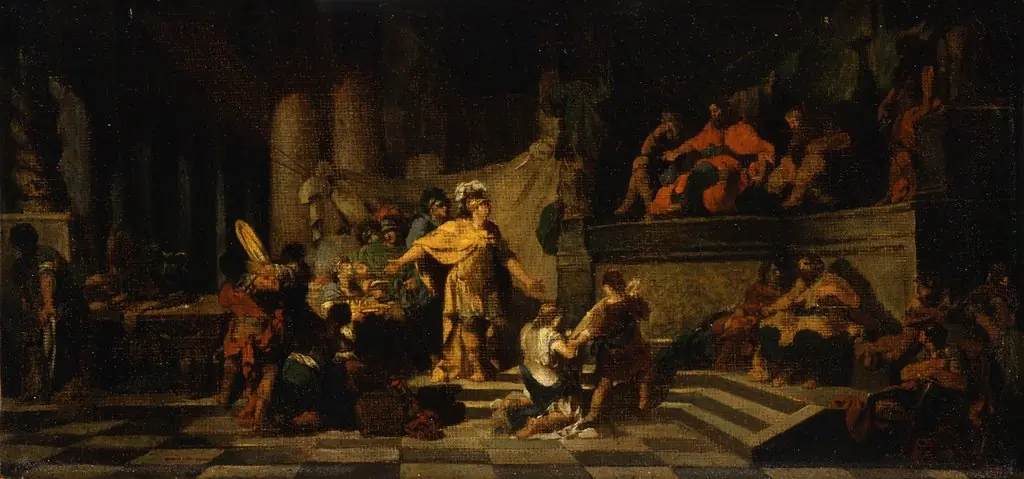 Aeneas Offering Presents to King Latinus and Asking Him for the Hand of His Daughter
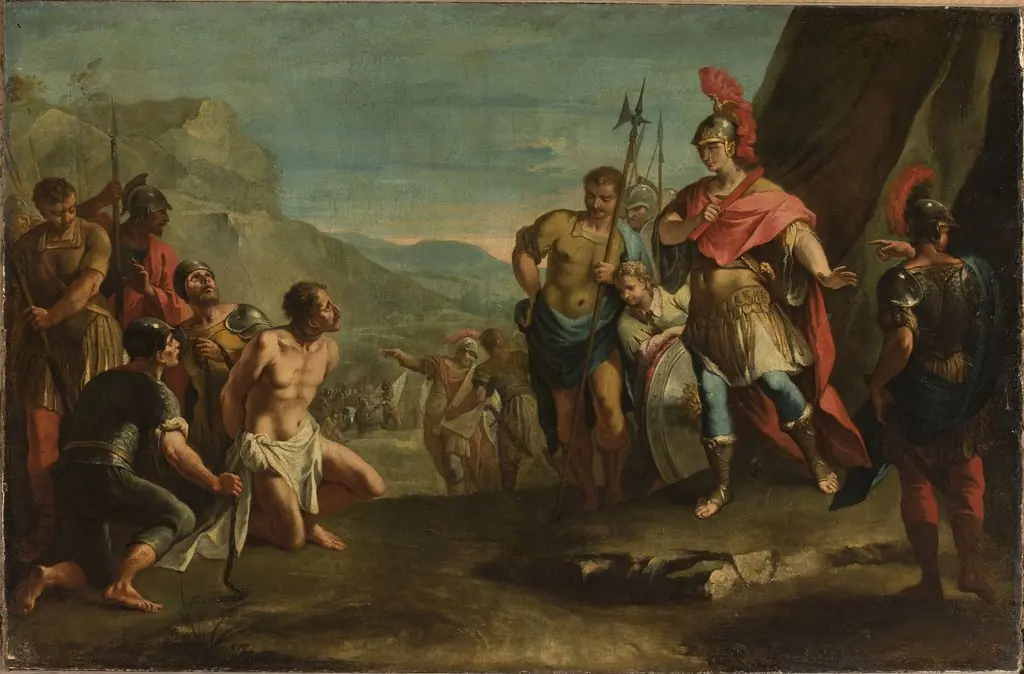 Killer of Darius before Alexander (King Porus and Alexander the Great)
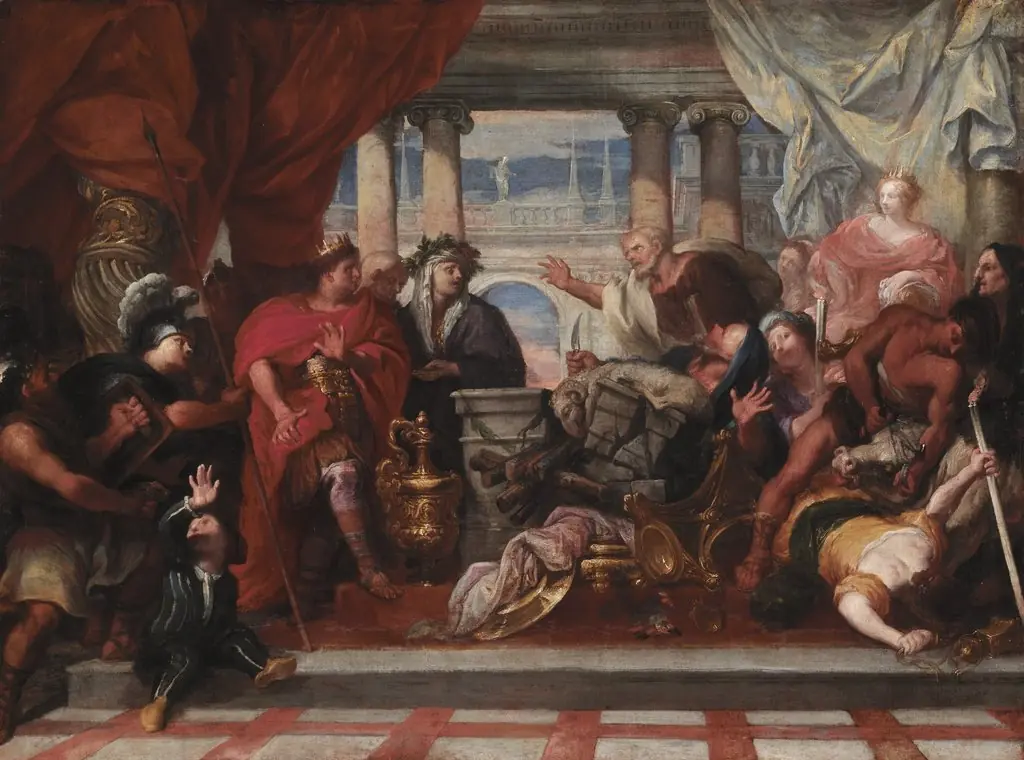 Scene of Sacrifice
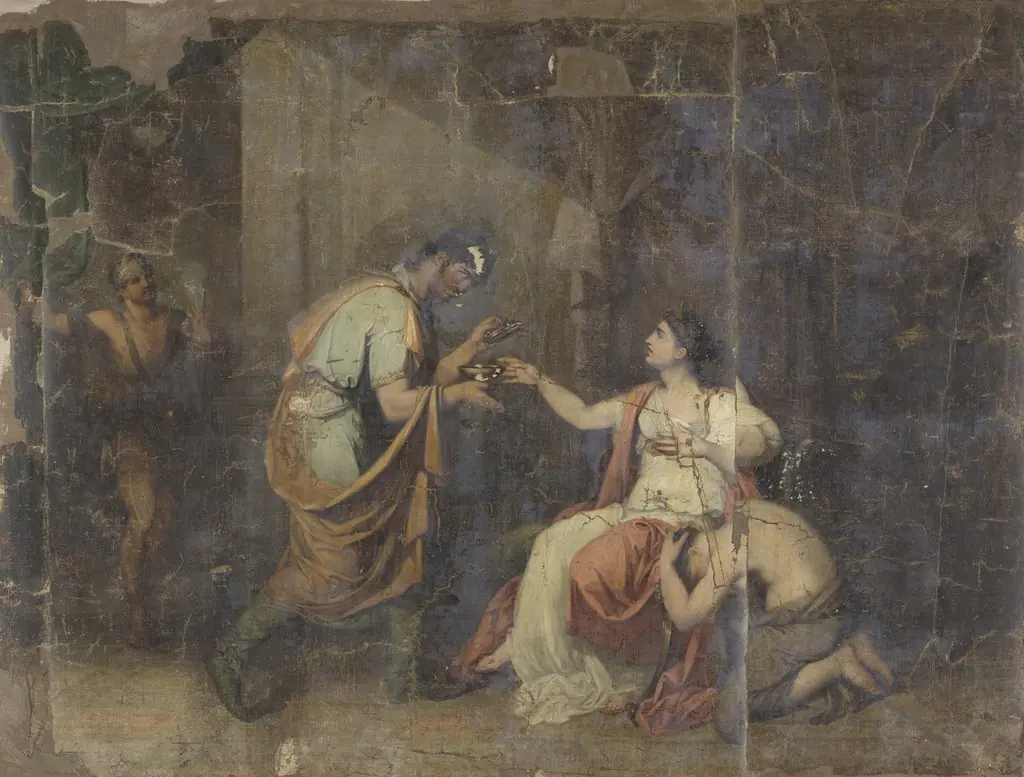 The Death of Sophonisba, Queen of Numidia
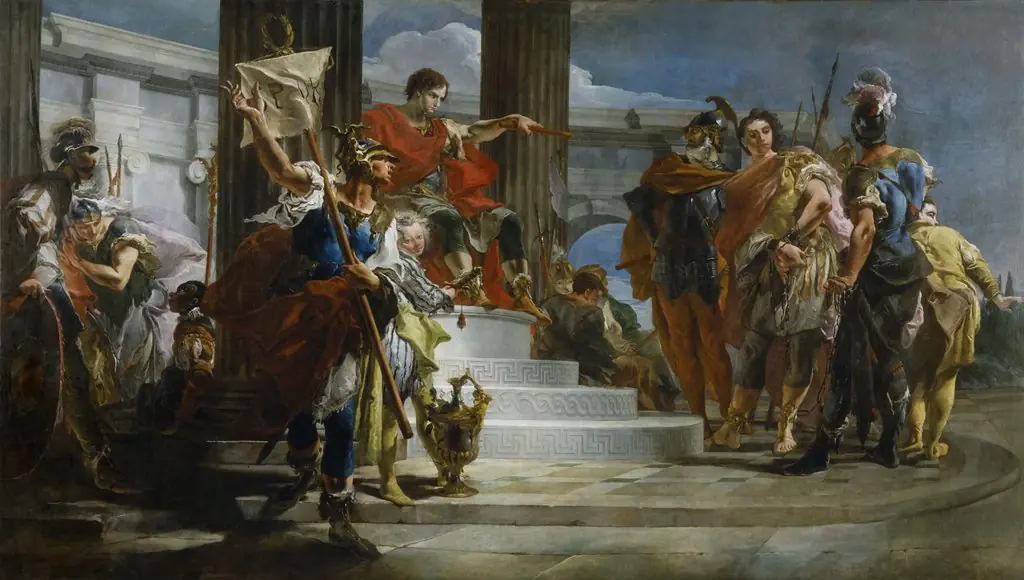 Scipio Africanus Freeing Massiva
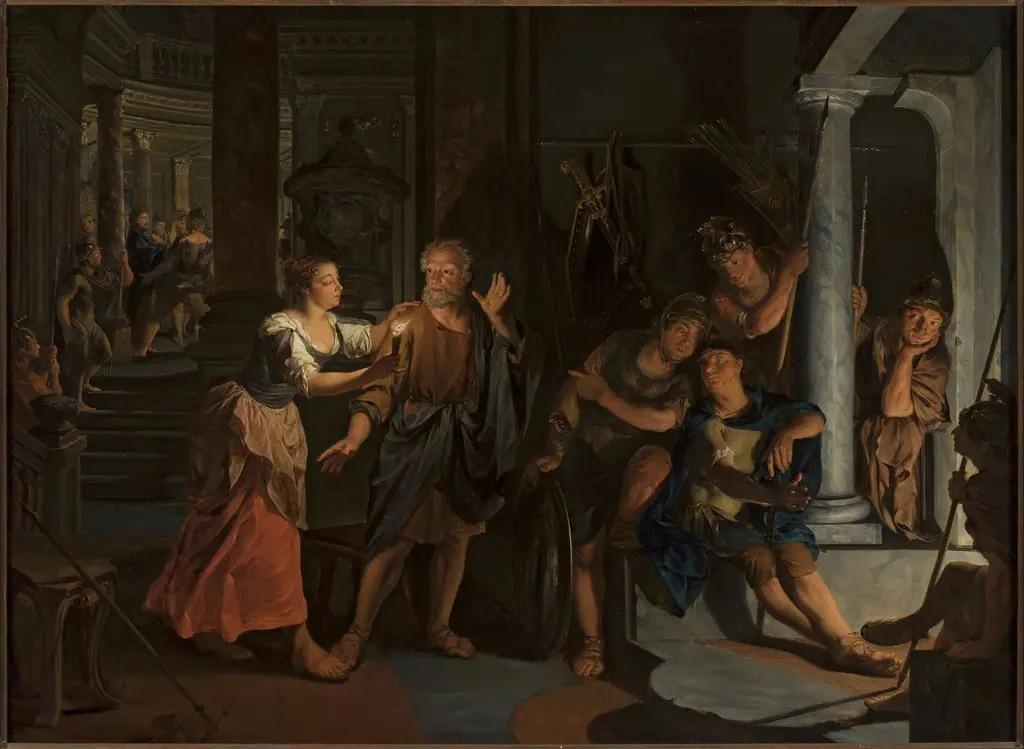 Denial of Saint Peter (Matthew 26:69-75; Mark 14:66-72; Luke 21:54-63; John 17:15-25).
 Mucius Scaevola before Lars Porsenna