Artwork
Apollo and Eros
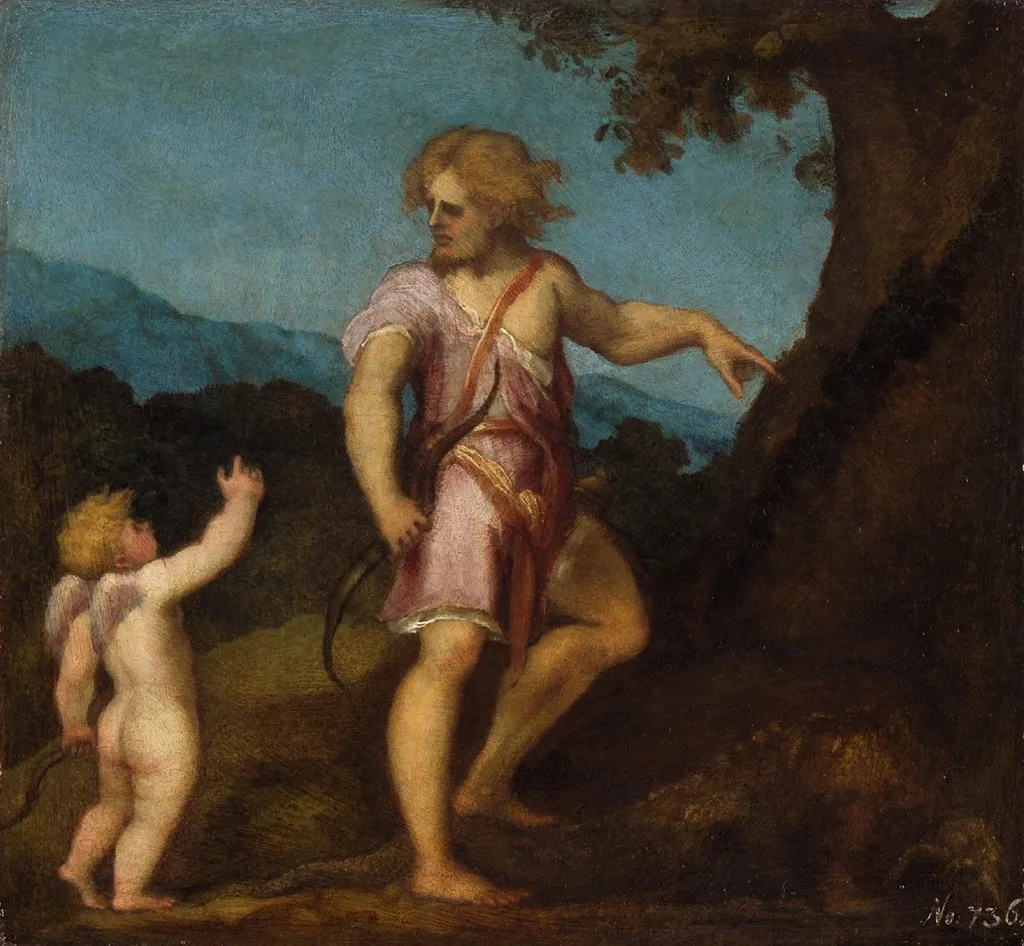
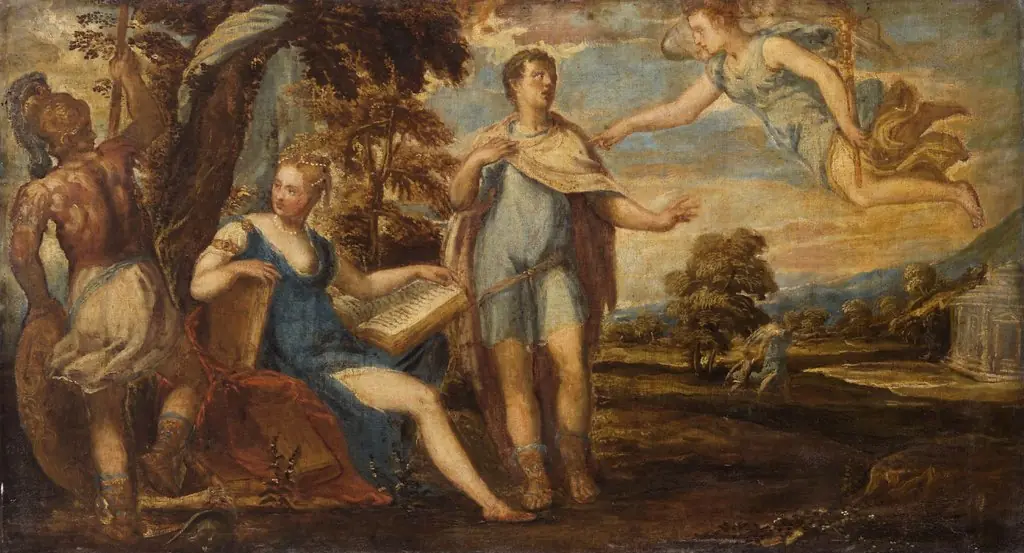
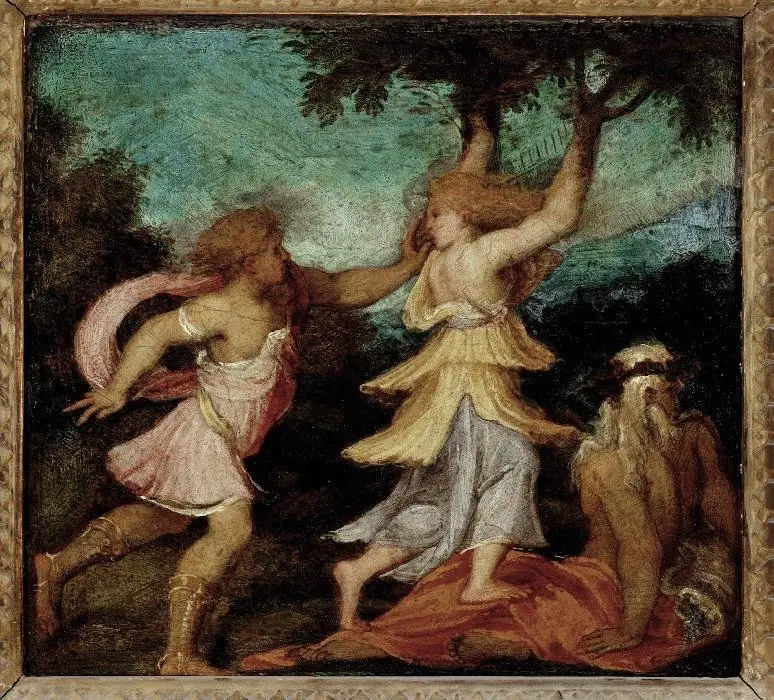
Apollo and Eros is an unspecified painting by the Mannerist artist Andrea Schiavone. It dates from 1543 and is held in the collection of the Kunsthistorisches Museum.
About this work
Overview
Created in 1543, *Apollo and Eros* is a mid‑sixteenth‑century painting by Andrea Schiavone, a Dalmatian-born artist active in Venice. The work presents a mythological scene that pairs the sun god Apollo with the winged figure of Eros, rendered within the stylistic currents of the Venetian Mannerist period.
Subject & Meaning
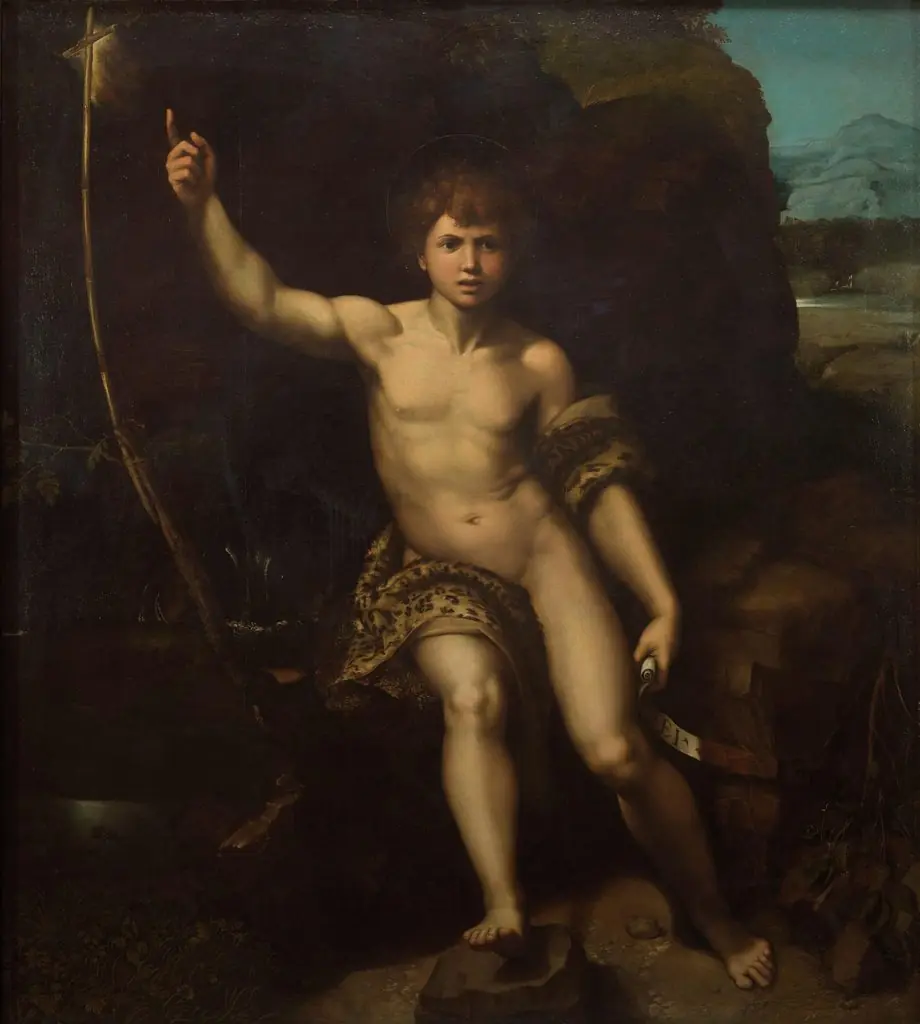
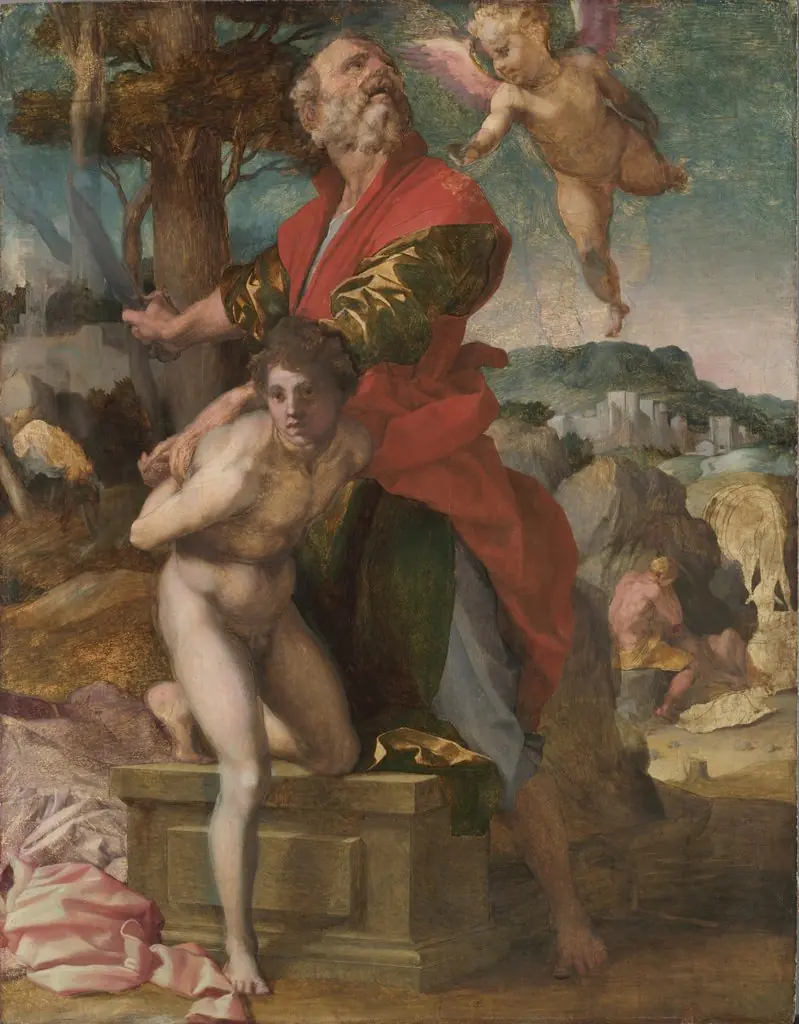
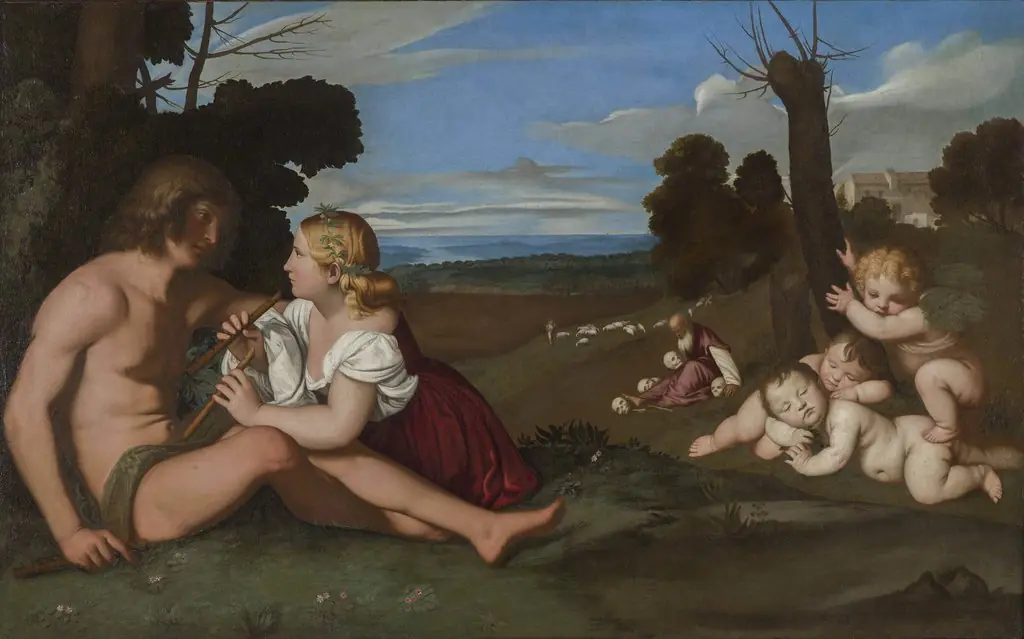
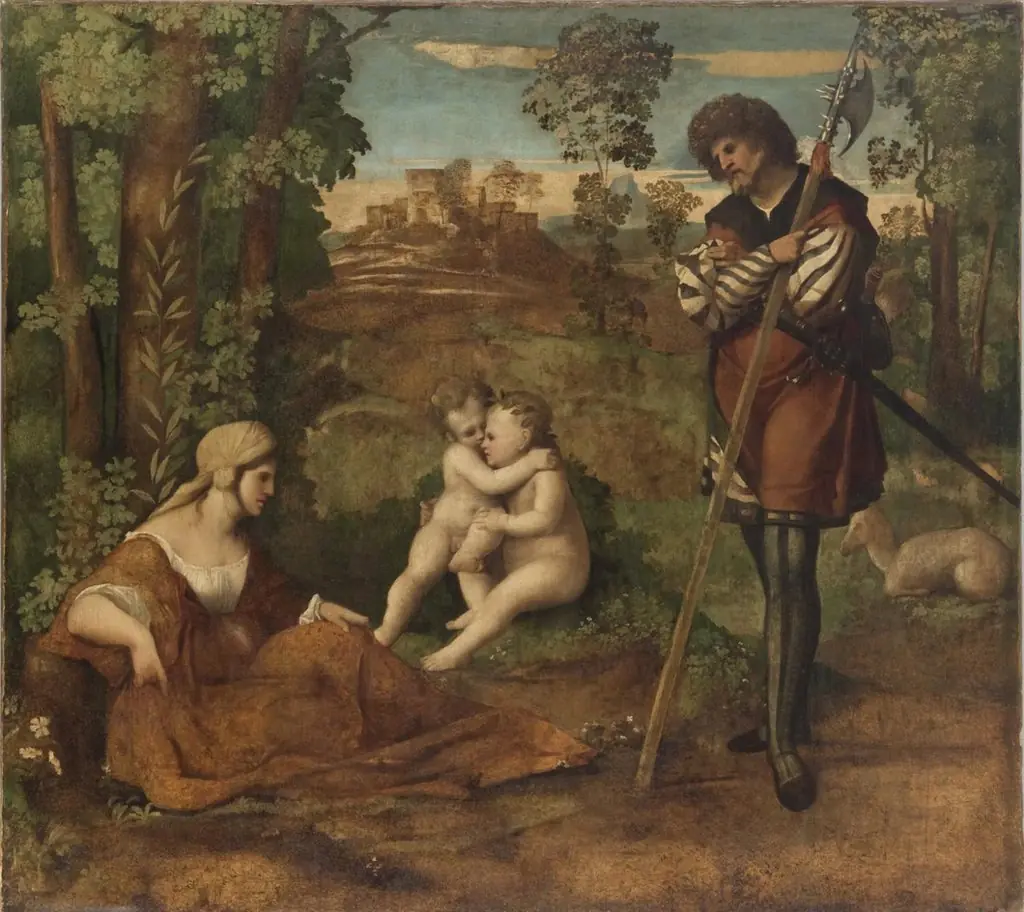
The composition shows a semi‑nude male figure, identified as Apollo, standing on a craggy outcrop while clutching a luminous sphere and gesturing outward. To his left, a diminutive, feather‑winged child—Eros—reaches toward the god, suggesting a narrative of divine interaction or the transmission of love’s power.
Technique & Style
Schiavone employs a heightened Mannerist elegance, emphasizing elongated forms and exaggerated musculature. Contrasting chiaroscuro models the figures, allowing the light to accentuate their faces and bodies against a darkened, rocky landscape, while the sky and a leaning tree provide a muted atmospheric backdrop.
History & Provenance
After its execution in Venice, the painting entered the collection of the Kunsthistorisches Museum in Vienna, where it remains part of the museum’s holdings of Renaissance and Mannerist works.
Context
Schiavone’s style merges the courtly sophistication of Venetian masters such as Titian with the artificiality typical of Mannerism. His choice of a classical myth aligns with the period’s renewed interest in antiquity, while the work reflects the artist’s synthesis of local coloristic traditions and the more stylized, intellectual approach of the broader European movement.
Artist & collection
Artist
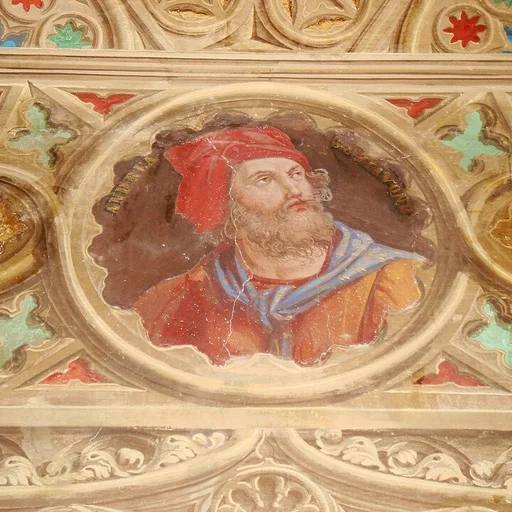
Andrea Meldolla (Croatian: Andrija Medulić), also known as Andrea Schiavone or Andrea lo Schiavone, literally "Andrew the Slav", (c.