Artwork
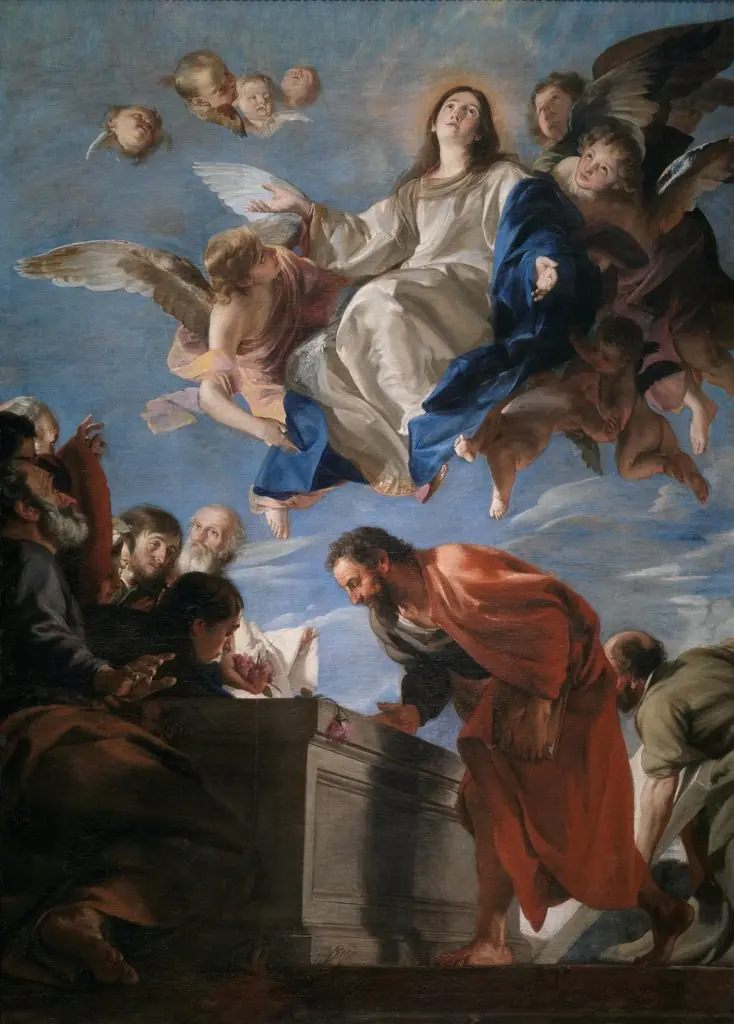
The Assumption of the Virgin
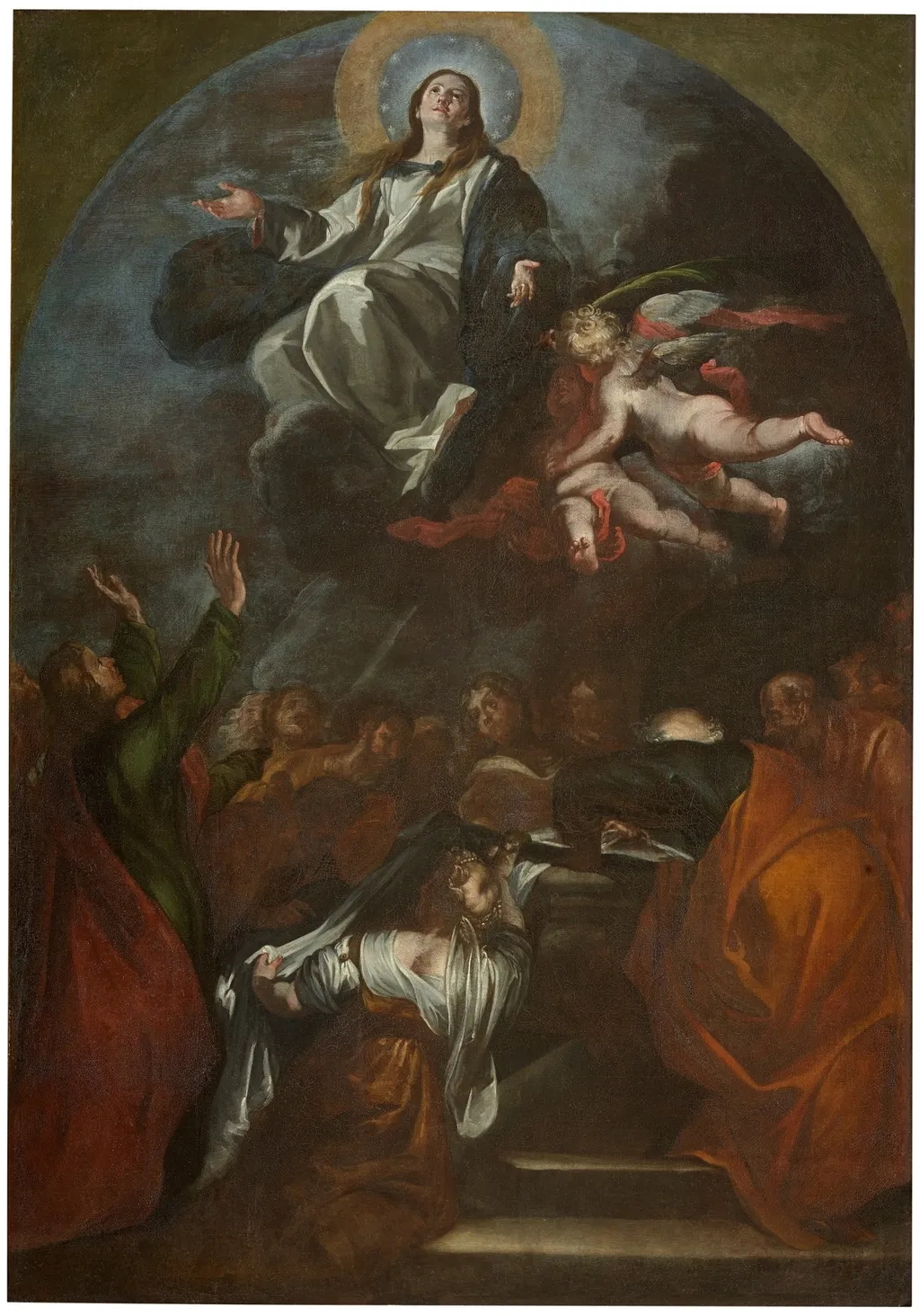
The Assumption of the Virgin is an oil painting by the Early Baroque Italian artist Juan Martín Cabezalero. It dates from 1640 and is held in the collection of the Museo del Prado.
About this work
Overview
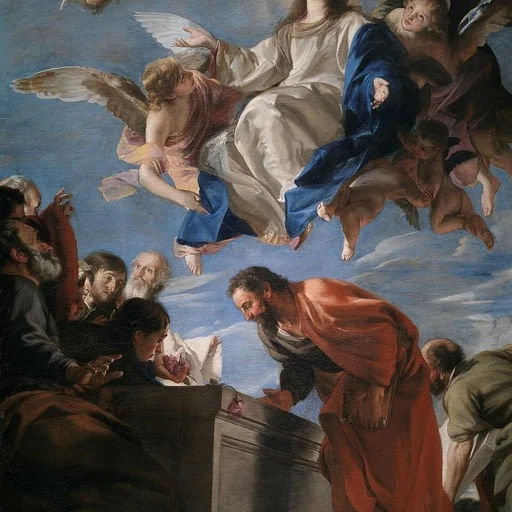
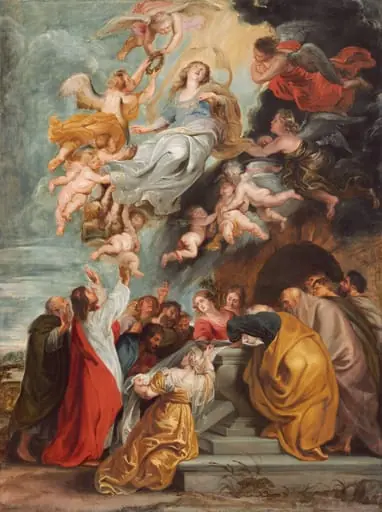
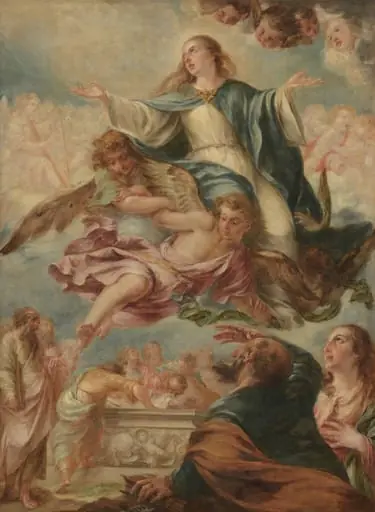
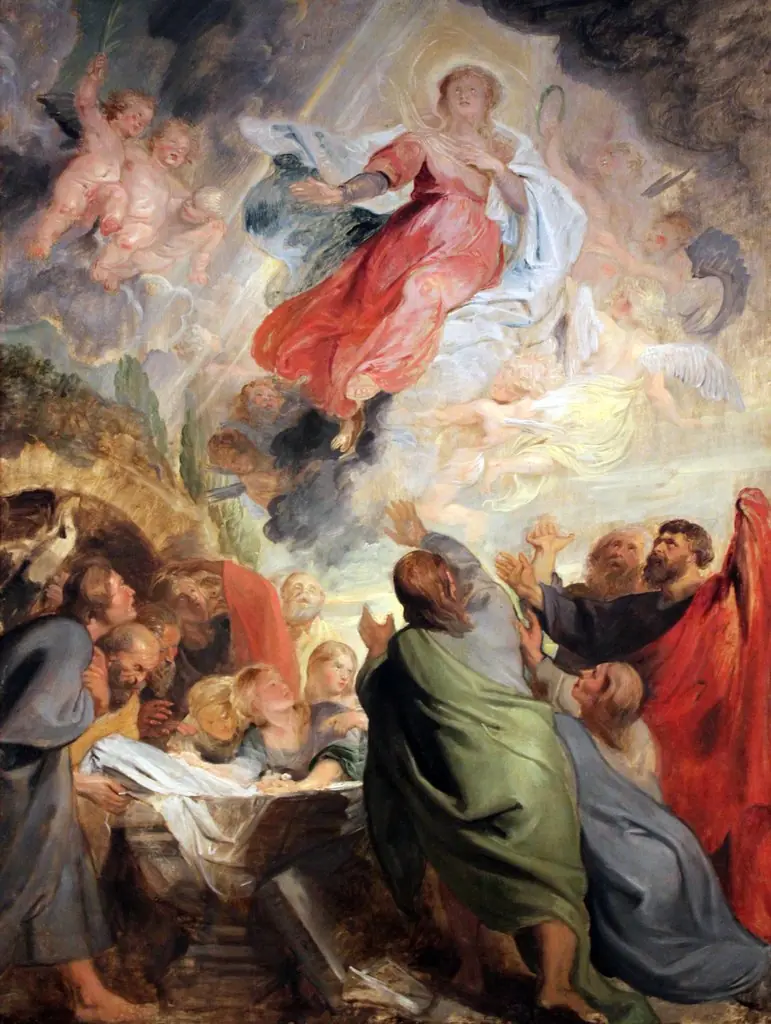
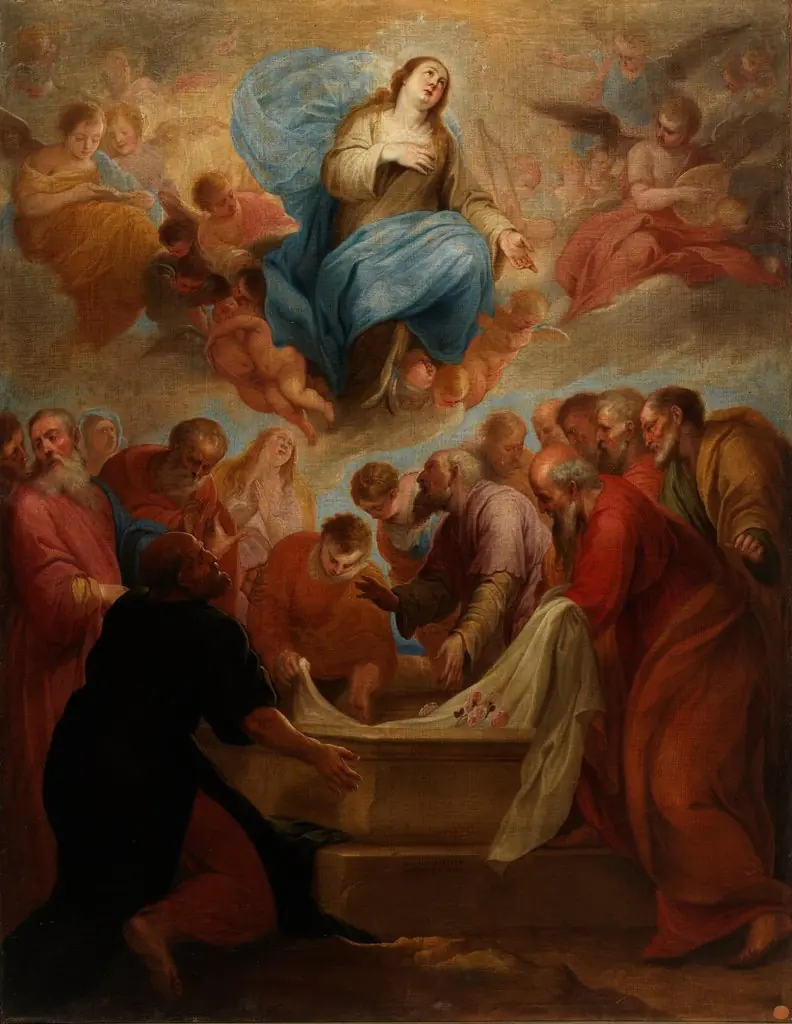
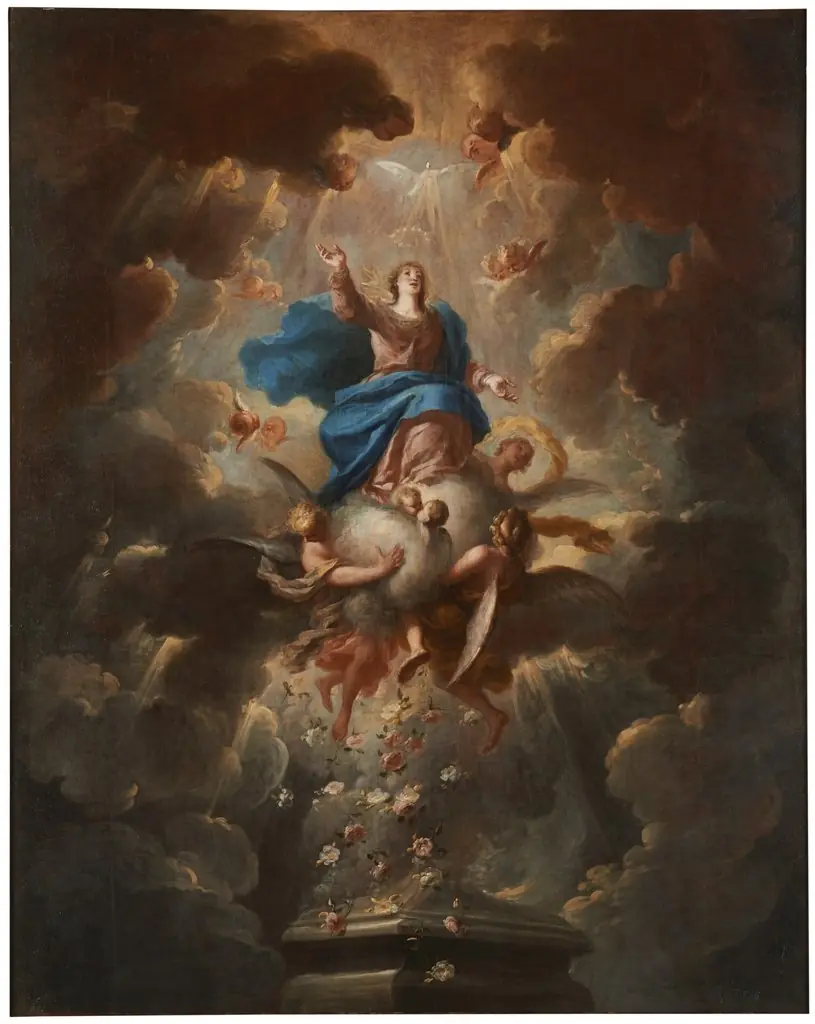
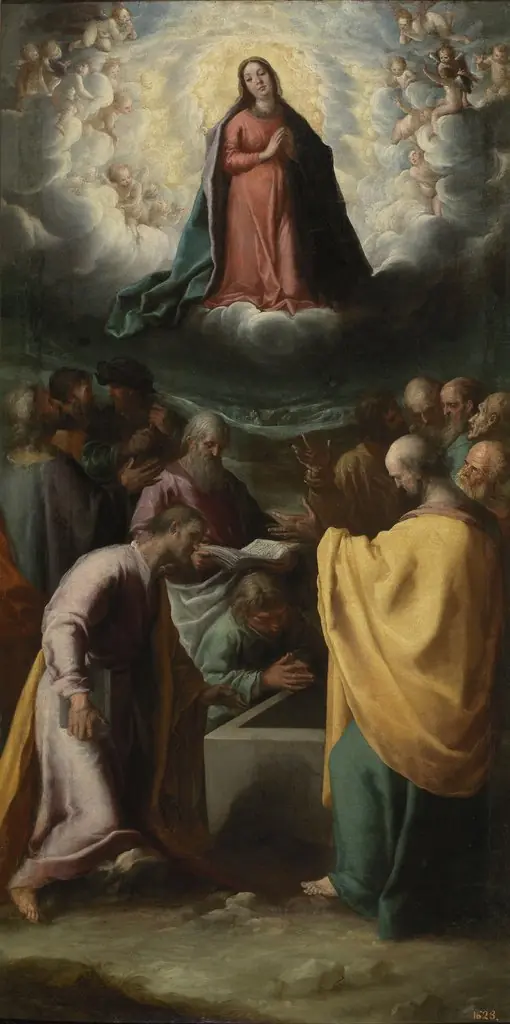
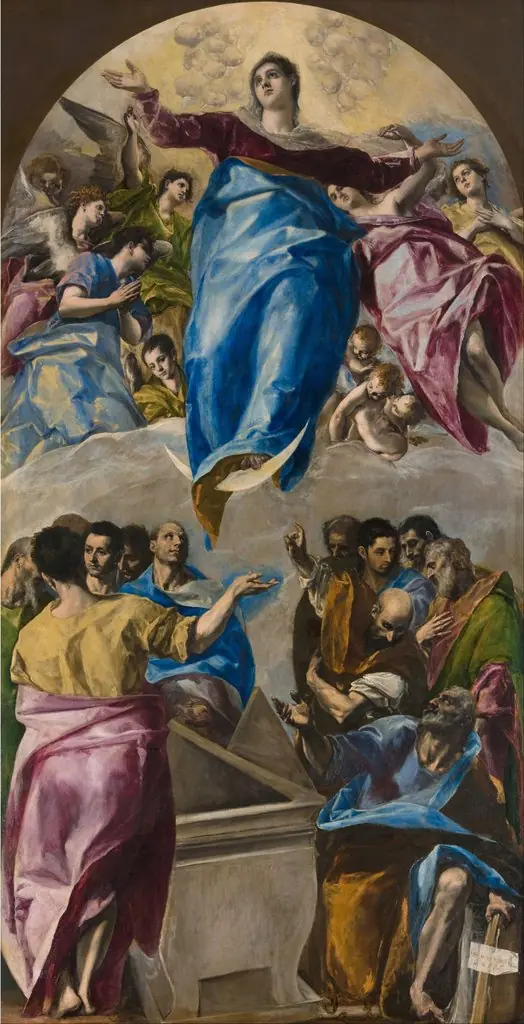
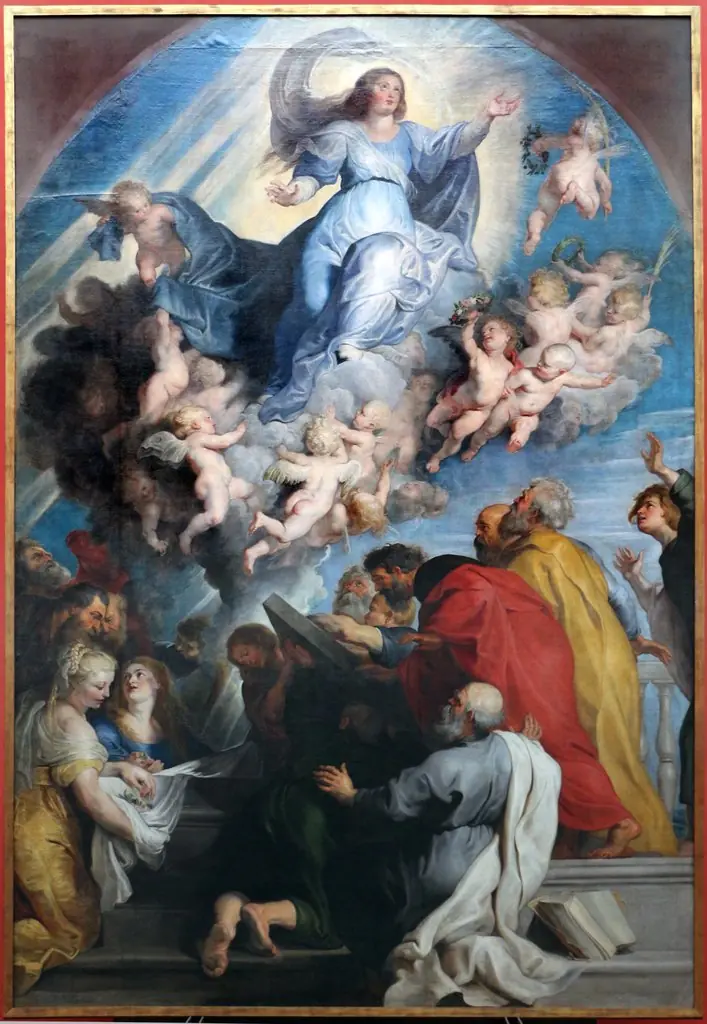
Juan Martín Cabezalero’s oil on canvas, dated 1640, depicts the biblical moment of the Virgin’s assumption. The work is part of the collection at the Museo del Prado. It presents a vertical composition in which a serene, robed figure ascends toward a luminous halo, while figures below react with varied expressions.
Subject & Meaning
The central figure represents the Virgin Mary rising to heaven, clothed in a white mantle beneath a dark cloak, symbolizing purity and divine transition. Below her, a grieving woman reaches upward, embodying human longing for the sacred, while an attendant angel hovers nearby, reinforcing the celestial nature of the event.
Technique & Style
Cabezalero employs pronounced chiaroscuro, contrasting deep blues, reds, and earth tones with a radiant light that outlines the ascending Virgin. The strong tonal differences model the faces and drapery, creating a sense of depth and emphasizing the spiritual elevation of the upper figure against the darker terrestrial realm.
History & Provenance
Created in the early seventeenth century, the painting entered the Spanish royal collection before being transferred to the Museo del Prado, where it remains on display. Its provenance reflects the typical trajectory of religious works commissioned for ecclesiastical settings and later incorporated into national museums.
Context
The work aligns with the Counter‑Reformation emphasis on Marian devotion, illustrating the theological doctrine of the Virgin’s bodily assumption. Its visual language echoes the dramatic lighting favored by Spanish Baroque painters, situating it within the broader artistic currents of mid‑17th‑century Spain.
Artist & collection