Artwork
Terme di Caracalla, Roma
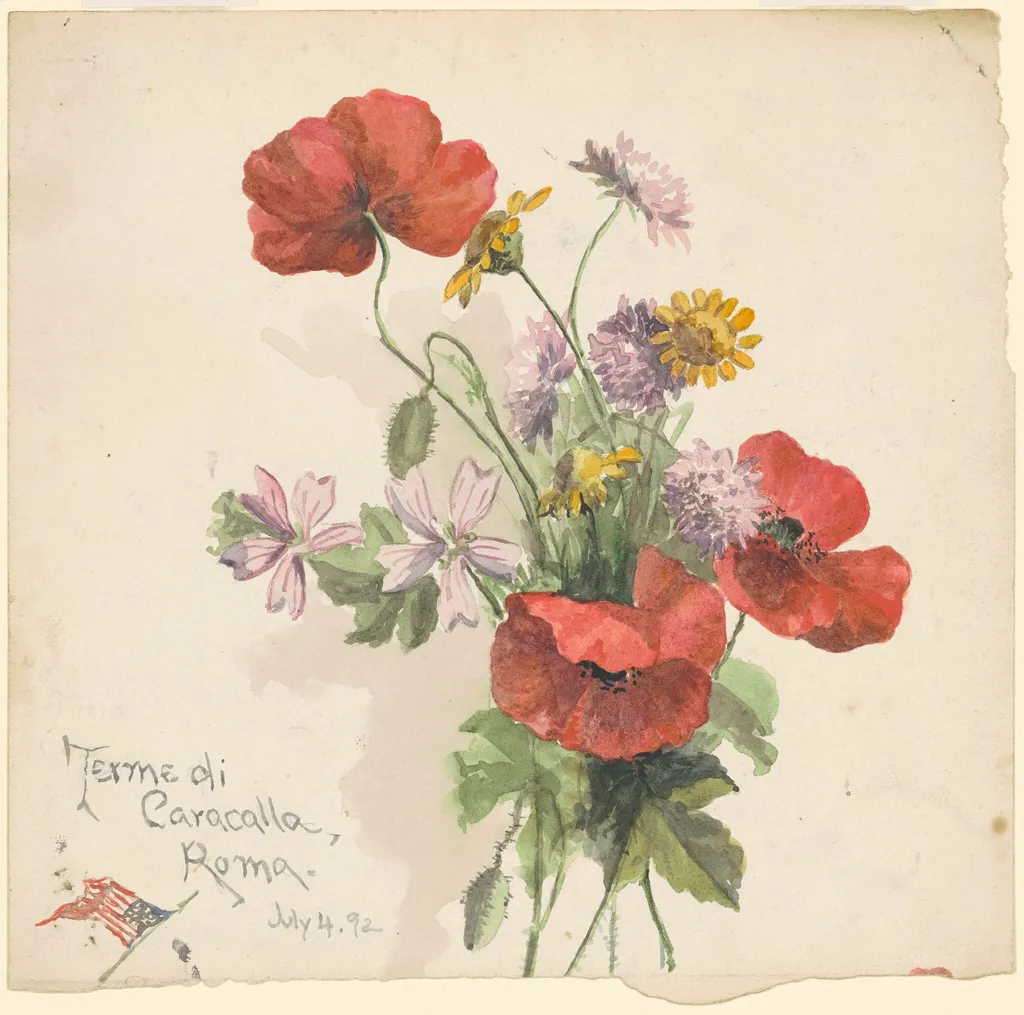
Terme di Caracalla, Roma is a graphite drawing by the Impressionist artist Marietta Minnigerode Andrews. It dates from 1892 and is held in the collection of the National Gallery of Art.
About this work
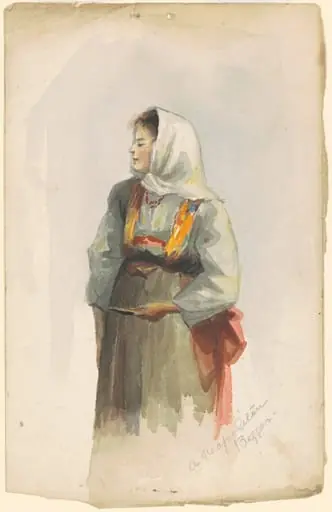
This painting shows a loose bouquet of flowers—bright red poppies, tiny purple blooms, and a few yellow ones—all painted in quick, soft brushstrokes.
This painting shows a loose bouquet of flowers—bright red poppies, tiny purple blooms, and a few yellow ones—all painted in quick, soft brushstrokes. The leaves are green but not too dark, and the stems look slightly tangled. In the corner, there’s a tiny sketch of an American flag and some handwritten words.
The artist signed it "Terme di Caracalla, Roma" and dated it July 4, 1892, which might mean she painted these flowers while visiting Rome. The colors feel fresh but not polished, like she worked fast.
If you like this style, look up watercolor to see how artists use thin layers of paint to create light and shadow.
Overview
Terme di Caracalla, Roma is a watercolor drawing created by Marietta Minnigerode Andrews in 1892. The work is executed in watercolor over graphite on wove paper.
Subject & Meaning
The drawing depicts a loose bouquet of flowers, including red poppies, purple and yellow blooms, and green leaves. A small American flag and handwritten text are visible in one corner, suggesting a connection to the artist's experience abroad.
Technique & Style
The flowers are rendered in quick, soft brushstrokes, with a focus on capturing freshness rather than precision. The watercolor technique allows for subtle layering and texture, contributing to the overall sense of spontaneity.
History & Provenance
The work is dated July 4, 1892, and titled after the Baths of Caracalla in Rome, indicating that it was created during the artist's visit to the city.
Artist & collection


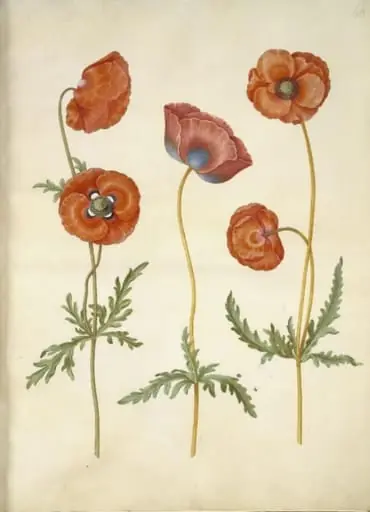 Papaver rhoeas (korn-valmue)
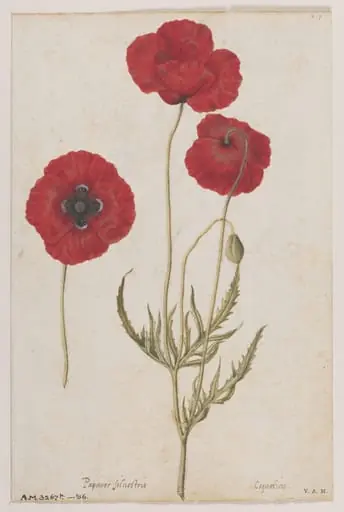 Corn poppies; larkspur
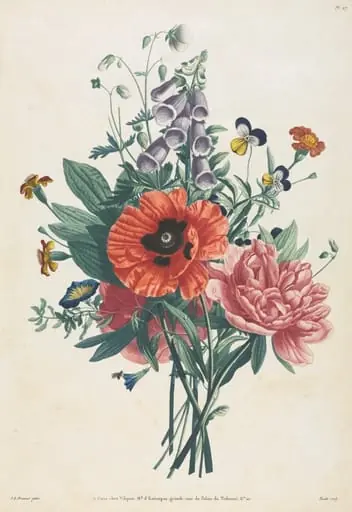 Collection of Flowers and Fruits Painted after Nature: Bouquet of Foxglove, Clematis, Pansy, Peony, Poppy, and Yellow Day Lily
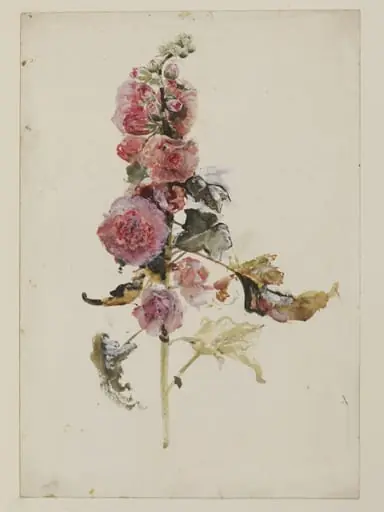 Hollyhocks
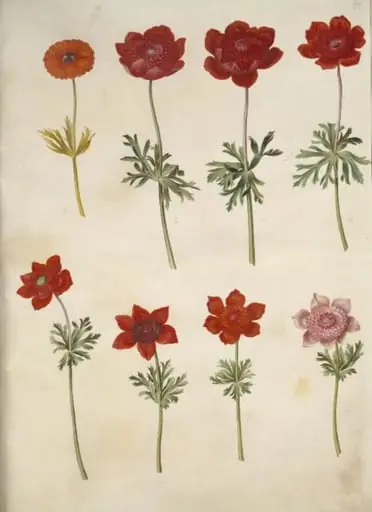 Anemone ×fulgens (skinnende anemone); Anemone coronaria (fransk anemone)
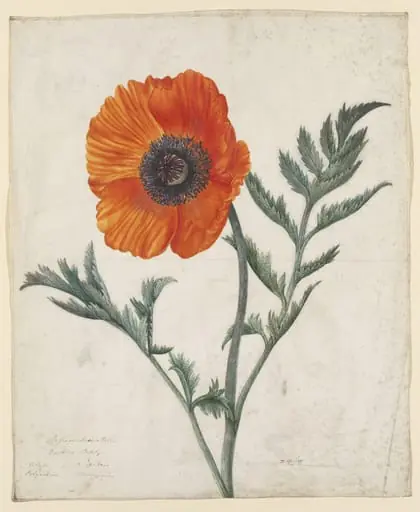 Untitled
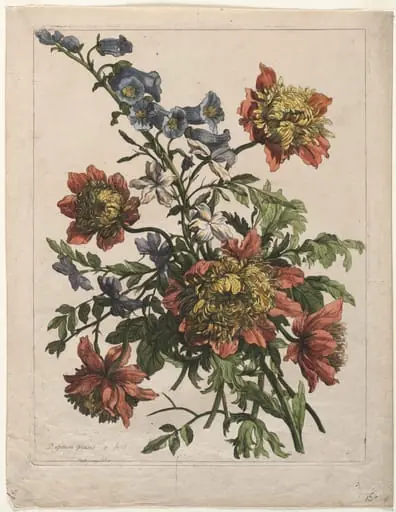 Bouquet
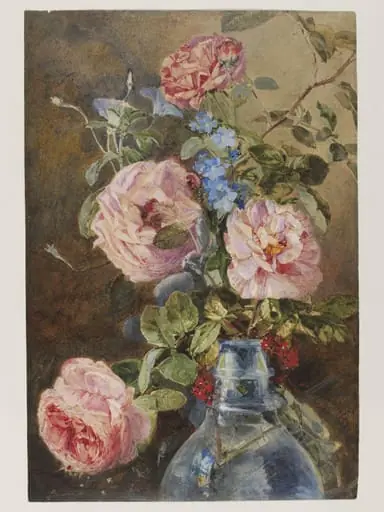 Roses, Convolvulus and Delphiniums in a Glass Vase
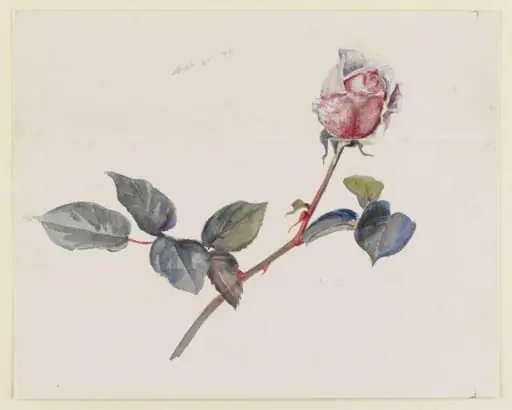 Pink rosebud with leaves
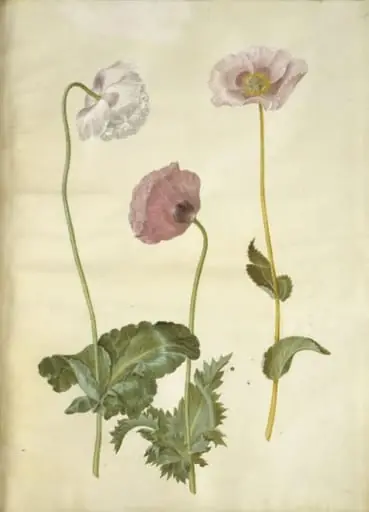 Papaver somniferum (opium-valmue)
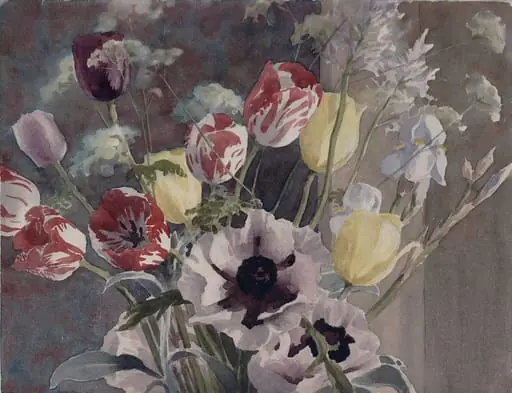 Spring Flowers