Artwork
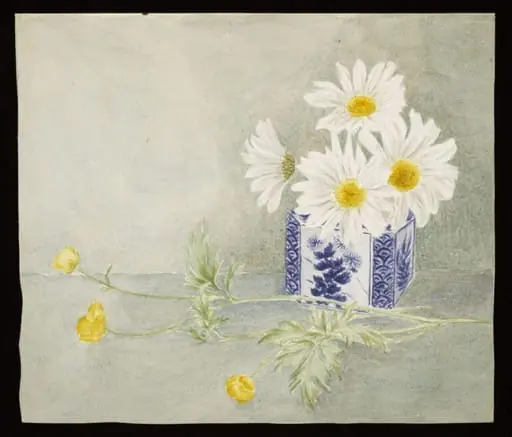
Daisies and Queen Ann's Lace
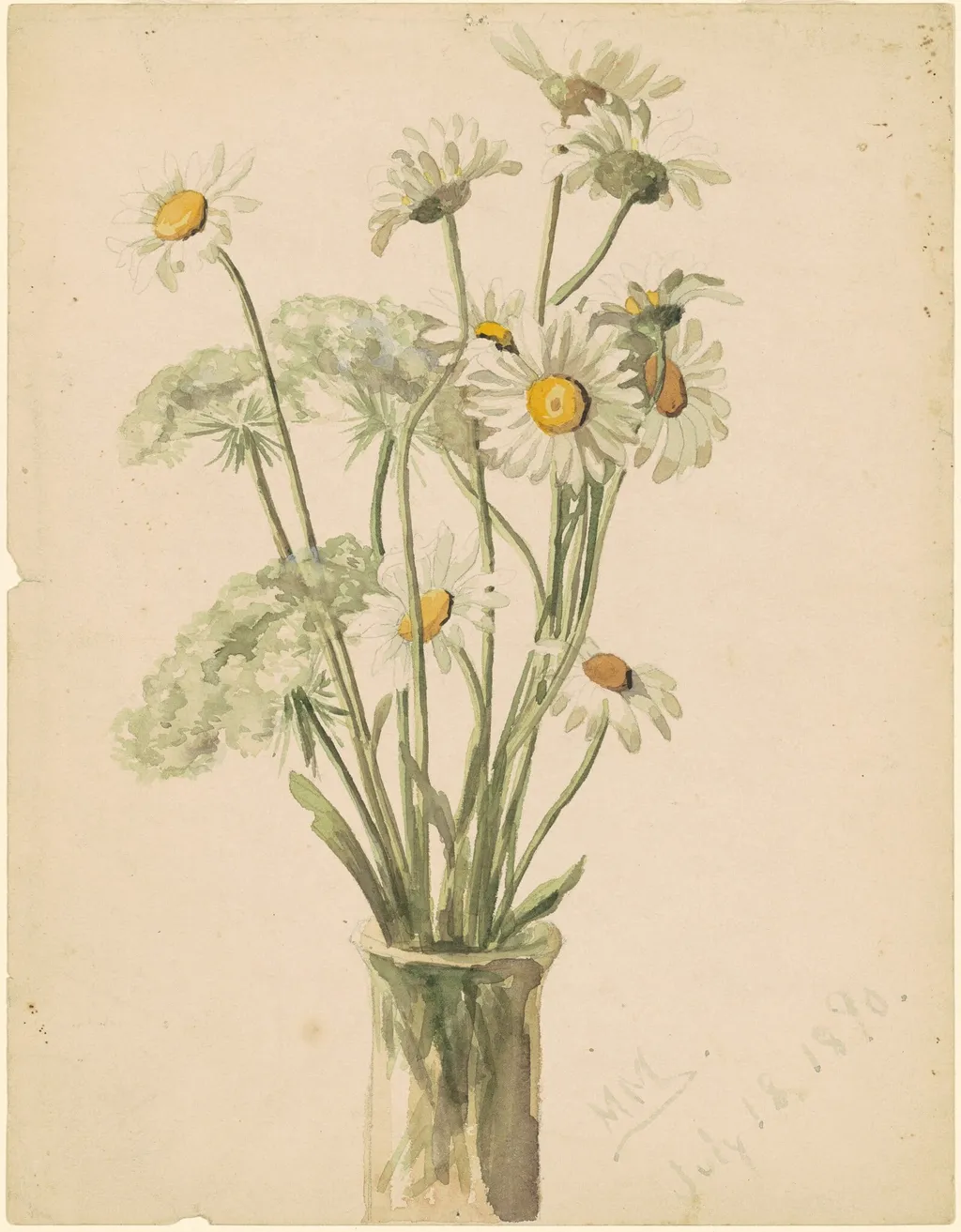
Daisies and Queen Ann's Lace is a graphite drawing by the Impressionist artist Marietta Minnigerode Andrews. It dates from 1890 and is held in the collection of the National Gallery of Art.
About this work
Overview
Rendered on wove paper, the work emphasizes natural form over ornamentation, capturing the quiet presence of common wildflowers.
Created in 1890, this watercolor and graphite drawing by Marietta Minnigerode Andrews depicts a modest arrangement of daisies and Queen Anne’s lace in a simple vase. Rendered on wove paper, the work emphasizes natural form over ornamentation, capturing the quiet presence of common wildflowers. The composition is uncluttered, with no decorative elements beyond the vessels and stems, focusing attention on the plants’ delicate structure and transient beauty.
Subject & Meaning
The subject consists of two native wildflowers—daisies with bright yellow centers and white petals, and Queen Anne’s lace with lacy white blooms—some fresh, others beginning to droop. This subtle contrast suggests the passage of time and the fragility of life. The choice of unassuming flowers, rather than cultivated blooms, reflects an appreciation for the ordinary, grounding the work in quiet observation rather than symbolic grandeur.
Technique & Style
Andrews employed loose, fluid watercolor brushwork to suggest the texture and movement of petals and leaves, allowing the paper’s white surface to contribute to the luminosity of the forms. Graphite outlines define stems and contours with restraint, enhancing precision without overpowering the transparency of the washes. Layered glazes create depth in the greens and subtle shifts in the whites, mimicking the way light passes through thin petals.
History & Provenance
The work dates from the late 19th century, a period when American artists increasingly turned to intimate natural subjects in watercolor. Andrews, active in Washington, D.C., was part of a circle of women artists who gained recognition through local exhibitions and societies. While specific ownership history is not widely documented, the piece remains within the tradition of domestic still-life studies favored by amateur and professional female artists of the era.
Context
In the 1890s, watercolor was gaining legitimacy as a medium for serious artistic expression in the United States, particularly among women who found access to formal academies limited. This work aligns with the broader trend of botanical illustration moving away from scientific precision toward expressive, atmospheric renderings. The emphasis on everyday flora reflects a cultural shift toward valuing personal observation and the beauty of the commonplace.
Legacy
Though not widely exhibited beyond regional circles during her lifetime, Andrews’ work contributes to the understated legacy of American women watercolorists who expanded the genre’s emotional range. This drawing exemplifies how quiet, unassuming subjects could convey sensitivity and technical skill, influencing later generations who sought to capture nature’s ephemeral qualities without theatricality.
Own this work as a print
Artist & collection


 Untitled
 Flowers
 Wild chrysanthemum (chrysanthemum indicum)
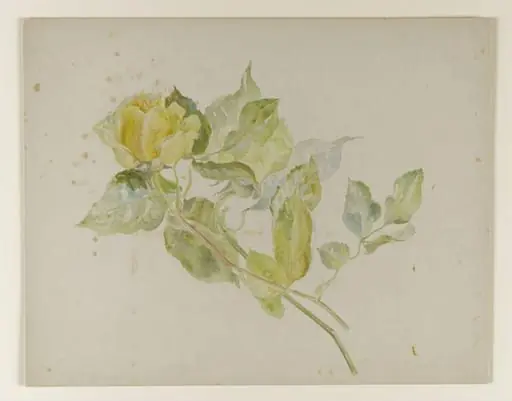 Yellow rose
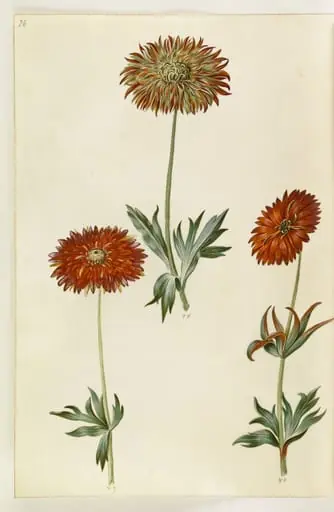 Anemone ×fulgens (skinnende anemone)
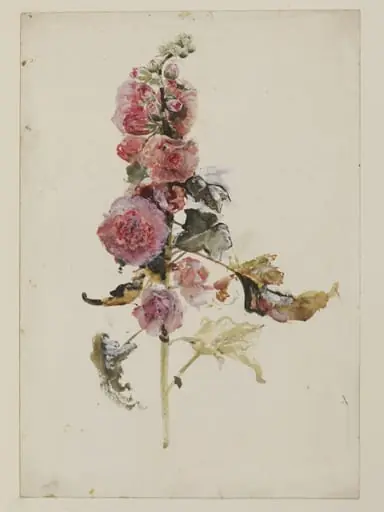 Hollyhocks
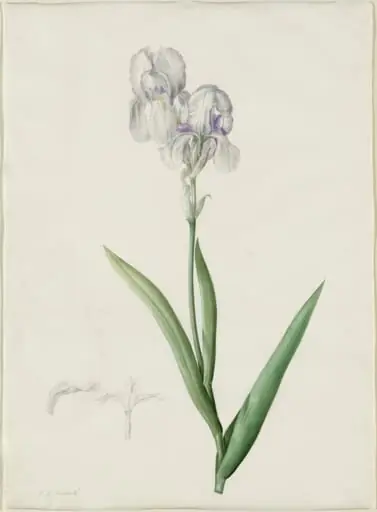 Iris Swertii
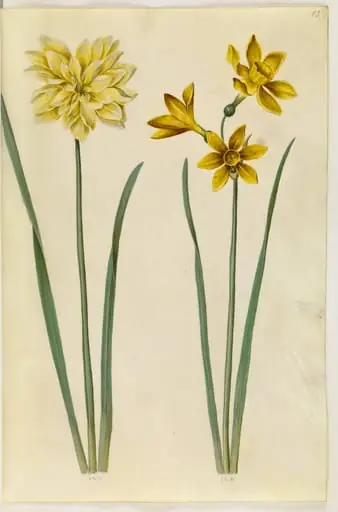 Narcissus pseudonarcissus (påskelilje); Narcissus tazetta aureus (guld-tazet)
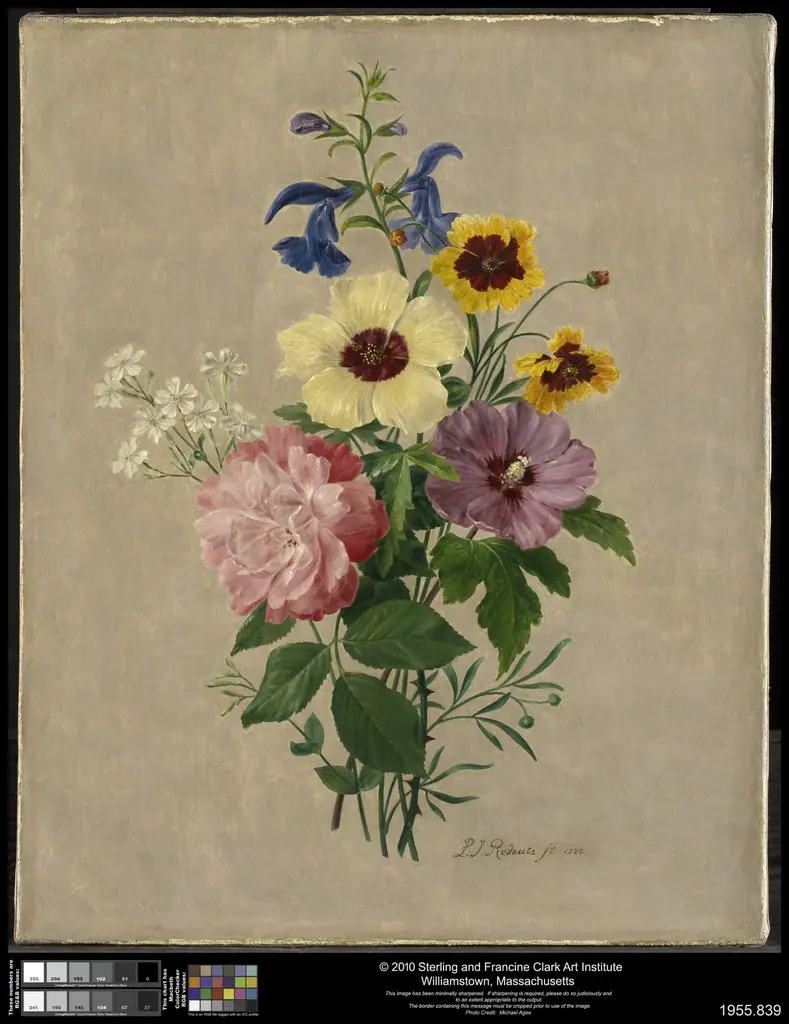 Flowers
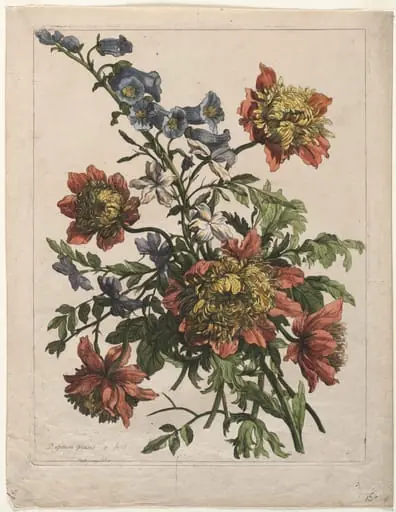 Bouquet
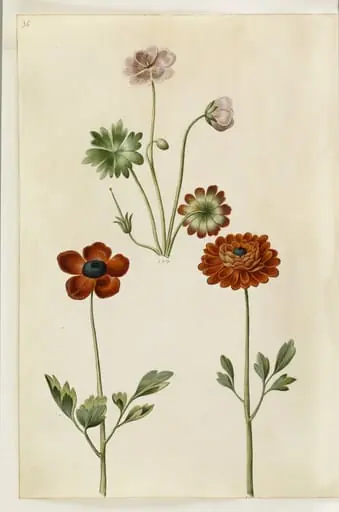 Geranium sanguineum striatum (stribet storkenæb); Ranunculus asiaticus (have-ranunkel)
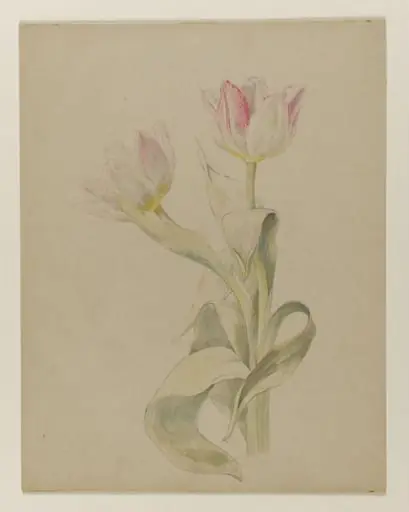 Pink and white tulips