Artwork
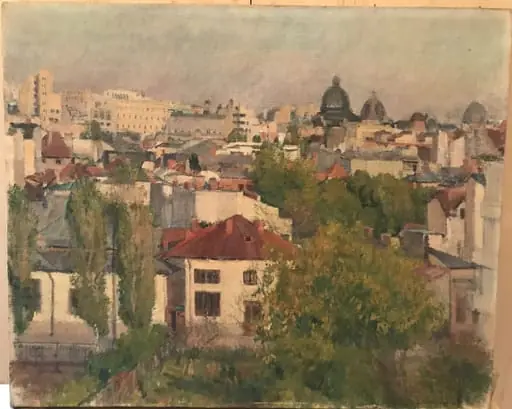
Peisaj din București
Peisaj din București is a drawing by Constantin Andronic. It dates from 1950 and is held in the collection of the Gavrila Simion Eco-Museum Research Institute Tulcea.
About this work
Overview
Peisaj din București is an undated work attributed to Constantin Andronic, likely produced around 1950.
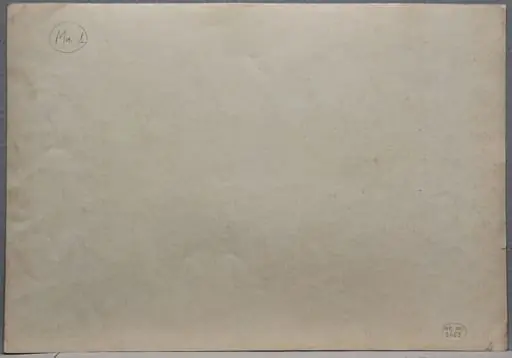
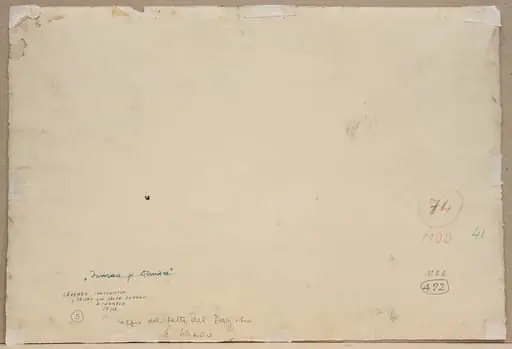
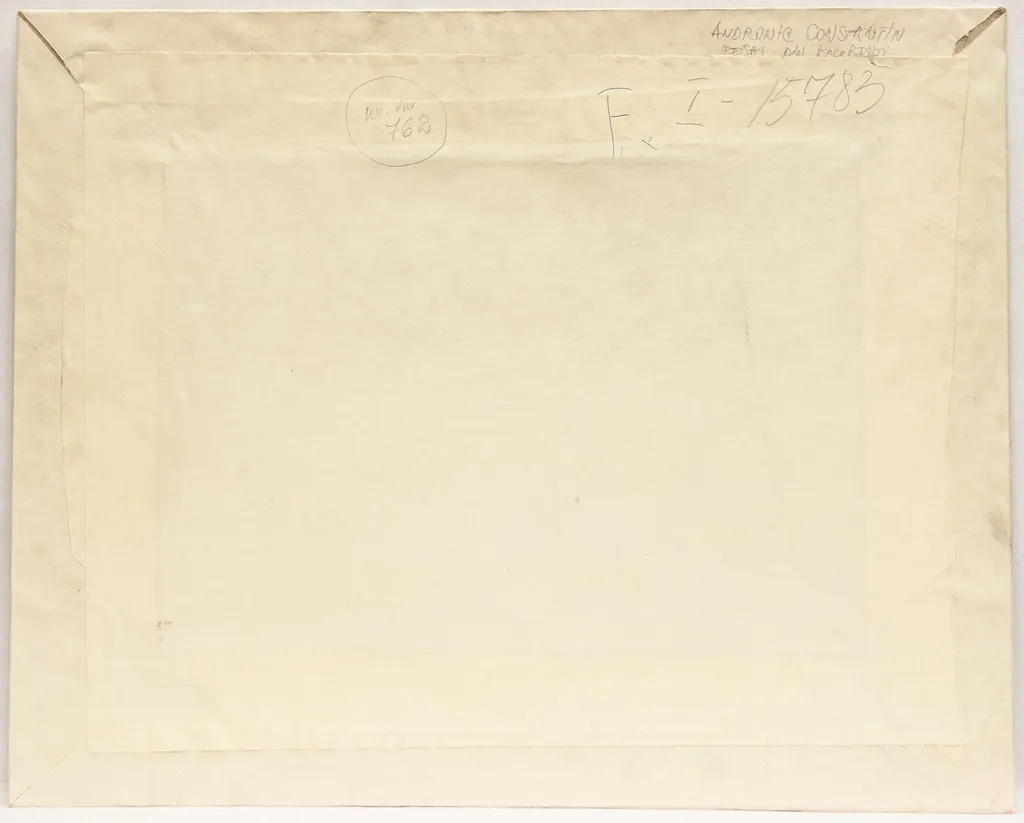
Peisaj din București is an undated work attributed to Constantin Andronic, likely produced around 1950. The piece consists of a plain sheet of aged, slightly yellowed paper with no visible drawing. Faint inscriptions in the corners identify the artist and include a circled numeral. The paper shows minor wear along the edges, suggesting handling over time. Its surface remains entirely unmarked, leaving its intended purpose ambiguous.
Subject & Meaning
The work bears no imagery, yet its title suggests a landscape of Bucharest. Without visual content, its subject exists only in potential or memory. The presence of the artist’s name and a numbered mark implies it may have been part of a series or a preparatory note. Its emptiness invites speculation about intention—whether it was abandoned, lost, or deliberately left blank as a conceptual gesture.
Technique & Style
No drawing technique is evident on the surface. The absence of lines, shading, or composition contrasts sharply with traditional landscape rendering. The only marks are handwritten annotations, executed in a casual, unadorned script. The material—thin, aged paper—hints at everyday studio use rather than formal presentation. The work’s style lies in its silence: a void where technique might have been.
History & Provenance
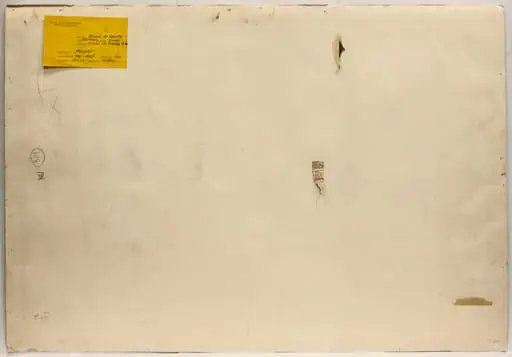
The piece resides in the collection of the Museum of Ethnography, though its acquisition history is undocumented. Its inclusion among ethnographic materials suggests it may have been collected as a cultural artifact rather than a finished artwork. The handwritten identifiers and worn edges imply it was handled by the artist or an associate, possibly during a period of transition or uncertainty in postwar Romania.
Context
Created in the early 1950s, the work emerged during a time of political and cultural constraint in Romania. Artists often navigated state-imposed aesthetic norms, sometimes producing private or incomplete works. This blank sheet may reflect the pressures of the era—where expression was limited, or where the act of creation itself became a quiet act of resistance or introspection.
Legacy
As an unmarked object preserved in a museum, Peisaj din București challenges conventional notions of artistic value. It endures not through visual impact but as a relic of process, absence, and quiet endurance. Its presence invites reflection on what is left unsaid, unfinished, or unrecorded in the history of Romanian art.
Artist & collection
Artist
Constantin Andronic carried a sketchbook everywhere, filling it with quick lines of Bucharest’s back alleys and half-remembered cafés.
Museum
Gavrila Simion Eco-Museum Research Institute Tulcea
Continue through works from the same source collection.