Artwork
Păpușarii
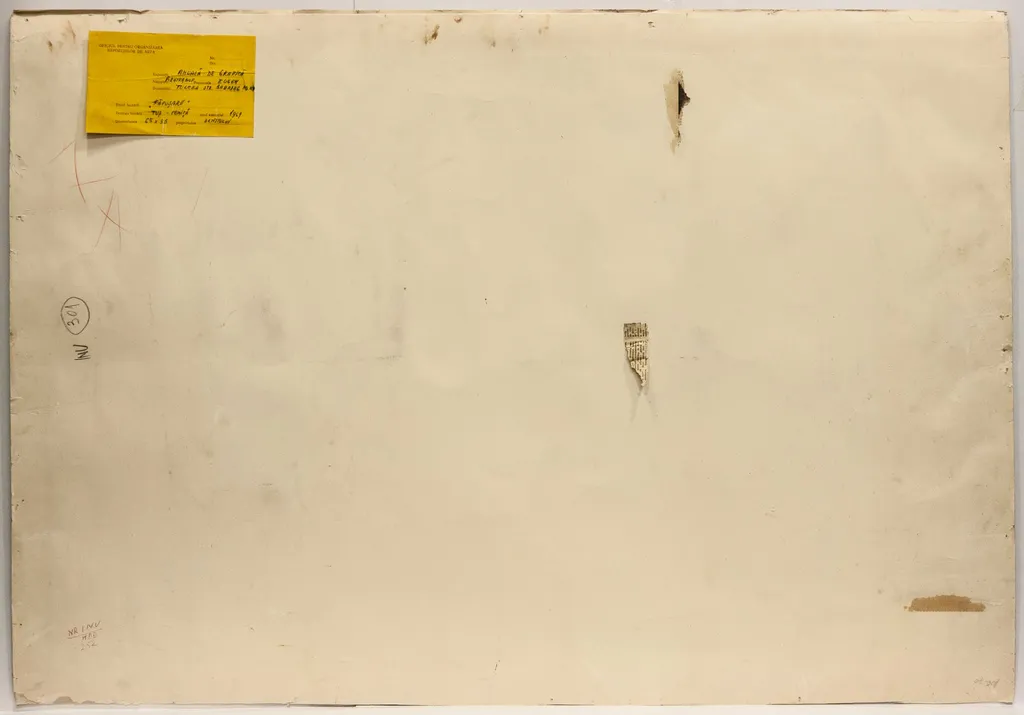
Păpușarii is a drawing by Eugen Bratfanof. It dates from 1950 and is held in the collection of the Gavrila Simion Eco-Museum Research Institute Tulcea.
About this work
Overview
Păpușarii is a modest sheet of light beige paper, dated around 1950, attributed to Romanian artist Eugen Bratfanof.
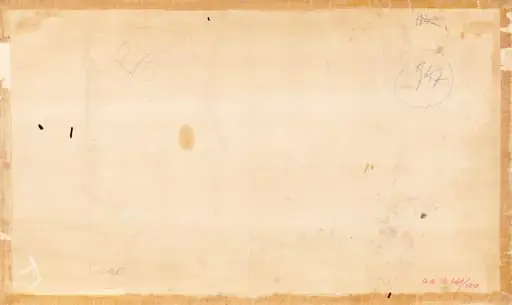
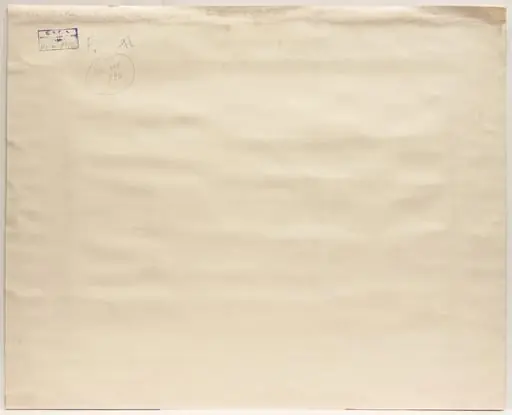
Păpușarii is a modest sheet of light beige paper, dated around 1950, attributed to Romanian artist Eugen Bratfanof. It resides in the collection of the Museum of Ethnography. The surface bears only faint traces—minor tears, smudges, and a small, detached scrap of paper at its center. A faded yellow label in the upper left corner holds illegible text. No figurative or graphic elements are present beyond these physical imperfections.
Subject & Meaning
The work’s title, meaning 'The Puppeteers,' suggests a thematic link to performance or control, yet the surface holds no imagery. Its emptiness may imply absence, loss, or the erasure of a prior composition. The lone paper scrap, possibly a remnant of an earlier sketch, hints at a process abandoned or obscured. The disconnect between title and visual content invites reflection on memory and the fragility of artistic intent.
Technique & Style
No deliberate drawing techniques such as cross-hatching or shading are visible. The work’s visual language is defined by accident and time: pencil smudges along the margins, slight creases, and the physical degradation of the paper itself. The absence of intentional mark-making shifts focus from artistic technique to the object’s material history, treating wear and tear as part of its formal character.
History & Provenance
The piece entered the Museum of Ethnography’s collection under Bratfanof’s name, though no documentation details its creation or acquisition. Its condition suggests it was handled, stored, or displayed without preservation care. The taped label and detached scrap imply it was once part of a larger archive or working portfolio, possibly discarded or repurposed before being cataloged as a standalone item.
Context
Created in postwar Romania, the work coincides with a period of cultural reorganization under state oversight. Artists often navigated restricted expression, and many works were lost, destroyed, or left incomplete. Păpușarii’s minimalism may reflect the constraints of the era—where silence, omission, or material decay became unintended carriers of meaning.
Legacy
As an artifact of absence, Păpușarii resists conventional interpretation. It functions less as a drawing and more as a relic of process and impermanence. Its presence in a museum collection underscores how institutional frameworks can assign significance to the unmarked, transforming neglect into historical testimony.
Artist & collection
Artist
Eugen Bratfanof created sculptures like Pescari, drawings such as Păpușarii, and prints including Io, Mircea voievod and Mihai Viteazul.
Museum
Gavrila Simion Eco-Museum Research Institute Tulcea
Continue through works from the same source collection.
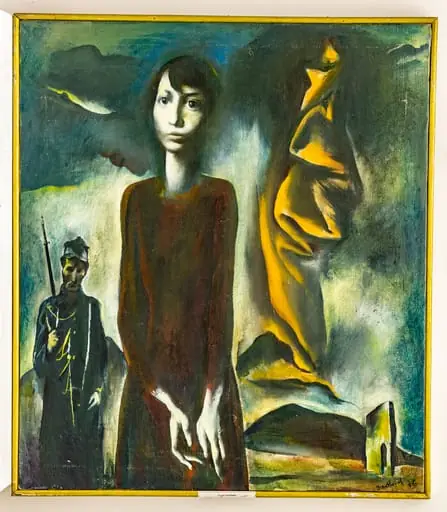
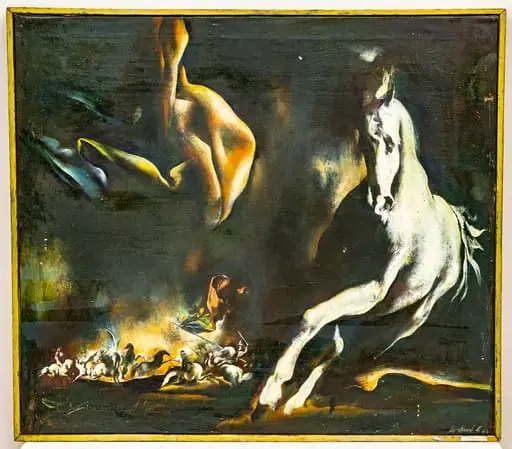
 Convoi spre ghilotină
 Prin ceață
 Ibricul roșu
 Conglomerat chimic
 Cortegiu
 Peisaj (cu stradă)
 Octombrie în deltă
 Rodul pământului
 Tablou, ulei pe pânză, „Omagiu de ziua femeii”. În centrul tabloului este reprezentat un coș cu flori de toarta căruia este legat un mărțișor. În partea de sus un portativ cu note pe care stau trei rândunele și inscripția ”De ziua femeii”. În partea stângă jos semnătura autorului G.V. Mihăilă, datat 1979. Oferit Elenei Ceaușescu de autor, 1979
 Pe marginea lacului