Artwork
Peisaj-Casă spre Dobrina
Peisaj-Casă spre Dobrina is a print by Viorel Huși. It dates from 1950 and is held in the collection of the Gavrila Simion Eco-Museum Research Institute Tulcea.
About this work
Overview
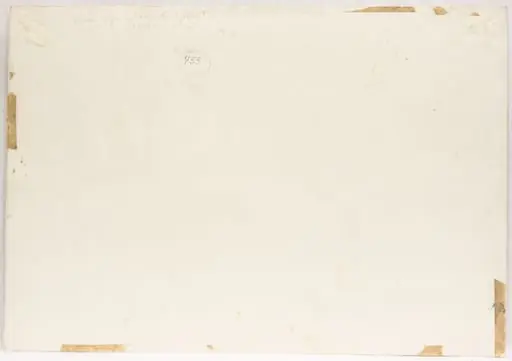
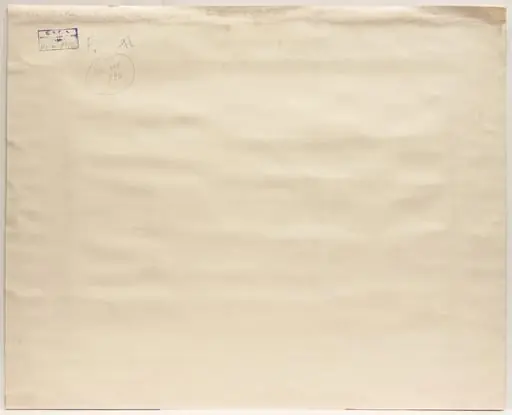
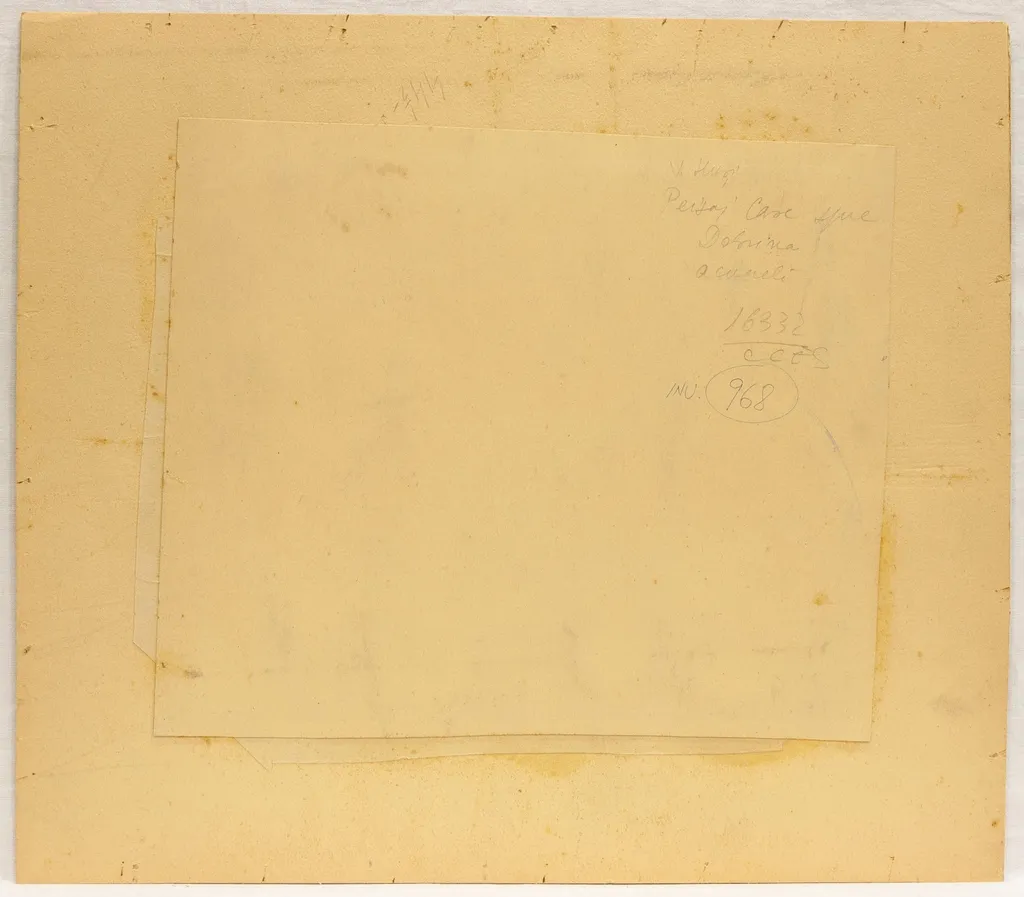
Peisaj-Casă spre Dobrina, circa 1950, is a work by Viorel Huși housed at the Museum of Ethnography. The piece presents as a faded, light tan sheet of paper with a central rectangular void, once presumably occupied by an image.
Subject & Meaning
The empty space suggests the intended subject was a house, potentially implying a scene of domesticity or rural life, though the absence of the image leaves interpretation speculative.
Technique & Style
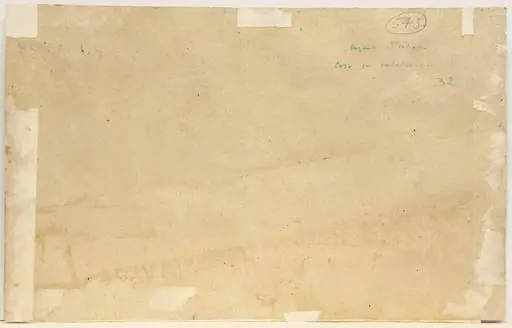
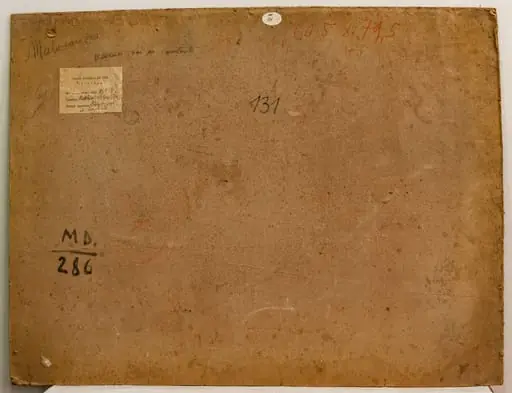
The work's current state reveals more about its archival or collection history than its artistic technique. Faint handwriting and inventory numbers indicate its past role in a catalog or collection, possibly related to printmaking processes like chiaroscuro.
History & Provenance
Created around 1950 by Viorel Huși, the piece is now part of the Museum of Ethnography's collection. Its condition implies a history of use, likely as part of a print catalog or archive.
Context
While the artwork itself is absent, its structure and markings provide insight into mid-20th-century practices in cataloging and possibly print production, hinting at a broader artistic or archival context.
Legacy
The legacy of Peisaj-Casă spre Dobrina lies more in its historical and archival significance than in its current visual state, offering a glimpse into the management and curation practices of its time.
Artist & collection
Artist
Viorel Huși painted the quiet corners of Romania where houses lean into hills like old friends.
Museum
Gavrila Simion Eco-Museum Research Institute Tulcea
Continue through works from the same source collection.