Artwork
Casting the Money Changers out of the Temple
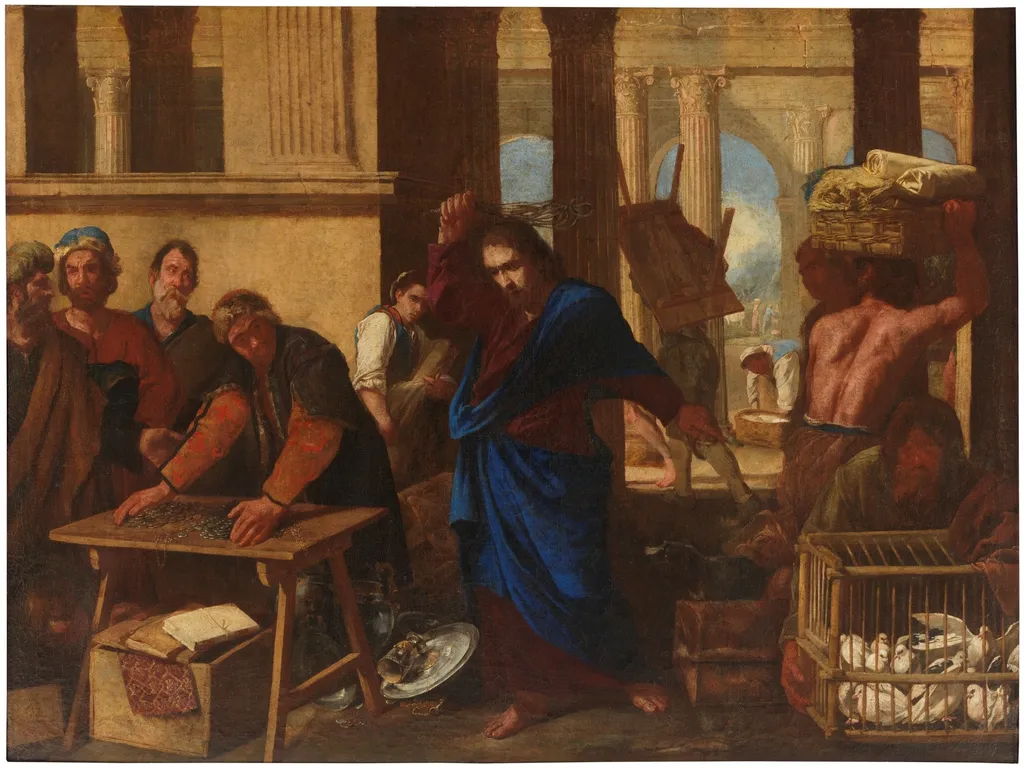
Casting the Money Changers out of the Temple is an oil painting by the Early Baroque Italian artist Aniello Falcone. It dates from 1630 and is held in the collection of the Museo del Prado.
About this work
Overview
Aniello Falcone’s 1630 oil painting *Casting the Money Changers out of the Temple* captures a bustling interior scene in which a group of figures confront a chaotic marketplace within a sacred space. The composition centers on a man in a blue robe gesturing upward, while surrounding onlookers display shock, anger, and agitation. The work resides in the Museo del Prado’s collection.
Subject & Meaning
The canvas interprets the biblical episode in which Jesus expels merchants and money changers from the temple, a narrative of religious purification and moral authority. Falcone juxtaposes everyday objects—coins, plates, a book, and a basket of birds—with the fervent gestures of the participants, underscoring the tension between commerce and sanctity.
Technique & Style
Executed in the early Italian Baroque idiom, the painting employs pronounced chiaroscuro, with stark contrasts of light and shadow that model the figures and heighten the drama. Falcone’s brushwork delineates textures—from the gleam of metal coins to the softness of feathered birds—while the spatial depth is achieved through a receding architectural doorway that frames a columned exterior.
History & Provenance
Although Falcone is chiefly remembered for his battle scenes, this religious work demonstrates his versatility during his Neapolitan period. Created in 1630, the painting entered the Museo del Prado’s holdings at an unspecified later date, where it remains part of the museum’s Baroque collection, offering insight into the artist’s broader oeuvre.
Own this work as a print
Artist & collection
Artist
Aniello Falcone or Ancillo Falcone (15 November 1600 – 1656) was an Italian Baroque painter, active in Naples and noted for his painted depictions of battle scenes.

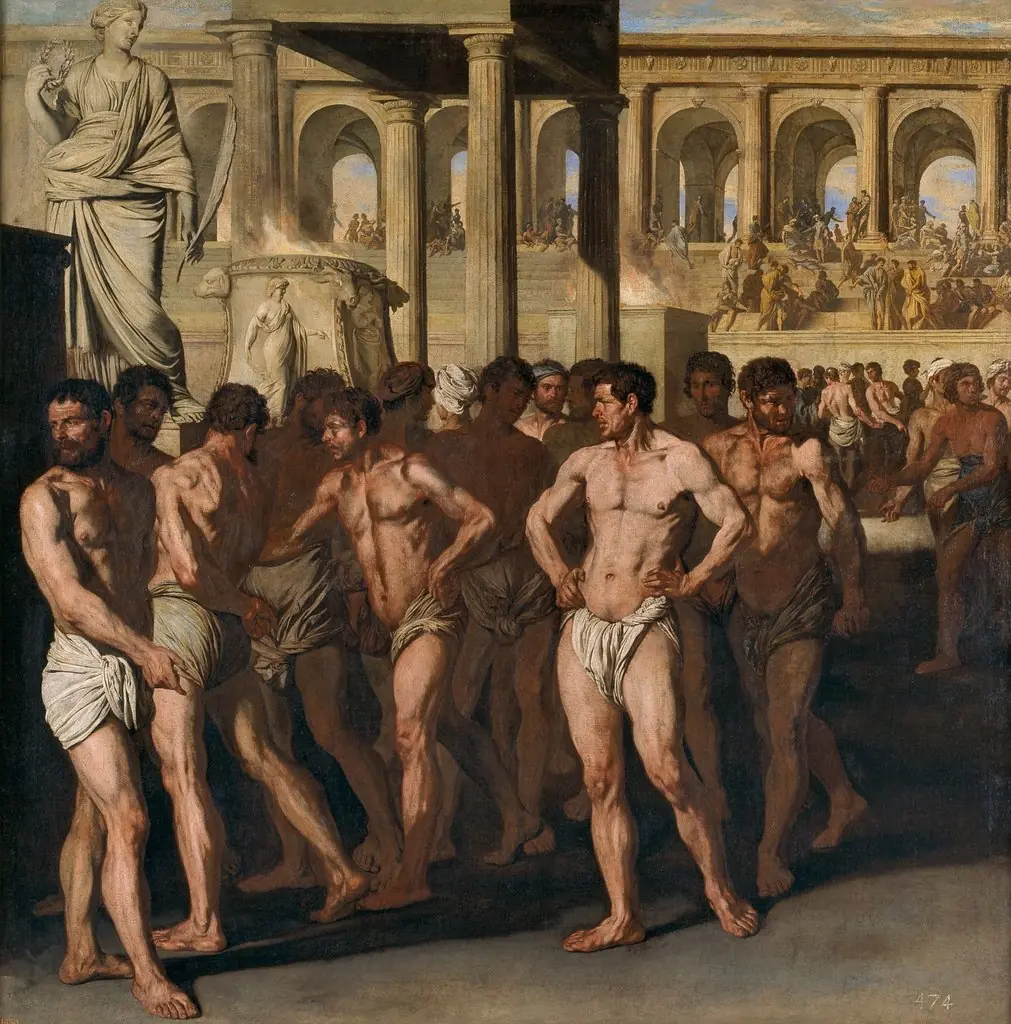
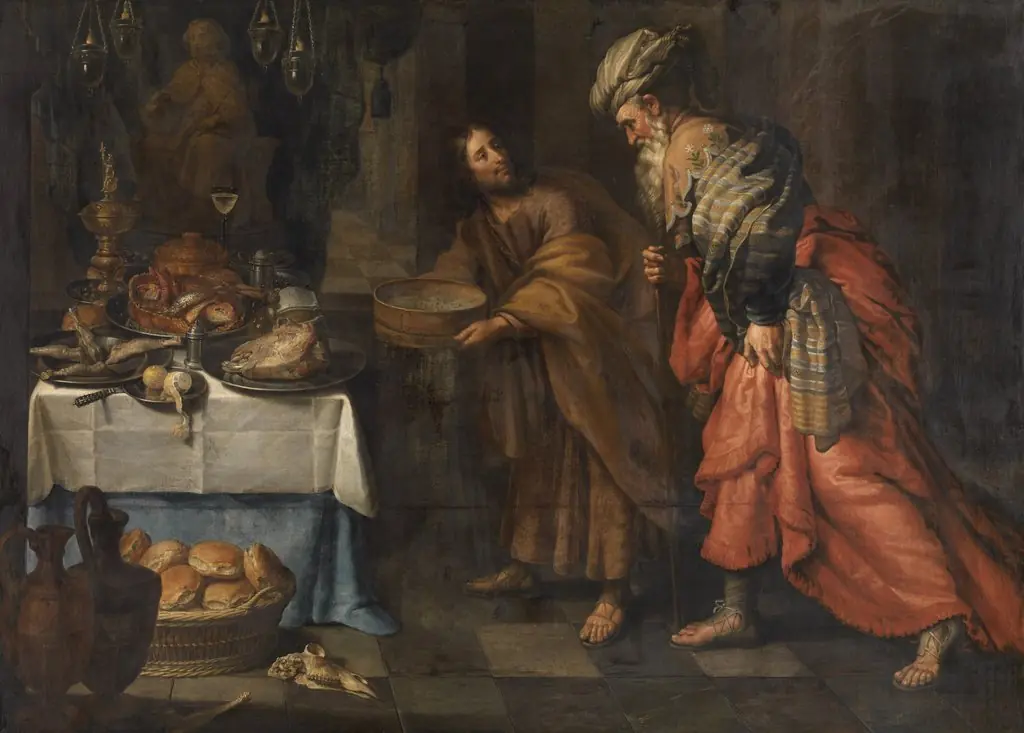 Daniël décrouvant l'imposture des prêtres de Baäl
 Christ Washing the Feet of His Disciples
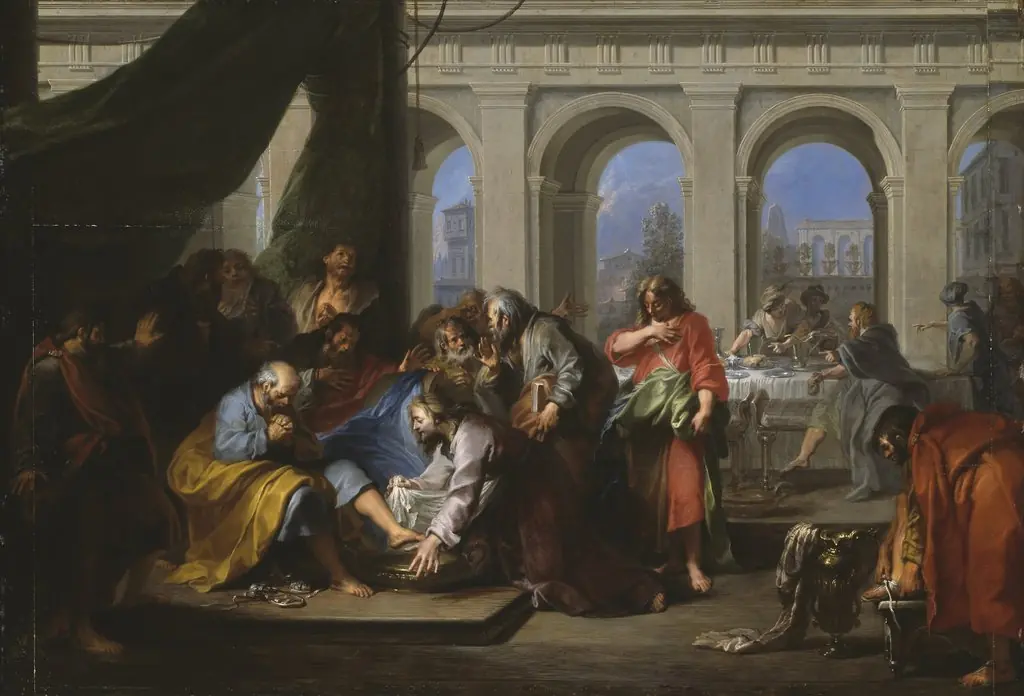 Christ Washing the Feet of His Disciples
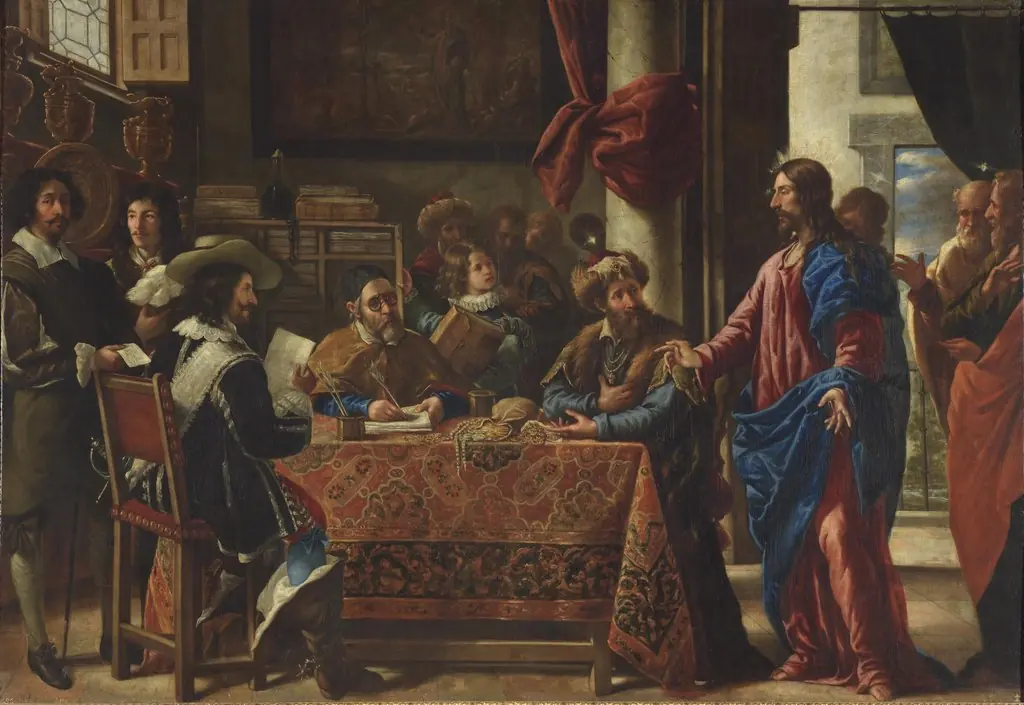 The Calling of Saint Matthew
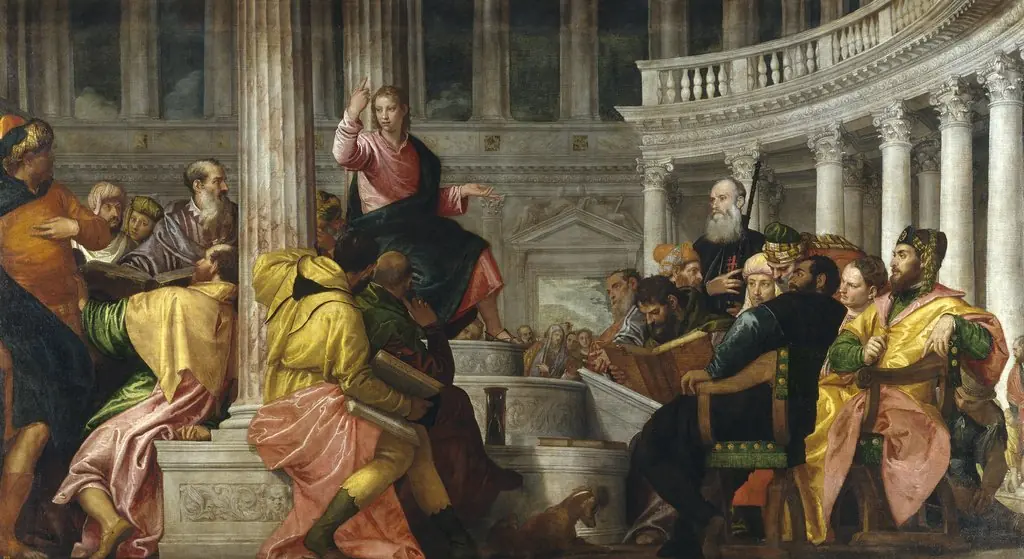 Christ Among the Doctors
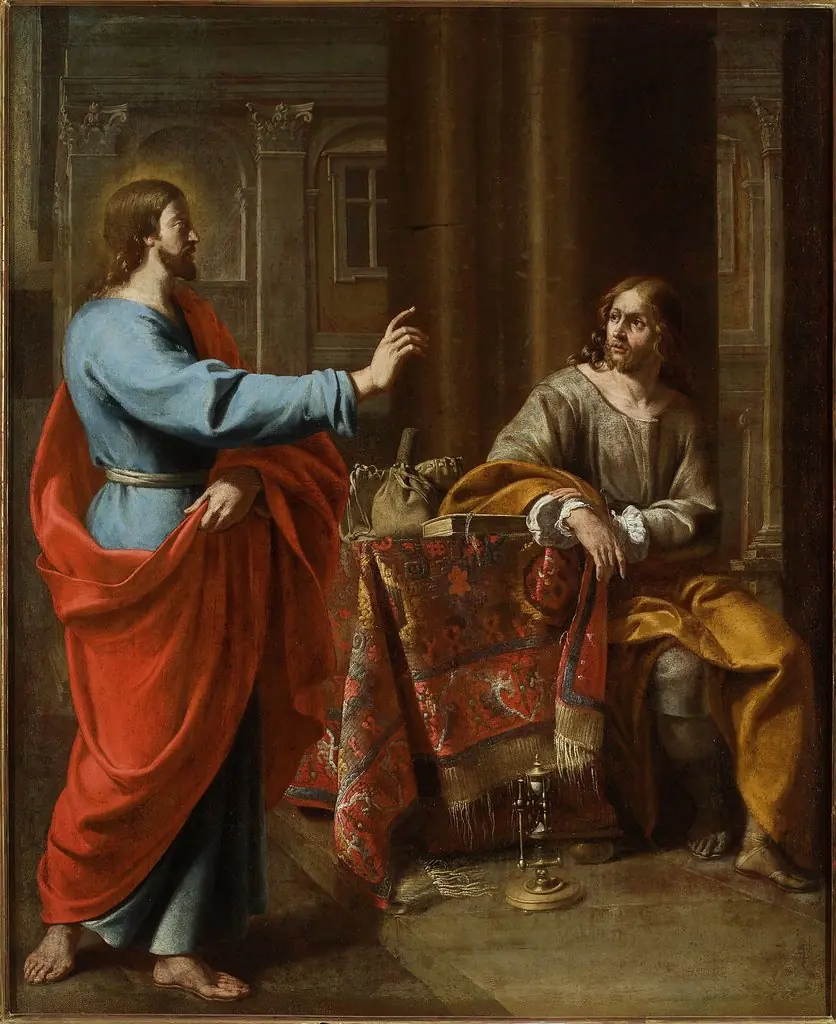 Calling of St. Matthew (Matthew 9:9, Mark 2:14, Luke 5:27-28)
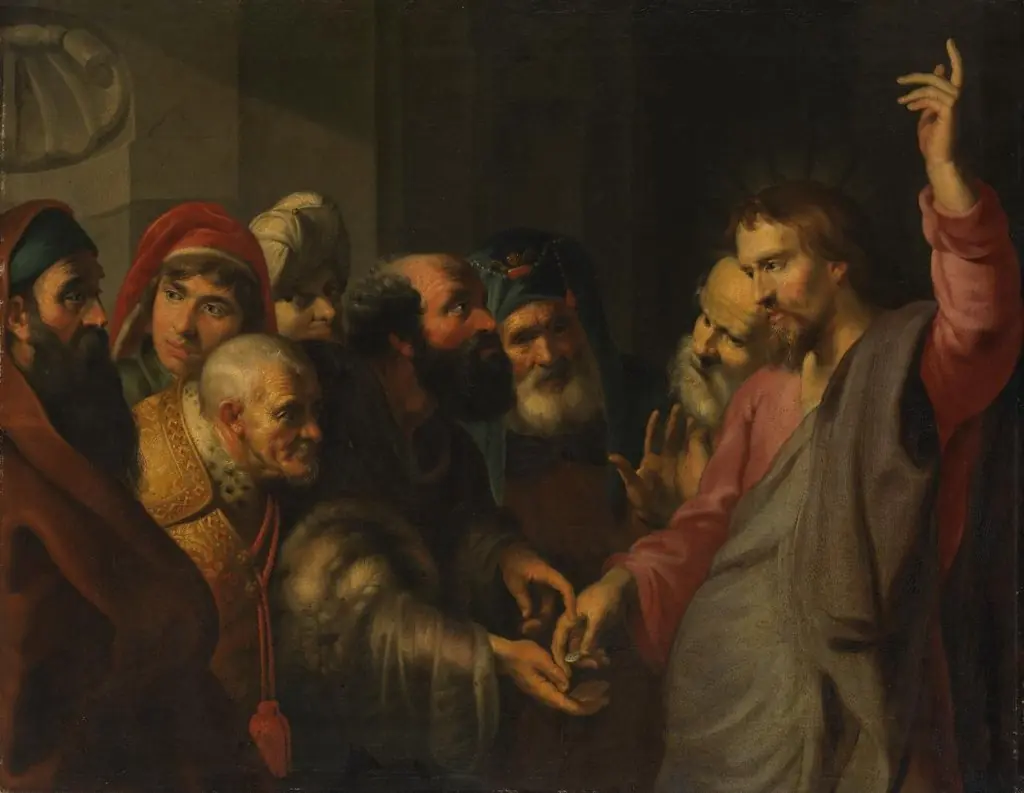 Der Zinsgroschen. Nach Peter Paul Rubens
 Christ and the woman of Canaan