Artwork
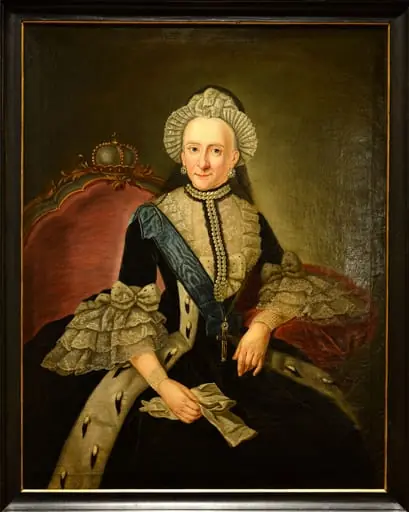
Therese Natalie (1728-1778) von Braunschweig - Wolfenbüttel als Äbtissin von Gandersheim, Kniestück
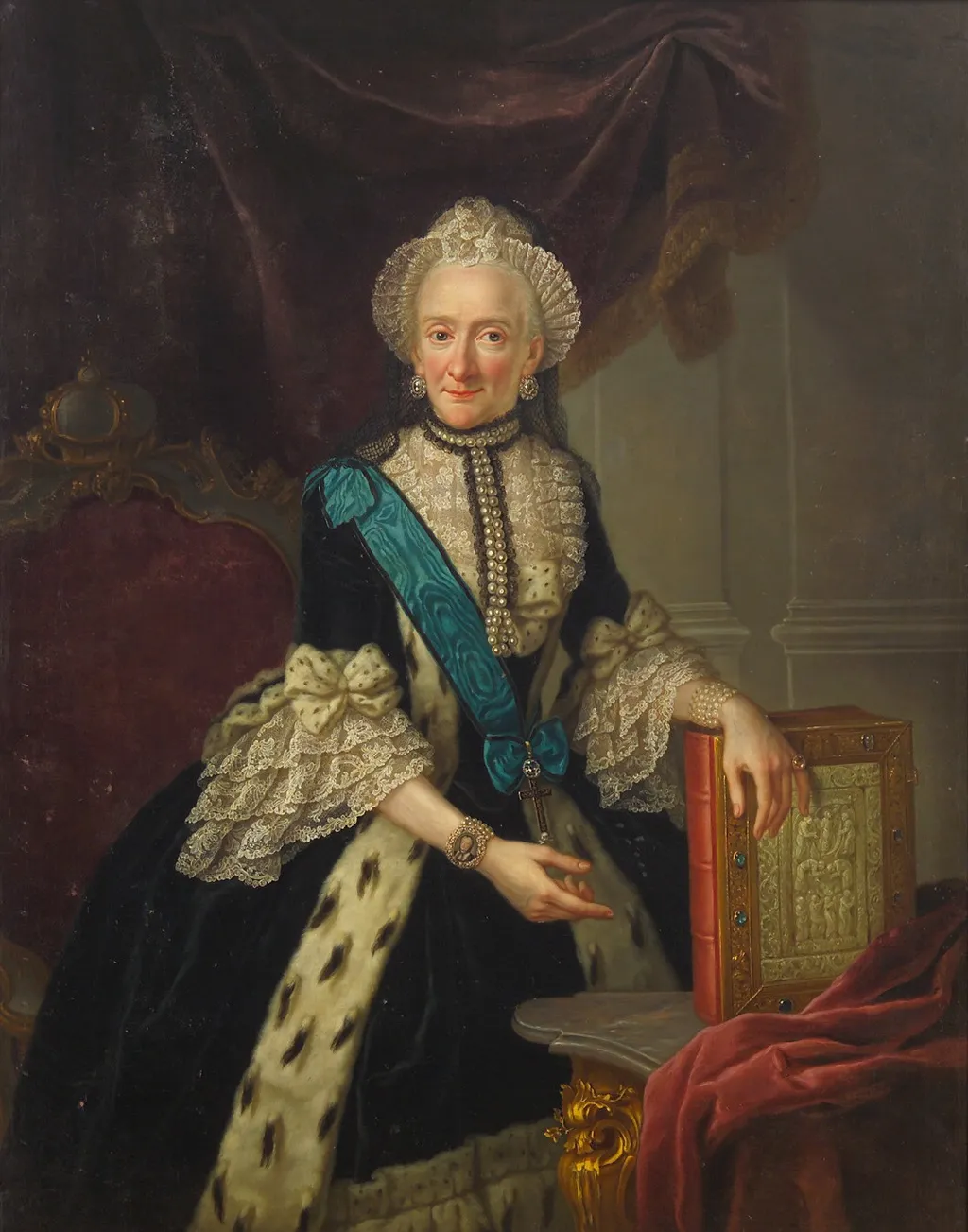
Therese Natalie (1728-1778) von Braunschweig - Wolfenbüttel als Äbtissin von Gandersheim, Kniestück is an oil painting by the Rococo painting artist Anna Rosina de Gasc. It dates from 1773 and is held in the collection of the Kunsthistorisches Museum.
About this work
Overview
The work is an oil portrait executed in 1773 by the German painter Anna Rosina de Gasc. It depicts Therese Natalie, a member of the Braunschweig‑Wolfenbüttel family who served as Abbess of Gandersheim, rendered in a formal kneeling pose typical of ecclesiastical portraiture. The canvas is part of the collection of the Kunsthistorisches Museum in Vienna.
Subject & Meaning
Therese Natalie (1728–1778) is shown in the vestments of her abbacy, emphasizing her religious authority and noble lineage. The kneeling stance, combined with the inclusion of a fan and a carved box, conveys both piety and the refined courtly culture of an 18th‑century German abbess. The portrait functions as a visual record of her status within the Holy Roman Empire’s ecclesiastical hierarchy.
Technique & Style
De Gasc employs a restrained chiaroscuro, allowing a soft, diffused light to illuminate the sitter’s face, pearls, and the intricate lace collar.
De Gasc employs a restrained chiaroscuro, allowing a soft, diffused light to illuminate the sitter’s face, pearls, and the intricate lace collar. The darkened backdrop, hinted at by draped fabric and a column, creates depth and focuses attention on the richly textured garments—a deep blue and gold jacket contrasted with a white powdered wig. Fine brushwork renders the sheen of silk and the delicacy of lace.
History & Provenance
Created shortly after Therese Natalie’s appointment as abbess, the portrait remained in the family’s holdings before entering the Kunsthistorisches Museum’s collection, where it is catalogued under the reference Q28020532. Its acquisition reflects the museum’s broader effort to represent German portraiture of the late Baroque period, preserving the work as an example of female artistic production in the 18th century.
Artist & collection

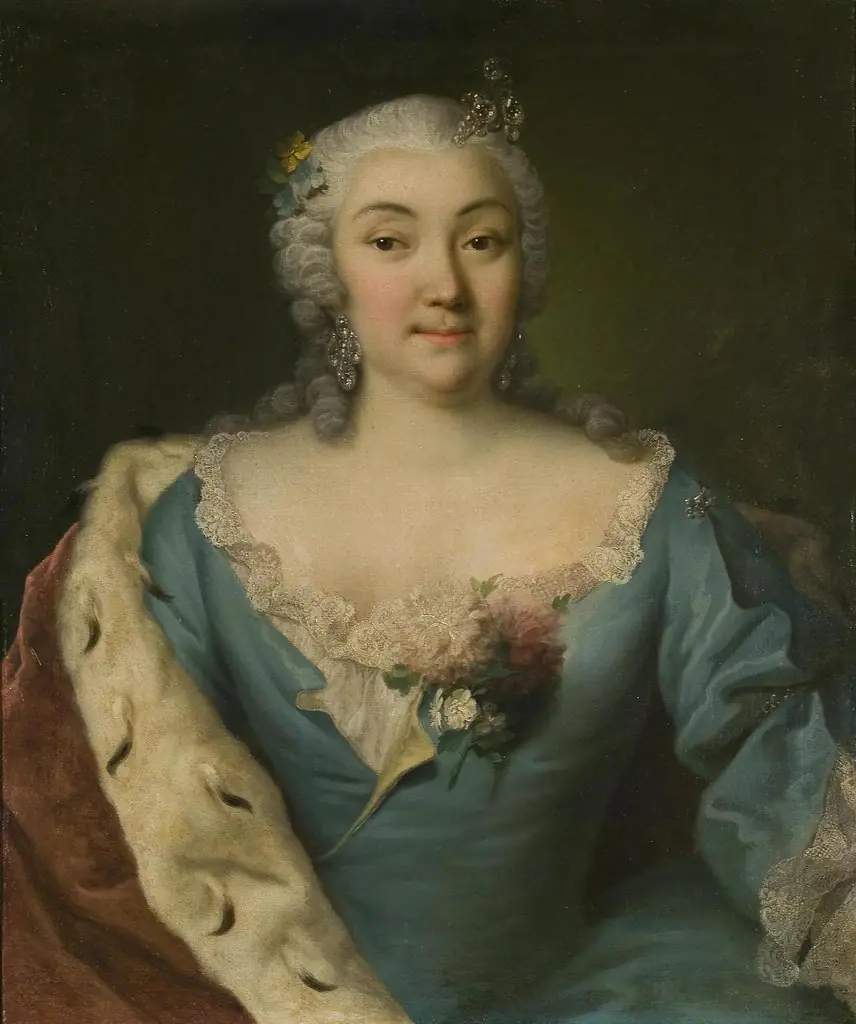 Portrait of A.I. Kurakina
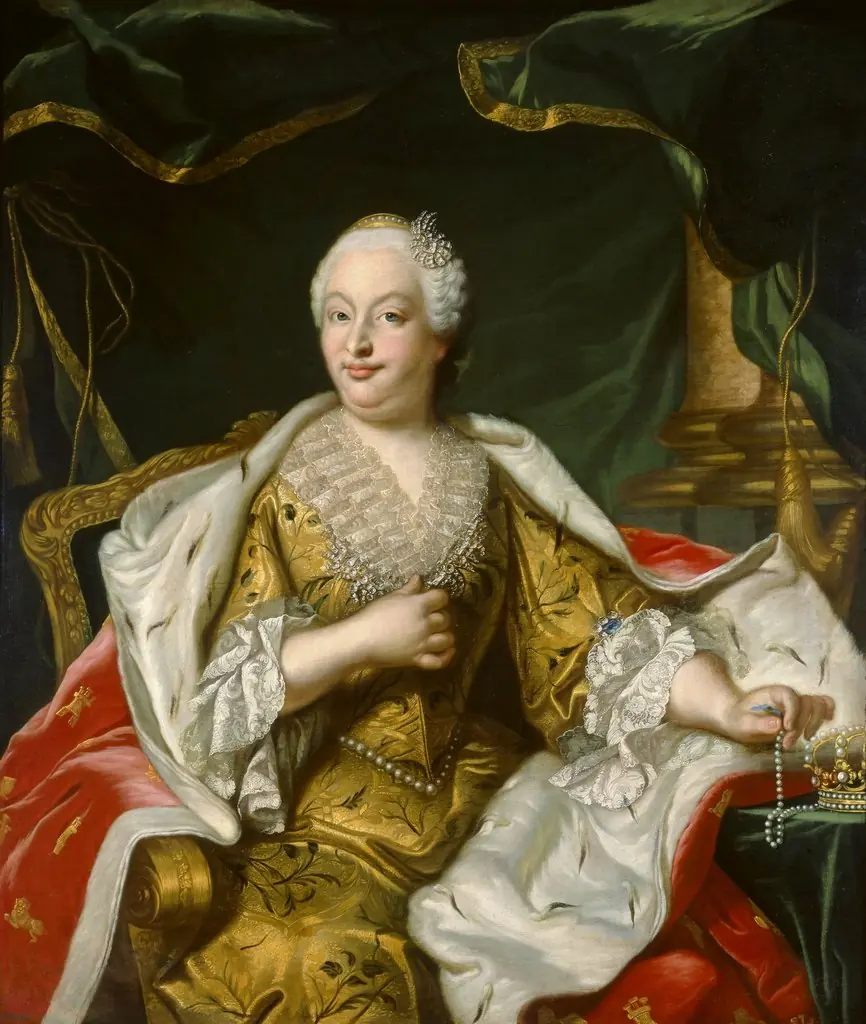 Bárbara de Braganza reina de España
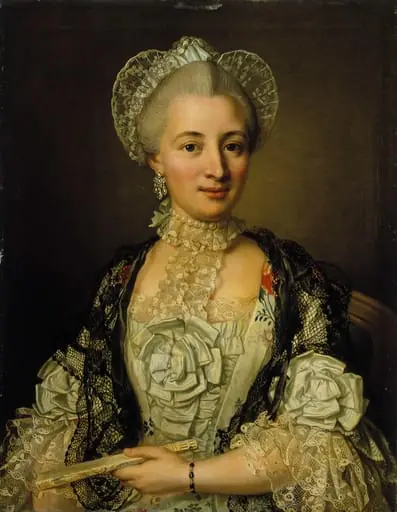 Naisen muotokuva
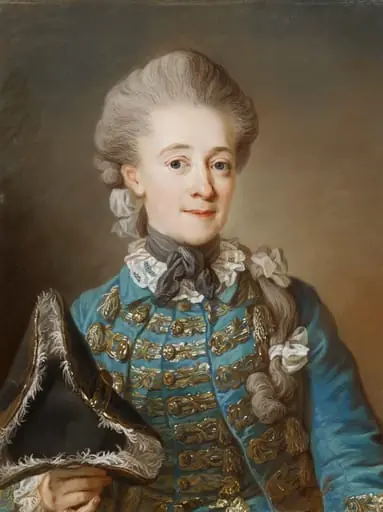 Vapaaherratar Ulrica Fredrika Cedercreutz
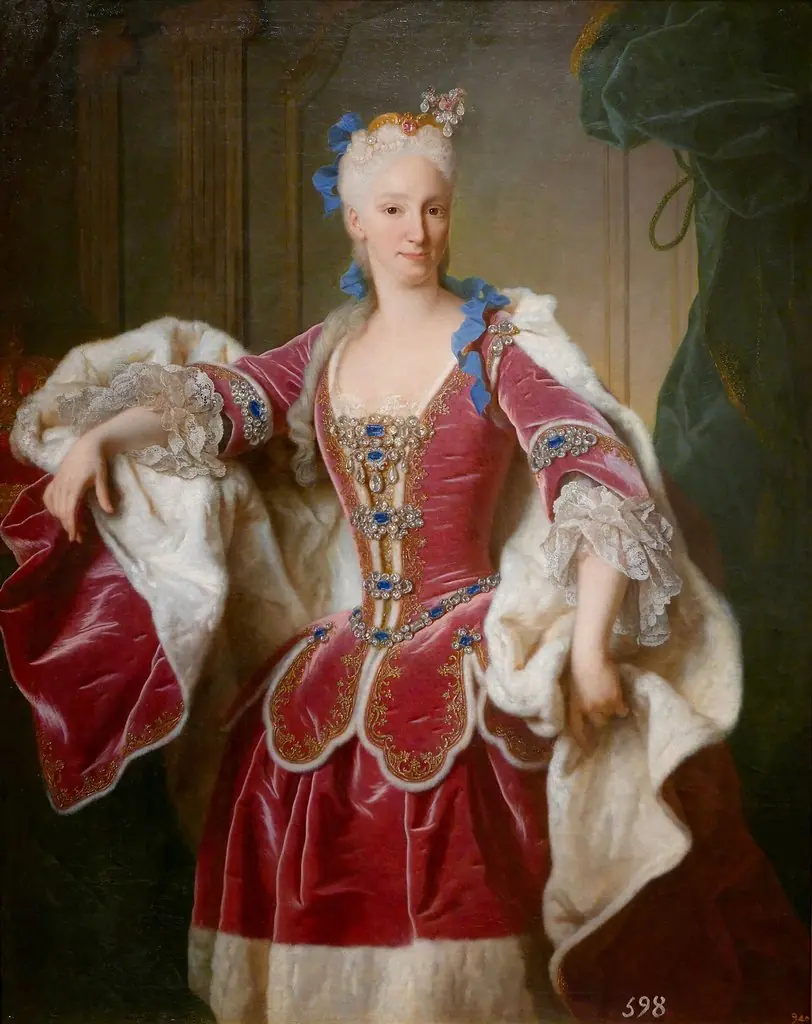 Elisabeth Farnese, Queen of Spain
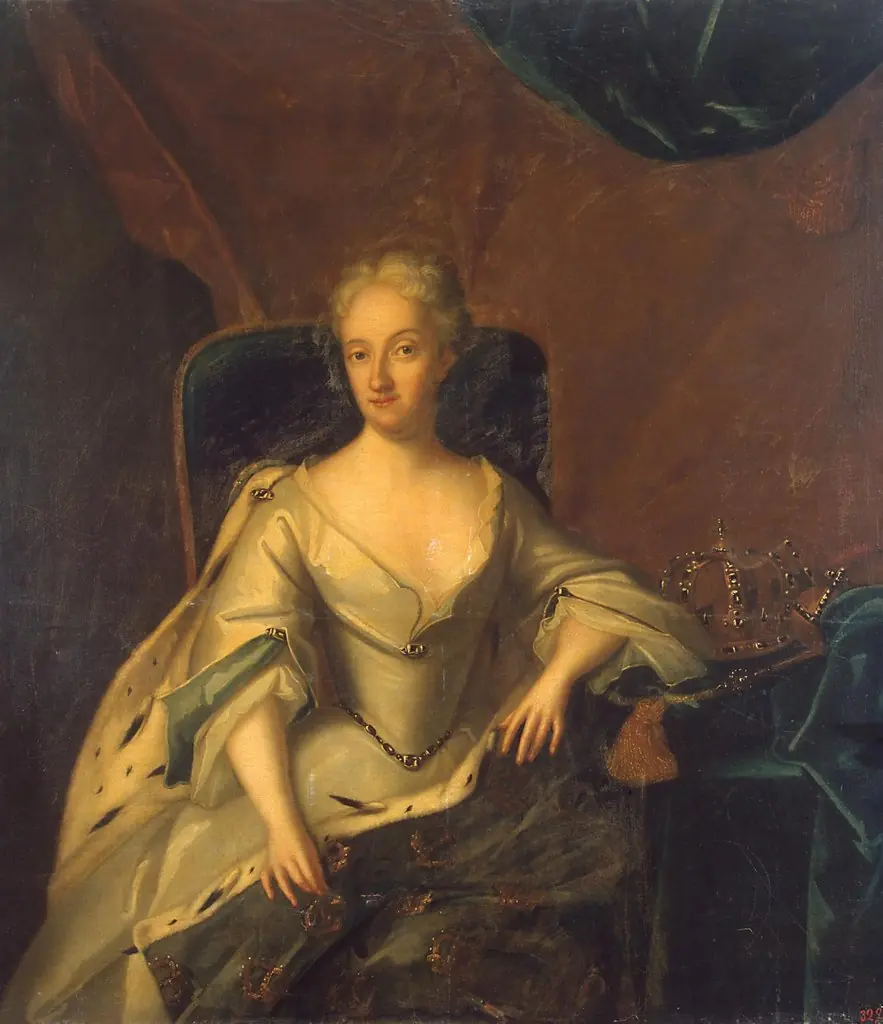 Portrait of Ulrika Eleonora the Younger, Queen of Sweden
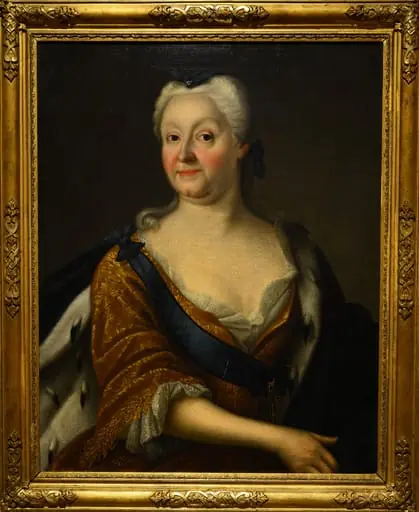 Äbtissin Elisabeth Ernestine Antonie von Sachsen-Meiningen
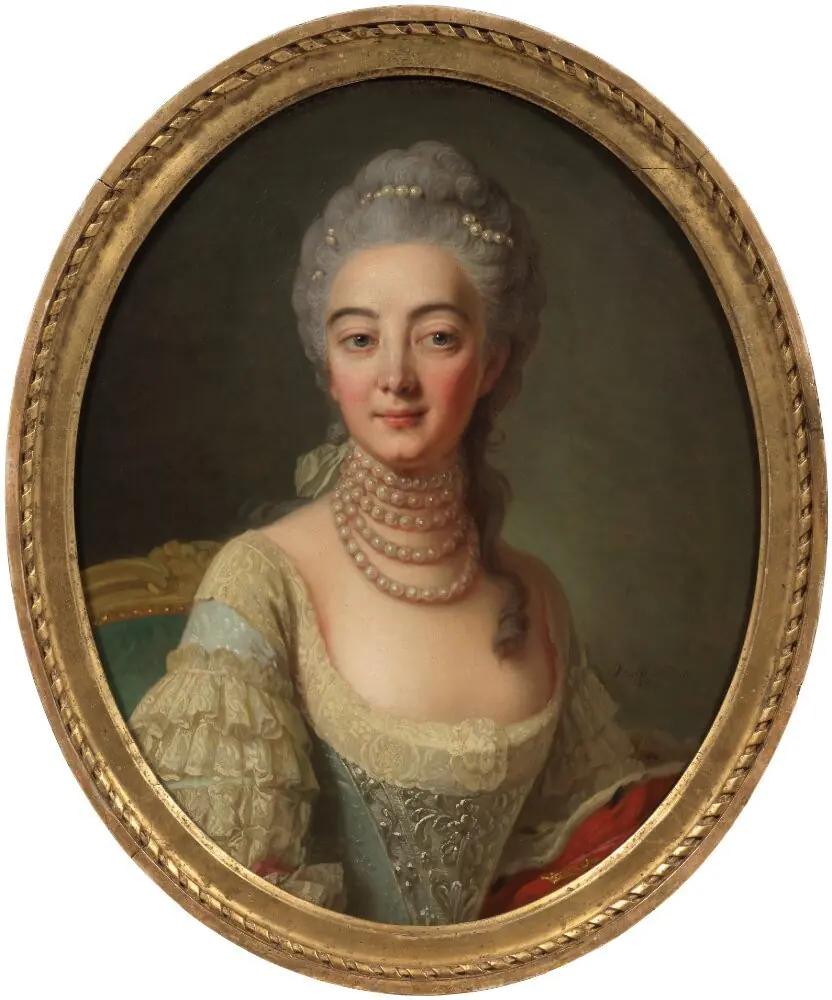 Elisabeth Frederike Sophie (1732–1780), Duchess of Württemberg
 Äbtissin Therese Nathalie von Braunschweig-Wolfenbüttel
 Portrait of Grand Duchess Natalia Alexeyevna
 Queen Maria Amalia of Saxony
 Portrait of the Marquise d'Aguirandes