Artwork
Icoana este pictată pe dosul unei bucăți de glajă de formă dreptunghiulară în ax vertical. Sfântul Nicolae este redat în prim plan, așezat pe un tron, ținînd Evanghelia închisă în mâna stângă în timp ce cu dreapta binecuvintează. Sfântul Nicolae este înveșmântat ca Mare Arhiereu, cu mitră înaltă, bipartită, omofor mare, verde, decorat cu cruci "patee", sacos roșu cărămiziu cu galon auriu cu motiv spiralat, stihar roșu. De mâna dreaptă îi atârnă bedernița, percepută ca decor al veșmântului. Chipul este sobru, barba albă,scurtă,la fel părul scurt, ondulat. Ochii sunt negri, bine definiți, arcadele evidențiate. Nimb auriu. Tronul, cu spătarul înalt, are marginea aurită realizată în trepte(surmontatea de câte o cruce) și decorată cu motiv spiralat. Spătarul este alb, decorat cu o rețea de linii negre dublate cu bleu, întretăiate. În colțurile de sus câte un serafim pe nori. Câmpul verde intens în partea de jos, până la nivelul jilțului, albastru de Prusia în registrul superior. Desenul este îngrijit, compoziția aglomerată, paleta cromatică variată, culorile tari, Inscripția cu negru în partea de sus, greu vizibilă. Rama, din lemn de brad băițuit, este alcătuită din patru șipci profilate pe o porțiune mică spre interior, îmbinate oblic la colțuri, decorată cu un motiv ușor ondulat, imitînd fibra lemnului, dispus oblic. Dos din scândurele subțiri de brad, dispuse orizonal și fixate în cuie.
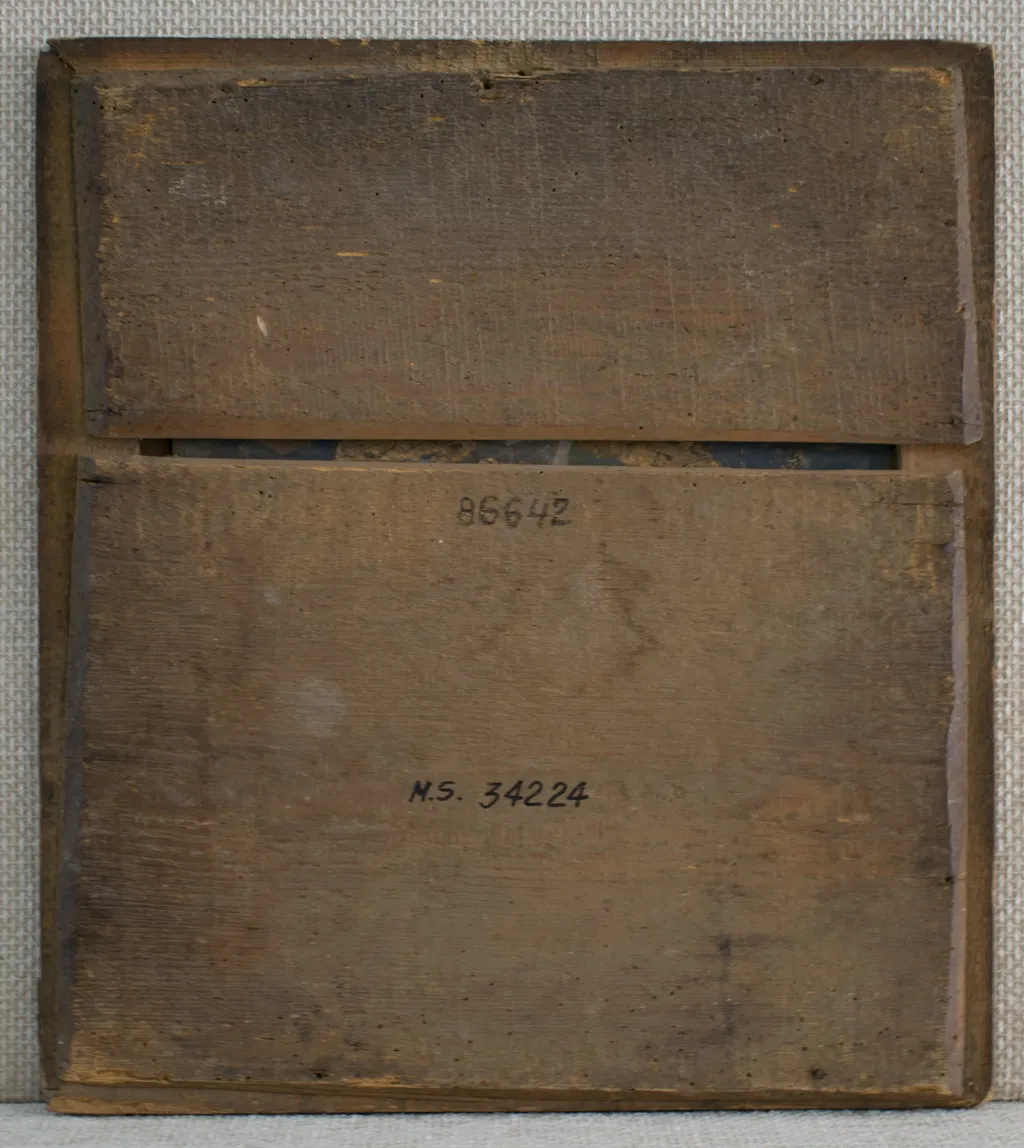
Icoana este pictată pe dosul unei bucăți de glajă de formă dreptunghiulară în ax vertical. Sfântul Nicolae este redat în prim plan, așezat pe un tron, ținînd Evanghelia închisă în mâna stângă în timp ce cu dreapta binecuvintează. Sfântul Nicolae este înveșmântat ca Mare Arhiereu, cu mitră înaltă, bipartită, omofor mare, verde, decorat cu cruci "patee", sacos roșu cărămiziu cu galon auriu cu motiv spiralat, stihar roșu. De mâna dreaptă îi atârnă bedernița, percepută ca decor al veșmântului. Chipul este sobru, barba albă,scurtă,la fel părul scurt, ondulat. Ochii sunt negri, bine definiți, arcadele evidențiate. Nimb auriu. Tronul, cu spătarul înalt, are marginea aurită realizată în trepte(surmontatea de câte o cruce) și decorată cu motiv spiralat. Spătarul este alb, decorat cu o rețea de linii negre dublate cu bleu, întretăiate. În colțurile de sus câte un serafim pe nori. Câmpul verde intens în partea de jos, până la nivelul jilțului, albastru de Prusia în registrul superior. Desenul este îngrijit, compoziția aglomerată, paleta cromatică variată, culorile tari, Inscripția cu negru în partea de sus, greu vizibilă. Rama, din lemn de brad băițuit, este alcătuită din patru șipci profilate pe o porțiune mică spre interior, îmbinate oblic la colțuri, decorată cu un motiv ușor ondulat, imitînd fibra lemnului, dispus oblic. Dos din scândurele subțiri de brad, dispuse orizonal și fixate în cuie. is a drawing by anonim. It is held in the collection of the "Dimitrie Gusti" National Village Museum. This religious icon is painted on the reverse side of a rectangular wooden panel, its front concealed beneath a layer of paint and wear.
About this work
Overview
This religious icon is painted on the reverse side of a rectangular wooden panel, its front concealed beneath a layer of paint and wear.
This religious icon is painted on the reverse side of a rectangular wooden panel, its front concealed beneath a layer of paint and wear. The surface shows signs of aging—cracks, weathering, and faint handwritten numerals—indicating reuse or repurposing. The image of Saint Nicholas, rendered in vivid pigments, was likely intended for veneration before being hidden, perhaps to protect it during periods of religious suppression.
Subject & Meaning
Saint Nicholas is depicted as a bishop, seated on a high throne, holding a closed Gospel in his left hand while bestowing a blessing with his right. His attire—green omophorion, crimson sacos with gold spiral trim, and a tall mitre—signifies his ecclesiastical authority. The golden halo, seraphim in the upper corners, and solemn expression reinforce his sanctity and divine role as intercessor and protector of the faithful.
Technique & Style
The painting employs a rich, contrasting palette: deep green below, Prussian blue above, with gold accents defining the throne and vestments. Details are meticulously rendered—spiral motifs, double-lined black grids on the backrest, and finely modeled facial features. The composition is dense, with little negative space, emphasizing hierarchy and sacred presence. Inscriptions are faint, suggesting they were secondary or obscured over time.
History & Provenance
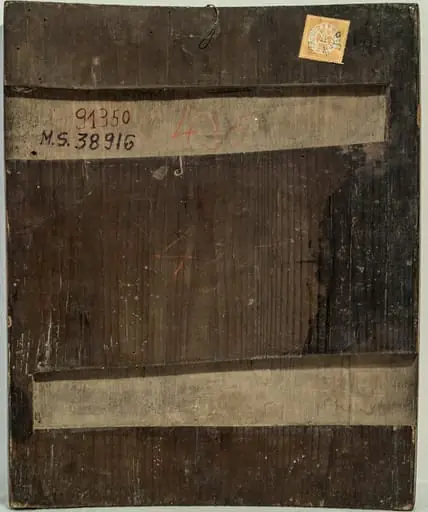
The panel’s reverse side bears traces of prior use: weathered wood, thin paint strips, and two faded ink numbers, possibly inventory marks. The wooden backing consists of horizontal planks nailed in place, typical of regional panel construction. Its concealment may reflect historical pressures on religious imagery, with the icon preserved but hidden, later rediscovered and studied as a cultural artifact.
Context
The icon reflects Byzantine liturgical traditions adapted in Eastern European Orthodox communities. The throne’s stepped gold edge and seraphim align with iconographic conventions from the late medieval period. The use of expensive pigments like Prussian blue and gold leaf indicates commissioning by a wealthy patron or ecclesiastical institution, likely during a time when such devotional objects were central to worship.
Legacy
Though hidden for much of its history, the icon survives as a tangible link to pre-modern religious practice. Its layered material history—painting, concealment, exposure—offers insight into how sacred objects were preserved under duress. The craftsmanship and iconography continue to inform studies of regional Orthodox art, serving as a quiet testament to enduring devotional traditions.
Artist & collection
Artist
This anonymous painter made small religious scenes with bold, flat colors and shaky lines, following old church traditions.
Museum
"Dimitrie Gusti" National Village Museum
Continue through works from the same source collection.
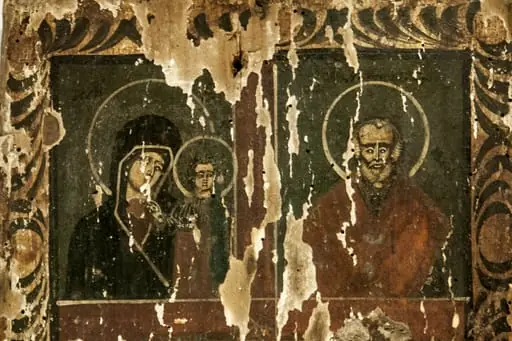 Un câmp central sub formă de cruce, împarte spațiul pictural în patru casete dreptunghiulare care conțin următoarele scene: Stânga sus Maica Domnului cu Pruncul tipul Kazanskaia. Este reprezentată până la piept, nu se văd mâinile, înveșmântată cu maforion negru cu galon alb. Are chipul îndurerat, privirea tristă, capul ușor înclinat spre Prunc. Iisus – Emanuel, binecuvintează cu dreapta, privirea îndreptată lateral, către sfântul Nicolae..Chiton brun deschis, himation verde. Dreapta sus - Sf. Nicolae în veșminte simple, capul descoperit, cărunt, cu barba rotundă și scurtă, privind la rândul său către pruncul Iisus. Înveșmântat cu sacos verde și omofor mare orange, care îi acoperă umerii. În casetele de jos sunt redați doi sfinți în vârstă, în picioare, în veșminte preoțești, întorși unul către altul, cu privirea îndreptată către scenele din registrul superior. Inscripția ce denominează primul dintre ei a fost ștearsă, cel de al doilea posibil sfântul Savatie?. Icoana are un vădit caracter popular, naiv. Spațiul cruciform pictat cu roșu, fondul scenelor verde închis, 2/3 din fondul scenelor de jos galben-orange. Nimburi trasate cu alb, inscripții caligrafice, litere cursive, cu negru. Compoziția este încadrată de un chenar cu decor vegetal, motive ample de factură populară, specifice spațiului slav.
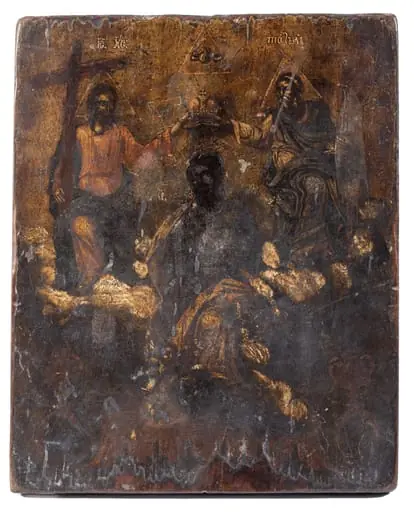 Încoronarea Fecioarei - reprezintă în centrul compoziției pe Fecioara Maria, în planul al doilea pe Iisus Hristos și Dumnezeu Tatăl ținând o coroană în mâini.
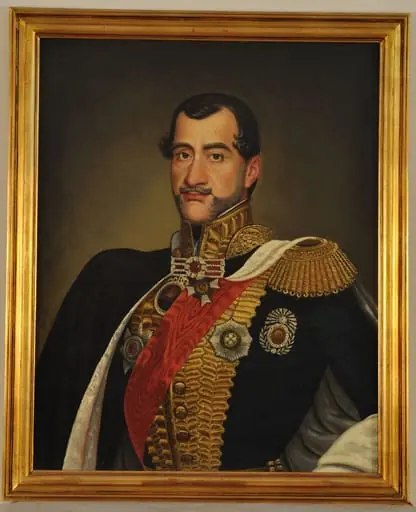 Alexandru Dimitrie Ghica
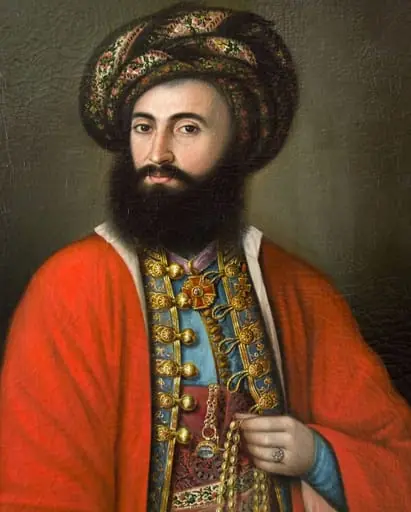 Constantin G. Cantacuzino cu turban (1793 - 1877)
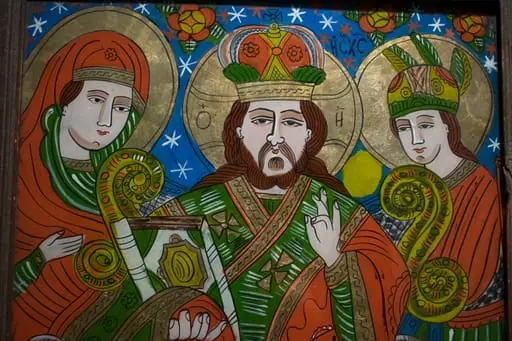 Icoacrip
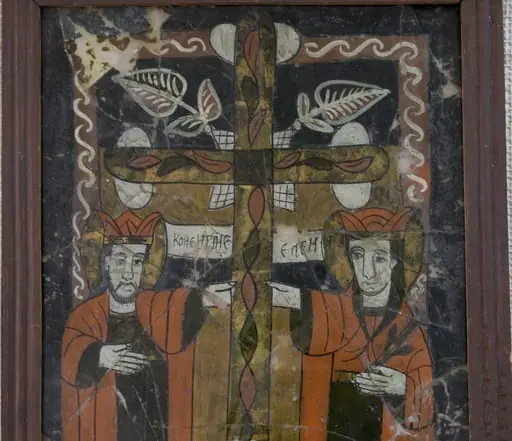 Pictură în oglindă, pe spatele unei bucăți de glajă, ax vertical.Sfinții Împărați Constantin și Elena, 3/4 , în picioare, semiprofil, sub brațele crucii pe care a fost răstignit Isus( găsită de Împărăteasa Elena la Ierusalim) Amândoi au plete castanii, lăsate pe umeri, coroane înalte, veșminte identice, simple, lungi, cămăși verzi și mantii roșii. Plasarea personajelor sub brațele crucii, în jumătatea inferioară, pe fond ocru sugerează complementaritatea celor două planuri(terestru și ceresc). Împărăteasa ține în mână o ramură verde, element ce o însoțește în majoritatea reprezentărilor populare. Fețele sunt ușor diforme, ochii negri. Crucea dreaptă, plasată în centrul compoziției, decorată cu frunze și o spirală în partea de jos, creează simetrie. La întretăierea brațelor crucii elemente vegetale cu contur alb. Chenarul specific icoanelor de Nicula, linia albă(zăluțe, funie) pe fond roșcat. Icoana este caracteristică perioadei de înflorire a picturi pe sticlă de la Nicula. Rama profilată, din lemn de brad, pictată cu o culoare roșcată. Dosul subțire. Sticla spartă în mai multe fragmente.
 Icoana este pictată "în oglindă", pe un suport de sticlă de formă dreptunghiulară în ax vertical. Cuvioasa Parascheva, 3/4, redată din ușor semiprofil, ține în mâna dreaptă o ramura verde, sinuoasă, în stânga o cruce. Fața butucănoasă, ochii căprui, sprâncenele arcuite, gura marcată cu roșu, bărbia pătrată, părul castaniu, lung, revărsat pe umeri. Pe cap poartă o tocă înaltă tripartită. Este înveșmîntată cu o mantie roșie și cămașă albastră. În jurul capului, aureolă realizată cu bronz auriu. Câmp bicolor(1/2 superior -bleu, 1/2 inferior ocru) două ramuri de trandafiri dispuși pe laturile verticale, întâlnindu-se deasupra capului sfintei. Desenul stângaci, dar destul de îngrijit, corola de flori, predominanța culorii roșii, abundența detaliului, fondul bicolor, utilizarea bronzului auriu, sunt caracteristici ale fazei târzie a picturii din centrele Nicula și Gherla. Rama subțire din lemn de brad, de culoare închisă, este completată cu un "dos" nou din scândură de brad.. Țăranii considerau că sfânta Parascheva păzește de grindină și de dureri de cap.
 Sfânta Paraschiva încoronată este reprezentată frontal, 3/4, Nimbul trasat cu roșu depășește linia chenarului și partea superioară a coroanei. Tehnica iluminării treptate cu elemente specifice: accentuarea zonei ochilor, tonurile de pământ ale umbrelor. Tunica decorată cu motive fitomorfe ample incizate în stratul de foiță. Mantie închisă în față, cu decor linar și bordură lată cu motive geometrice 3 șiruri de incizii în grund). Pe cap, umeri lăsat pe spate, un maforion de culoare deschisă. În mâna dreaptă, Sfânta ține o cruce mică, rusească, (6 brațe)în stânga un rotulus desfășurat cu inscripția scrisă în limba slavonă: Cred în unul Dumnezeu… alte inscripții: pe chenar de o parte și de alta a nimbului: Chipul Sf. Mucenițe Parascheva Vineri, în colțul stâng al icoanei ѾOН pe nimbul cruciger al lui Iisus, reprezentat ca pe sfântul Keramion. Cromatica: Chenar roșu cu două linii galbene și mărginit cu brun; fond - foița metalică decorată prin incizare, cu chenar multiplu din motive geometrice reteate. Tip Krashnuskha. Pe spate, un timbru al miliței RPR.
 Icoana reprezintă un sfânt militar, din comparațiile efectuate s-a ajuns la concluzia că ar fi vorba de sf. Mare mucenic Teodor Stratilat, un mare general care cârmuia cetatea Heracleea, pe vremea împăratului Licinius(308-321). Sfântul este pictat din semiprofil,în picioare, până deasupra genunchilor. Este înveșmântat în costum de oștean medieval, cu armură și mantie lungă, roșie, prinsă pe umărul drept. În mâna dreaptă ține o cruce mică iar cu stânga, pe care o are lăsată în jos, sprijină un scut pe care se observă o figură antropomorfă în relief. Capul este descoperit, părul și barba scurte, luminate de razele aureolei. Trăsăturile bărbătești, ferme, sunt redate într-o manieră cu influențe academice, la fel ca și realizarea faldurilor. Proporțiile sunt respectate. În dreapta sfântului, în colțul de sus se distinge capul și aureola din raze ale unui înger. La momentul executării fotografiei, icoana era destul de deteriorată, statul pictral exfoliat grundul și suportul de lemn prezentau crăpături în partea de jos.
 Icoasia,
 Icoa
Icoa Răstignirea lui Iisus Hristos plasată pe un câmp central sub formă de cruce, împarte spațiul pictural în patru casete dreptunghiulare, Iisus Hristos răstignit pe crucea cu 6 brațe (specifică ortodoxiei ruse), cu un veșmânt alb în jurul mijlocului, ochii închișiNimbul cu inscripțiile consacrate. La baza crucii, sugerat dealul Golgota și craniul lui Adam. Pe latura de sus un nor cu inscripția XC Cele 4 casete conțin următoarele scene: Stânga sus Maica Domnului cu Pruncul tipul Kazanskaia. Este reprezentată până la piept, nu se văd mâinile. Capul ușor înclinat spre Prunc. Maforion roșu, pe frunte și pe umeri stelele Fecioriei, albe, discrete.Iisus – Emanuel, binecuvintează cu dreapta, nimbul cruciger. Chiton albastru și himationgalben. Dreapta sus - Sf. Nicolae în veșminte de arhiereu, cărunt, cu barba rotundă capul descoperit. Nu se văd mâinile.. Înveșmântat cu sacos roșu cu drapaj galben, omofor lat, închis la culoare. Stânga jos - Sf. Gheorghe, oștean, călare pe un cal alb în poziție cambrată.Înfige, cu ambele mâini, sulița în gura balaurului, redat aici ca un șarpe negru, subțire. În oglindă, sfântul mucenic Dimitrie, în veșminte identice, călare pe un cal negru, cu o suliță în mâini. Fondul: brun pentru scena centrală, scenele de sus: brun roșcat, cu o bandă îngustă, aurită sus, niburile cu linie albă, scenele de jos: inferior bandă brună, pământul cu galben, cerul - verde închis, nimburile galbene cu linie discretă, albă pe margine. Chenarul marginal specific icoanelor tip krasnushka.Inscripții caligrafice cu negru. Inscripții cu llitere negre, caligrafice la scenele de sus, alb central. Caracter popular
 Icoana îl reprezintă pe cuviosul Stelian în ipostaza consacrată: îmbrăcat în haine monahale, de factură athonită, ținînd în brațe, pe mâna dreaptă, un prunc înfășat în scutece, având aureolă(uneori pruncul apare cu însemnele lui Hrisos). Sfântul privește către prunc, mustățile și barba lungi, albe, chipul bine proporționat, ochii mari, expresivi, trăsăturile ușor vălurite, estompate.. Aureolele mari, după restaurare pictate cu galben, chenar roșu. Fond culoare verde crom, chenar îngust. Icoana a fost restaurată.
 Icoa cen
 Icoambla