Artwork
Peisaj italian cu biserică
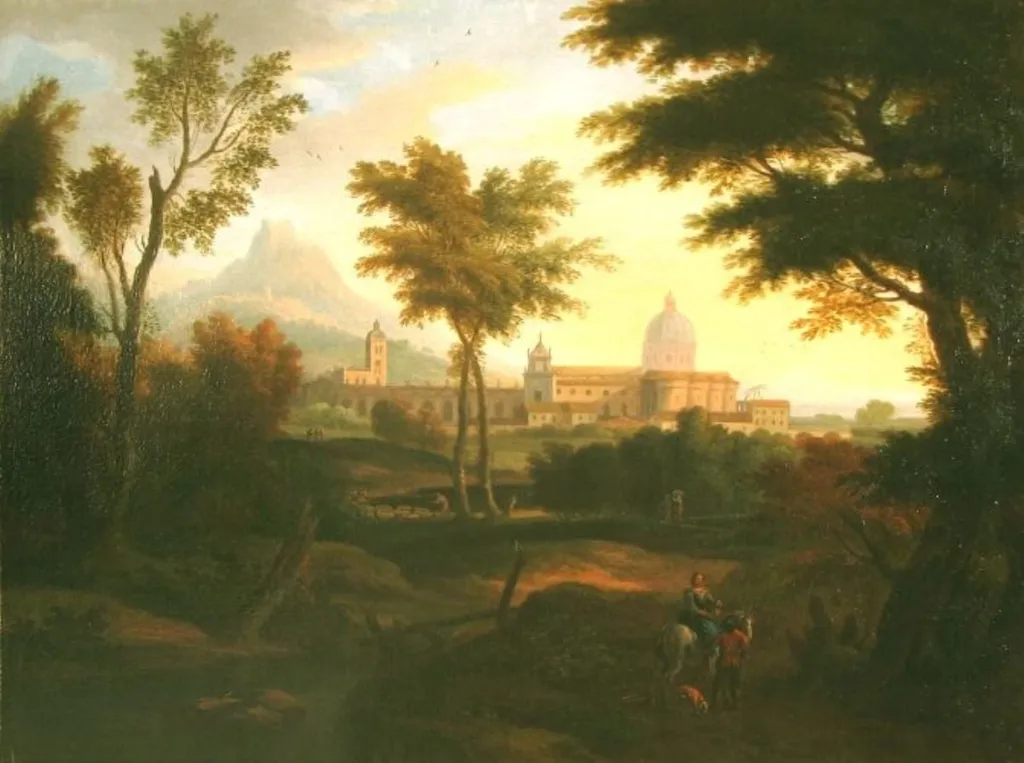
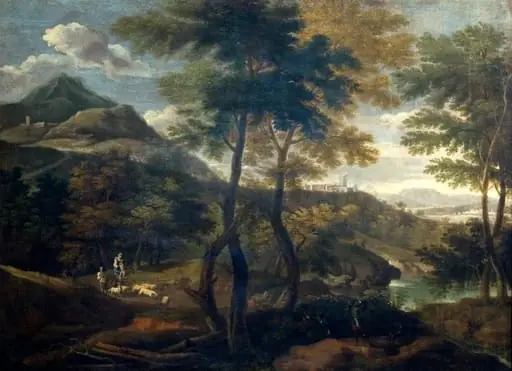
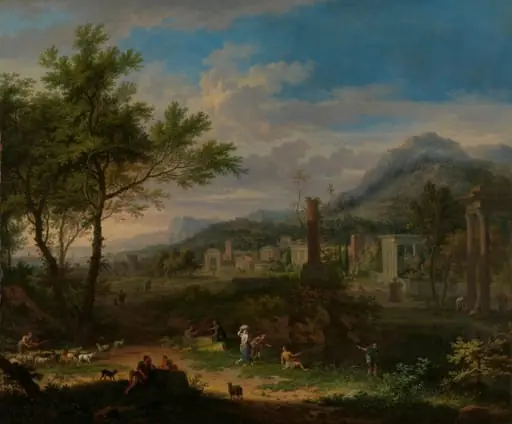
Peisaj italian cu biserică is an unspecified painting by the Baroque artist anonim italian. It dates from 1750 and is held in the collection of the Brukenthal National Museum. This anonymous Italian painting, dated around 1750, depicts a tranquil rural landscape under the soft light of late afternoon.
About this work
Overview
This anonymous Italian painting, dated around 1750, depicts a tranquil rural landscape under the soft light of late afternoon. A winding path meanders through rolling fields and scattered trees, guiding the eye toward a distant settlement marked by a dome and slender towers. The composition balances natural elements with human presence, evoking quietude without narrative urgency.
Subject & Meaning
The scene presents an idealized vision of the Italian countryside, where human activity—two riders and grazing sheep—is subtle and harmonious with nature. The church-like structures suggest spiritual or communal centrality, yet they remain distant and unobtrusive. The painting conveys serenity rather than religious or political symbolism, emphasizing stillness and the passage of time.
Technique & Style
The artist employs a delicate handling of light to model forms and suggest depth, with warm tones fading gently into cooler shadows. Brushwork is restrained, favoring smooth transitions over texture. The use of chiaroscuro is subtle but effective, enhancing the three-dimensionality of buildings and terrain without dramatic contrast, aligning with 18th-century landscape conventions.
History & Provenance
The painting’s origins remain undocumented, with no known record of its commission, owner, or exhibition history. Its anonymous authorship reflects a common practice among landscape painters of the period, who often worked outside the academic hierarchy. The work likely circulated in private collections, valued for its atmospheric appeal rather than artistic fame.
Context
Created during the height of the Grand Tour era, the image resonates with the tastes of European travelers seeking idealized views of Italy’s countryside. While not tied to a specific region, its architectural elements evoke central or northern Italian villages. Such works served as visual souvenirs, capturing the mood of place rather than topographical accuracy.
Legacy
Though unsigned and unattributed, the painting exemplifies the quiet, observational tradition in 18th-century Italian landscape painting. It contributes to a broader body of work that prioritized mood and light over grandeur, influencing later generations who sought to capture the ephemeral qualities of natural light in rural settings.
Artist & collection

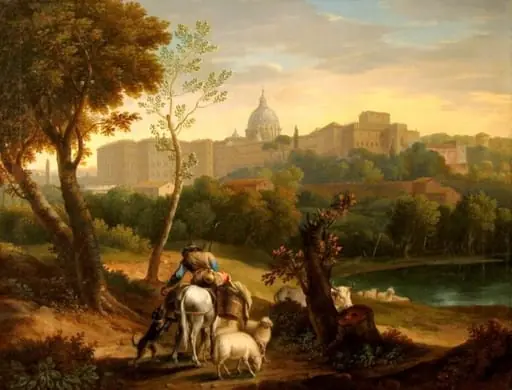 Roma cu Vaticanul și bazilica Sfântul Petru
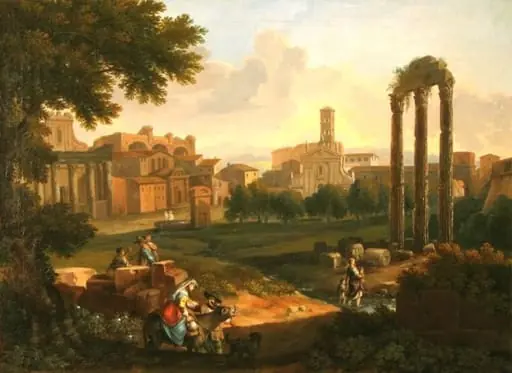 Vedere din Roma Veche (Roma cu columnele templului lui Jupiter)
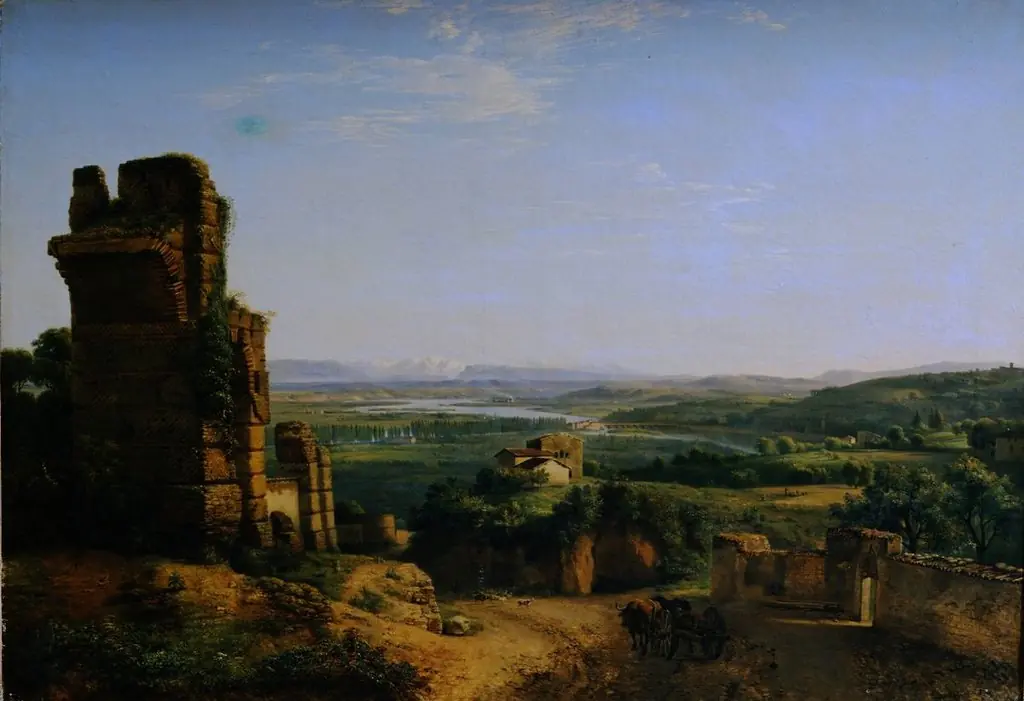 Vue des aqueducs romains sur les hauteurs de Saint-Just
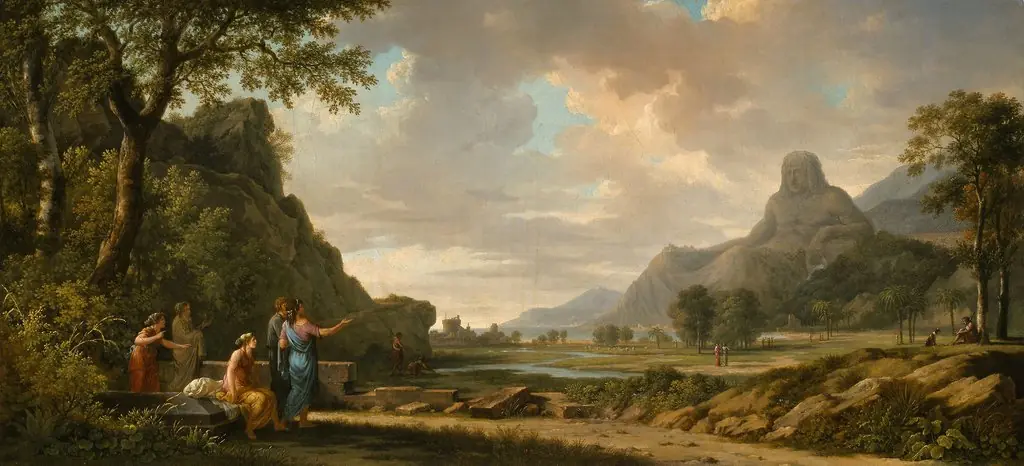 Mount Athos Carved as a Monument to Alexander the Great
 Mount Athos Carved as a Monument to Alexander the Great
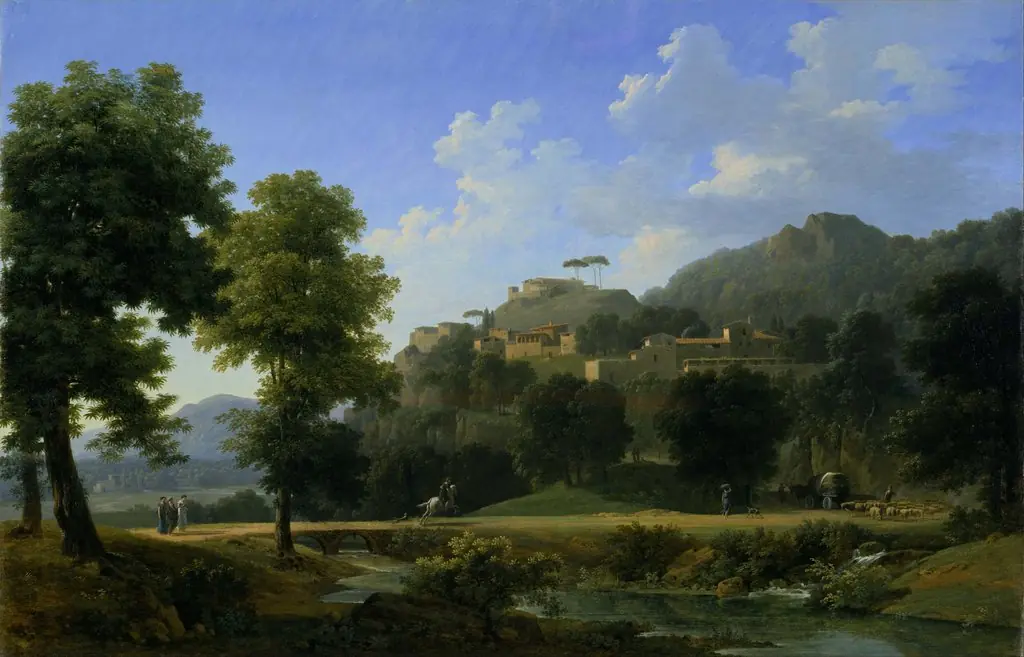 Italian Landscape (Le Paysage d'Italie)
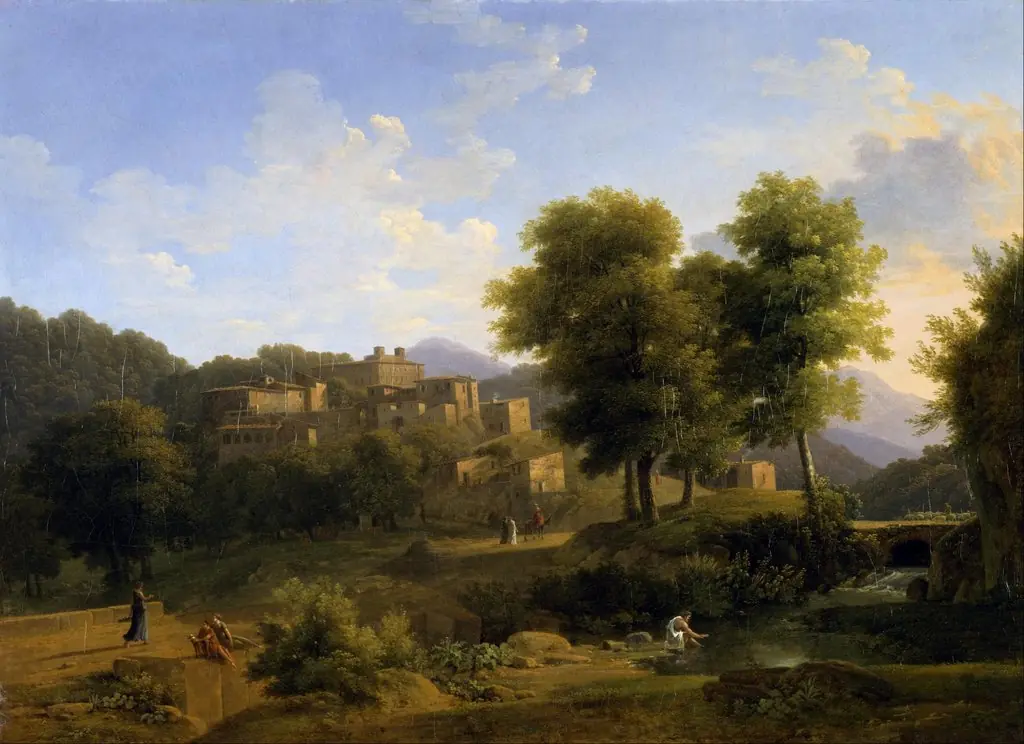 View of a Town in the Sabine Hills
 Peisaj italian
 The Villa d'Este in Tivoli
 Ideal Landscape with a Sacrifice to the Goddess Flora
 Pastorale avec l’Arc de Constantin
 Arcadian Landscape with Fishermen