Artwork
Rebeca la izvor
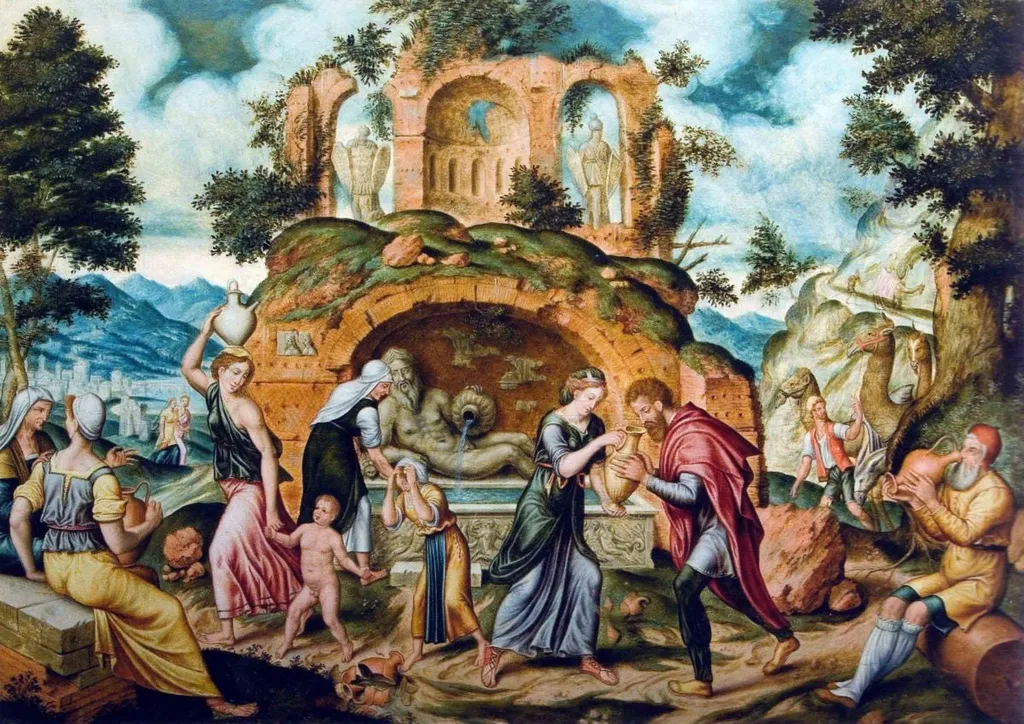
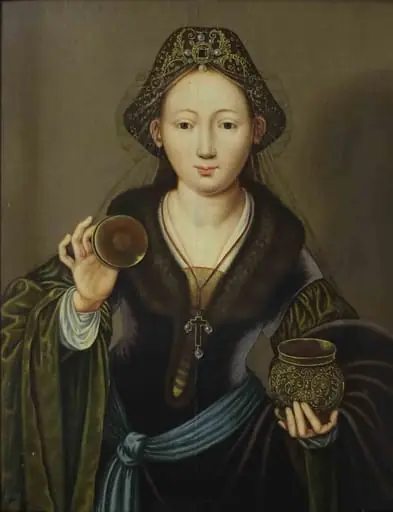
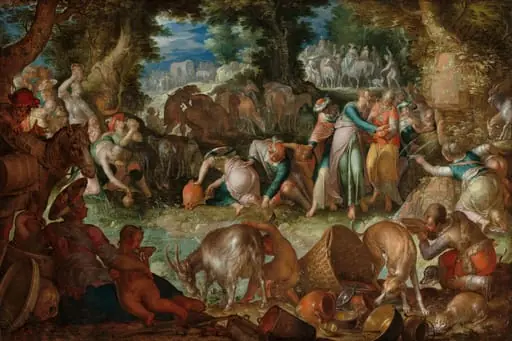
Rebeca la izvor is an unspecified painting by anonim neerlandez. It is held in the collection of the National Museum of Art of Romania. A quiet moment from biblical narrative is rendered in oil on canvas, depicting Rebeca at a stone well surrounded by figures and foliage.
About this work
Overview
A quiet moment from biblical narrative is rendered in oil on canvas, depicting Rebeca at a stone well surrounded by figures and foliage.
A quiet moment from biblical narrative is rendered in oil on canvas, depicting Rebeca at a stone well surrounded by figures and foliage. The composition centers on her poised stance, pitcher in hand, beneath a modest roofed structure. Distant mountains and a soft sky frame the scene, while muted earth tones and cool blues create a calm, contemplative atmosphere. The work is held in the collection of the Museum of Ethnography.
Subject & Meaning
Rebeca, a figure from Genesis, is shown fulfilling a task of hospitality—drawing water for a stranger and his camels. The scene emphasizes duty, humility, and divine providence. Surrounding figures suggest a community context, reinforcing themes of social obligation and quiet faith. No overt drama is present; instead, the moment is rendered as an ordinary act charged with spiritual significance.
Technique & Style
The artist employs a restrained realism, with careful attention to fabric folds, stone texture, and natural light. Brushwork is precise but unobtrusive, avoiding dramatic contrasts. The palette favors ochres, olive greens, and pale blues, enhancing the sense of stillness. Trees and distant hills are rendered with subtle gradations, grounding the scene in a tangible, quiet landscape.
History & Provenance
The painting entered the Museum of Ethnography’s collection in the early 20th century, likely acquired during a period of increased interest in biblical themes within ethnographic contexts. Its origin remains undocumented, though stylistic elements suggest late 19th-century European academic influence. No significant alterations or restorations are recorded.
Context
Created during a time when religious narratives were frequently depicted in secular museums, the work reflects a broader trend of visualizing scriptural stories as cultural artifacts rather than devotional images. Its placement in an ethnographic institution underscores an interest in portraying daily life and moral customs across cultures, framed through a Western lens.
Legacy
Though not widely exhibited or reproduced, the painting contributes to a lesser-known strand of 19th-century biblical realism that prioritized atmosphere over narrative intensity. It remains a quiet example of how religious subjects were integrated into ethnographic discourse, emphasizing cultural continuity over theological doctrine.
Artist & collection
Artist
This Dutch artist painted dramatic Bible scenes in oil, full of rich fabrics and candlelit faces.

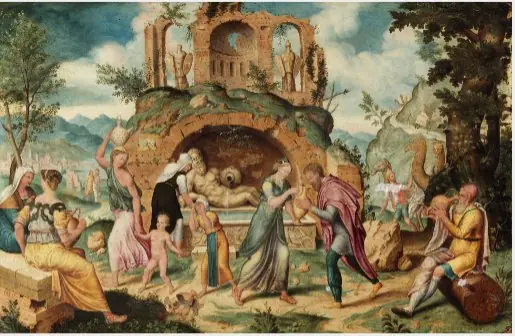 The Meeting of Rebecca and Abraham's Servant at the Well of Nahor
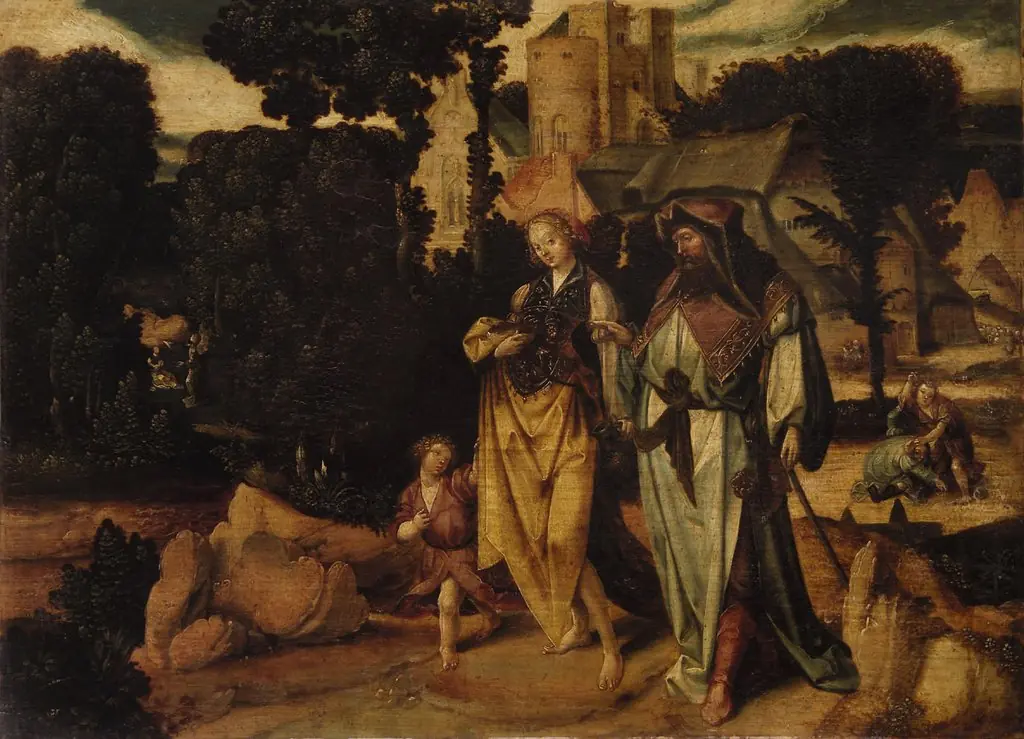 Rejection of Hagar
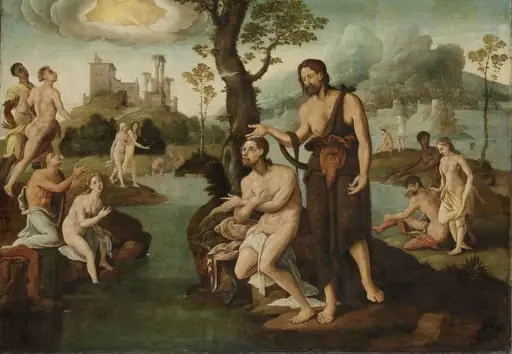 The baptism of Christ
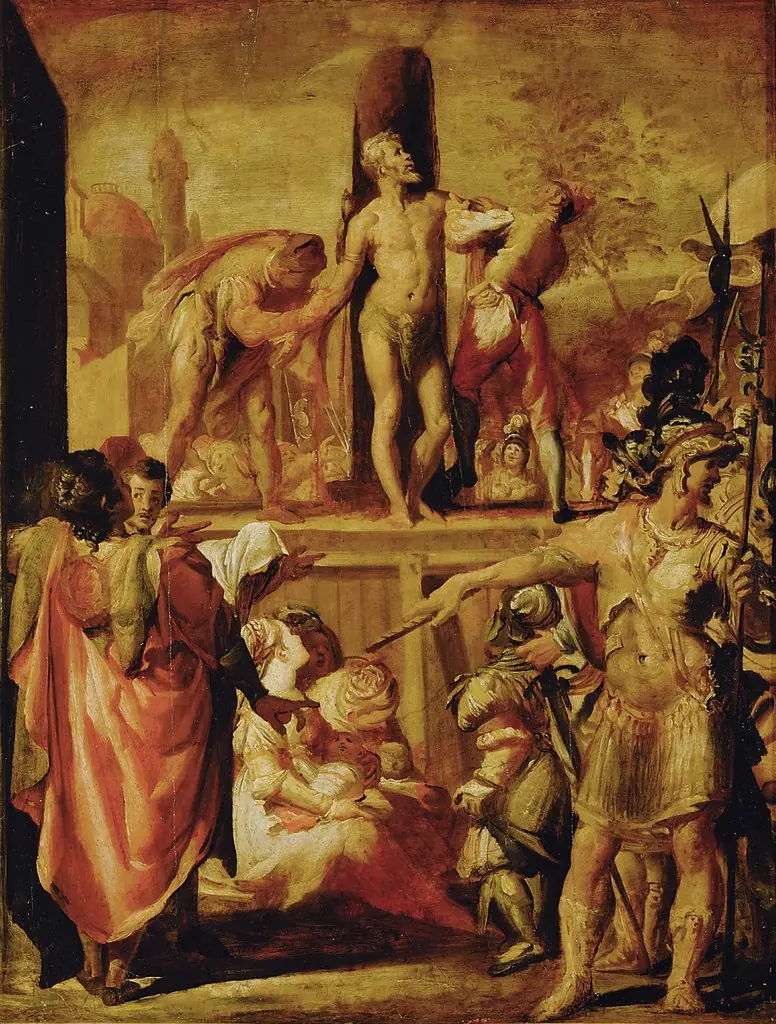 Marter des Hl. Bartholomäus
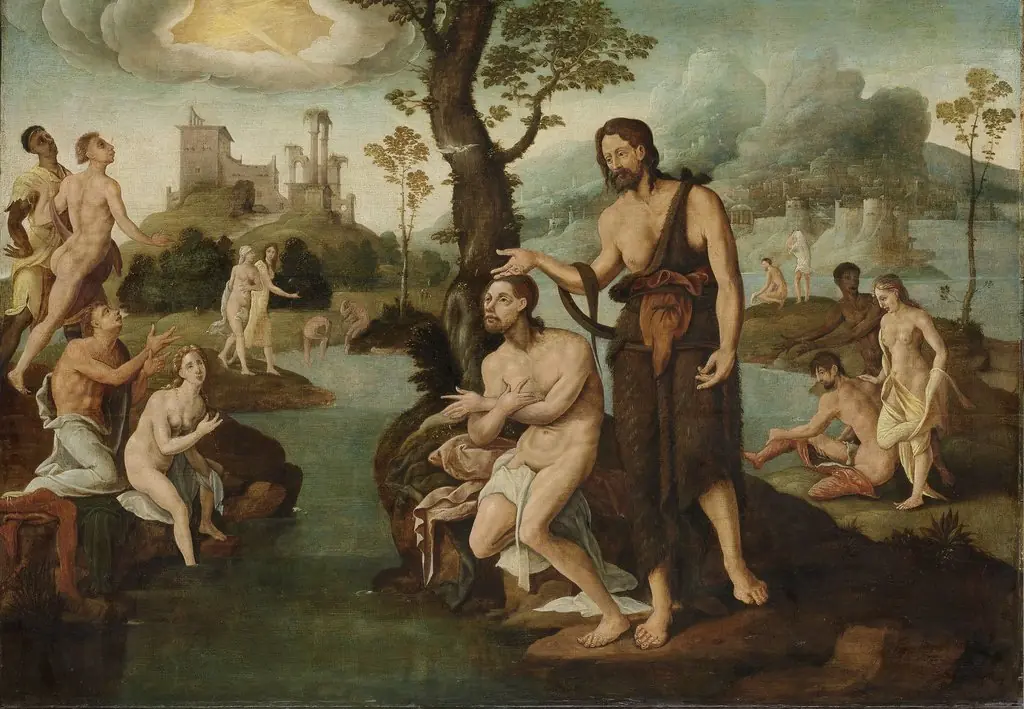 The Baptism of Christ
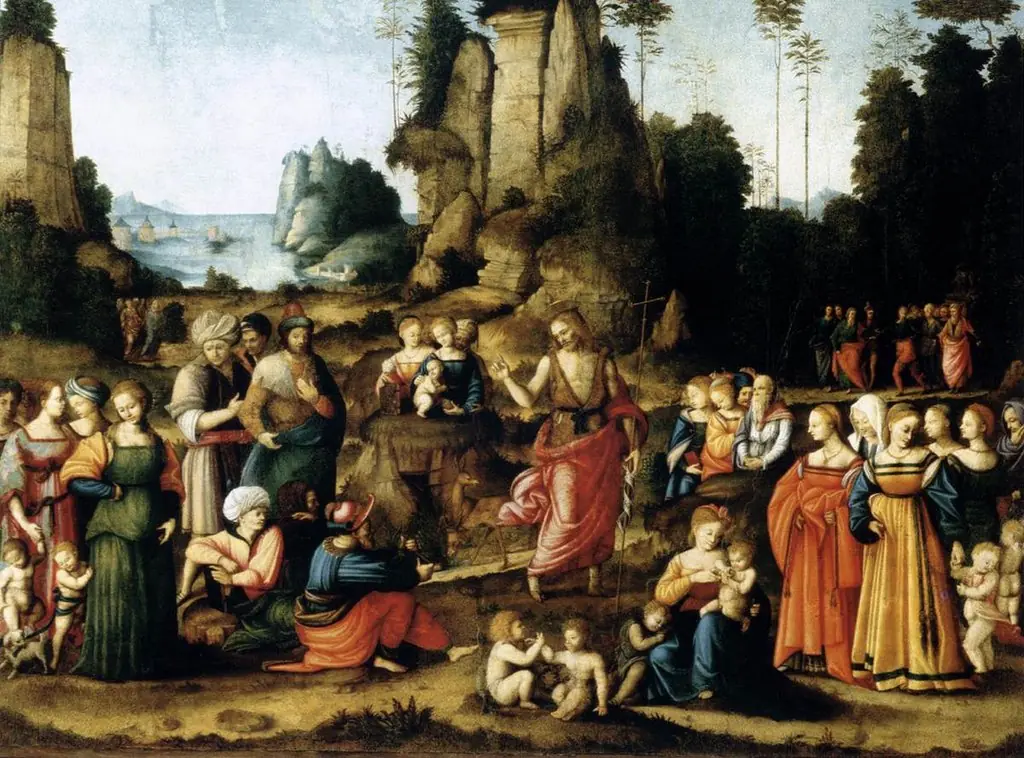 The Preaching of Saint John the Baptist
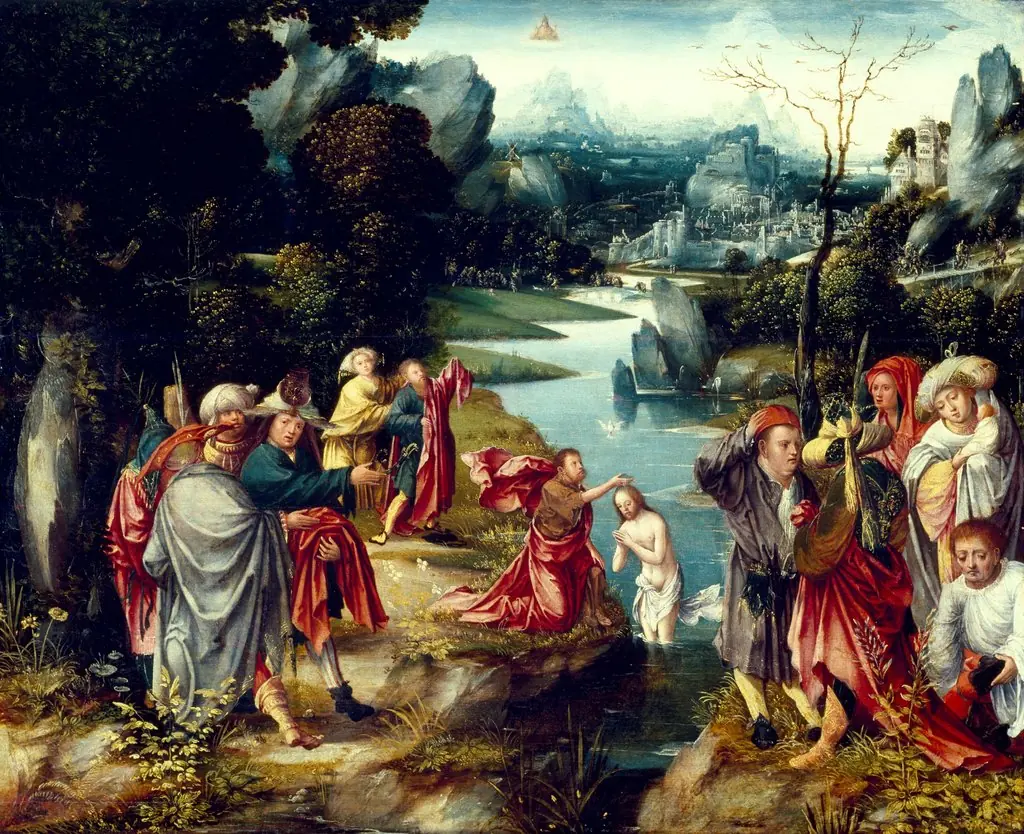 The Baptism of Christ
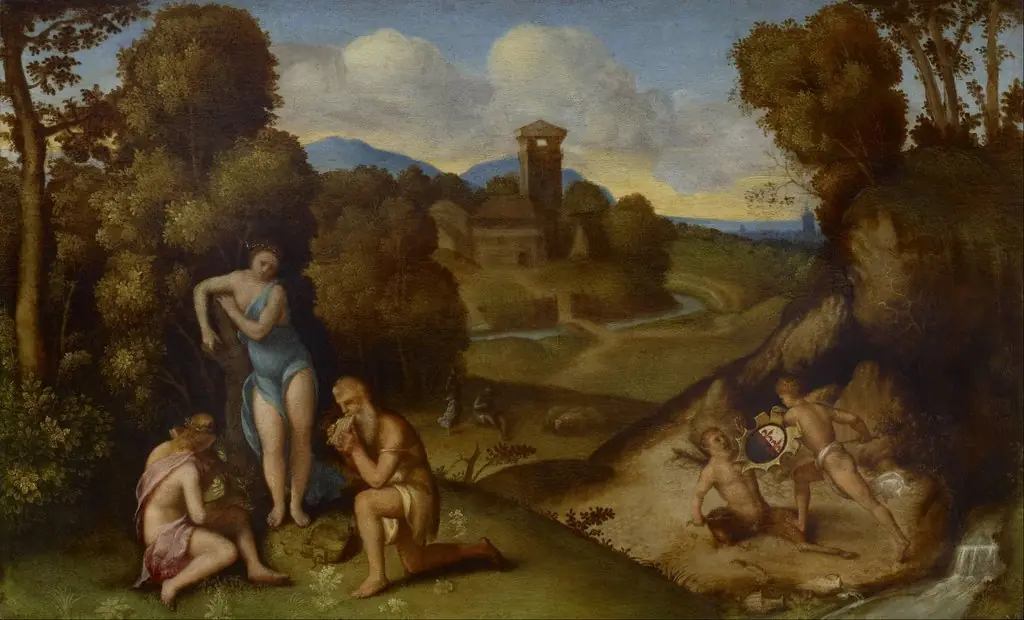 Allegory
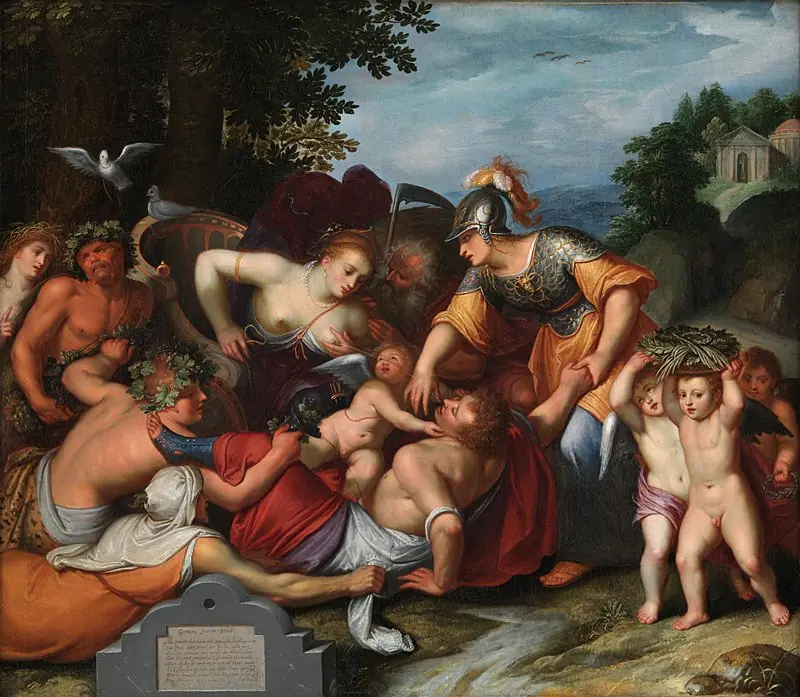 Gemeine Jeuchts Beeldt. Allegori på ungdommens fristelser
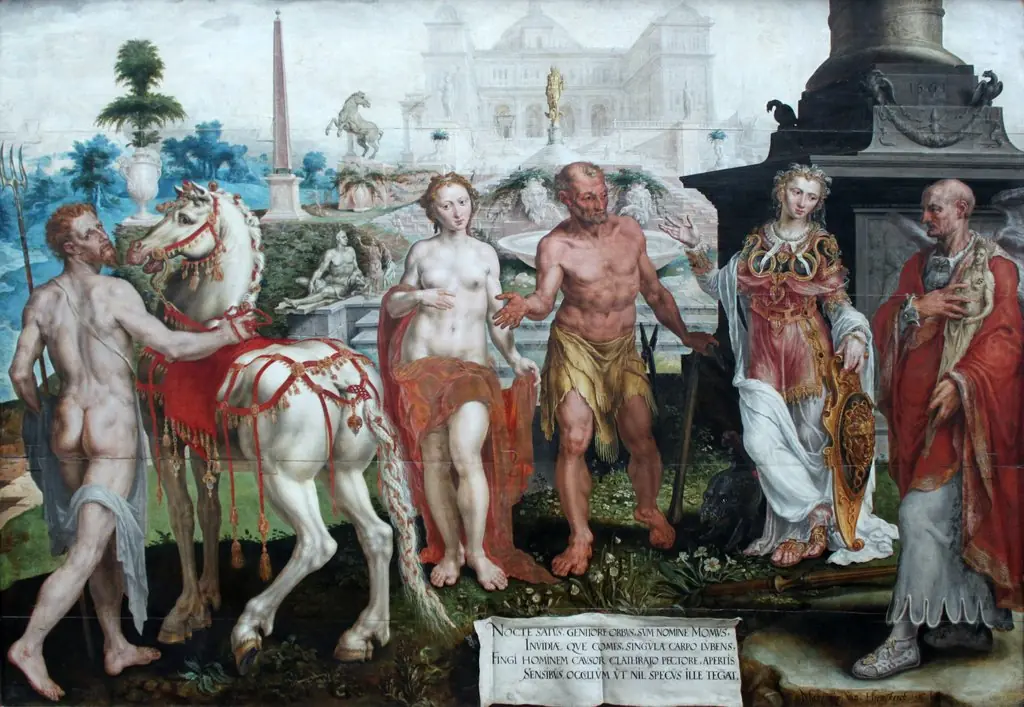 Momos Reproaches the Works of the Gods
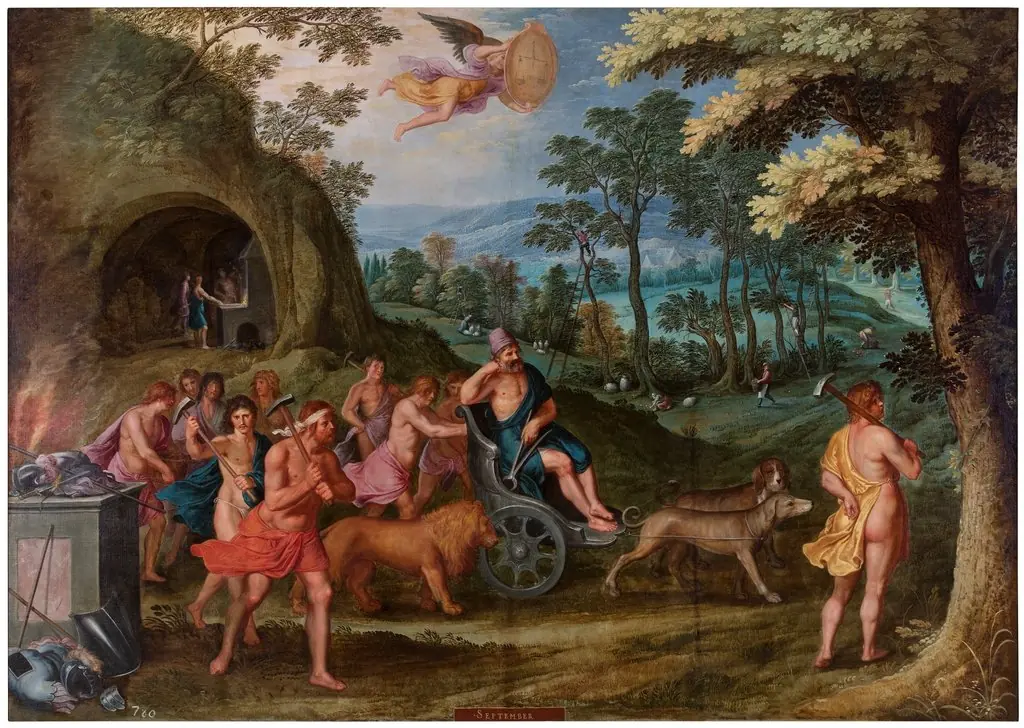 Alegoría del mes de Septiembre con el triunfo de Vulcano y el signo de Libra
 Moses Striking the Rock