Artwork
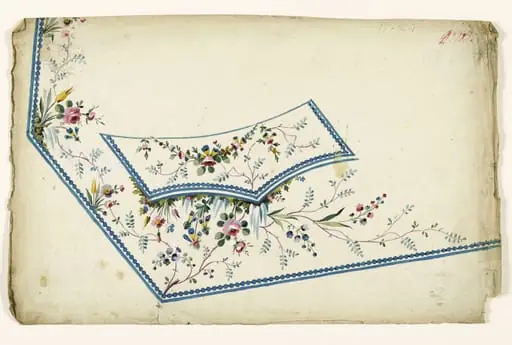
Composition de fleurs en bouquets et guirlandes de feuilles, projets de broderies de gilet, XVIIIème siècle
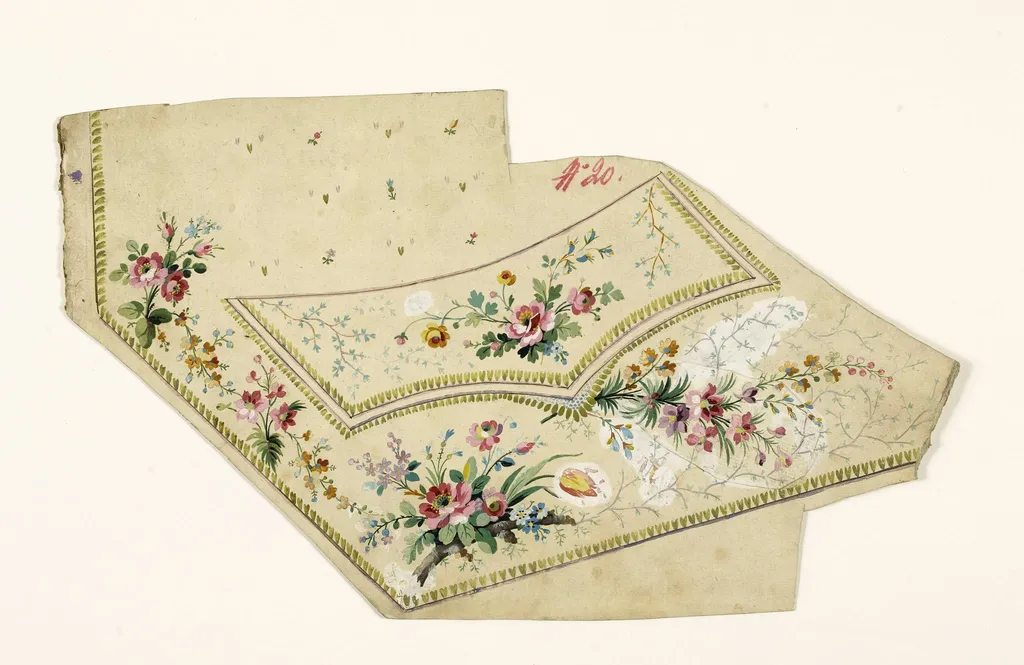
Composition de fleurs en bouquets et guirlandes de feuilles, projets de broderies de gilet, XVIIIème siècle is a drawing by Anonyme. It dates from 1750 and is held in the collection of the Palais Galliera - Musée de la Mode de la Ville de Paris. This folded paper sheet, dating to around 1750, contains painted floral patterns intended as templates for embroidery.
About this work
Overview
Created by an unknown artist, it features bouquets of roses and tulips intertwined with leafy vines, all rendered in muted pinks, greens, and blues.
This folded paper sheet, dating to around 1750, contains painted floral patterns intended as templates for embroidery. Created by an unknown artist, it features bouquets of roses and tulips intertwined with leafy vines, all rendered in muted pinks, greens, and blues. The edges are decorated with a scalloped border in green and gold, suggesting it was meant to be applied to luxury textiles. Fading and wear indicate frequent use, likely by artisans or needleworkers in a workshop setting.
Subject & Meaning
The design centers on naturalistic floral arrangements—roses, tulips, and foliage—arranged in repeating garlands. These motifs reflect 18th-century European tastes for ornamental botany, often associated with elegance and refinement in dress. The patterns were not decorative for their own sake but served as practical guides for embroidering garments such as vests or shawls, linking aesthetic ideals with domestic craft and elite fashion.
Technique & Style
The artist used watercolor or gouache to paint delicate, softly blended forms, with subtle shading to suggest volume. Lines are precise but not rigid, allowing the flowers to appear organic. The scalloped border and structured garlands indicate a methodical approach, typical of pattern books used by embroiderers. The absence of heavy outlines and the use of layered washes suggest an emphasis on subtlety over boldness, suited to textile reproduction.
History & Provenance
The object was likely produced in a French or Flemish atelier specializing in textile design, where such templates were copied and distributed to skilled needleworkers. Its current location at the Museum of Ethnography implies it was collected as an artifact of craft rather than fine art. The physical wear—fading, creases, and handling marks—supports its use in active production, distinguishing it from purely decorative drawings.
Context
In the mid-18th century, embroidered garments were status symbols among the European elite. Pattern books like this one circulated among artisans, ensuring consistency in design across households and workshops. Floral motifs were favored for their association with nature and refinement, aligning with Rococo aesthetics. This sheet represents the intersection of commercial craft, gendered labor, and the material culture of fashion.
Legacy
Though unsigned and utilitarian, such designs preserve the unseen labor of textile workers and the visual language of their time. They offer insight into how artistic motifs were translated from paper to fabric, revealing the collaborative nature of fashion production. Today, they serve as historical records of craftsmanship, documenting techniques and aesthetics that shaped everyday luxury in pre-industrial Europe.
Artist & collection
Artist
A French designer from the 1700s made delicate flower drawings meant to decorate vests.
Museum
Palais Galliera - Musée de la Mode de la Ville de Paris
Continue through works from the same source collection.
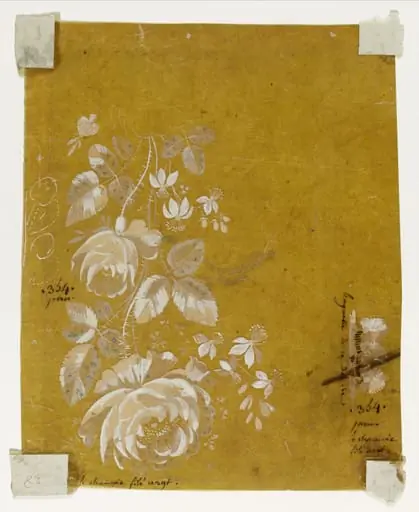 Bouquet de roses blanches pour étoffe, projets de broderies de gilet, XVIIIème siècle
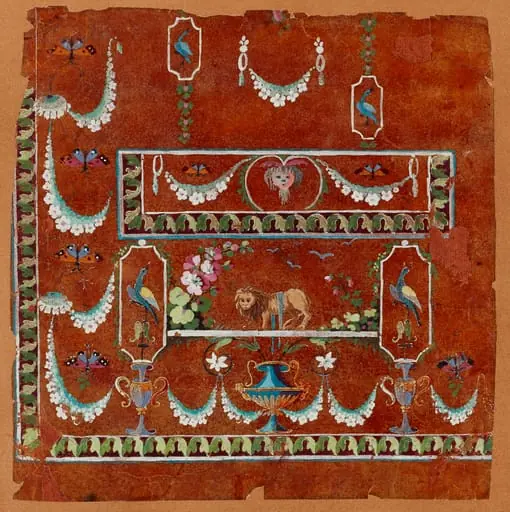 Gilet décor à grotesques, projets de broderies de gilet, XVIIIeme siècle
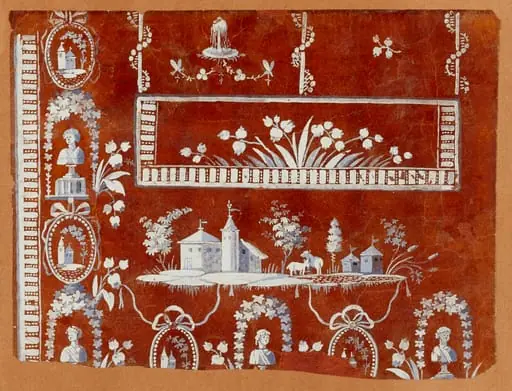 Gilet décor architectures rurales, projets de broderies de gilet, XVIIIème siècle
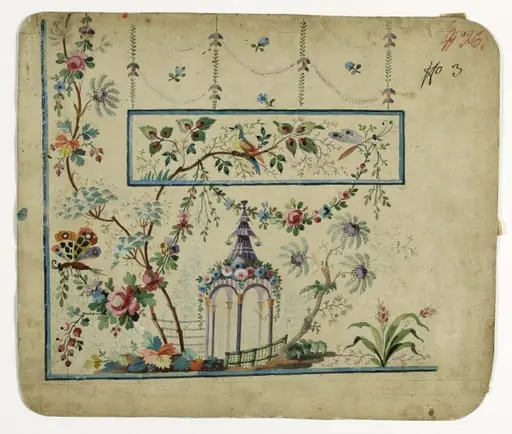 Gilet décor pagode, projets de broderies de gilet, XVIIIème siècle
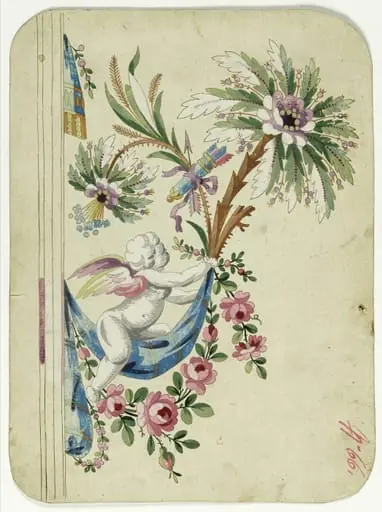 Décor de putti sur palmier, projets de broderies de gilet, XVIIIème siècle
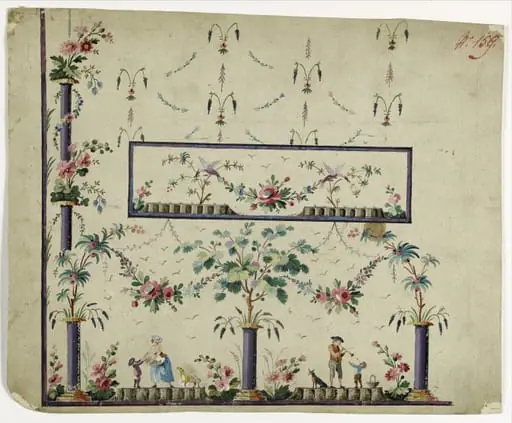 Gilet décor couple avec enfants, projets de broderies de gilet, XVIIIème siècle
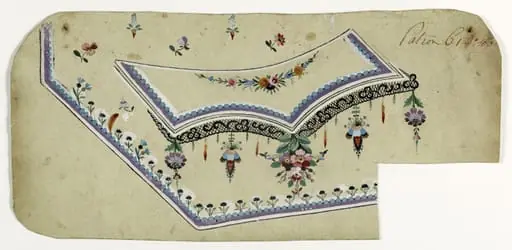 Gilet à la dentelle noire, projets de broderies de gilet, XVIIIème siècle
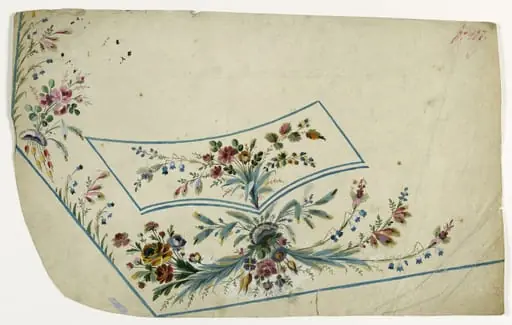 Gilet aux feuilles bleu-gris, projets de broderies de gilet, XVIIIème siècle
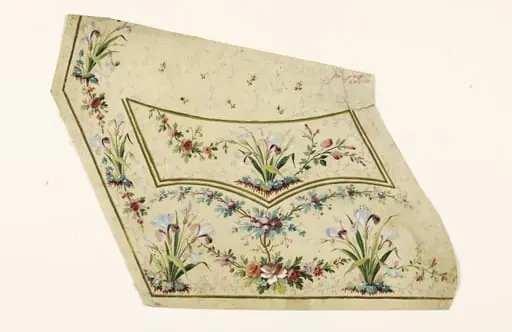 Composition de fleurs en bouquets et guirlandes de baies, projets de broderies de gilet, XVIIIème siècle
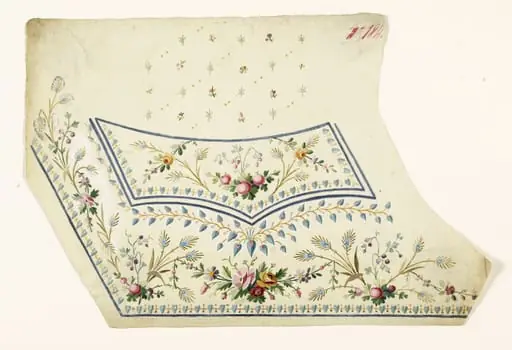 Composition de bouquets de fleurs et de baies et semis de fleurs, projets de broderies de gilet, XVIIIème siècle
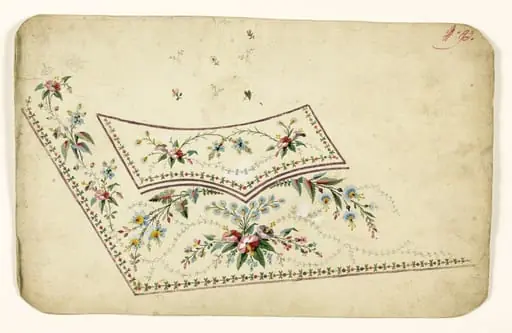 Composition de bouquets de fleurs et chardons, projets de broderies de gilet, XVIIIème siècle
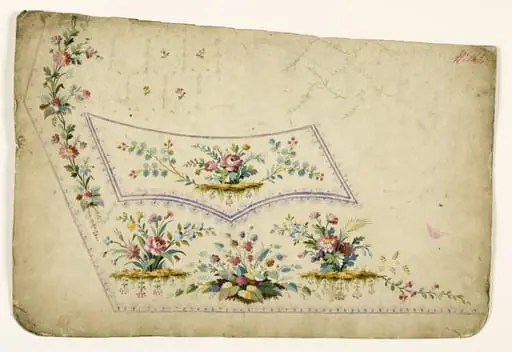 Compositions florales sur tertre et guirlandes de fleurs, projets de broderies de gilet, XVIIIème siècle
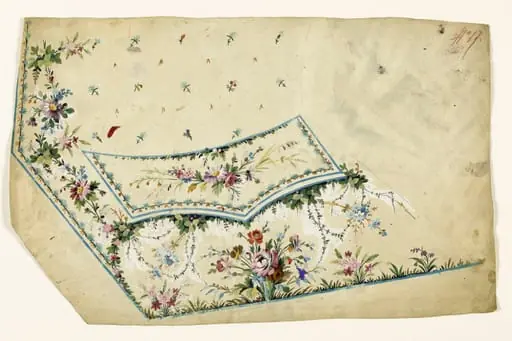 Bouquets de fleurs, guirlandes de feuilles et semis de fleurs, projets de broderies de gilet, XVIIIème siècle
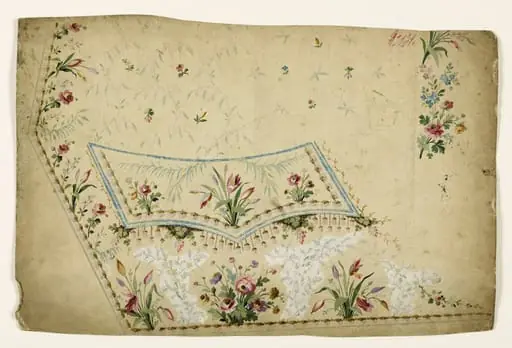 Composition avec bouquets de fleurs, frises de grappes et clochettes stylisées, projets de broderies de gilet, XVIIIème siècle
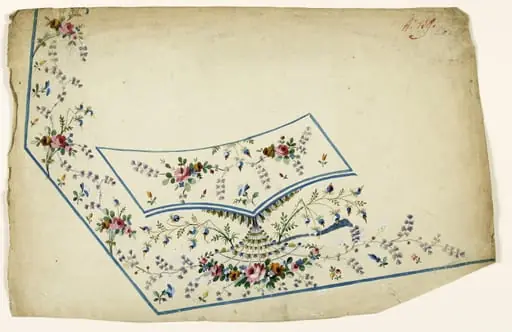 Composition à bouquet de fleurs en éventail et guirlandes de fleurs mauves, projets de broderies de gilet, XVIIIème siècle
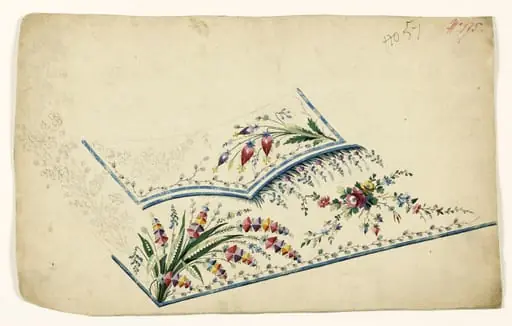 Composition en bouquets de fleurs et guirlandes de feuilles, projets de broderies de gilet, XVIIIème siècle
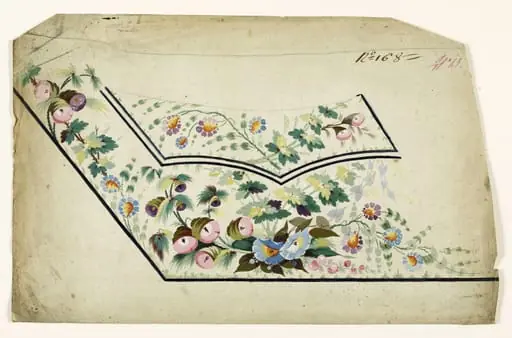 Composition de fleurs sauvages, projets de broderies de gilet, XVIIIème siècle
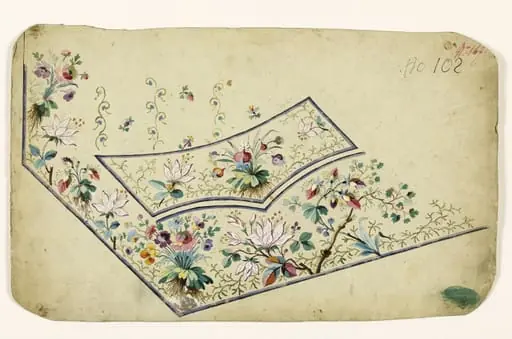 Composition de fleurs champêtres en branches et en bouquets, projets de broderies de gilet, XVIIIème siècle
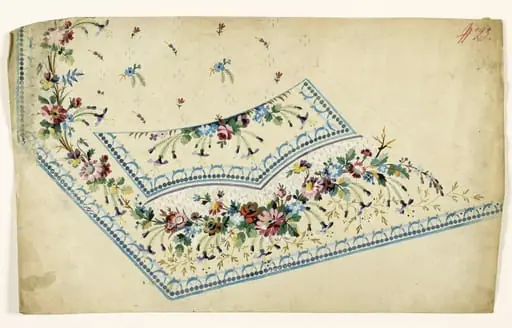 Composition de fleurs en guirlandes et en semis et frises de perles bleues, projets de broderies de gilet, XVIIIème siècle
 Composition de fleurs en branches et en bouquets, projets de broderies de gilet, XVIIIème siècle