Artwork
Composition florale de coquelicots et fleurs sauvages bleues, guirlandes de fleurs et frises de perles mauves, projets de broderies de gilet, XVIIIème siècle
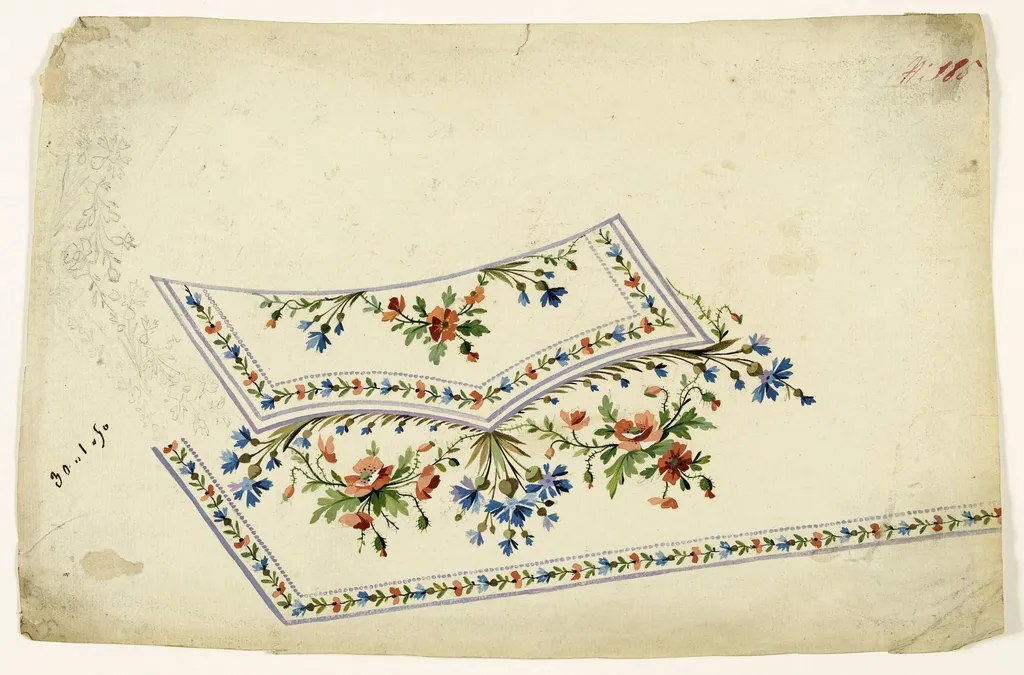
Composition florale de coquelicots et fleurs sauvages bleues, guirlandes de fleurs et frises de perles mauves, projets de broderies de gilet, XVIIIème siècle is a drawing by Anonyme. It dates from 1750 and is held in the collection of the Palais Galliera - Musée de la Mode de la Ville de Paris. This anonymous 18th-century drawing, dated around 1750, presents a decorative textile design intended for embroidery.
About this work
Overview
It features two central diamond-shaped fields filled with wildflowers—red poppies and blue cornflowers—arranged with botanical precision.
This anonymous 18th-century drawing, dated around 1750, presents a decorative textile design intended for embroidery. It features two central diamond-shaped fields filled with wildflowers—red poppies and blue cornflowers—arranged with botanical precision. Surrounding these panels are vine-like borders and a continuous frieze of small purple beads, suggesting a finished garment’s edge. The plain background emphasizes the floral motifs, reinforcing their function as a pattern guide.
Subject & Meaning
The composition draws from natural forms—poppies, cornflowers, and foliage—common in European decorative arts of the period. These flowers carried no overt symbolic meaning but reflected contemporary tastes for botanically accurate ornamentation. Their arrangement, resembling stitched motifs, indicates a practical purpose: translating nature into wearable art. The design likely served as a template for embellishing menswear, particularly vests, where floral patterns conveyed refinement without overt display.
Technique & Style
Executed in ink or pencil on paper, the drawing employs fine, controlled lines to define each petal and leaf. The flowers are rendered with rhythmic repetition, mimicking the uniformity of embroidery stitches. Purple beadwork is suggested through tiny, evenly spaced dots along the borders, indicating a planned material contrast. The absence of shading or perspective aligns with the needs of textile pattern-making, prioritizing clarity and replicability over illusionistic depth.
History & Provenance
The drawing resides in the Museum of Ethnography, suggesting its acquisition as part of a broader collection of material culture rather than fine art. Its anonymous authorship reflects its utilitarian origin—likely created by a professional patternmaker or skilled artisan for a tailor or embroiderer. No documented ownership history exists prior to its museum acquisition, but its preservation implies recognition of its role in 18th-century dressmaking traditions.
Context
In mid-18th-century Europe, embroidered garments were markers of social status and craftsmanship. Floral motifs, especially those derived from wild plants, were popular in both aristocratic and middle-class attire. This design fits within a broader tradition of pattern books circulated among needleworkers and tailors. The inclusion of beadwork alongside stitched flowers points to a trend of mixed-media embellishment, blending textile techniques for visual richness.
Legacy
Though not signed or widely published, this drawing exemplifies the quiet, functional artistry behind everyday luxury in pre-industrial fashion. It survives as evidence of the skilled labor behind garments now lost to time. Its preservation in an ethnographic collection underscores its value not as fine art, but as a material witness to the techniques, aesthetics, and domestic economies of 18th-century textile production.
Artist & collection
Artist
A French designer from the 1700s made delicate flower drawings meant to decorate vests.
Museum
Palais Galliera - Musée de la Mode de la Ville de Paris
Continue through works from the same source collection.
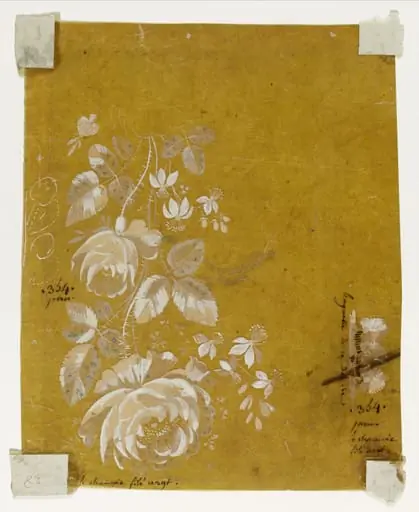 Bouquet de roses blanches pour étoffe, projets de broderies de gilet, XVIIIème siècle
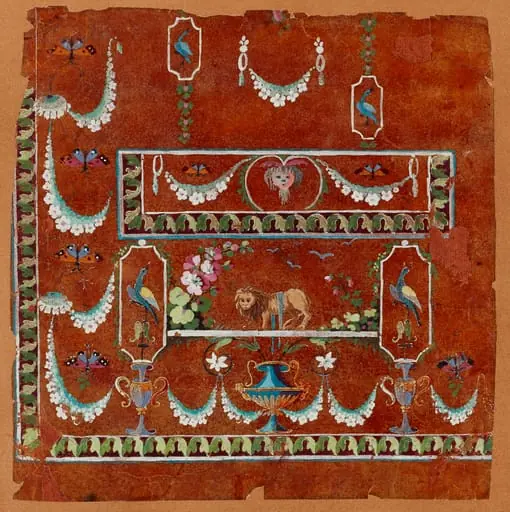 Gilet décor à grotesques, projets de broderies de gilet, XVIIIeme siècle
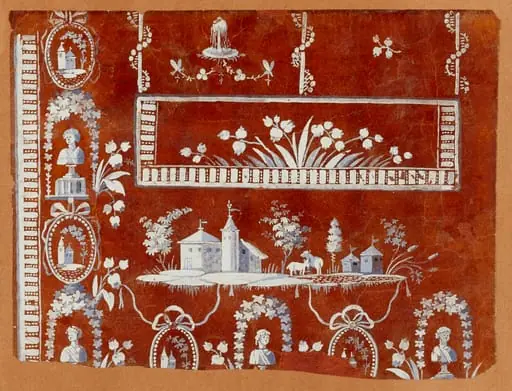 Gilet décor architectures rurales, projets de broderies de gilet, XVIIIème siècle
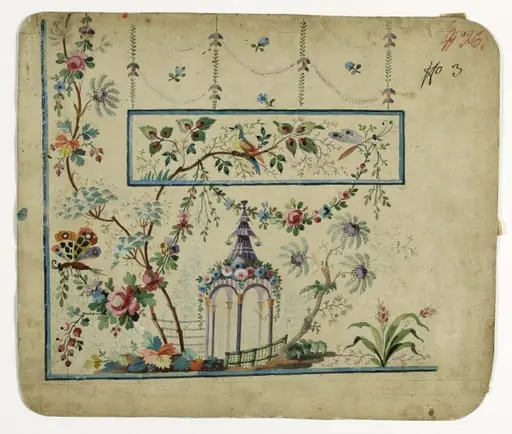 Gilet décor pagode, projets de broderies de gilet, XVIIIème siècle
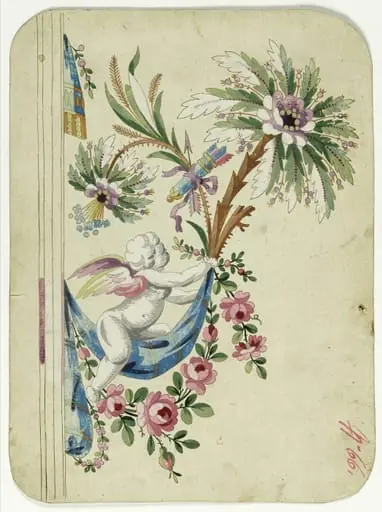 Décor de putti sur palmier, projets de broderies de gilet, XVIIIème siècle
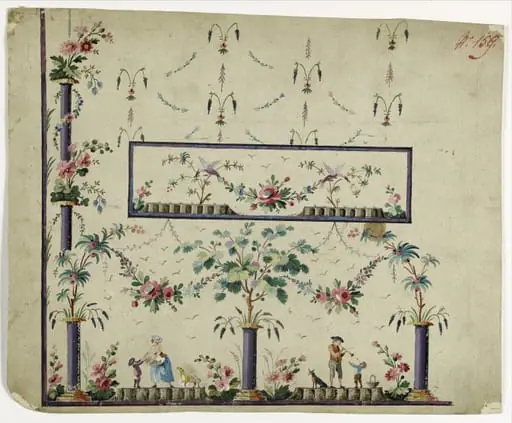 Gilet décor couple avec enfants, projets de broderies de gilet, XVIIIème siècle
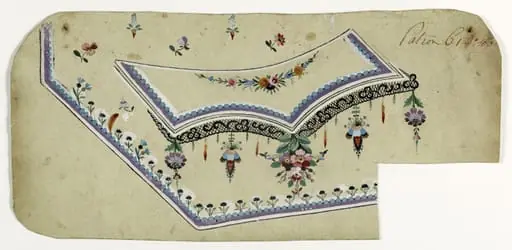 Gilet à la dentelle noire, projets de broderies de gilet, XVIIIème siècle
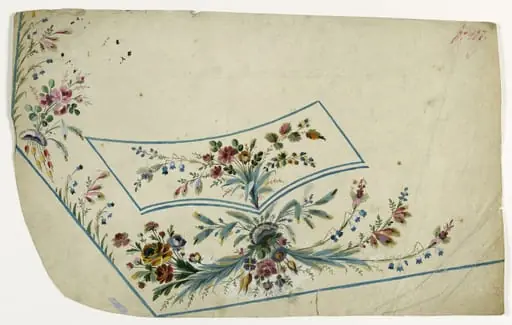 Gilet aux feuilles bleu-gris, projets de broderies de gilet, XVIIIème siècle
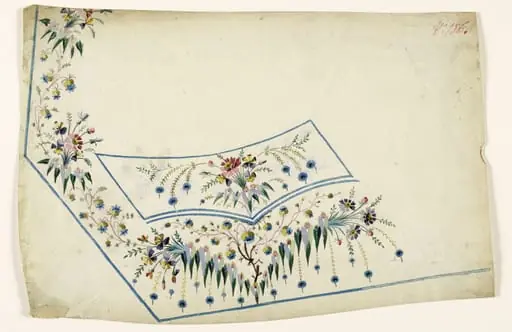 Composition florale en guirlandes, projets de broderies de gilet, XVIIIème siècle
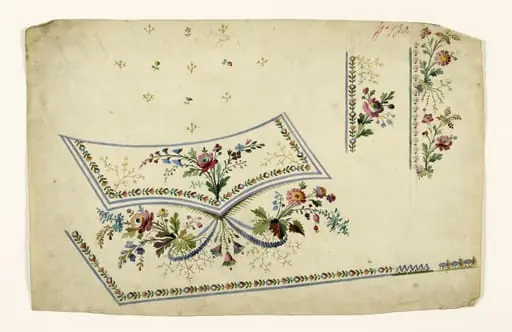 Composition florale avec bouquets et frises de fleurs stylisées, projets de broderies de gilet, XVIIIème siècle
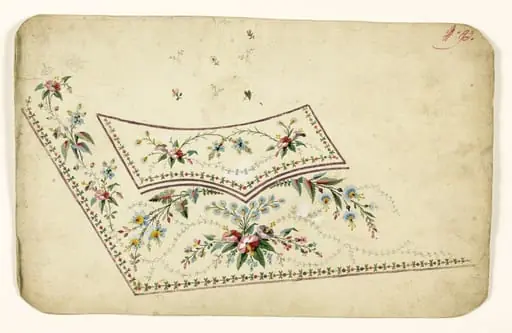 Composition de bouquets de fleurs et chardons, projets de broderies de gilet, XVIIIème siècle
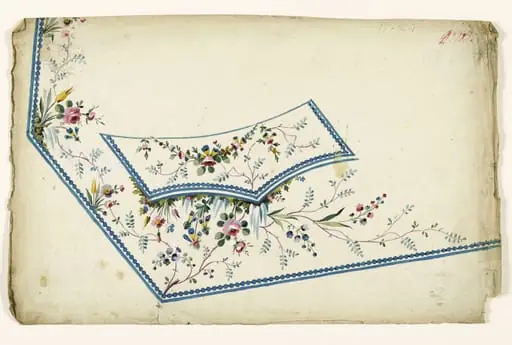 Composition de fleurs en branches et en bouquets, projets de broderies de gilet, XVIIIème siècle
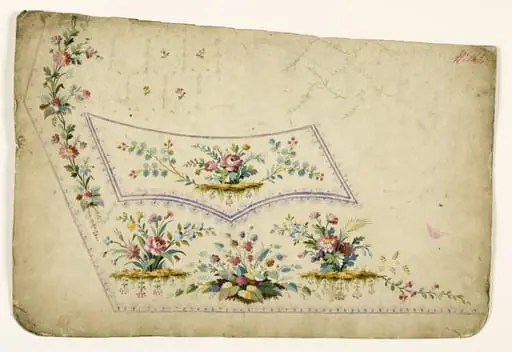 Compositions florales sur tertre et guirlandes de fleurs, projets de broderies de gilet, XVIIIème siècle
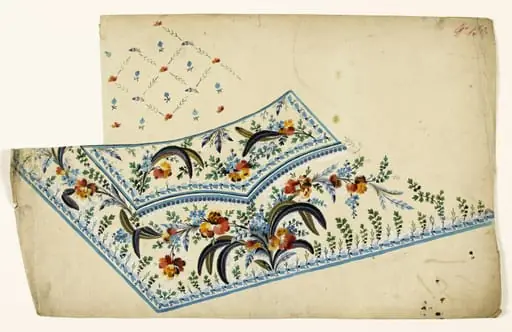 Composition de fleurs et de plumes en bouquets, frises de perles et de fleurs bleues, croisillons de plumes et de fleurs à semis de fleurs, projets de broderies de gilet, XVIIIème siècle
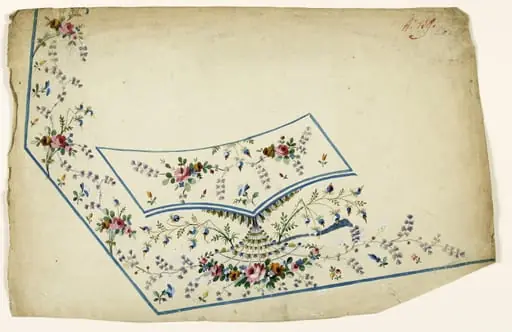 Composition à bouquet de fleurs en éventail et guirlandes de fleurs mauves, projets de broderies de gilet, XVIIIème siècle
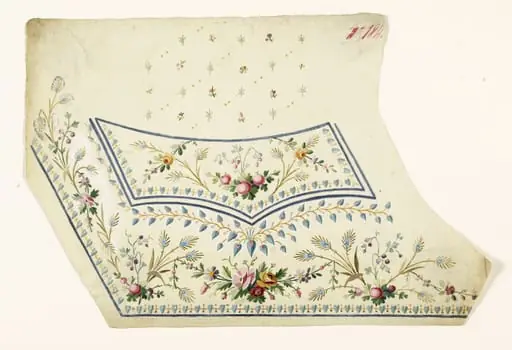 Composition de bouquets de fleurs et de baies et semis de fleurs, projets de broderies de gilet, XVIIIème siècle
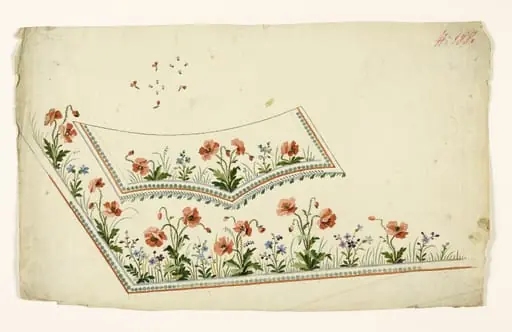 Composition florale aux coquelicots, projets de broderies de gilet, XVIIIème siècle
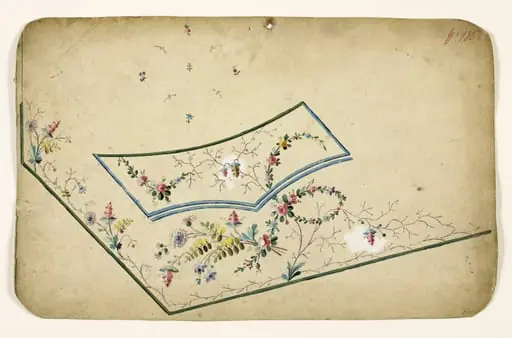 Composition florale avec guirlandes de branches et bandes bleues et vertes, projets de broderies de gilet, XVIIIème siècle
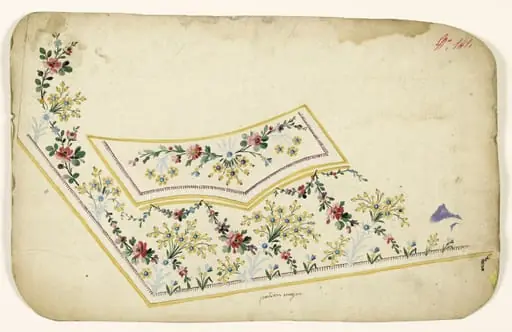 Composition de bouquets de fleurs jaunes, guirlandes de fleurs roses, frises de perles blanches et de franges pourpres et bandes jaunes, projets de broderies de gilet, XVIIIème siècle