Artwork
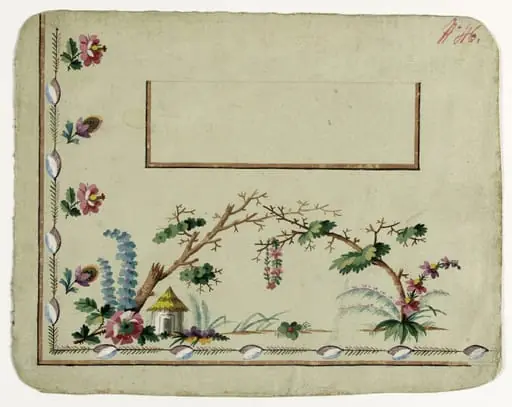
Gilet décor Enée aborde en Afrique ou en Italie [ ? ], projets de broderies de gilet, XVIIIème siècle
![Gilet décor Enée aborde en Afrique ou en Italie [ ? ], projets de broderies de gilet, XVIIIème siècle, by Anonyme, 1785](https://artifactworldgallery.com/img/anonyme--gilet-decor-enee-aborde-en-afrique-ou-en-italie-projets-de-b--71103e9e9849fdb0-w1024.webp)
Gilet décor Enée aborde en Afrique ou en Italie [ ? ], projets de broderies de gilet, XVIIIème siècle is a drawing by the Romanticist artist Anonyme. It dates from 1785 and is held in the collection of the Palais Galliera - Musée de la Mode de la Ville de Paris. The drawing, attributed to an anonymous hand and dated 1785, is part of the Museum of Ethnography’s collection.
About this work
Overview
The drawing, attributed to an anonymous hand and dated 1785, is part of the Museum of Ethnography’s collection. It functions as a design sketch for a decorative vest, with the upper portion left blank to accommodate embroidery. The composition combines a figurative scene with ornamental borders, serving as a practical template for textile artisans of the late eighteenth century.
Subject & Meaning
At the centre stands a gentleman in elaborate dress, positioned on a shoreline beside a fleet of ships. Palm trees and flowering plants frame the scene, suggesting an exotic locale—either an African or Italian coast—while the surrounding flora reinforces the decorative intent of the piece.
Technique & Style
Executed in fine line work, the drawing balances detailed figuration with stylised botanical motifs. The border is filled with vivid floral elements and purple stippling, typical of eighteenth‑century ornamental design. The empty upper zone indicates where needleworkers would transpose the motifs onto fabric, linking drawing and textile production.
History & Provenance
Created in 1785, the sketch entered the Museum of Ethnography’s holdings as part of its collection of historic costume and textile designs. Its anonymous authorship reflects the common practice of workshop‑produced pattern books, where individual designers were rarely recorded.
Context
During the late eighteenth century, European fashion embraced exotic themes, incorporating imagined scenes of distant lands into garment decoration. Such design sheets guided embroiderers in rendering elaborate vest ornaments, merging narrative imagery with the ornamental language of the period’s dressmaking.
Artist & collection
Artist
A French designer from the 1700s made delicate flower drawings meant to decorate vests.
Museum
Palais Galliera - Musée de la Mode de la Ville de Paris
Continue through works from the same source collection.
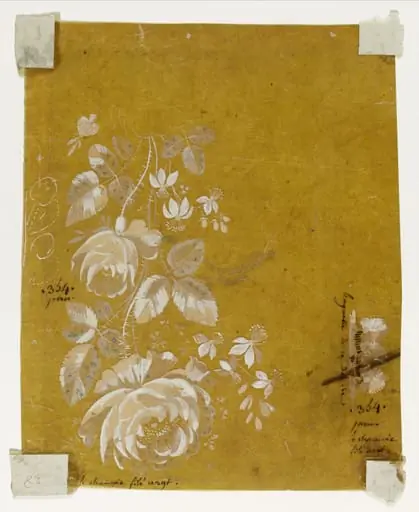 Bouquet de roses blanches pour étoffe, projets de broderies de gilet, XVIIIème siècle
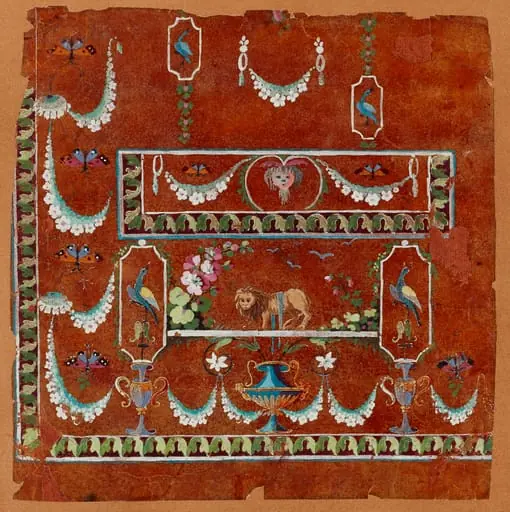 Gilet décor à grotesques, projets de broderies de gilet, XVIIIeme siècle
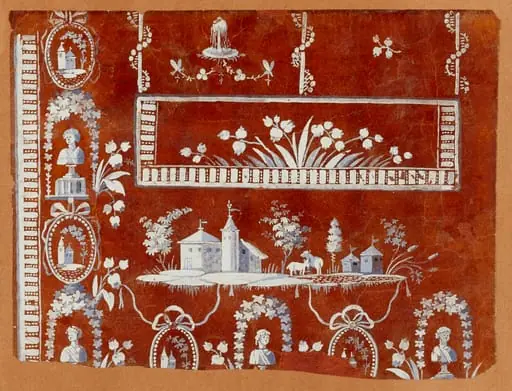 Gilet décor architectures rurales, projets de broderies de gilet, XVIIIème siècle
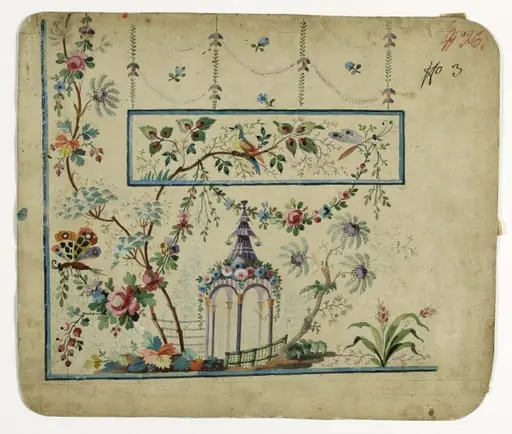 Gilet décor pagode, projets de broderies de gilet, XVIIIème siècle
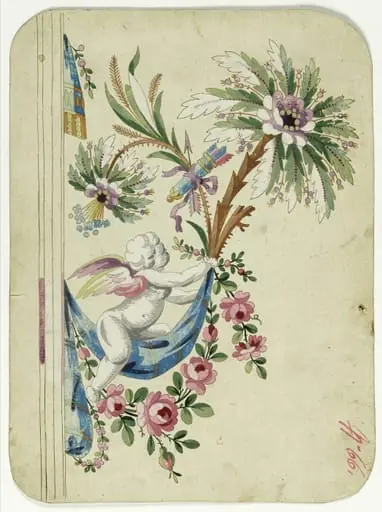 Décor de putti sur palmier, projets de broderies de gilet, XVIIIème siècle
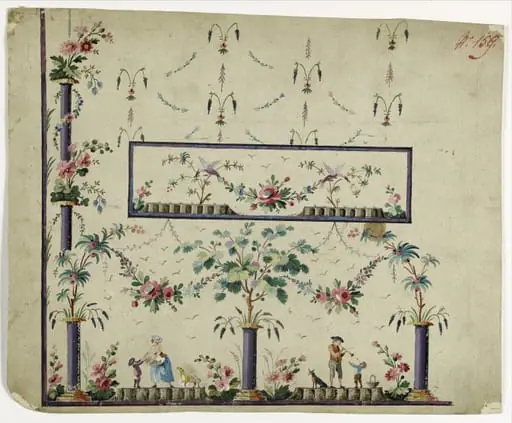 Gilet décor couple avec enfants, projets de broderies de gilet, XVIIIème siècle
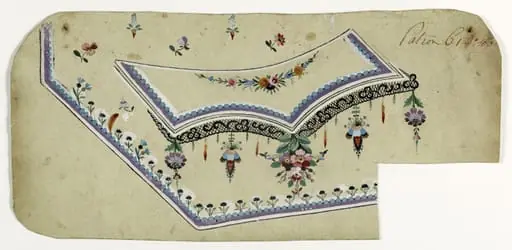 Gilet à la dentelle noire, projets de broderies de gilet, XVIIIème siècle
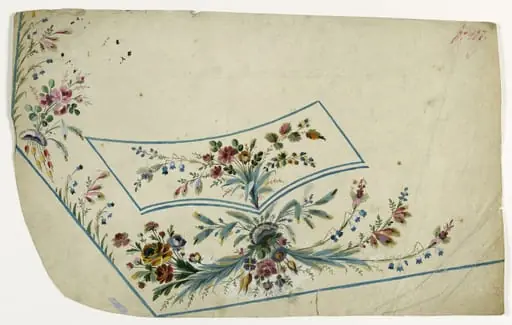 Gilet aux feuilles bleu-gris, projets de broderies de gilet, XVIIIème siècle
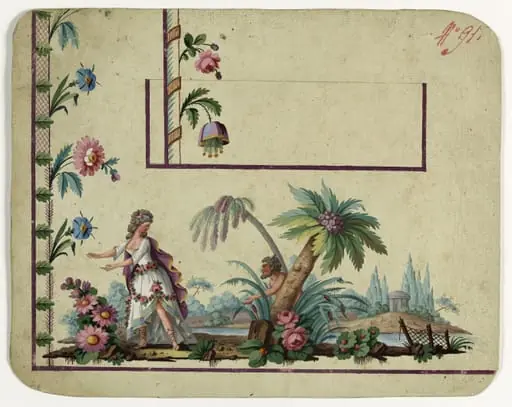 Gilet décor Flore et le faune, projets de broderies de gilet, XVIIIème siècle
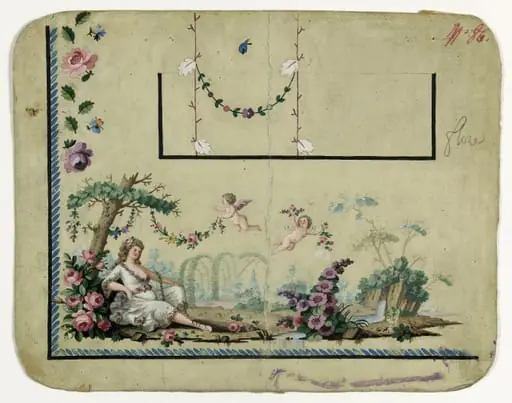 Gilet décor la déesse Flore dans un paysage, projets de broderies de gilet, XVIIIème siècle
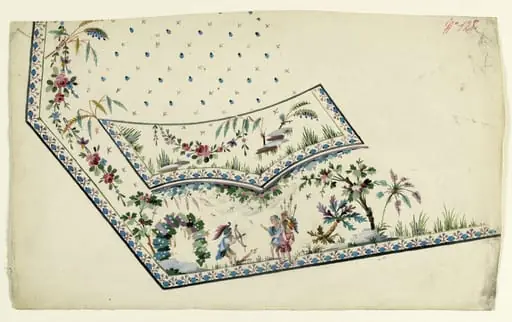 Gilet décor de paysage avec guerriers, projets de broderies de gilet, XVIIIème siècle
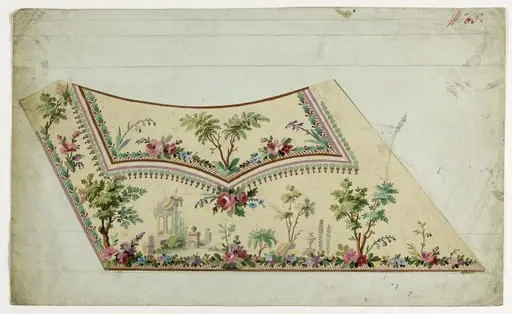 Gilet décor paysage architecture antique, projets de broderies de gilet, XVIIIème siècle
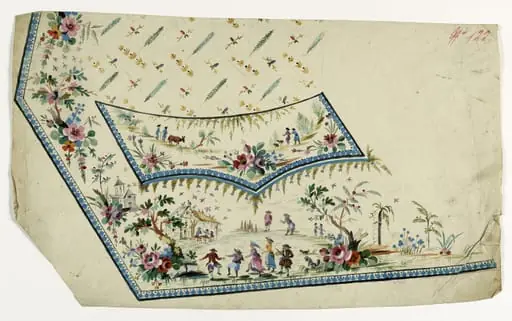 Gilet décor fête paysanne, projets de broderies de gilet, XVIIIème siècle
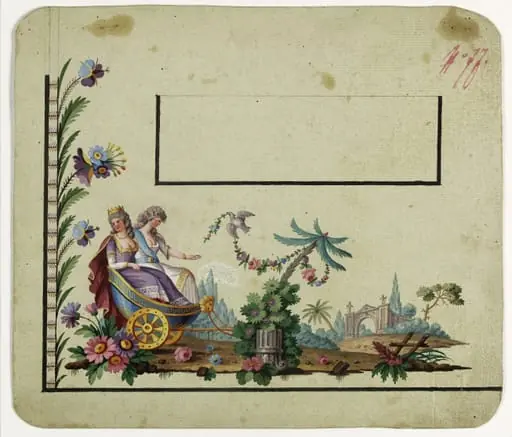 Gilet décor Didon en promenade sur un char, projets de broderies de gilet, XVIIIème siècle
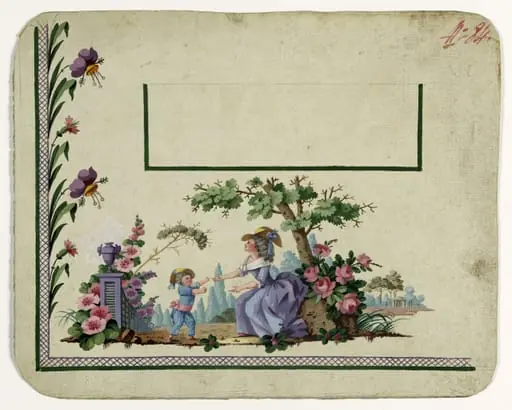 Gilet décor amour filial, projets de broderies de gilet, XVIIIème siècle
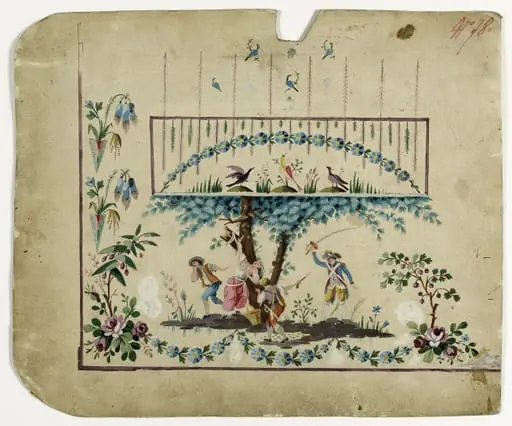 Gilet décor Louis Gillet délivrant une paysanne, projets de broderies de gilet, XVIIIème siècle
 Gilet décor petite chaumière, projets de broderies de gilet, XVIIIème siècle