Artwork
Gilet décor la déesse Flore avec un putti en pierre, projets de broderies de gilet, XVIIIème siècle
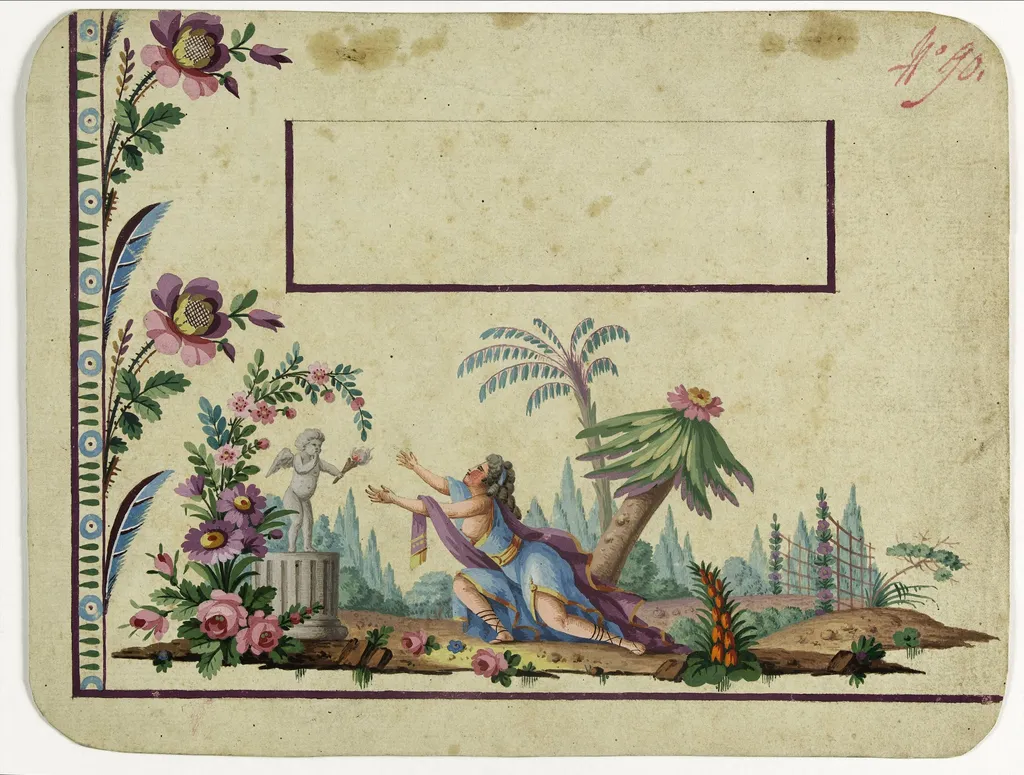
Gilet décor la déesse Flore avec un putti en pierre, projets de broderies de gilet, XVIIIème siècle is a drawing by Anonyme. It dates from 1750 and is held in the collection of the Palais Galliera - Musée de la Mode de la Ville de Paris. This 18th-century drawing, attributed to an anonymous artist, functions as a design template for embroidered waistcoats.
About this work
Overview
This 18th-century drawing, attributed to an anonymous artist, functions as a design template for embroidered waistcoats. Created around 1750, it depicts a mythological scene intended for textile reproduction. The work is held in the collection of the Museum of Ethnography and reflects the intersection of fine art and decorative craft in European fashion design of the period.
Subject & Meaning
The central figure, identified as Flora, the Roman goddess of spring and flowers, kneels beside a tree, reaching toward a winged putto.
The central figure, identified as Flora, the Roman goddess of spring and flowers, kneels beside a tree, reaching toward a winged putto. The imagery evokes themes of renewal and natural abundance, aligning with classical allegories popular in Rococo aesthetics. The surrounding garden, fence, and distant architecture frame the scene as an idealized pastoral space, reinforcing the connection between femininity, nature, and ornamental beauty.
Technique & Style
Rendered in vibrant pigments of pink, green, and blue, the drawing employs fluid lines and decorative borders typical of textile design sketches. The composition is carefully balanced to accommodate embroidery patterns, with open space at the top likely reserved for repeating motifs. The stylized flora and architectural elements suggest influence from engraved ornament books, adapted for handwork on luxury garments.
History & Provenance
The drawing was likely produced in France or Italy during the mid-1700s, a time when embroidered waistcoats were fashionable among elite men and women. It was preserved not as a finished artwork but as a working model, possibly used by a workshop of embroiderers. Its survival in a museum collection reflects later scholarly interest in the material culture of dress.
Context
In the 18th century, elaborate embroidery was a marker of status and refinement. Designers created detailed drawings like this one to guide artisans in translating painterly compositions into stitched patterns on silk and linen. Such templates bridged fine art traditions and domestic labor, often circulating among workshops before being applied to garments worn at court or in urban salons.
Legacy
This drawing survives as a rare artifact of the collaborative process behind luxury textile production. It illuminates the role of anonymous designers in shaping fashion and the ways classical mythology was repurposed for decorative arts. Today, it serves as a document of craftsmanship, offering insight into the unseen labor behind elite dress in the Age of Enlightenment.
Artist & collection
Artist
A French designer from the 1700s made delicate flower drawings meant to decorate vests.
Museum
Palais Galliera - Musée de la Mode de la Ville de Paris
Continue through works from the same source collection.
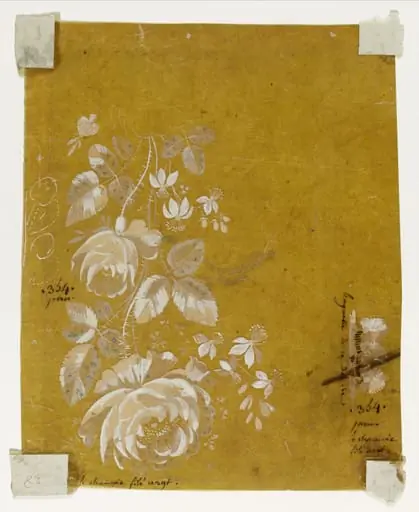 Bouquet de roses blanches pour étoffe, projets de broderies de gilet, XVIIIème siècle
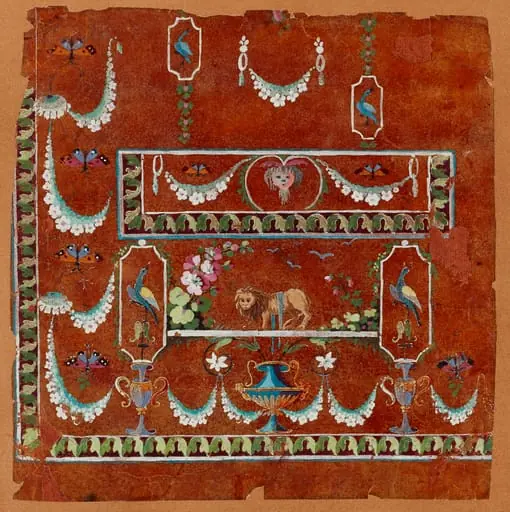 Gilet décor à grotesques, projets de broderies de gilet, XVIIIeme siècle
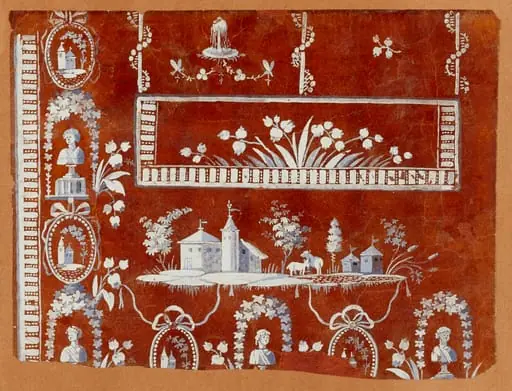 Gilet décor architectures rurales, projets de broderies de gilet, XVIIIème siècle
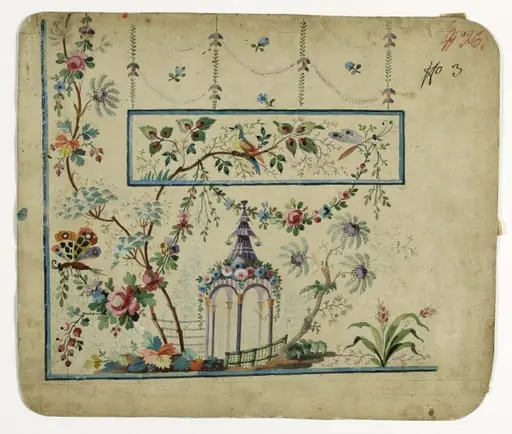 Gilet décor pagode, projets de broderies de gilet, XVIIIème siècle
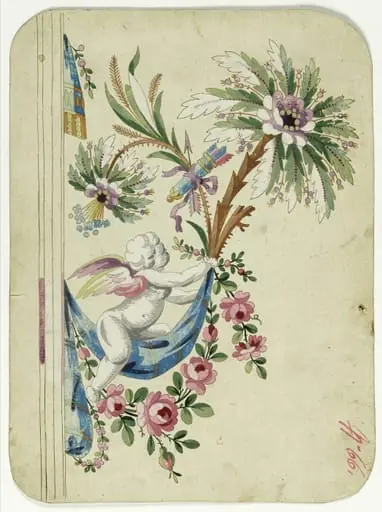 Décor de putti sur palmier, projets de broderies de gilet, XVIIIème siècle
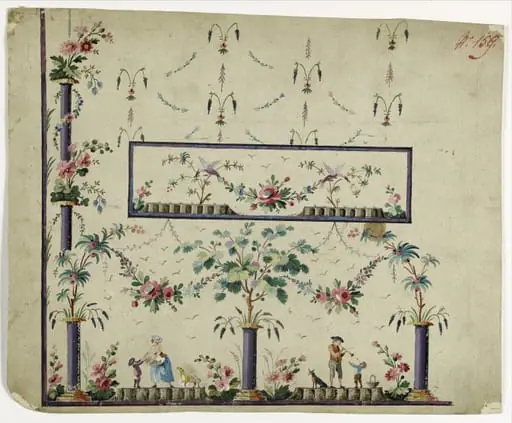 Gilet décor couple avec enfants, projets de broderies de gilet, XVIIIème siècle
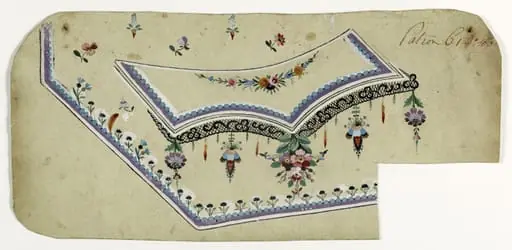 Gilet à la dentelle noire, projets de broderies de gilet, XVIIIème siècle
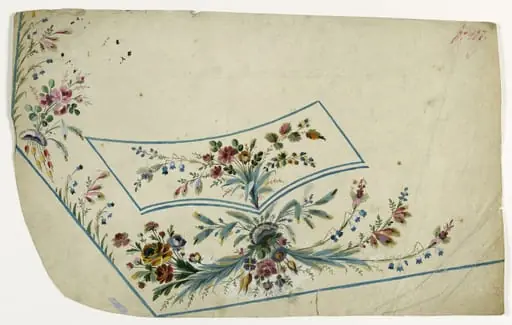 Gilet aux feuilles bleu-gris, projets de broderies de gilet, XVIIIème siècle
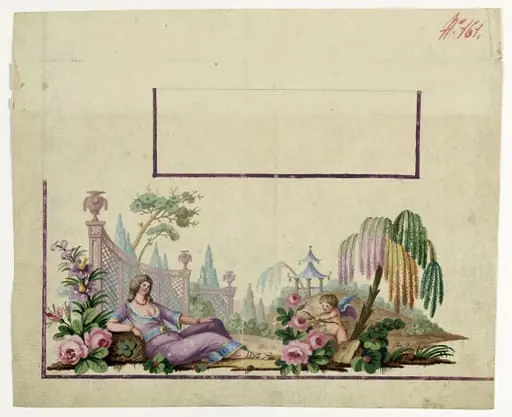 Gilet décor la déesse Flore dans un paysage de treillage, projets de broderies de gilet, XVIIIème siècle
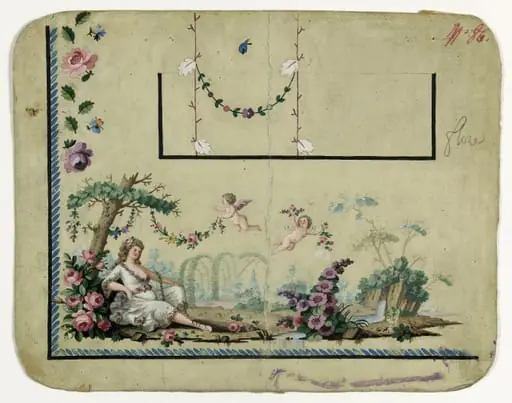 Gilet décor la déesse Flore dans un paysage, projets de broderies de gilet, XVIIIème siècle
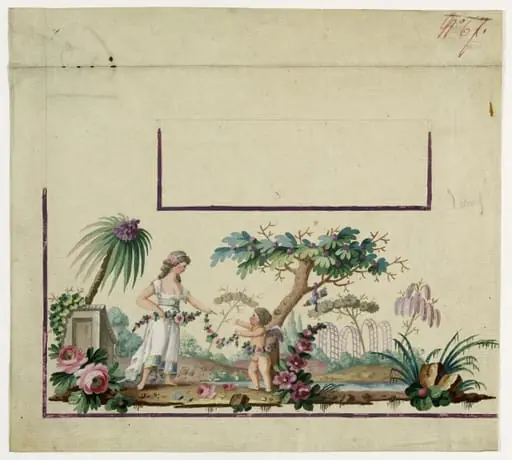 Gilet décor la déesse Flore en conversation avec un amour, projets de broderies de gilet, XVIIIème siècle
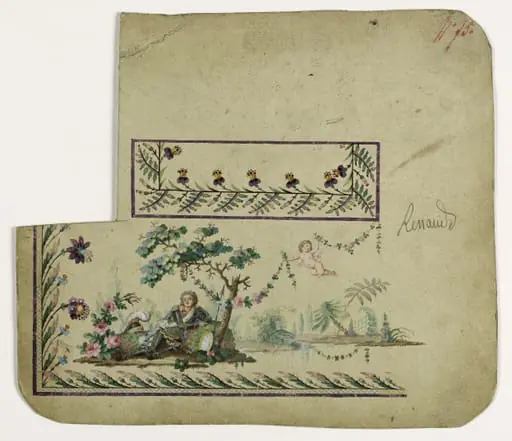 Gilet décor Renaud enchanté par Armide, projets de broderies de gilet, XVIIIème siècle
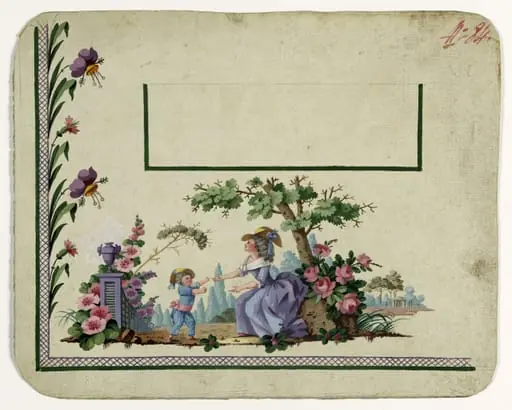 Gilet décor amour filial, projets de broderies de gilet, XVIIIème siècle
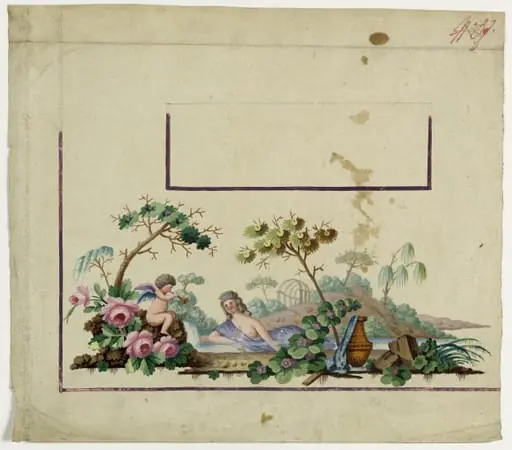 Gilet décor la déesse Flore au bain, projets de broderies de gilet, XVIIIème siècle
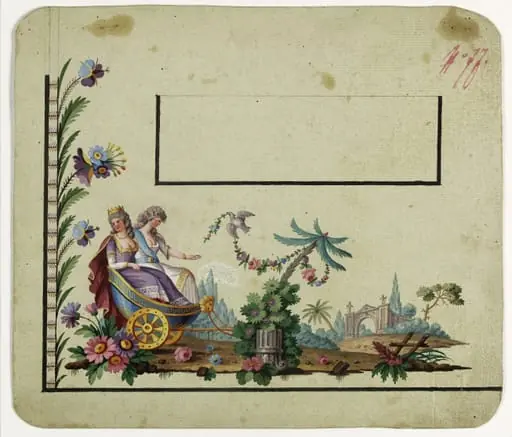 Gilet décor Didon en promenade sur un char, projets de broderies de gilet, XVIIIème siècle
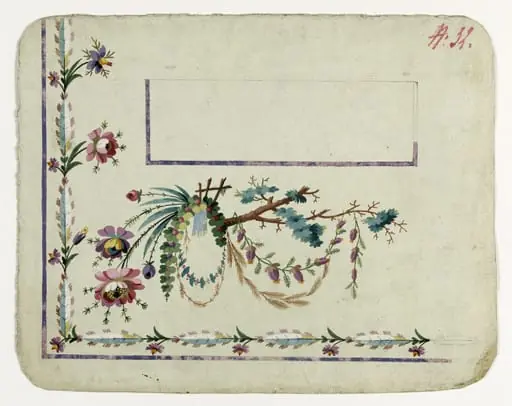 Gilet décor guirlande de branchage et de fleurs, projets de broderies de gilet, XVIIIème siècle