Artwork
Gilet décor fleurs et colibris, projets de broderies de gilet, XVIIIème siècle
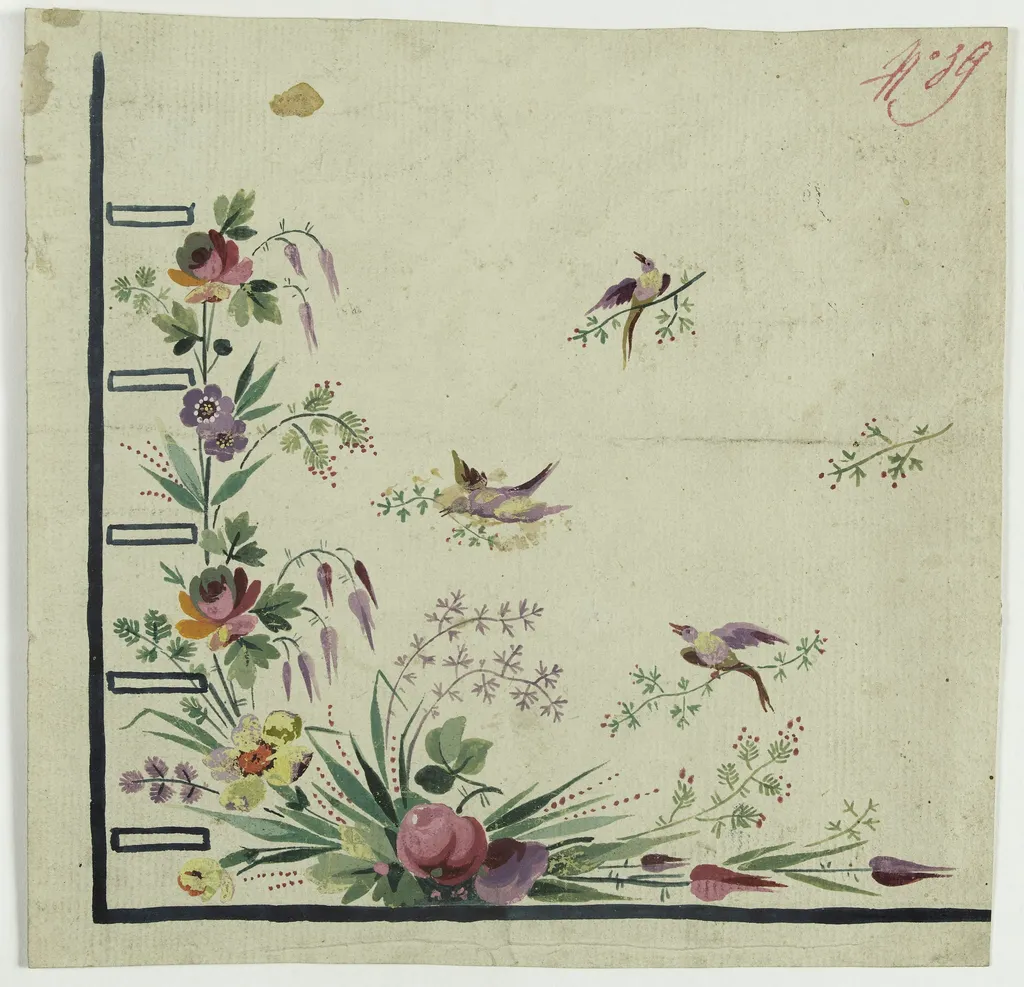
Gilet décor fleurs et colibris, projets de broderies de gilet, XVIIIème siècle is a drawing by the Romanticist artist Anonyme. It dates from 1785 and is held in the collection of the Palais Galliera - Musée de la Mode de la Ville de Paris. The piece is a paper design dating from 1785, attributed to an unknown artist.
About this work
Overview
The piece is a paper design dating from 1785, attributed to an unknown artist. It presents a decorative scheme intended for the embroidery of a men’s waistcoat, featuring stylised flora and avian motifs. The drawing is part of the collection of the Museum of Ethnography and exemplifies eighteenth‑century pattern planning for textile adornment.
Subject & Meaning
The arrangement creates a rhythmic, ornamental band that would have framed the garment’s front panels, marrying natural imagery with fashionable display.
Central to the composition are oversized blossoms rendered in vivid reds, purples and yellows, surrounded by verdant leaves. Interspersed among the flowers are diminutive birds, depicted in muted tones, suggesting hummingbirds or similar small species. The arrangement creates a rhythmic, ornamental band that would have framed the garment’s front panels, marrying natural imagery with fashionable display.
Technique & Style
Executed in ink or watercolor on a light‑coloured sheet, the design employs bold outlines and flat washes of colour. A dark vertical border on the left side frames a series of empty rectangles, likely placeholders for additional motifs or stitching guides. The overall aesthetic reflects the Rococo penchant for asymmetrical, flowing patterns adapted for textile use.
History & Provenance
Created in the late eighteenth century, the drawing entered the Museum of Ethnography’s holdings at an unspecified date, where it remains as a documentary example of period costume design. Its anonymous authorship is typical of workshop‑produced pattern books, which were circulated among tailors and embroiderers without individual attribution.
Context
During the 1700s, embroidered waistcoats were a staple of elite male dress in Europe, and pattern sheets such as this guided artisans in translating pictorial motifs into stitched relief. The inclusion of exotic birds aligns with contemporary fascination with the natural world and the influx of New World species into European decorative vocabularies.
Artist & collection
Artist
A French designer from the 1700s made delicate flower drawings meant to decorate vests.
Museum
Palais Galliera - Musée de la Mode de la Ville de Paris
Continue through works from the same source collection.
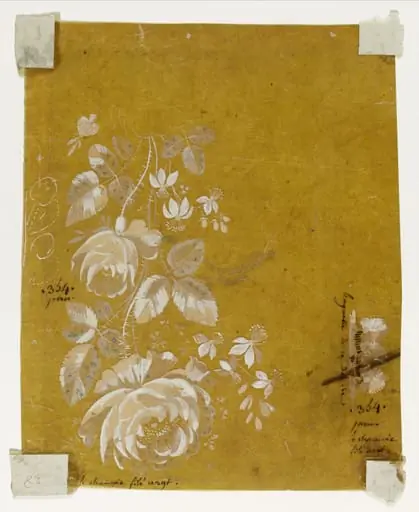 Bouquet de roses blanches pour étoffe, projets de broderies de gilet, XVIIIème siècle
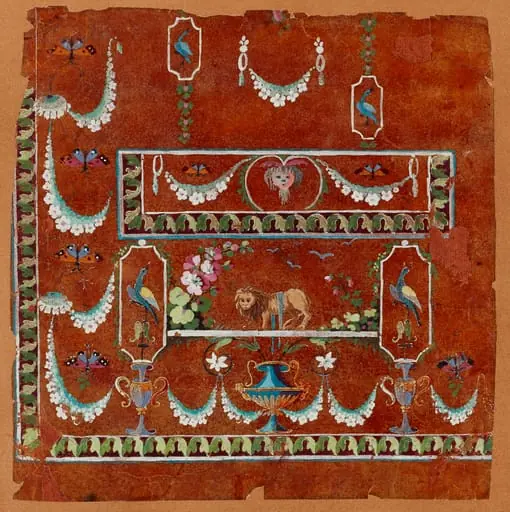 Gilet décor à grotesques, projets de broderies de gilet, XVIIIeme siècle
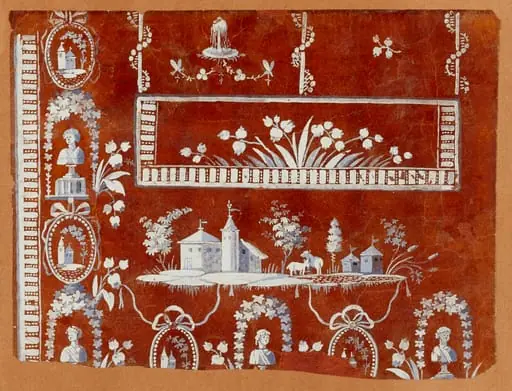 Gilet décor architectures rurales, projets de broderies de gilet, XVIIIème siècle
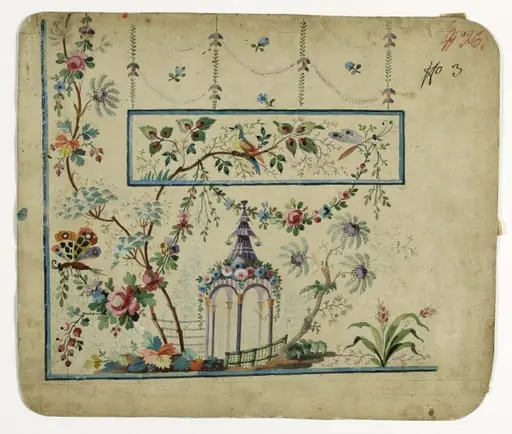 Gilet décor pagode, projets de broderies de gilet, XVIIIème siècle
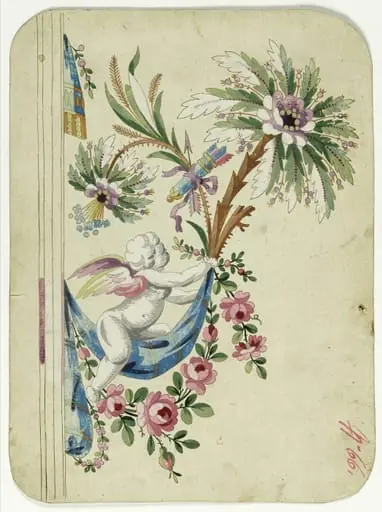 Décor de putti sur palmier, projets de broderies de gilet, XVIIIème siècle
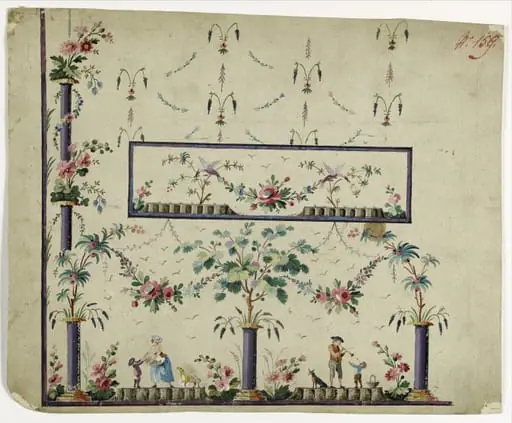 Gilet décor couple avec enfants, projets de broderies de gilet, XVIIIème siècle
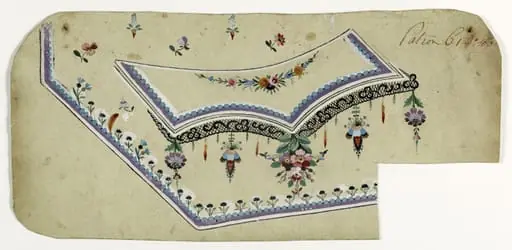 Gilet à la dentelle noire, projets de broderies de gilet, XVIIIème siècle
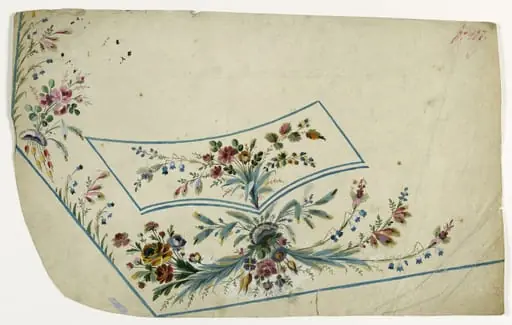 Gilet aux feuilles bleu-gris, projets de broderies de gilet, XVIIIème siècle
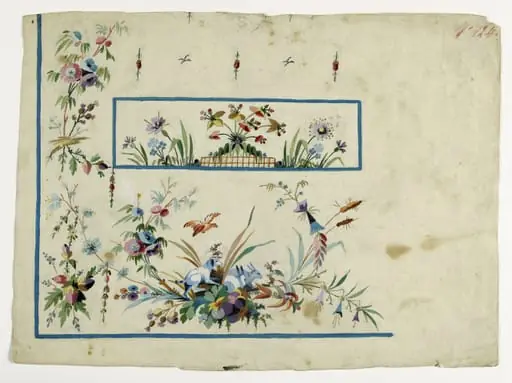 Gilet décor fleurs et fruits avec chien et lapins, projets de broderies de gilet, XVIIIème siècle
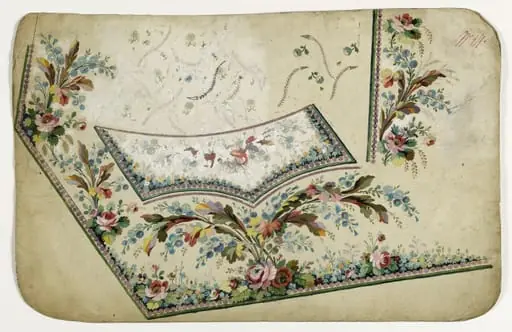 Gilet fleurs et feuilles multicolores, projets de broderies de gilet, XVIIIème siècle
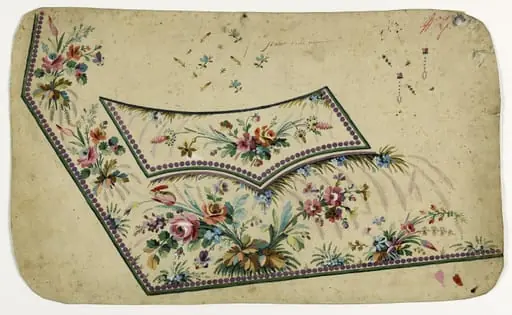 Gilet fleurs et perles mauves, projets de broderies de gilet, XVIIIème siècle
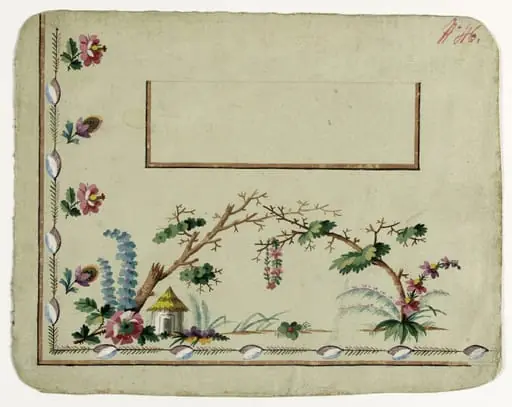 Gilet décor petite chaumière, projets de broderies de gilet, XVIIIème siècle
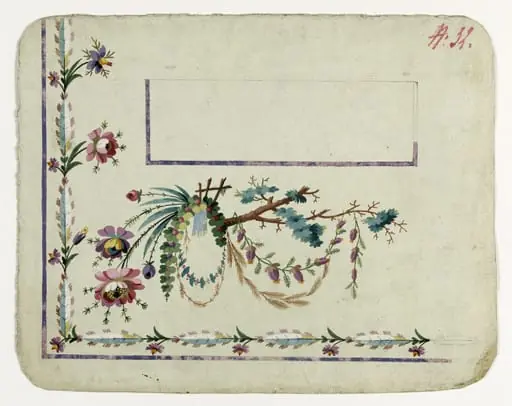 Gilet décor guirlande de branchage et de fleurs, projets de broderies de gilet, XVIIIème siècle
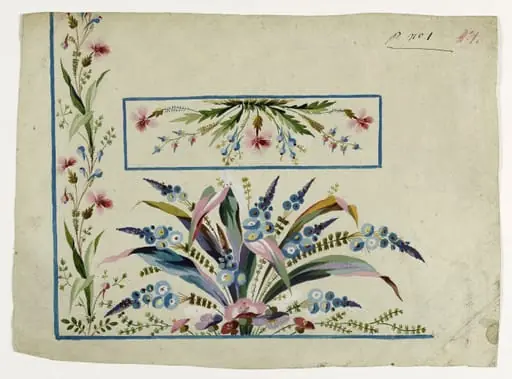 Gilet décor bouquet de bleuets et d'oeillets, projets de broderies de gilet, XVIIIème siècle
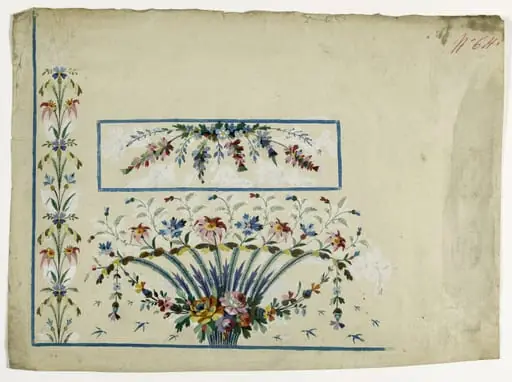 Gilet décor bouquet oeillets et églantines, projets de broderies de gilet, XVIIIème siècle
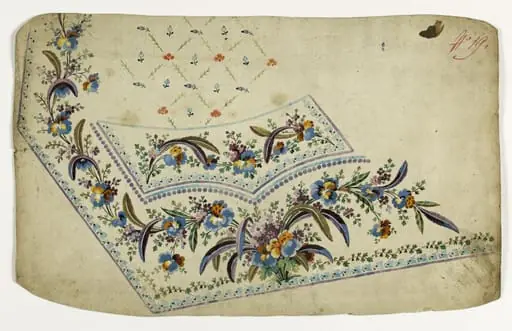 Gilet fleurs bleues et orange, projets de broderies de gilet, XVIIIème siècle
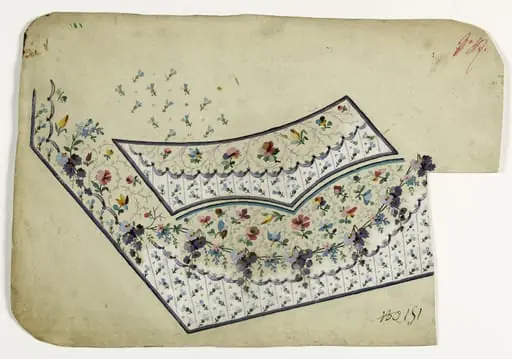 Gilet au décor tapissant, projets de broderies de gilet, XVIIIème siècle