Artwork
Allegorical Figure (recto)
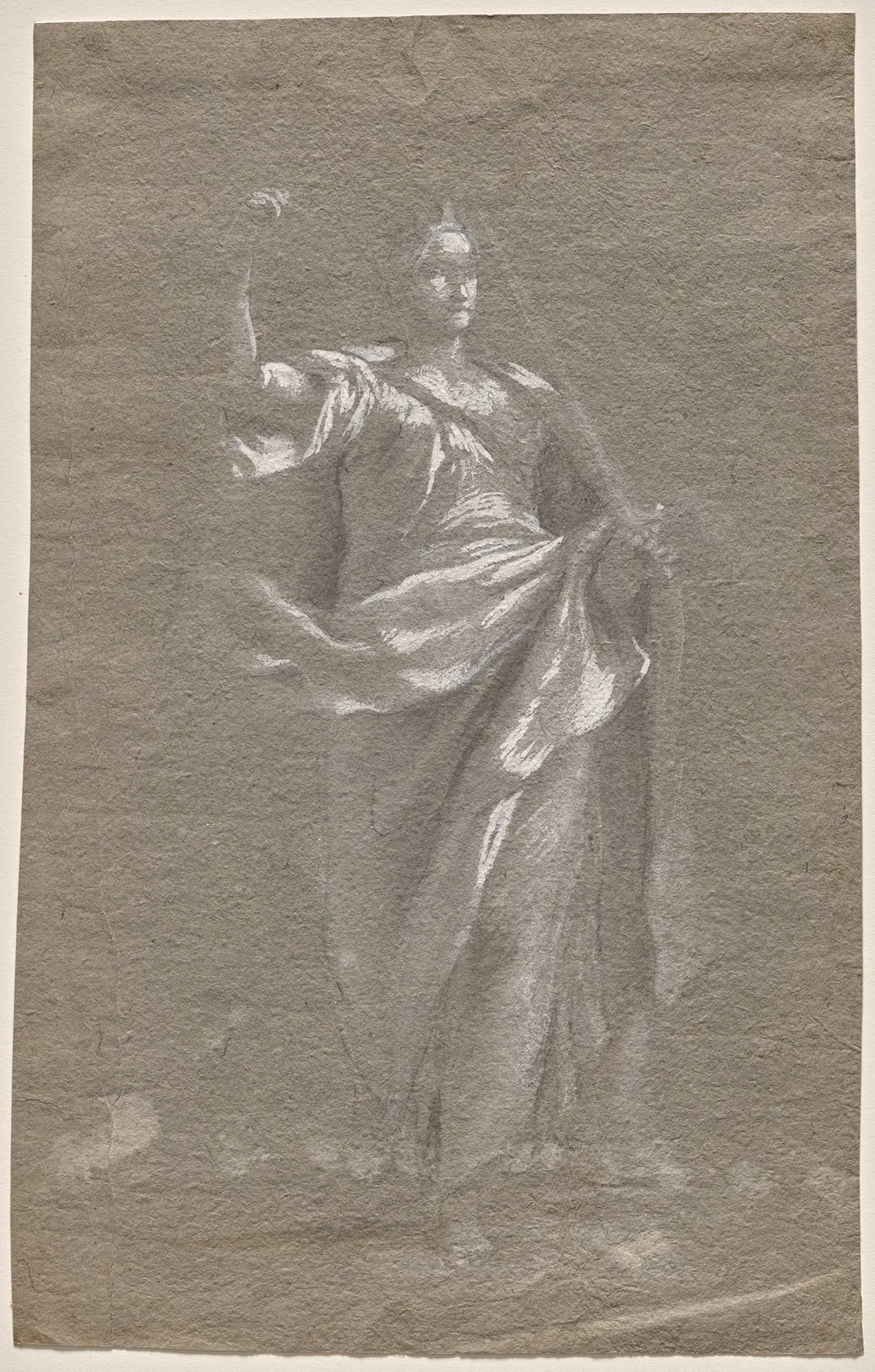
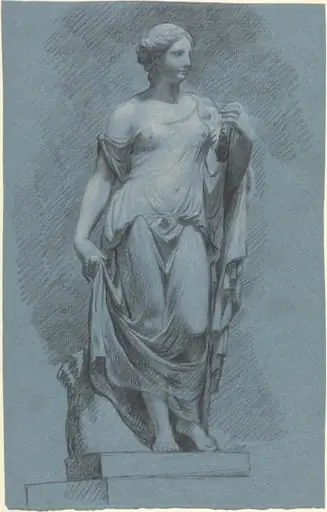
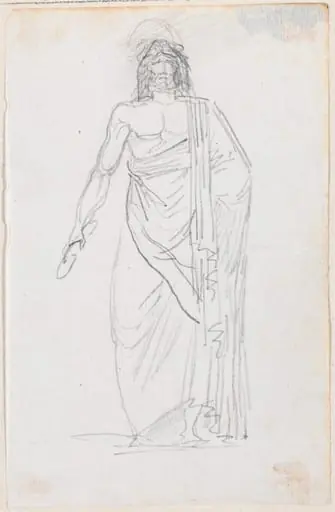
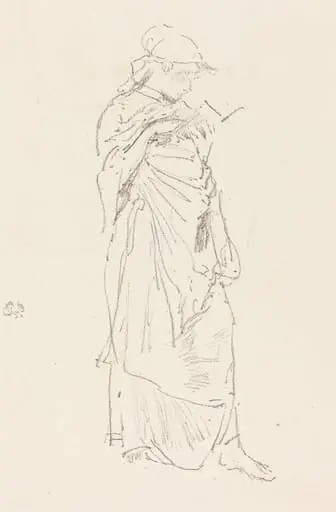
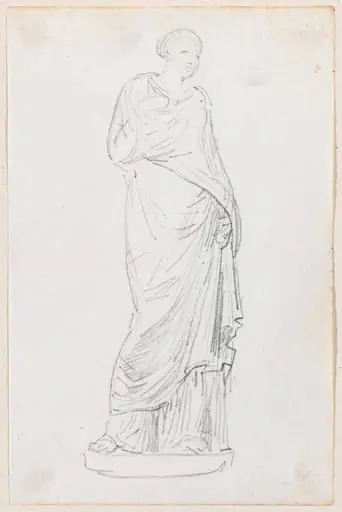
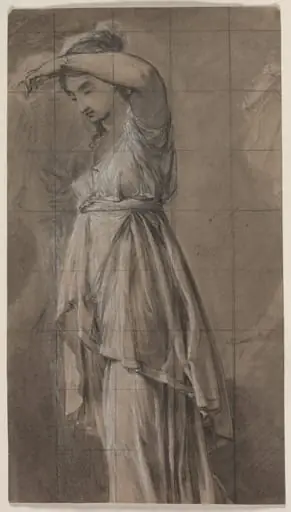
Allegorical Figure (recto) is a drawing by the Romanticist artist Unknown. It dates from 1804 and is held in the collection of the Cleveland Museum of Art. This drawing presents a solitary, indistinct figure rendered in monochrome.
About this work
Overview
This drawing presents a solitary, indistinct figure rendered in monochrome. The form emerges faintly from a coarse, gray background, suggesting a surface like aged paper or weathered stone. Executed with rapid, uneven strokes, the figure appears deliberately incomplete, as if captured in a moment of transition or left intentionally unresolved by the artist.
Subject & Meaning
The figure lacks identifiable features or attributes, resisting clear allegorical classification. Its blurred face and ambiguous posture evoke anonymity and impermanence. The raised arm may suggest invocation or surrender, while the loose limb implies resignation. The work invites contemplation of absence, memory, or the fragility of identity rather than conveying a specific narrative.
Technique & Style
The artist employed minimal, gestural lines to suggest form, avoiding definition in favor of suggestion. The background’s textured gray tone contrasts with the figure’s faint contours, creating subtle depth without traditional shading. The absence of chiaroscuro reinforces the work’s ethereal quality, prioritizing ambiguity over dramatic contrast or polished finish.
History & Provenance
The drawing’s origin and authorship remain undocumented. Its material and execution align with studies or preparatory sketches from the late Renaissance or early Baroque periods, though no definitive attribution exists. It has likely passed through private collections, preserved for its evocative quality rather than its historical significance.
Context
During the 16th and 17th centuries, artists frequently produced unfinished studies to explore form, gesture, or mood. This drawing fits within that tradition—less a finished work than a moment of visual inquiry. Its rawness reflects a practice where the act of drawing itself held value beyond the final image.
Legacy
Though not widely known, the drawing exemplifies how restraint and incompleteness can evoke emotional resonance. Its quiet presence has influenced later artists drawn to ambiguity and the expressive potential of the sketch. It endures not as a resolved statement, but as an open-ended meditation on presence and erasure.
Artist & collection

 Domestic Scene
 Giacomo and Cardinal Marco, investing Andrea, Abbot of San Zeno, with his Benefice
 The Nymph of Fontainebleau
 Portrait of a Woman
 Madonna and Child with Saints in the Enclosed Garden
 Venus and Minerva
 Family Group of Four on Sofa
 Wall painting from Room H of the Villa of P. Fannius Synistor at Boscoreale
![Statue of Abundance [recto], by Hubert Robert](https://artifactworldgallery.com/img/hubert-robert--statue-of-abundance-recto--af10c767ab97b269-w320.webp)