Artwork
The Raising of Lazarus
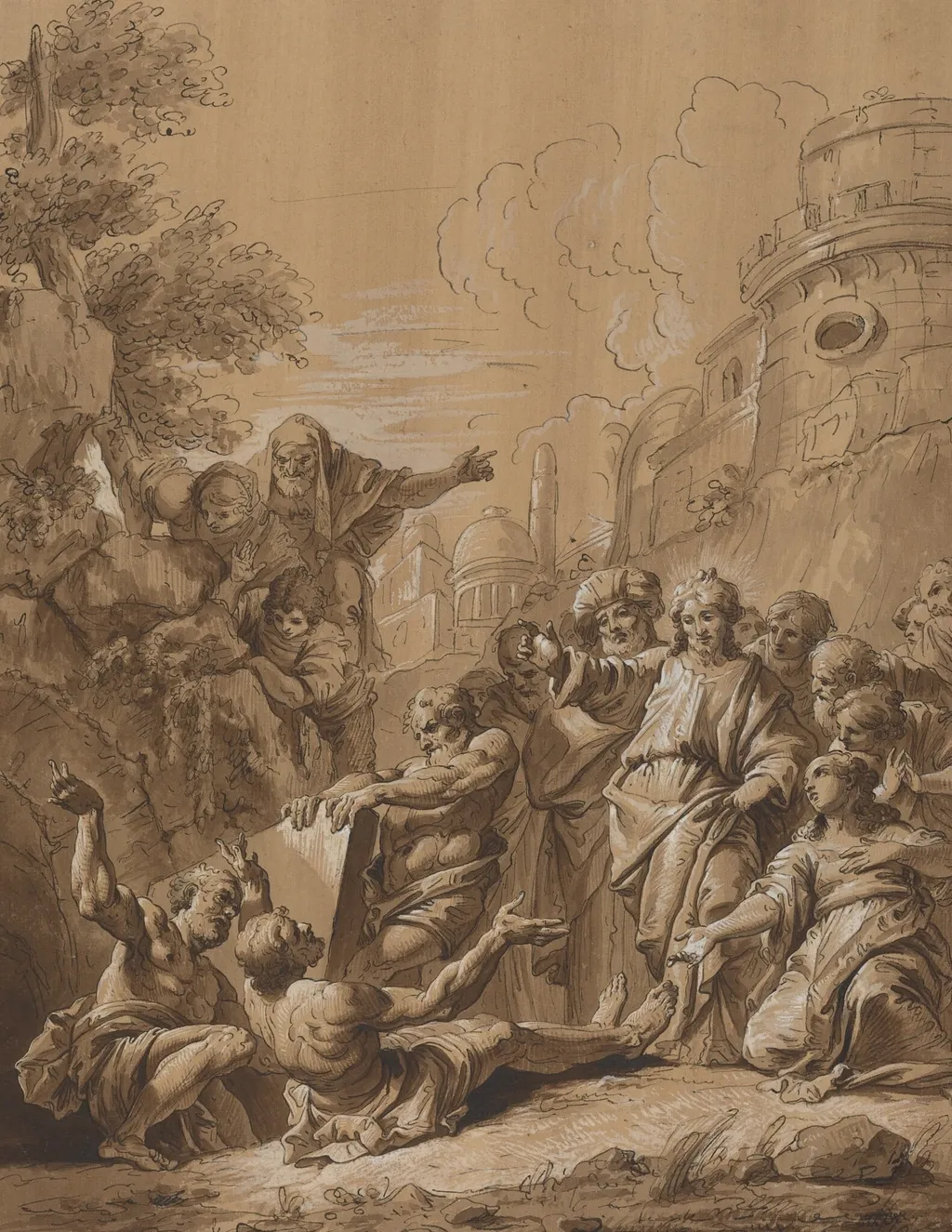
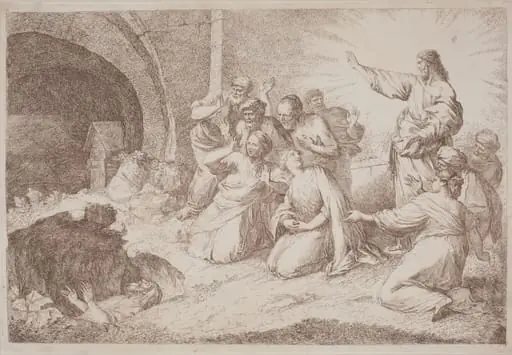
The Raising of Lazarus is an ink drawing by the Baroque artist Unknown. It dates from 1701 and is held in the collection of the National Gallery of Art. The work is a pen and brown‑ink drawing on prepared laid paper, enhanced with brown wash and touches of white.
About this work
Overview
The work is a pen and brown‑ink drawing on prepared laid paper, enhanced with brown wash and touches of white. It depicts a crowded, turbulent moment in which a group of figures surrounds a prone man, their gestures ranging from pointing upward to expressions of alarm. Architectural elements—a building with columns and a dome—frame the scene, contributing to its dramatic composition.
Subject & Meaning
The central figure appears to be a man lying on the ground, likely representing the biblical Lazarus at the moment of his resurrection. The surrounding onlookers, caught in various states of shock and curiosity, emphasize the miraculous nature of the event and the communal response to a divine intervention.
Technique & Style
The artist employs rapid, sketchy lines to convey movement and emotional intensity, creating a sense of immediacy. Contrasting brown washes with highlighted white areas generate a strong chiaroscuro effect, reinforcing the urgency and depth of the scene. The handling of ink and wash reflects a Baroque sensibility toward dynamic composition and dramatic lighting.
Context
Executed as a preparatory or standalone study, the drawing illustrates the artist’s interest in rendering complex narrative moments with expressive line work. Its emphasis on gesture and atmosphere aligns with broader 17th‑century artistic trends that favored theatricality and emotional engagement in religious subjects.
Artist & collection

 Domestic Scene
 Giacomo and Cardinal Marco, investing Andrea, Abbot of San Zeno, with his Benefice
 The Nymph of Fontainebleau
 Portrait of a Woman
 Madonna and Child with Saints in the Enclosed Garden
 Venus and Minerva
 Family Group of Four on Sofa
 Wall painting from Room H of the Villa of P. Fannius Synistor at Boscoreale
 Moses and the Brazen Serpent
 Martyrdom of a Female Saint
 Moses Striking the Rock
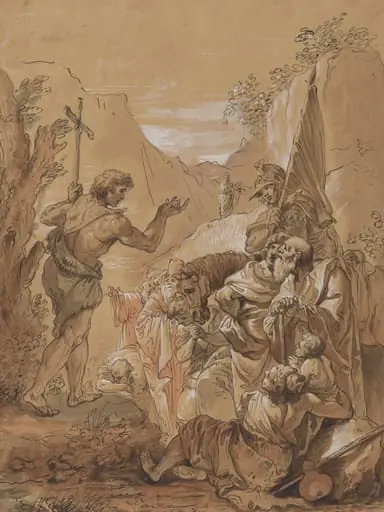 Preaching of John the Baptist in the Wilderness
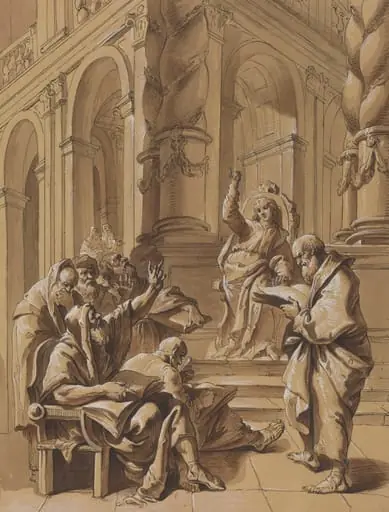 Christ among the Doctors
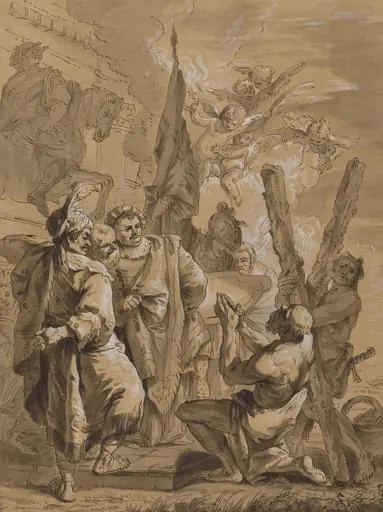 Martyrdom of Saint Andrew
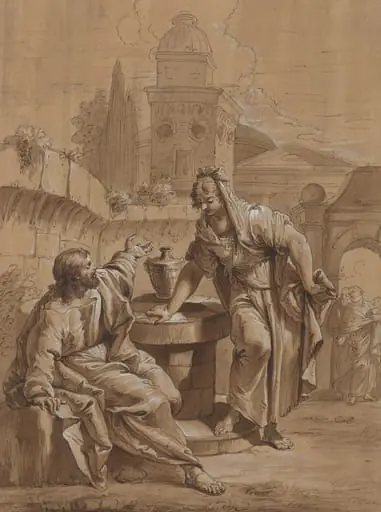 Christ and the Woman of Samaria
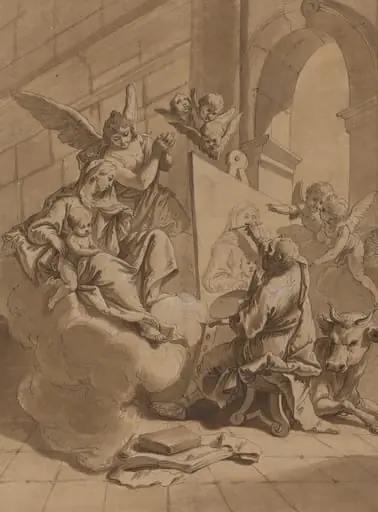 Saint Luke Painting the Virgin
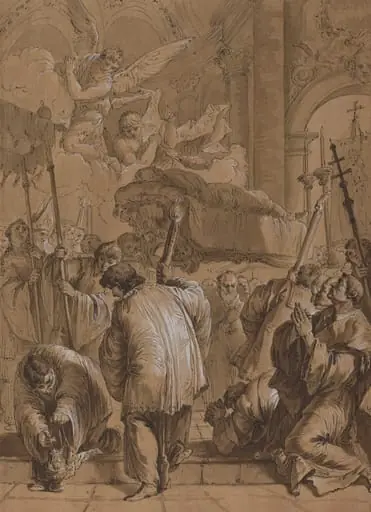 Funeral Procession of a Saint with Angels
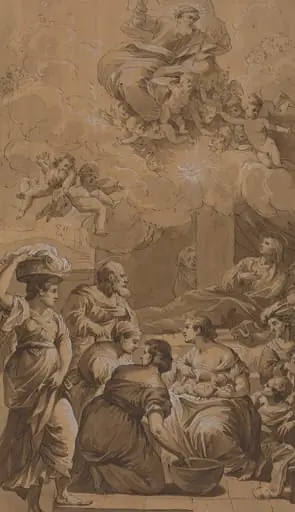 Birth of the Virgin
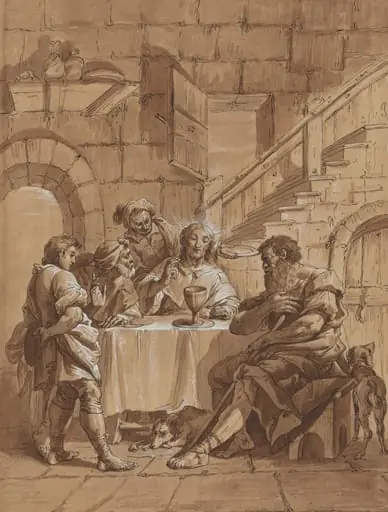 Supper at Emmaus
 The Raising of Lazarus