Artwork
Drawing for a Ceiling Fresco
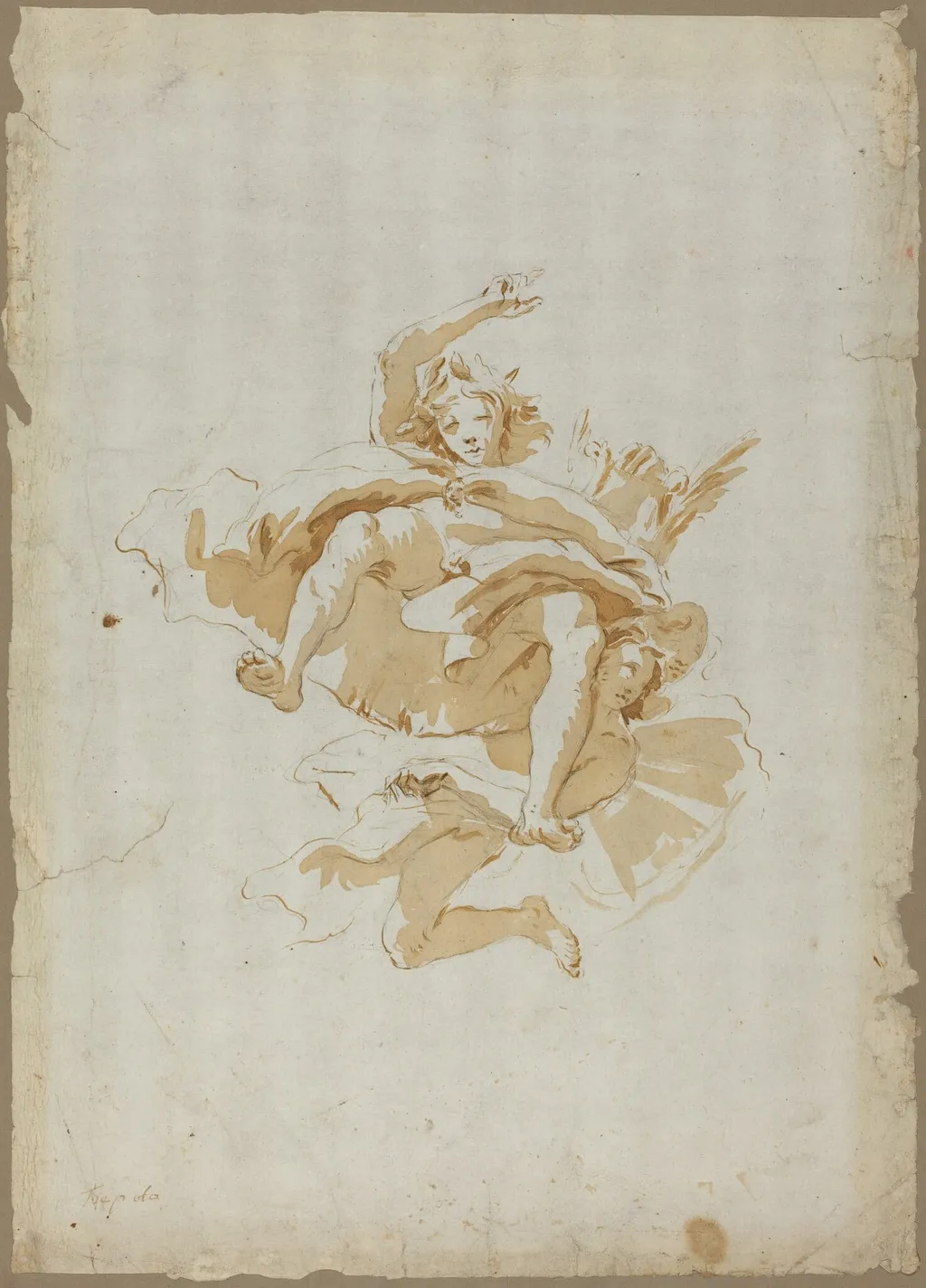
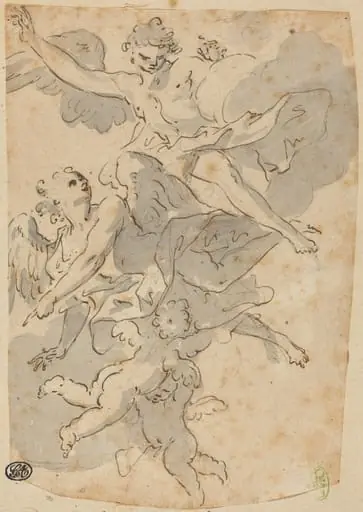
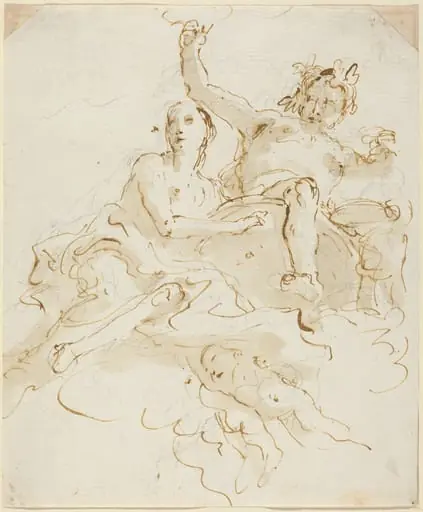
Drawing for a Ceiling Fresco is an ink drawing by the Baroque artist Unknown. It dates from 1733 and is held in the collection of the National Gallery of Art. This ink and wash drawing on paper captures a dynamic, airborne moment between two figures.
About this work
Overview
Executed with swift, fluid strokes and soft brown tonal washes, it lacks precise outlines, instead conveying motion through blurred edges and organic ink bleed.
This ink and wash drawing on paper captures a dynamic, airborne moment between two figures. Executed with swift, fluid strokes and soft brown tonal washes, it lacks precise outlines, instead conveying motion through blurred edges and organic ink bleed. The medium suggests a preparatory study, likely for a larger ceiling composition, with visible creasing indicating frequent handling during the creative process.
Subject & Meaning
Two figures, one adorned with leafy crowns and wings, the other gripping a small object—possibly a tool or branch—appear locked in a sudden, violent twist. Their entangled forms suggest mythological or allegorical beings caught mid-transformation or conflict. The absence of context invites interpretation as a symbolic struggle, perhaps between nature and craft, or divine and mortal forces.
Technique & Style
The artist employed loose pen lines layered with diluted brown ink washes to model form without definition. Graphite may have underpinned the composition, but the dominant marks are spontaneous and unrefined. The ink’s uneven absorption into the paper enhances the sense of urgency, rejecting polished finish in favor of expressive immediacy characteristic of preparatory Baroque studies.
History & Provenance
The drawing’s physical condition—faint creases, worn edges, and ink bleed—points to prolonged use in the artist’s studio. Though its exact origin is undocumented, its style aligns with 17th-century Italian workshop practices, where such sketches were reused, annotated, or adapted for monumental frescoes before final execution.
Context
Created within the Baroque tradition, the drawing reflects period interests in movement, emotional intensity, and theatrical composition. Ceiling frescoes of the era often depicted celestial or mythological scenes in spiraling, weightless arrangements. This sketch exemplifies how artists translated grand narratives into rapid, tactile studies to capture dynamic energy before scaling up.
Legacy
As a working drawing, it preserves the artist’s process rather than a finished ideal. Its rawness offers insight into how Baroque grandeur was built from fleeting, experimental marks. Such studies, once considered ephemeral, are now valued as direct conduits to the artist’s creative impulse, revealing the labor behind monumental works.
Artist & collection

 Domestic Scene
 Giacomo and Cardinal Marco, investing Andrea, Abbot of San Zeno, with his Benefice
 The Nymph of Fontainebleau
 Portrait of a Woman
 Madonna and Child with Saints in the Enclosed Garden
 Venus and Minerva
 Family Group of Four on Sofa
 Wall painting from Room H of the Villa of P. Fannius Synistor at Boscoreale
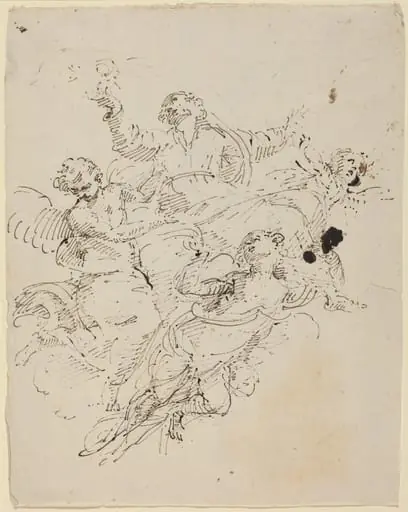 The Ascension of the Virgin
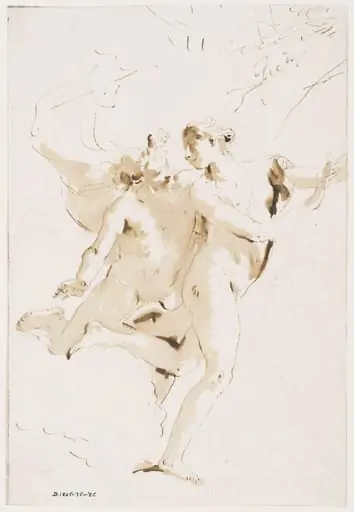 Apollo and Daphne
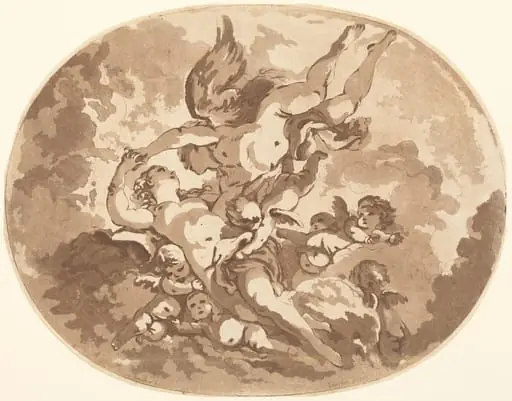 Eros and Psyche
 Angels and Putti
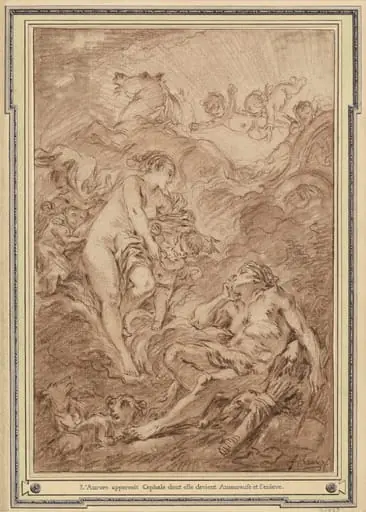 Aurora and Cephalus
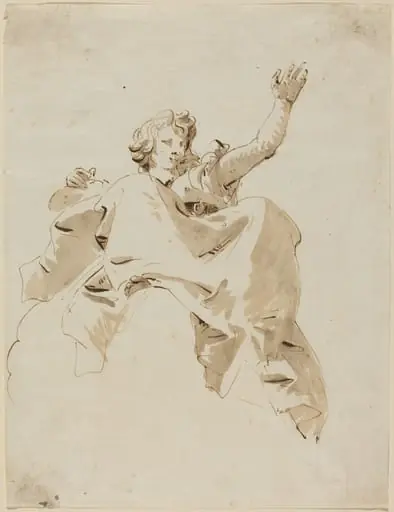 A Woman Seated on a Cloud, Seen from Below
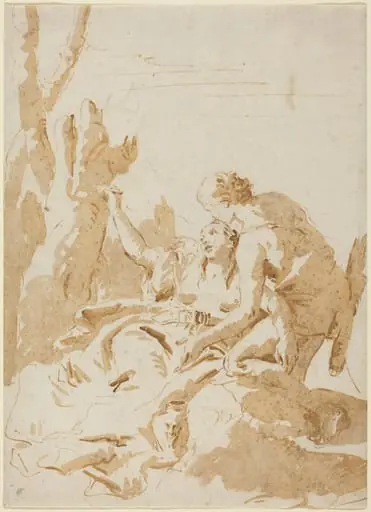 Angelica and Medoro
 Esquisse d’un tombeau (Sketch for a Tomb)
 The Stigmatization of Saint Francis
 Venus and Cupid Discovering the Body of Adonis
 The Assumption of the Virgin
 Bacchus and Ariadne