Artwork
Christ on the Mount of Olives, The Flagellation, Christ Crowned with Thorns, The Crucifixion
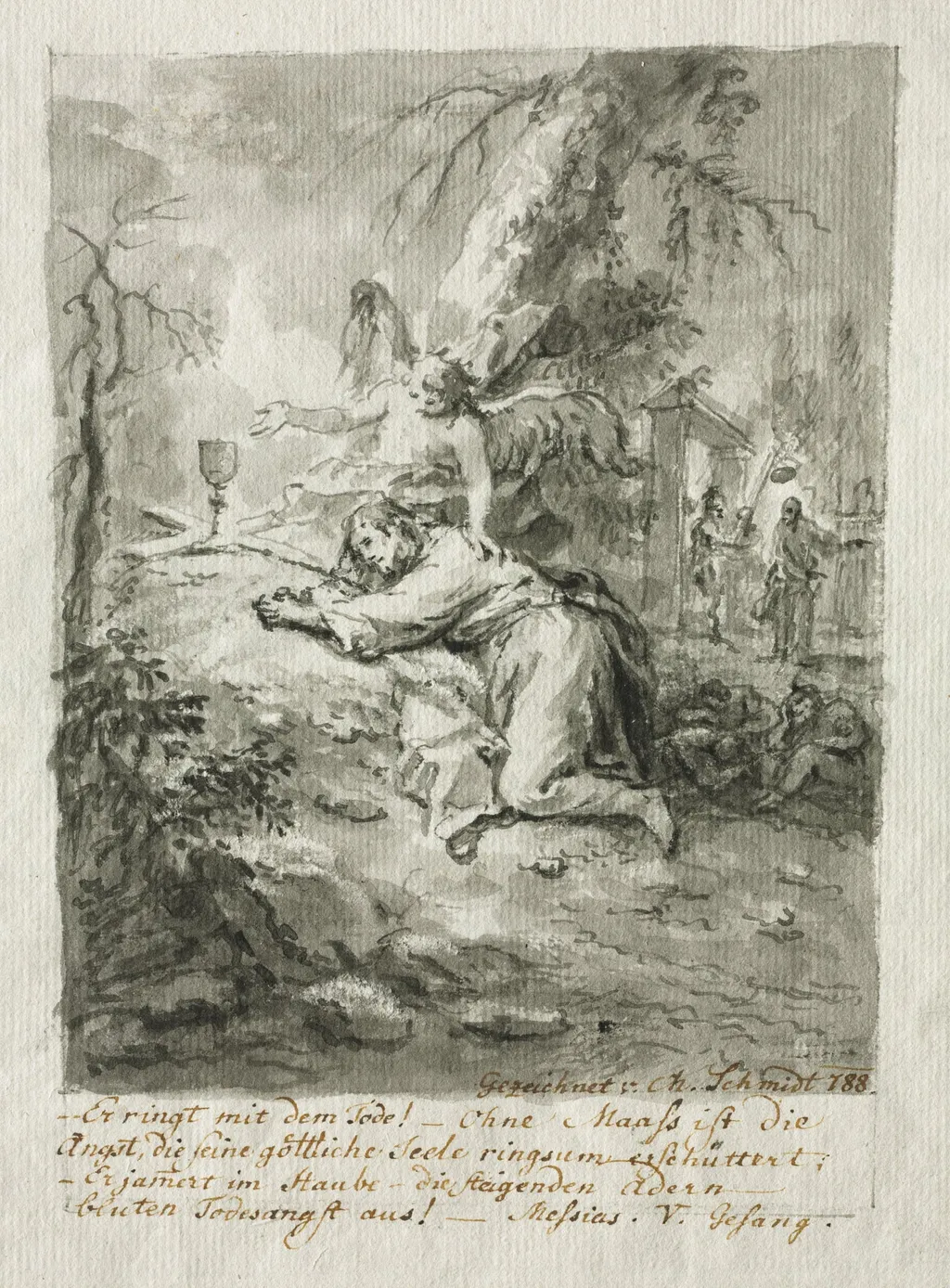
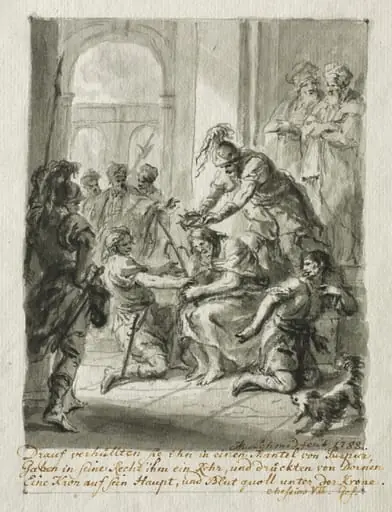
Christ on the Mount of Olives, The Flagellation, Christ Crowned with Thorns, The Crucifixion is a drawing by the Romanticist artist Martin Johann Schmidt. It dates from 1788 and is held in the collection of the Cleveland Museum of Art.
About this work
Overview
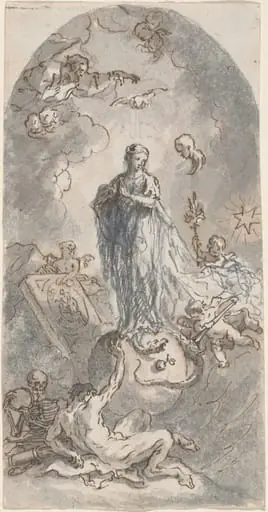
Created in 1788 by Martin Johann Schmidt, known as Kremser Schmidt, this drawing compiles four pivotal moments from Christ’s Passion into a single composition.
Created in 1788 by Martin Johann Schmidt, known as Kremser Schmidt, this drawing compiles four pivotal moments from Christ’s Passion into a single composition. Executed in monochrome washes, it reflects the artist’s late style—emphasizing emotional intensity over polished finish. Schmidt, based in Stein, Lower Austria, was renowned for religious works in churches and monasteries, often blending northern Italian influences with local devotional traditions.
Subject & Meaning
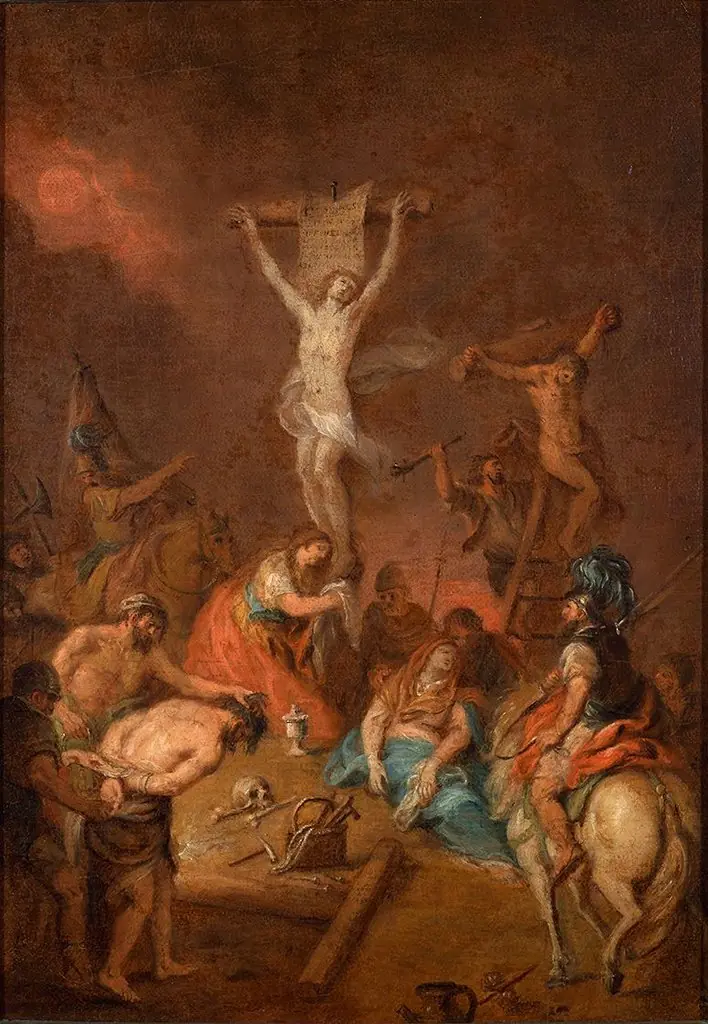
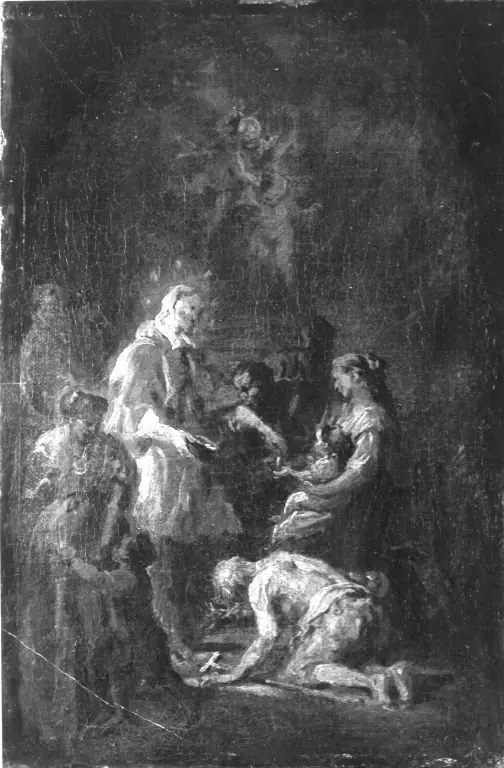
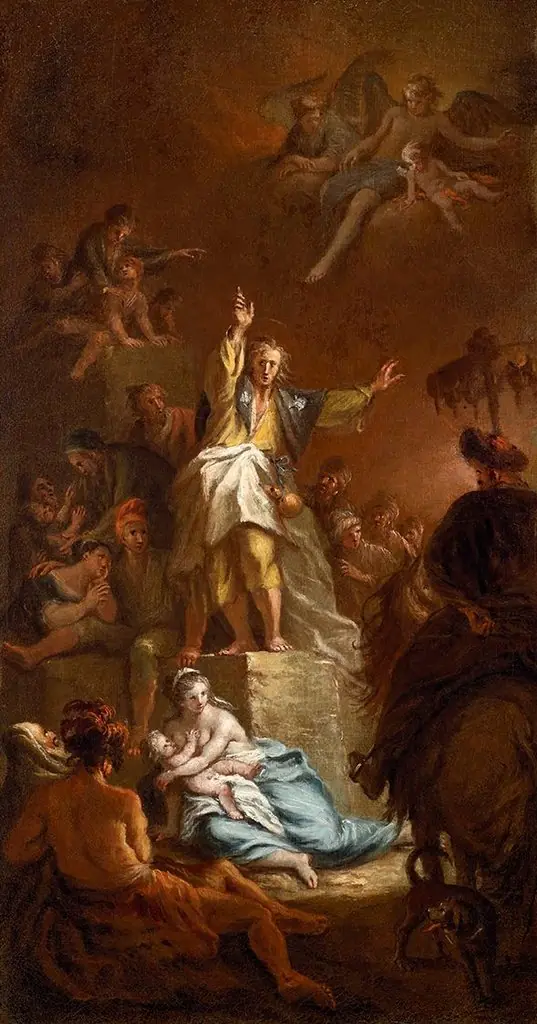
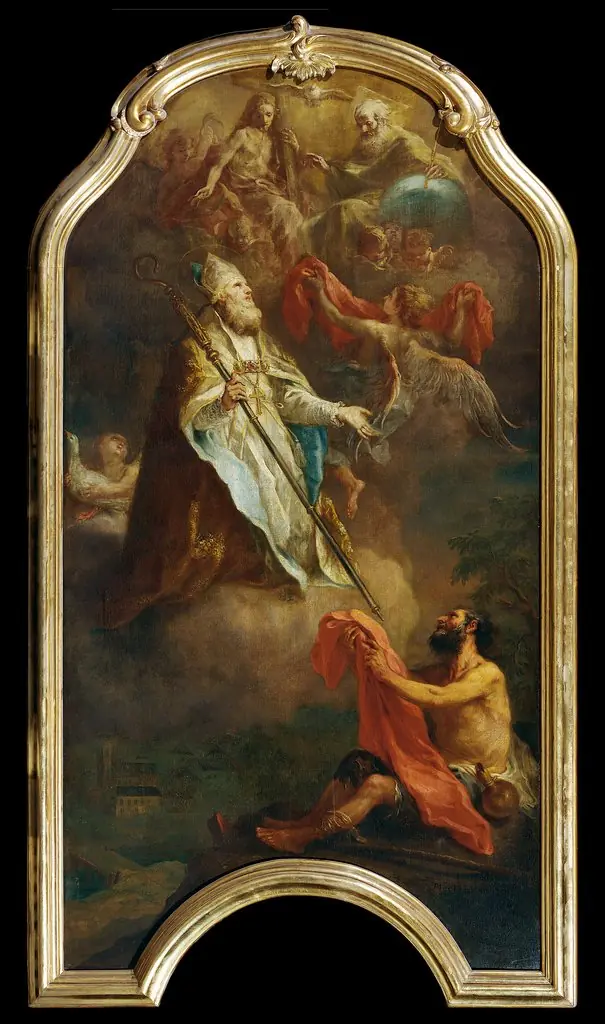
The drawing presents four scenes from the Passion: Christ’s agony in Gethsemane, his flagellation, crowning with thorns, and crucifixion. These are not isolated panels but interwoven moments, suggesting a continuous spiritual journey. The kneeling Christ, bathed in shadow, is accompanied by a hovering angel and distant soldiers, underscoring divine sorrow amid human cruelty. The German inscription at the base evokes themes of mortality and spiritual dread.
Technique & Style
Schmidt employed rapid, fluid strokes in gray and brown washes, prioritizing expressive movement over precise detail. Forms are suggested through loose contours and tonal gradations, creating a sense of urgency and emotional weight. The absence of color heightens the somber mood, while the sketchlike quality conveys immediacy. This approach aligns with late Baroque tendencies to convey inner turmoil through gestural draftsmanship.
History & Provenance
The drawing originates from Schmidt’s final creative period, when he focused on intimate religious studies alongside large-scale altarpieces. Likely produced as a preparatory or devotional piece, it remained within Austrian collections after his death. Its survival reflects its value as a personal meditation rather than a commissioned work, offering insight into the artist’s private engagement with sacred narrative.
Context
In late 18th-century Austria, religious art still held central cultural weight, even as Enlightenment ideals gained ground. Schmidt’s work responded to a lingering demand for emotionally resonant imagery in ecclesiastical settings. His synthesis of Italian dramatic lighting and Austrian piety positioned him as a bridge between Baroque grandeur and emerging sentimental modes in sacred art.
Legacy
Schmidt’s drawings, including this one, are now recognized for their psychological depth and technical economy. Though overshadowed by his frescoes, these works reveal his mastery of conveying spiritual tension through minimal means. They influenced later Austrian artists seeking to express faith through direct, unadorned visual language, preserving a quiet but potent strand of devotional art.
Artist & collection
Artist
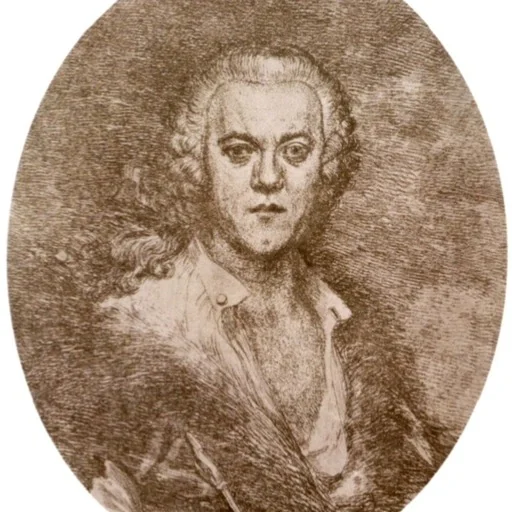
Martin Johann Schmidt, called Kremser Schmidt or Kremserschmidt, (25 September 1718 – 28 June 1801), was one of the outstanding Austrian painters of the late Baroque/Rococo along with Franz Anton Maulbertsch.