Artwork
Twelve landscapes (H.95-106): The Gateway
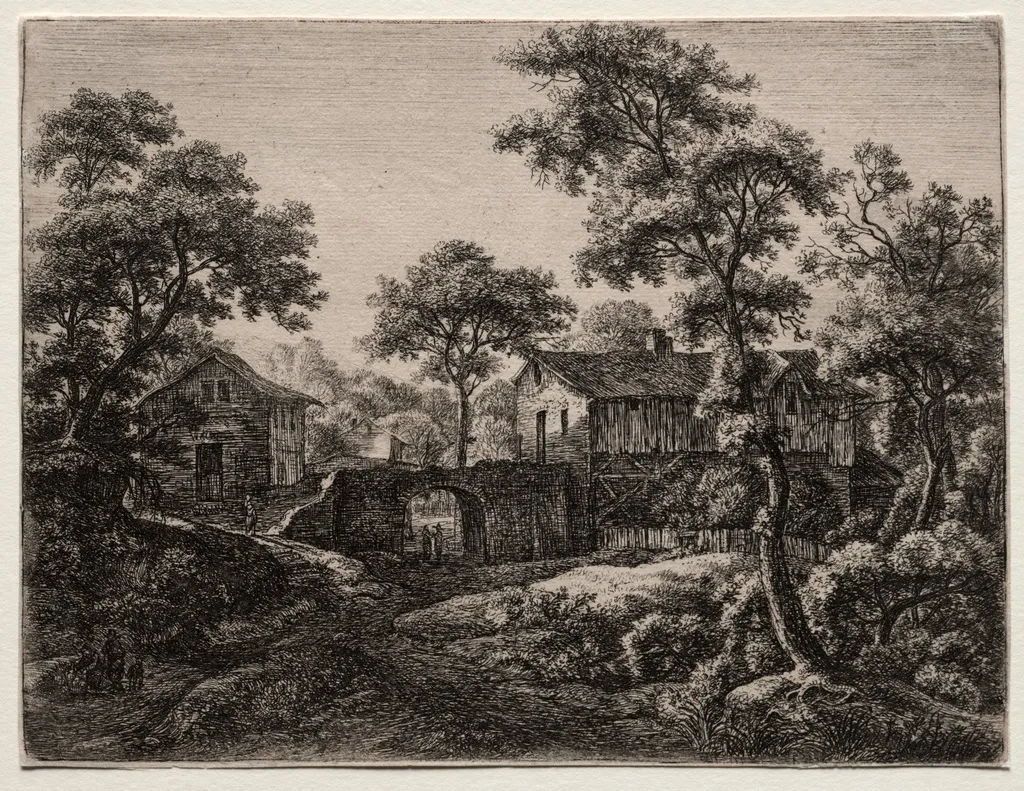
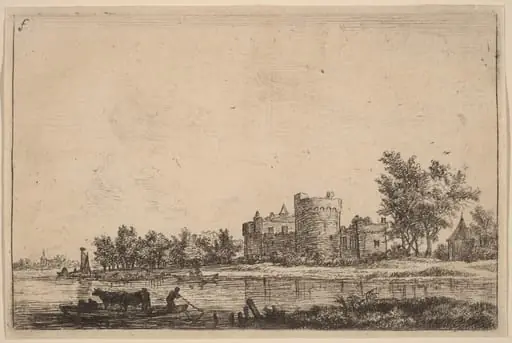
Twelve landscapes (H.95-106): The Gateway is a print by the Baroque artist Antonie Waterloo. It dates from 1665 and is held in the collection of the Cleveland Museum of Art. Twelve landscapes (H.
About this work
Overview
Twelve landscapes (H.95-106): The Gateway is a 1665 landscape print by Anthonie Waterloo, part of a series of twelve landscapes. It is currently held in the collection of The Cleveland Museum of Art.
Subject & Meaning
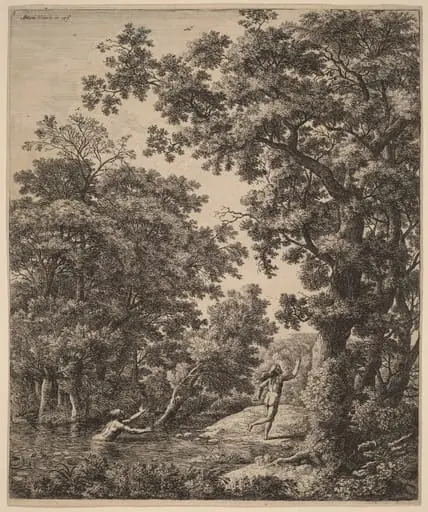
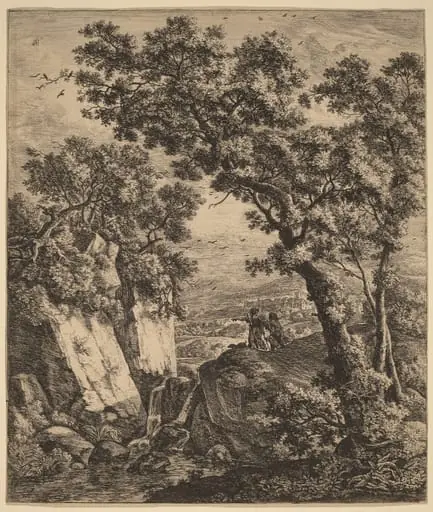
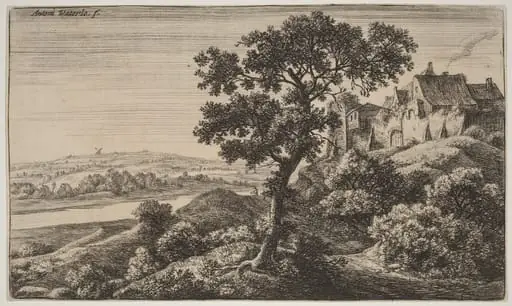
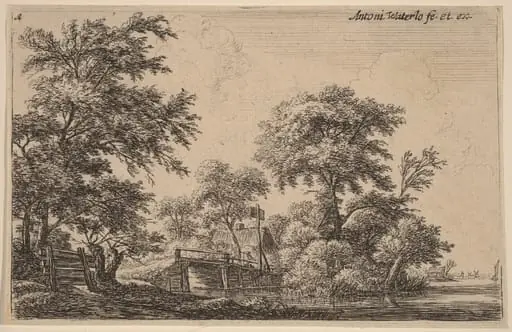
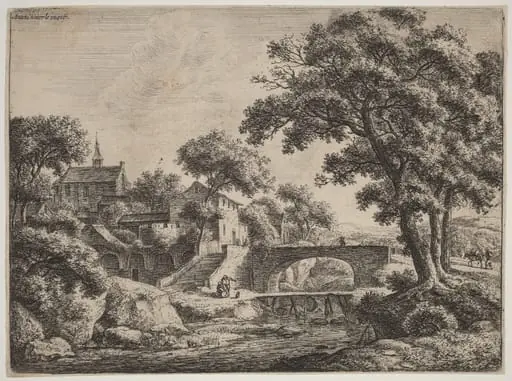
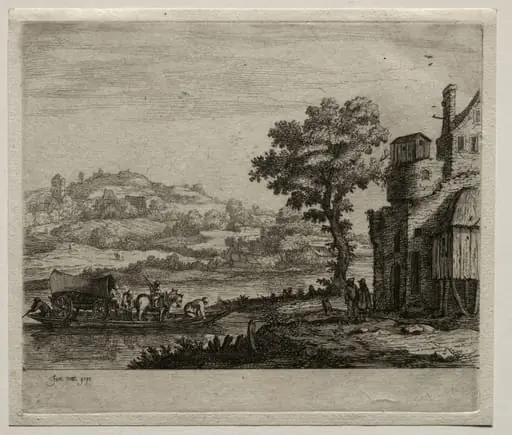
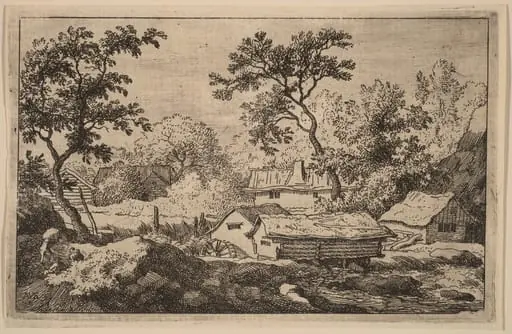
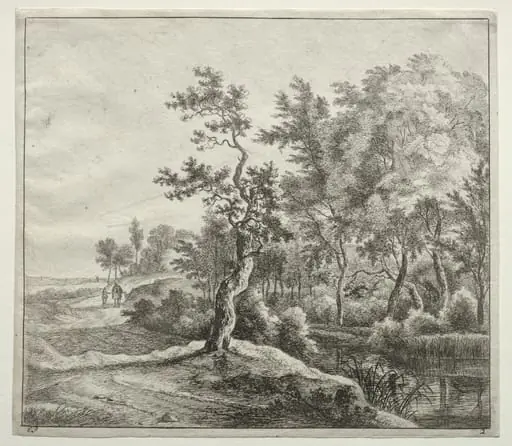
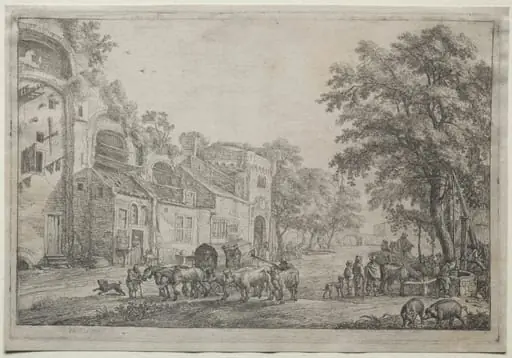
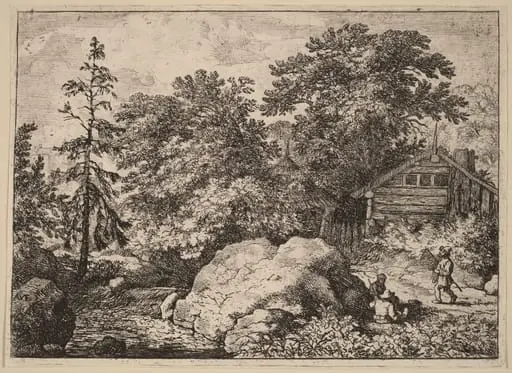
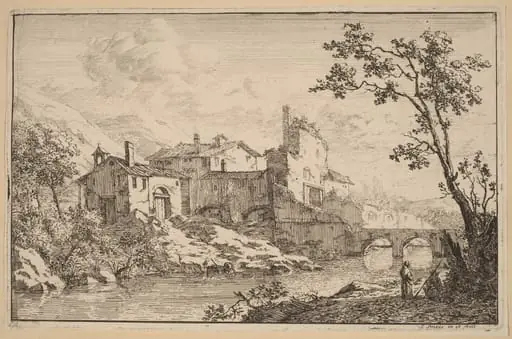
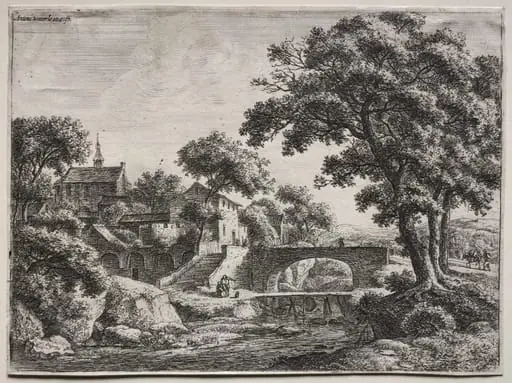
The print depicts a serene village scene featuring two humble, aged houses (one wooden, one stone) alongside a winding path, a stone bridge over a narrow stream, and surrounding trees with robust branches. Figures of a few pedestrians near the bridge add a sense of quiet activity.
Technique & Style
Waterloo employed strong chiaroscuro techniques, leveraging shading to create depth and contrast between the dark, volumetric forms of trees and buildings against a lighter background, thereby enhancing the spatial and narrative dimensions of the scene.
History & Provenance
Created in 1665, the work's provenance prior to its acquisition by The Cleveland Museum of Art is not detailed here. It is known to be part of a larger set of twelve landscapes by the artist.
Context
As part of 'Twelve landscapes', this work reflects 17th-century European printmaking's focus on capturing everyday, idyllic scenes, often emphasizing the interplay of light and shadow to evoke mood and setting.
Legacy
While specific influence or notable exhibitions of 'The Gateway' alone are not highlighted, as part of Anthonie Waterloo's oeuvre, it contributes to the broader appreciation of 17th-century Dutch landscape printing and the chiaroscuro technique's application in the period.
Own this work as a print
Artist & collection