Artwork
Rider and Flock on a Bridge
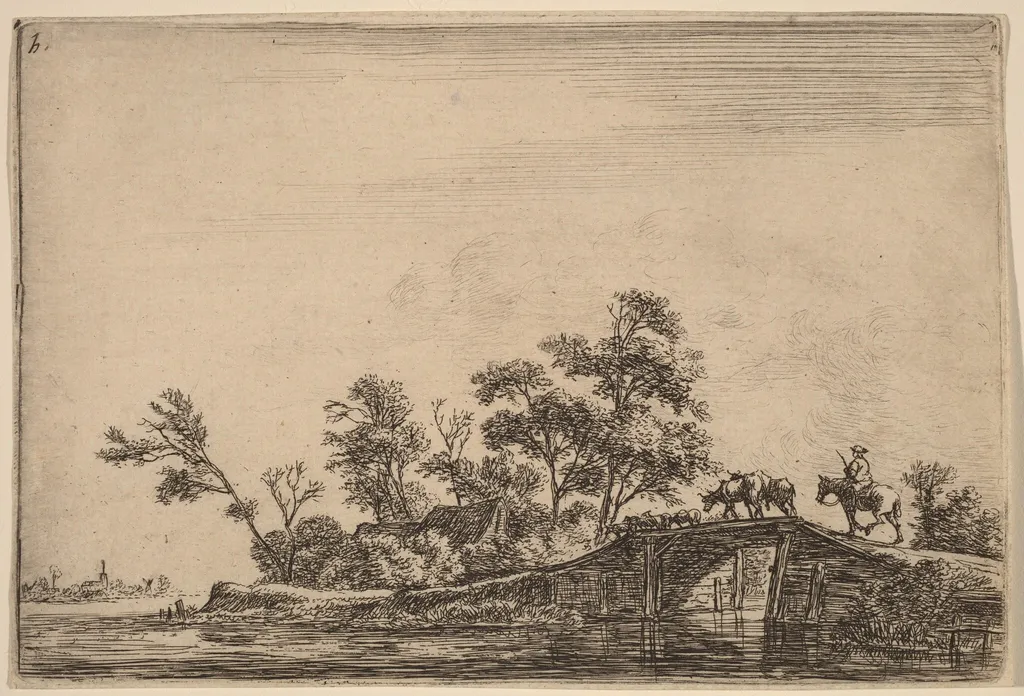
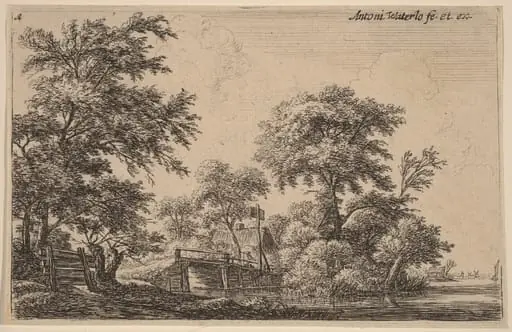
Rider and Flock on a Bridge is an ink print by the Baroque artist Antonie Waterloo. It dates from 1650 and is held in the collection of the National Gallery of Art.
About this work
Overview
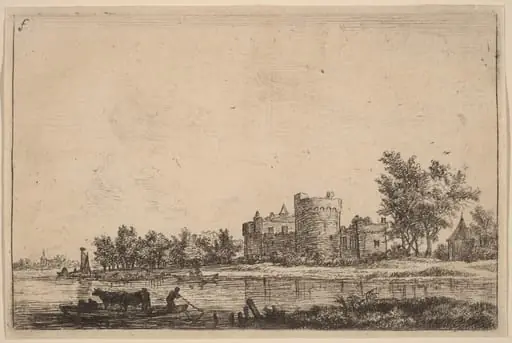
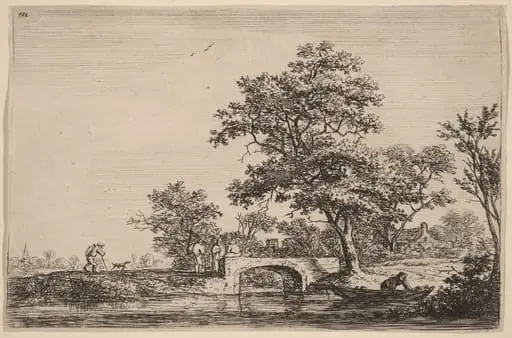
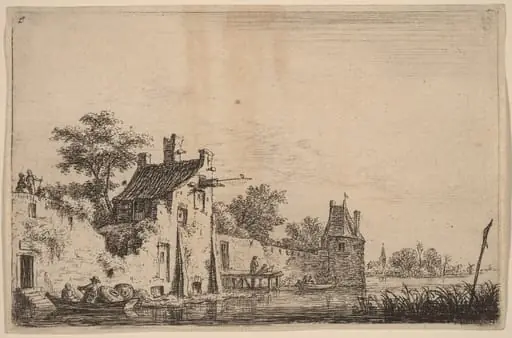
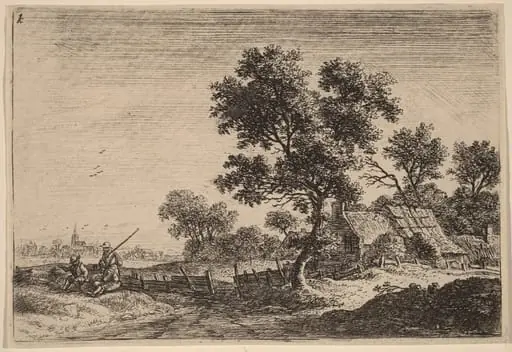
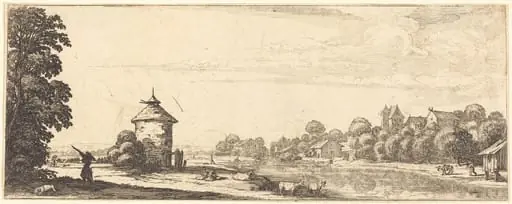
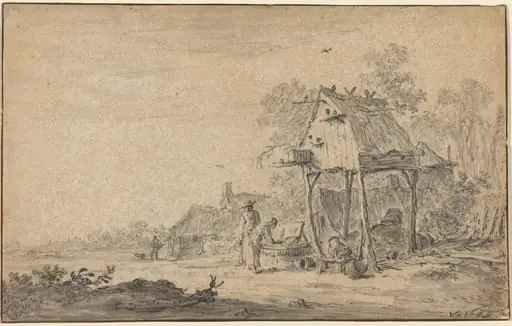
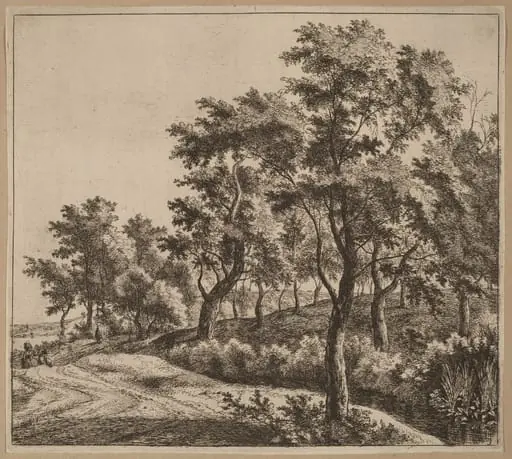
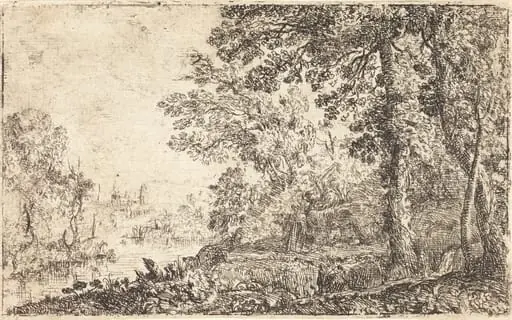
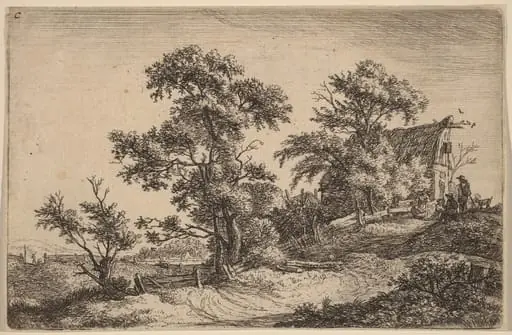
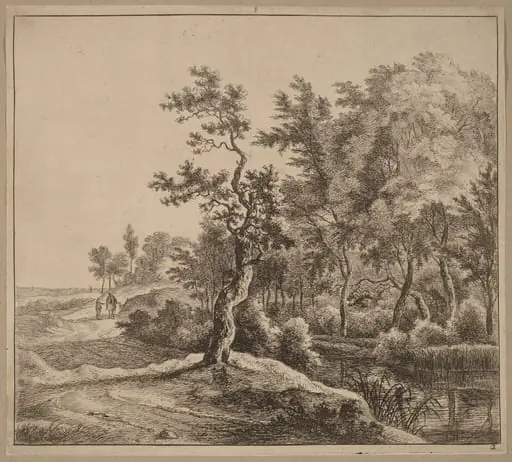
An etching titled Rider and Flock on a Bridge was produced by Anthonie Waterloo around 1650. The print depicts a solitary rider on horseback guiding a small group of goats across a slender bridge, with a tranquil river below and distant structures emerging from a sparse woodland.
Subject & Meaning
The composition centers on the interaction between human, animal, and landscape, suggesting themes of travel, pastoral life, and the crossing of natural obstacles. The quiet river and modest architecture in the background provide a sense of place without distracting from the movement of the rider and herd.
Technique & Style
Waterloo employed the traditional copper-plate etching process, allowing fine lines to convey texture in the foliage, water, and the dynamic posture of the horse’s legs and the goats’ steps. The restrained line work reflects the 17th‑century aesthetic that favored clarity of form and subtle tonal variation.
Historical Context
Created in the mid‑17th century, the print aligns with a period when Dutch artists frequently explored everyday rural scenes. Etching, then a popular medium for disseminating such images, enabled artists like Waterloo to reach a broader audience through relatively affordable reproductions.
Artist & collection