Artwork
Equestrian portrait of the Emperor Charles V
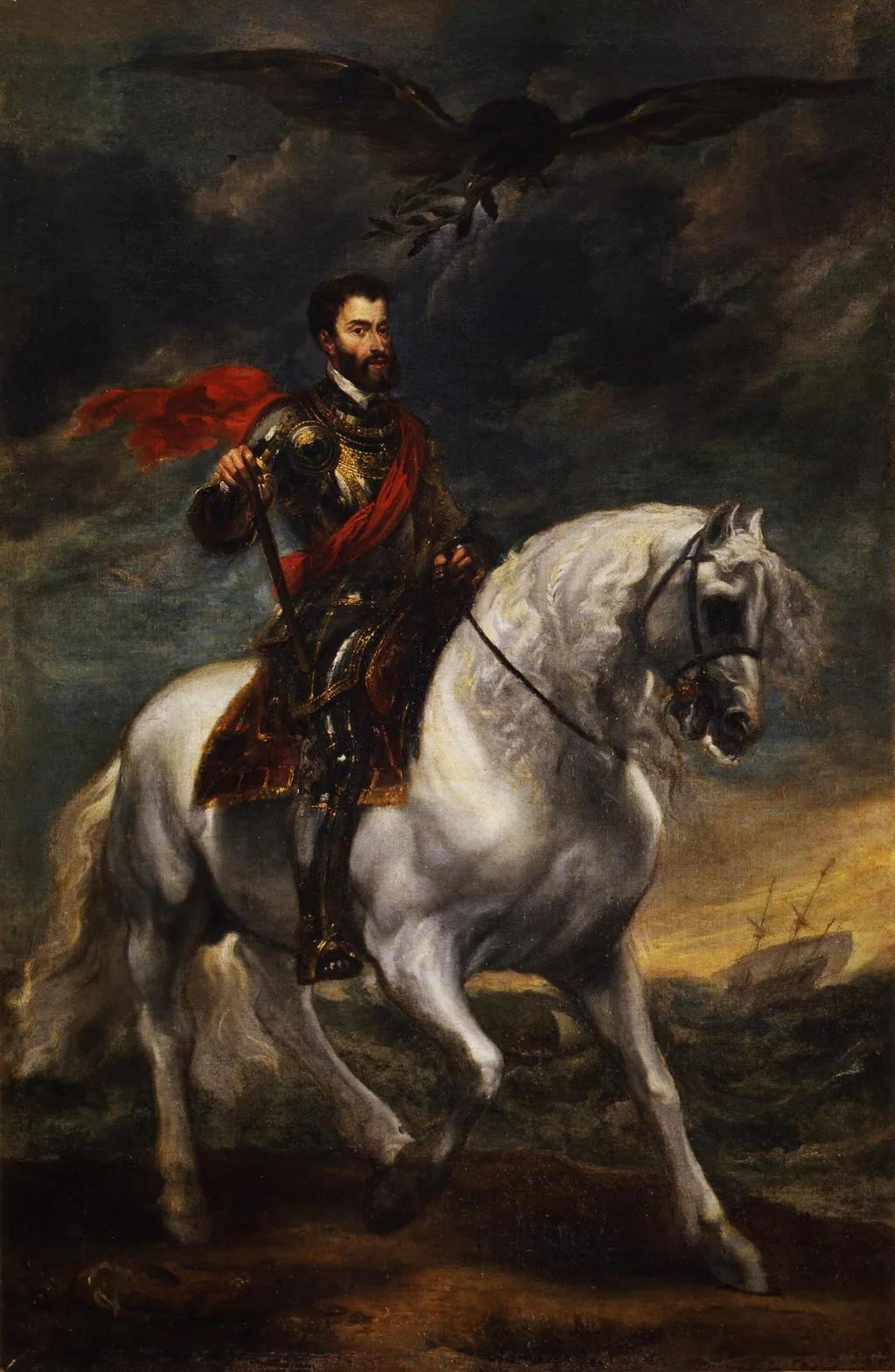
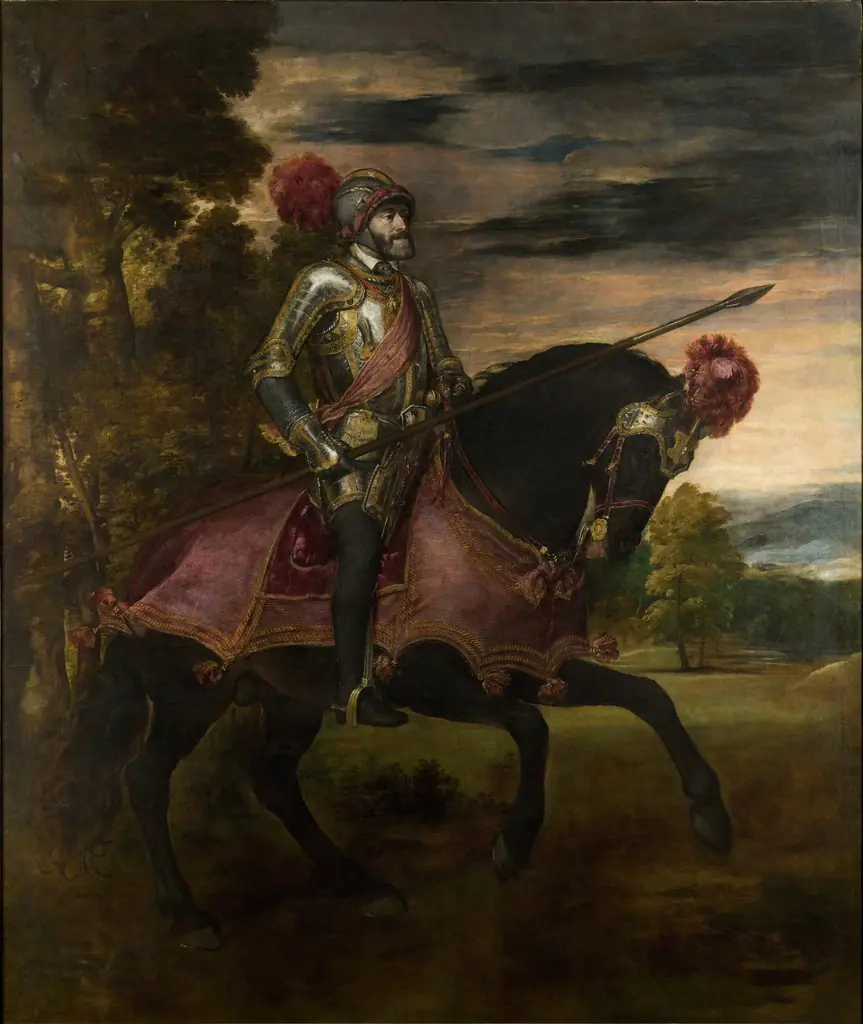
Equestrian portrait of the Emperor Charles V is an oil painting by the Flemish Baroque painting artist Anthony van Dyck. It dates from 1620 and is held in the collection of the Uffizi Gallery.
About this work
Overview
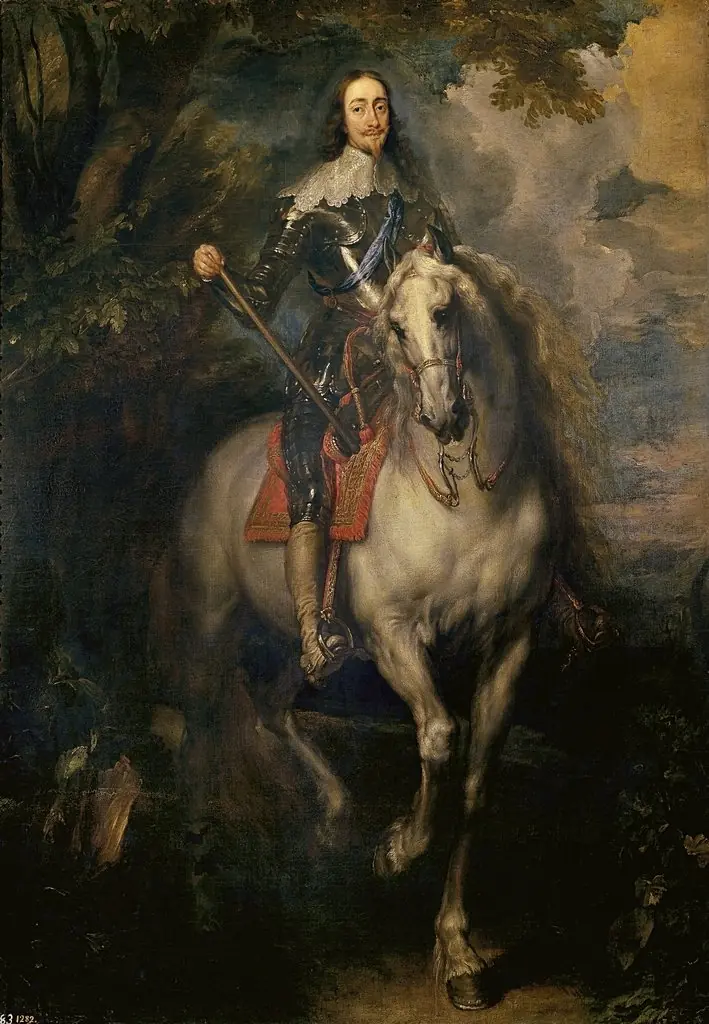
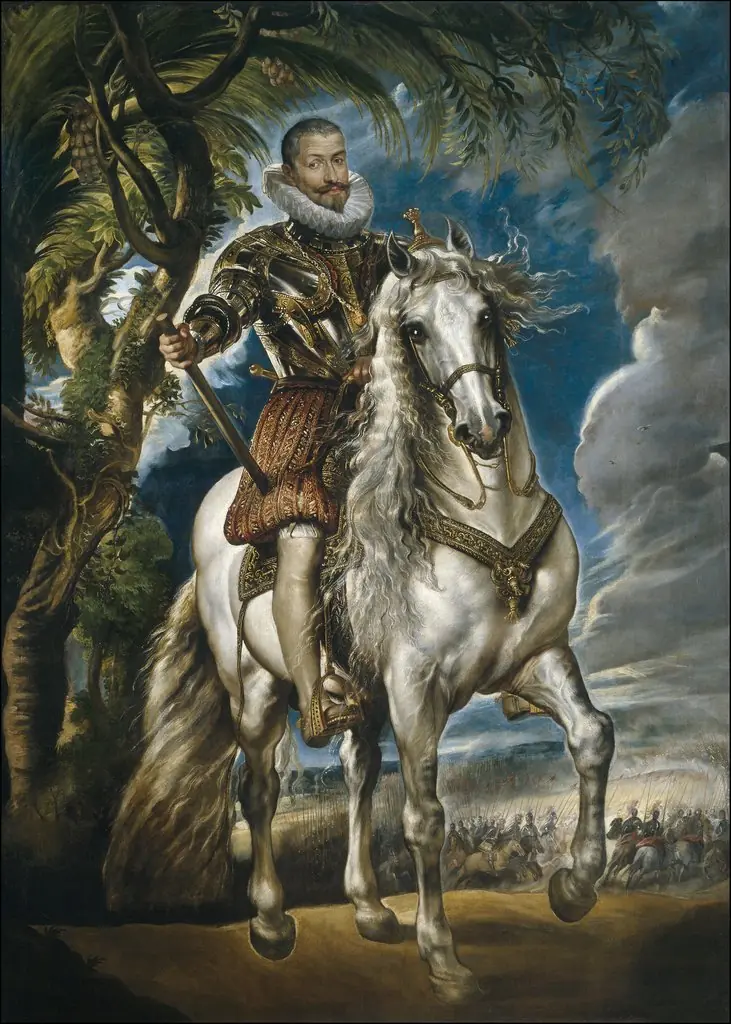
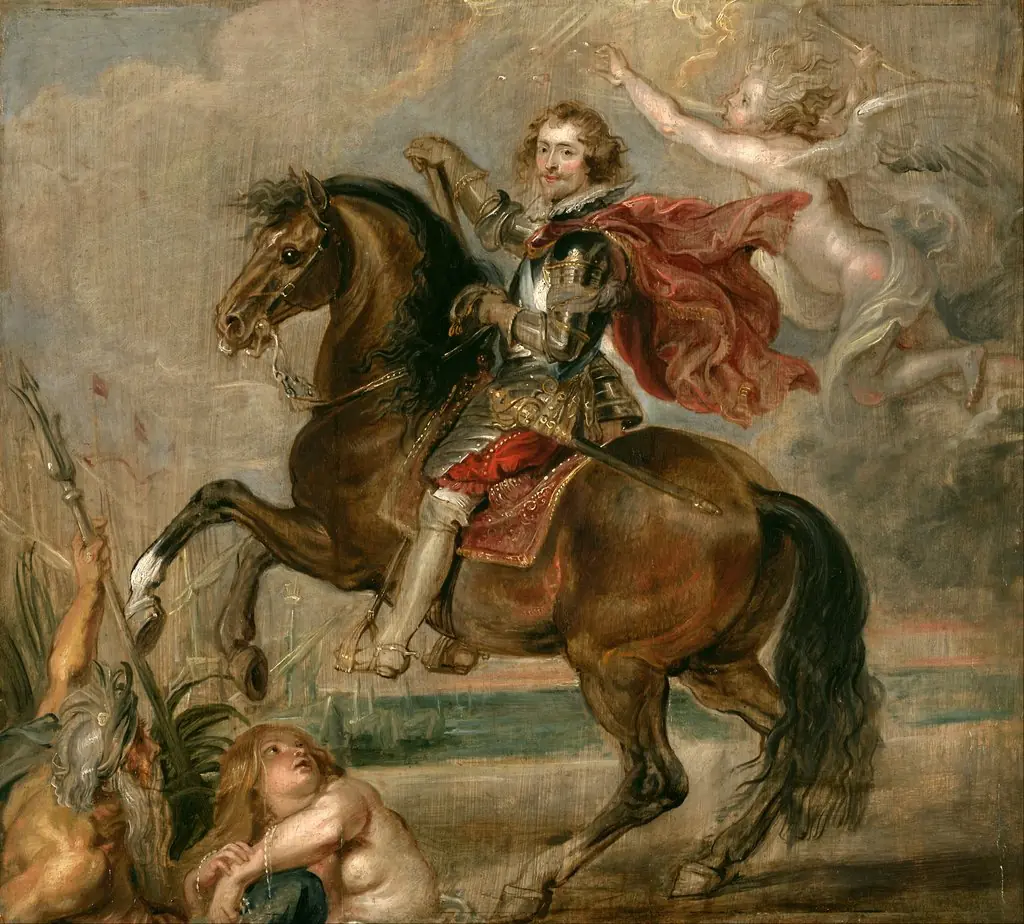
Anthony van Dyck’s oil painting from 1620 presents the Holy Roman Emperor Charles V astride a rearing white horse. The rider, clad in armor with a red mantle and sword, gazes forward while a dark bird sweeps overhead. The composition is set against a muted landscape of distant trees and hills, emphasizing the figure’s authority.
Subject & Meaning
The work portrays Charles V as a martial leader, his upright posture and the horse’s dynamic pose suggesting control and vigor. The inclusion of a soaring bird may allude to imperial power extending beyond earthly realms, while the somber expression reinforces the emperor’s solemn duty.
Technique & Style
Executed in oil on canvas, van Dyck employs a Baroque palette of deep shadows contrasted with the bright white of the horse and the vivid red of the cape. Loose brushwork renders the wind‑tossed mane and tail, while the background remains atmospheric, allowing the central figures to dominate the visual field.
History & Provenance
Created during van Dyck’s Italian period, the painting entered the Uffizi Gallery’s collection, where it remains on display. Its attribution to the Flemish artist reflects his early career, before his later appointment as principal court painter in England.
Context
The portrait dates from a time when van Dyck was absorbing influences from his master Peter Paul Rubens and the broader Italian Baroque milieu. Though Charles V had died decades earlier, the image aligns with contemporary practices of commemorating past rulers through heroic equestrian imagery.
Own this work as a print
Artist & collection
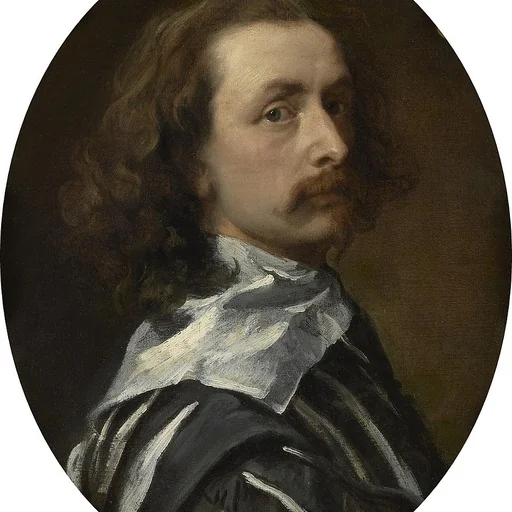
Artist
Sir Anthony van Dyck (; Dutch: Antoon van Dijck ; 22 March 1599 – 9 December 1641) was a Flemish Baroque artist, who became the leading court painter in England after success in the Spanish Netherlands and Italy.