Artwork
Martyrdom of St. George
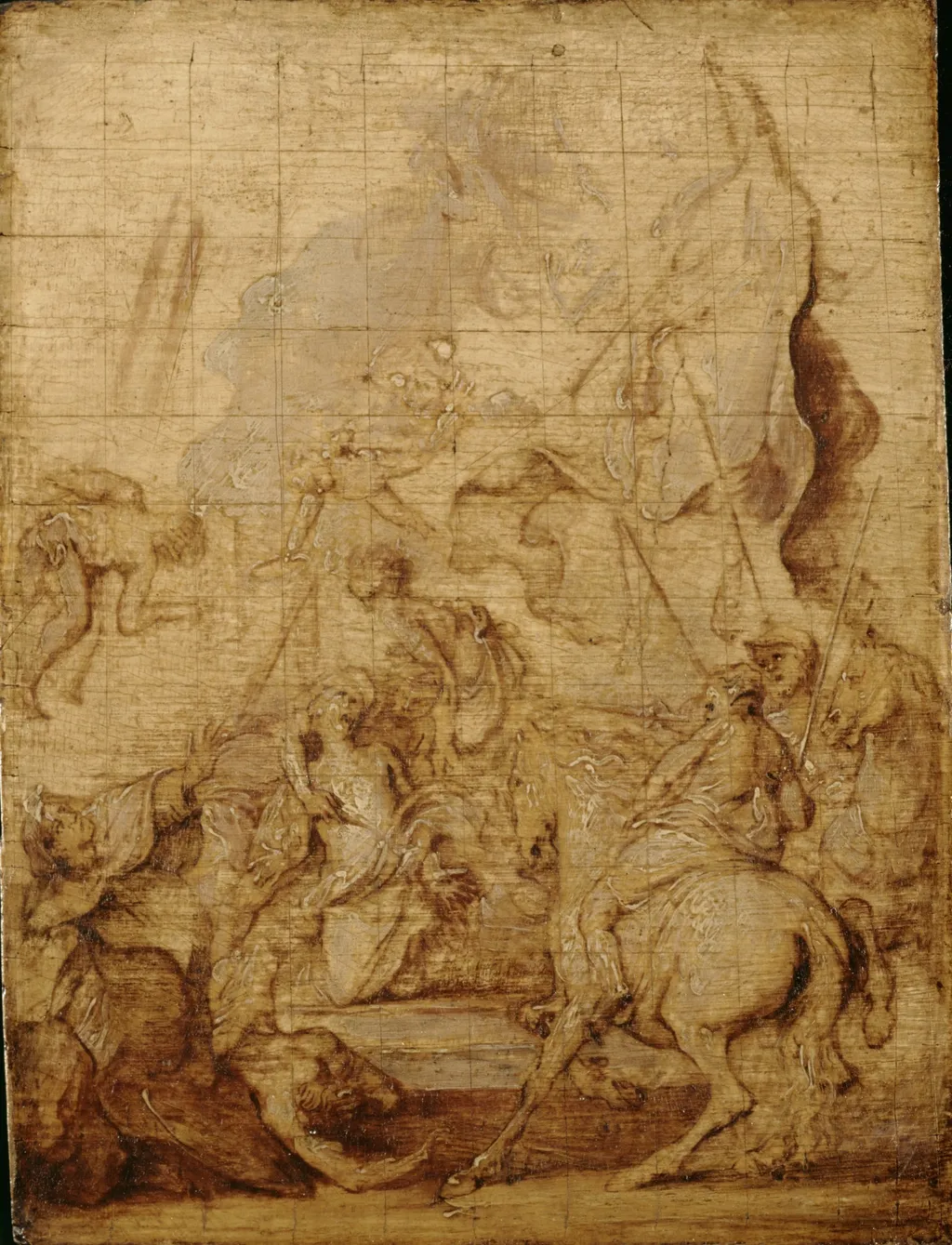
Martyrdom of St. George is an unspecified painting by the Flemish Baroque painting artist Anthony van Dyck. It dates from 1630 and is held in the collection of the Detroit Institute of Arts.
About this work
Overview
The composition functions as a preparatory study for a larger religious composition, revealing van Dyck’s early handling of narrative drama.
Created circa 1630 by Sir Anthony van Dyck, the work titled *Martyrdom of St. George* is an oil sketch now held by the Detroit Institute of Arts. It captures a violent moment from the saint’s legend, presenting a rider on horseback confronting a group of onlookers. The composition functions as a preparatory study for a larger religious composition, revealing van Dyck’s early handling of narrative drama.
Subject & Meaning
The image portrays the legendary martyrdom of Saint George, a Christian soldier-saint traditionally slain for his faith. In the sketch, the mounted figure—identified as George—charges forward with a spear, while figures in the background display varied reactions, from fear to anguish, underscoring the brutal nature of the execution and the saint’s steadfast resolve.
Technique & Style
Executed with loose, expressive brushwork, the sketch relies on bold contours and a limited palette of chiaroscuro values. Dark, saturated tones dominate the foreground, receding into lighter washes that suggest depth. Van Dyck’s handling of line and gesture conveys movement and emotional intensity, characteristic of his early Baroque training under Rubens.
History & Provenance
Anthony van Dyck, born in Antwerp in 1599 and a principal assistant to Peter Paul Rubens, produced the study during his mature Flemish Baroque period. The piece entered the Detroit Institute of Arts collection in the 20th century, where it remains part of the museum’s holdings of European paintings.
Context
The sketch reflects the broader Flemish Baroque interest in dramatic religious narratives, a genre that flourished in the Counter‑Reformation era. Van Dyck’s approach combines Rubens’s dynamic composition with his own emerging personal style, foreshadowing the more refined portraiture that would later define his international reputation.
Artist & collection
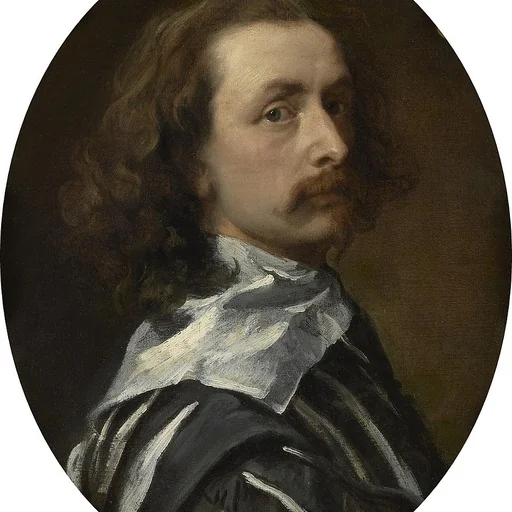
Artist
Sir Anthony van Dyck (; Dutch: Antoon van Dijck ; 22 March 1599 – 9 December 1641) was a Flemish Baroque artist, who became the leading court painter in England after success in the Spanish Netherlands and Italy.

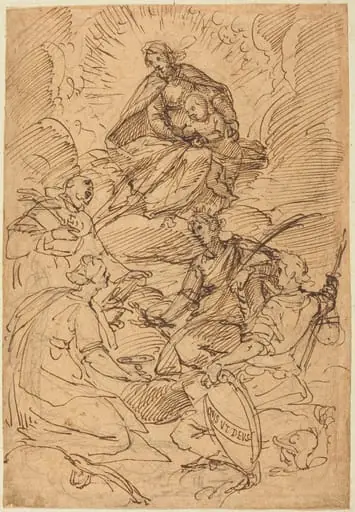 The Madonna and Child in Glory Adored by Saints
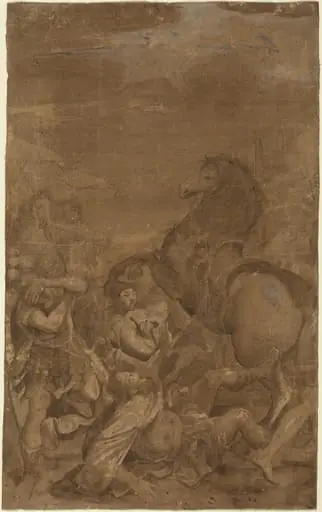 The Conversion of Saint Paul
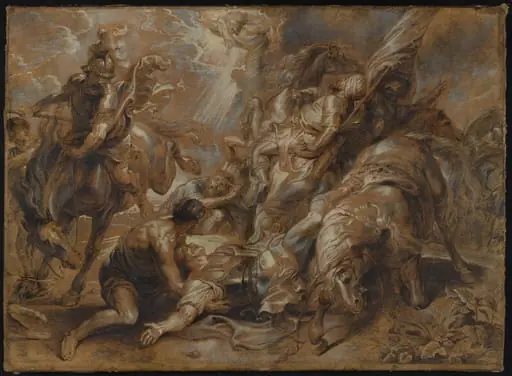 The Conversion of Saint Paul
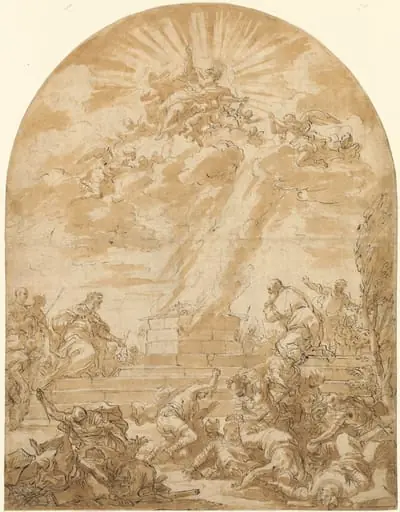 The Sacrifice of Elijah before King Ahab
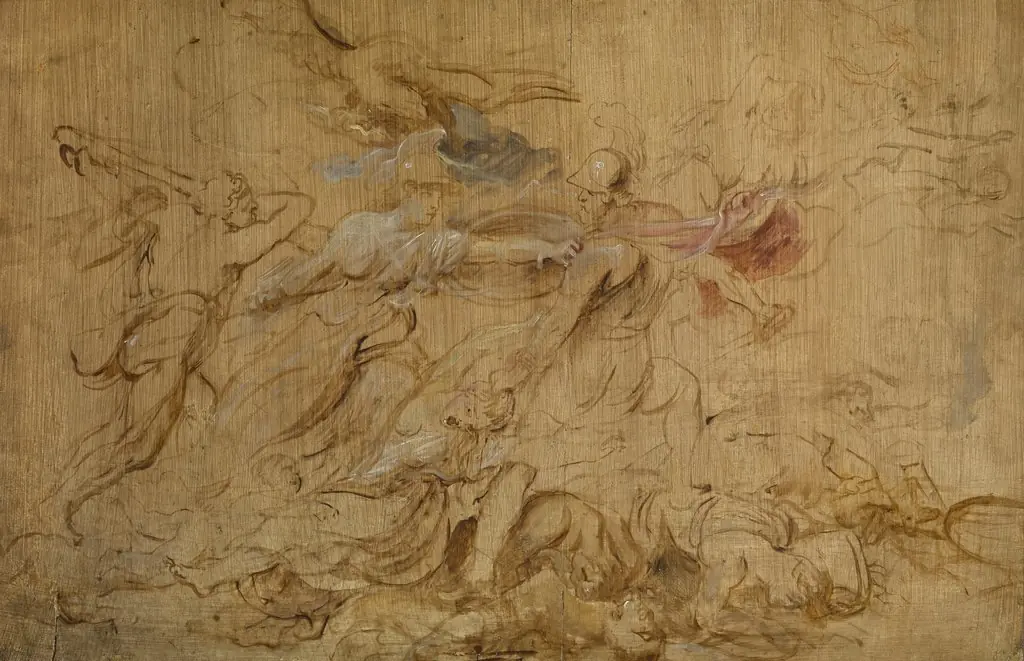 Hercules and Minerva expelling Mars
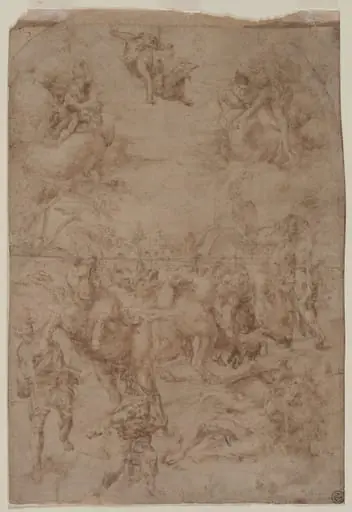 The Conversion of St. Paul
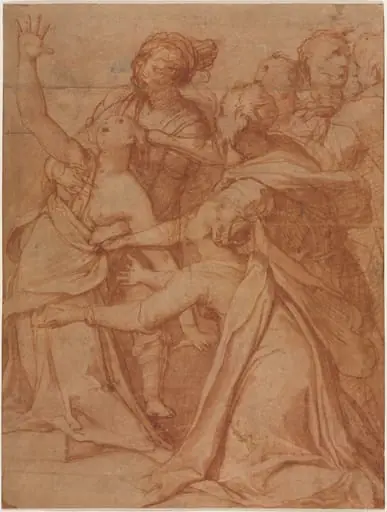 A Miracle of Saint Philip Benizzi: The Healing of a Demoniac Woman
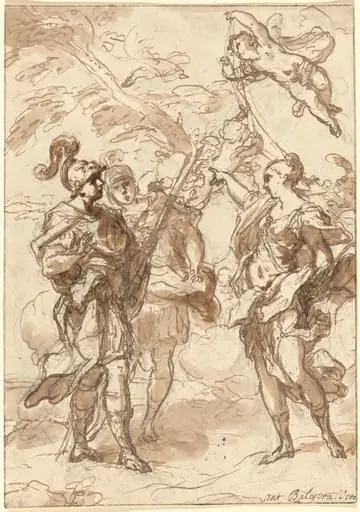 Venus as a Huntress Appearing to Aeneas and Achates
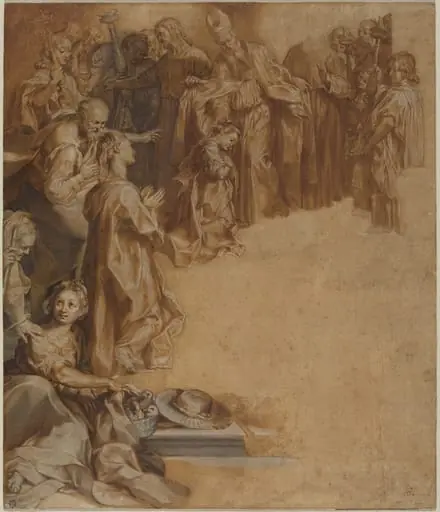 The Presentation of the Virgin in the Temple
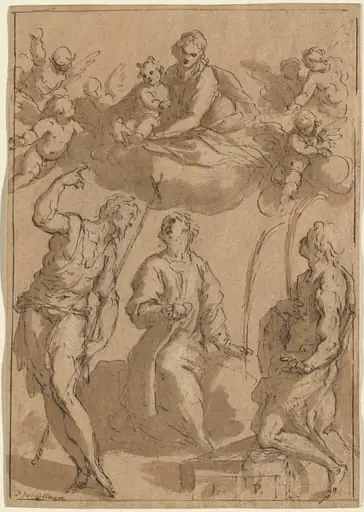 Madonna and Child in Glory with Saints John the Baptist, Stephen, and Lawrence
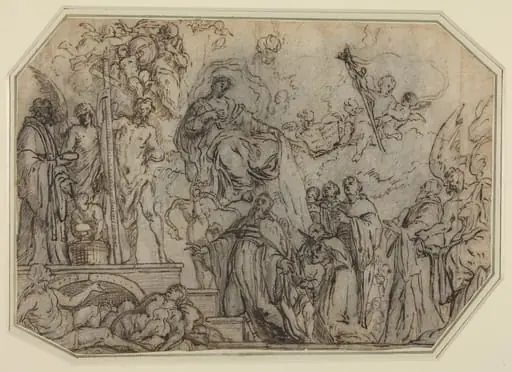 The Trinity and the Virgin Appearing to Ecclesiastics
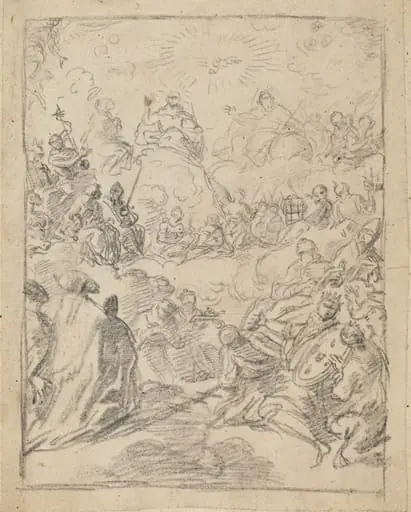 The Triumph of the Trinity (The Gloria)