Artwork
Christ in Emmaus
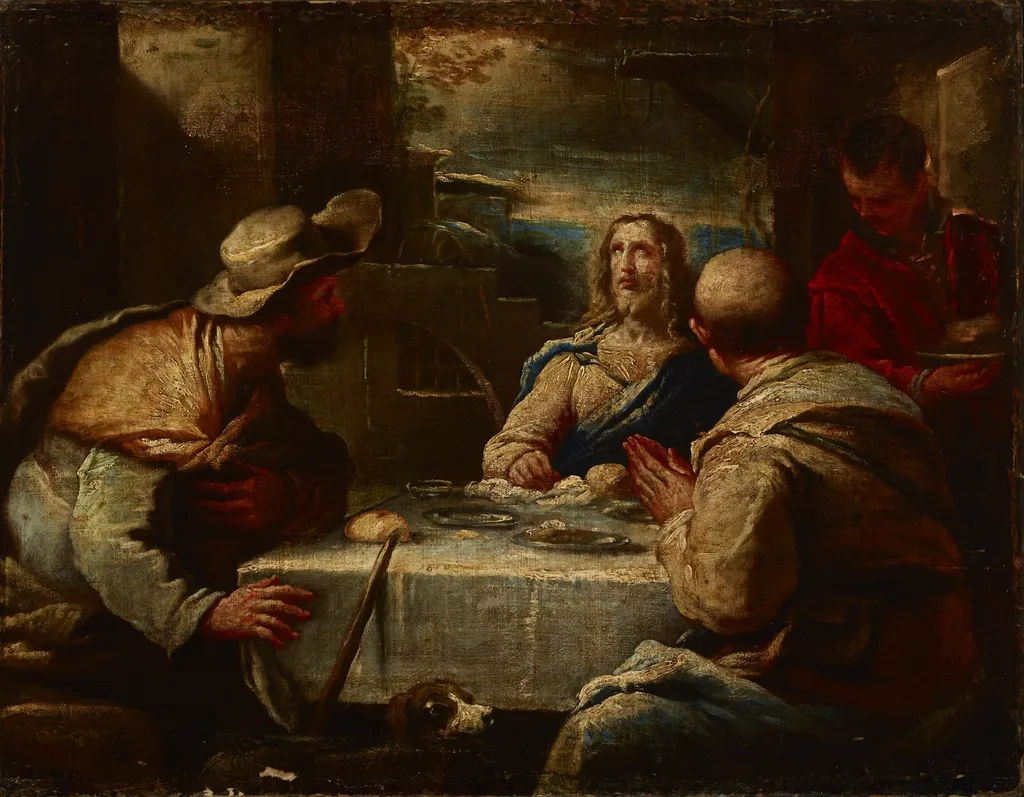
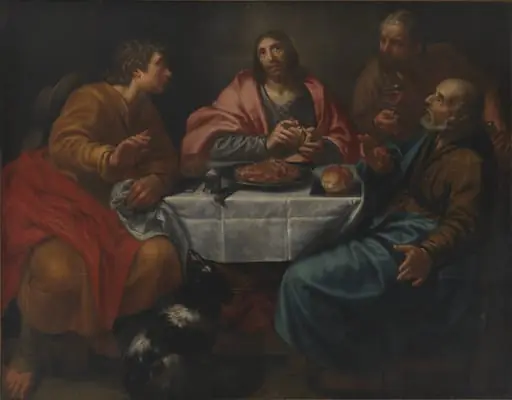
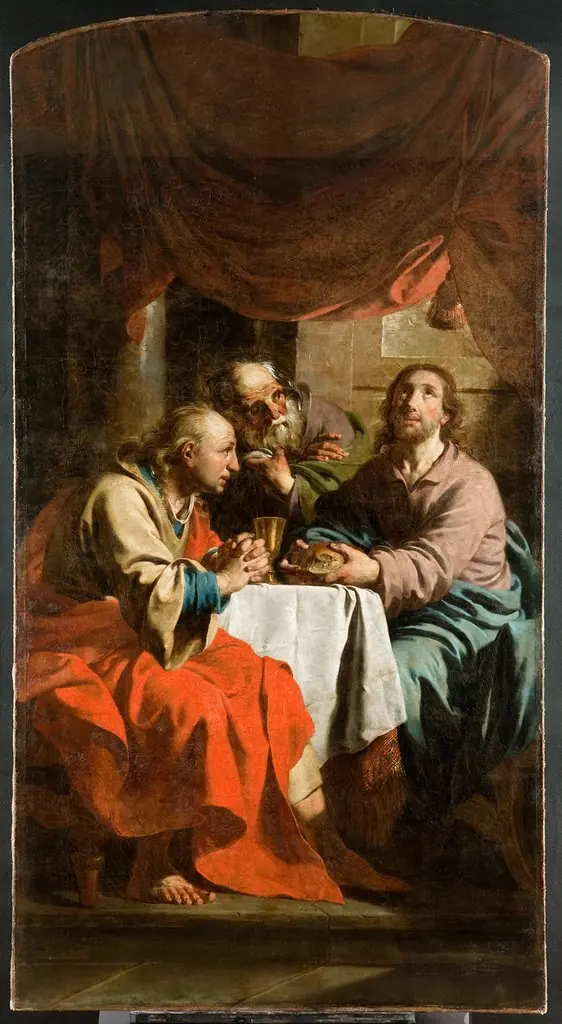
Christ in Emmaus is an oil painting by Luca Giordano. It dates from 1655 and is held in the collection of the National Museum in Kraków.
About this work
Overview
Painted in 1655 by Luca Giordano, this oil on canvas work illustrates the biblical moment of Christ’s revelation to two disciples in Emmaus.
Painted in 1655 by Luca Giordano, this oil on canvas work illustrates the biblical moment of Christ’s revelation to two disciples in Emmaus. The scene is rendered with quiet intensity, focusing on a single interior space where the divine presence is conveyed not through grandeur but through subtle gesture and light. The painting resides in the National Museum in Kraków, part of its collection of early modern European religious art.
Subject & Meaning
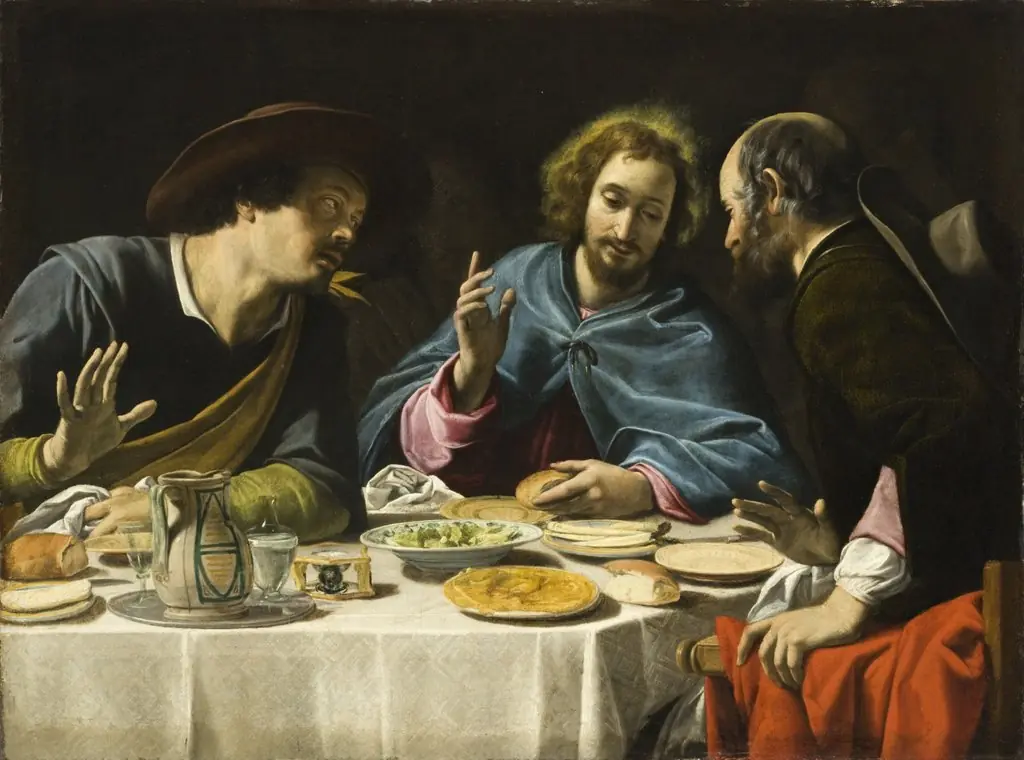
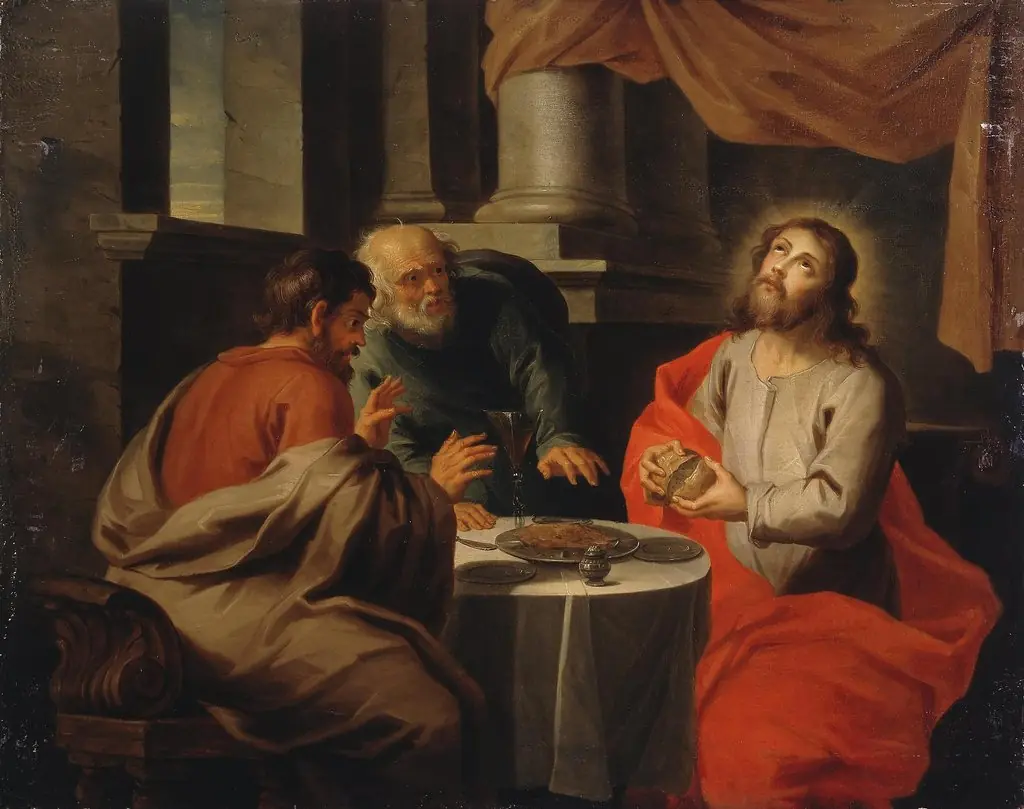
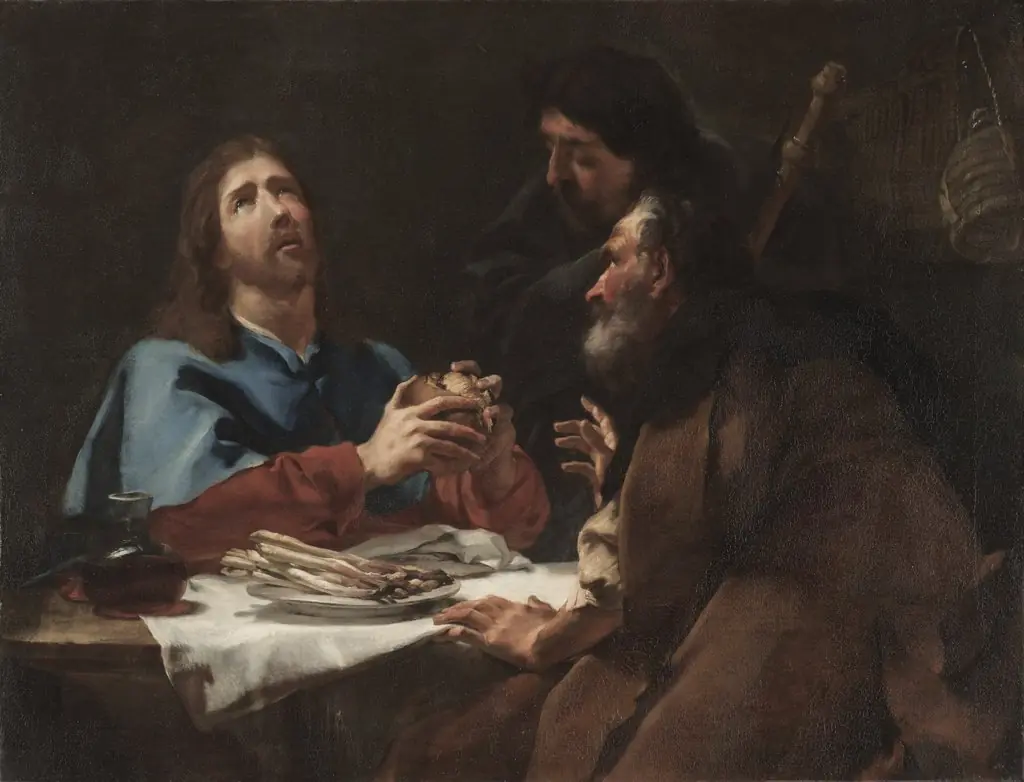
The painting captures the moment Christ, unrecognized by his followers, blesses bread during a meal, triggering their realization of his identity. The central figure, calm and composed, contrasts with the two disciples leaning forward in sudden attention. The simplicity of the setting underscores the intimate, personal nature of the revelation, emphasizing spiritual recognition over spectacle.
Technique & Style
Giordano employs chiaroscuro to model forms and deepen emotional resonance. Dark, textured walls and garments absorb shadow, while a narrow beam of light falls across the table, illuminating the bread and the central figure’s face. The brushwork varies—smooth on skin, rough on fabric—enhancing tactile realism and directing focus to the moment of revelation without theatricality.
History & Provenance
Commissioned during Giordano’s early career in Naples, the painting entered the collection of the National Museum in Kraków in the 19th century, likely through European art transfers or acquisitions. Its survival through wars and political shifts reflects its quiet endurance as a devotional object rather than a celebrated showpiece.
Context
Created in the mid-17th century, the work aligns with Counter-Reformation ideals that favored emotionally accessible religious scenes. Giordano’s approach, influenced by Caravaggio’s naturalism, avoided idealization in favor of human vulnerability. The scene’s domestic setting made the divine feel immediate to viewers, reinforcing faith through everyday intimacy.
Legacy
Though not widely reproduced, the painting exemplifies Giordano’s early mastery of light and psychological nuance. It remains a quiet reference in studies of Baroque religious painting, valued for its restraint and emotional precision rather than dramatic flair. Its presence in Kraków offers a regional counterpoint to more famous Italian versions of the same subject.
Own this work as a print
Artist & collection

Artist
Luca Giordano was an Italian late-Baroque painter and printmaker in etching. Giordano was one of the most celebrated artists of the Neapolitan Baroque, whose vast output included altarpieces, mythological paintings and…