Artwork
Louis XVIII Receiving the Duke of Angoulême on His Return from the Spanish Campaign
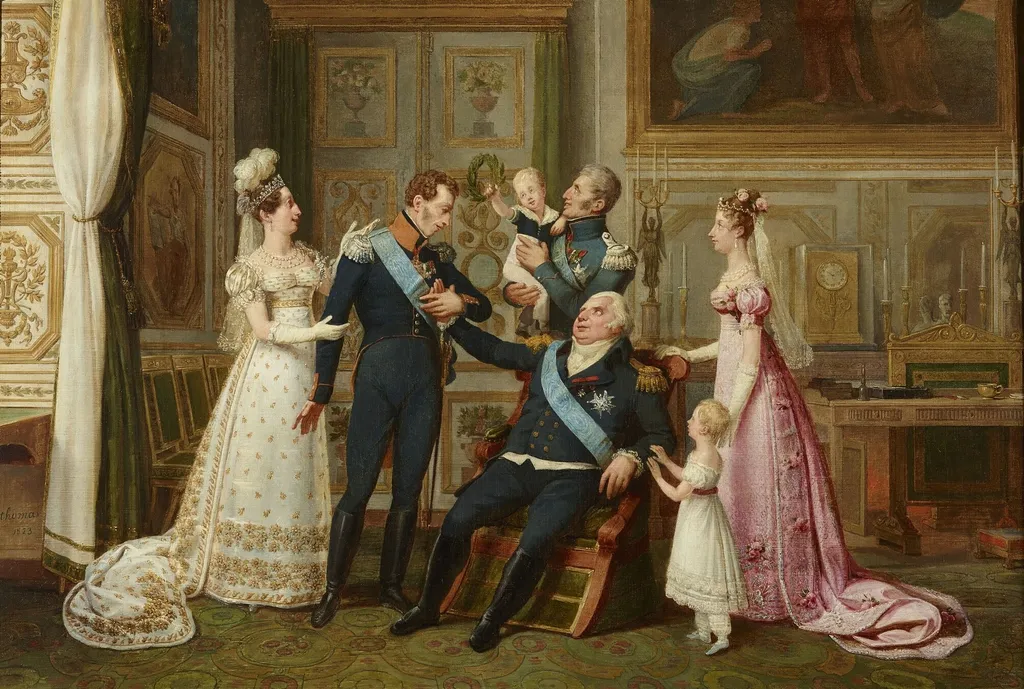
Louis XVIII Receiving the Duke of Angoulême on His Return from the Spanish Campaign is an oil painting by Antoine-Jean-Baptiste Thomas. It dates from 1823 and is held in the collection of the Palace of Versailles. Antoine Jean‑Baptiste Thomas painted this 1823 oil work to commemorate a royal reception at the Tuileries.
About this work
Overview
The scene is set in an opulently decorated interior, with gilded walls, sumptuous drapery and a mirrored fireplace framing the gathering.
Antoine Jean‑Baptiste Thomas painted this 1823 oil work to commemorate a royal reception at the Tuileries. The composition gathers the French monarch Louis XVIII and his close relatives as they greet the returning Duke of Angoulême, fresh from his victorious expedition in Spain. The scene is set in an opulently decorated interior, with gilded walls, sumptuous drapery and a mirrored fireplace framing the gathering.
Subject & Meaning
The tableau records a moment of dynastic celebration: Louis XVIII, seated and afflicted by gout, acknowledges his nephew Louis‑Antoine, the Duke of Angoulême, who led the Hundred Thousand Sons of Saint Louis. The duke’s wife, Marie‑Thérèse, clings to him, while the Count of Artois presents the infant Duke of Bordeaux, symbolising the continuity of the Bourbon line. Adjacent figures, the Duchess of Berry and her daughter Princess Louise, underscore the family’s resilience after recent tragedies.
Technique & Style
Thomas employs a polished academic style typical of the Bourbon Restoration, rendering textures—from the sheen of military uniforms to the delicate lace of the women’s gowns—with meticulous brushwork. The lighting, directed from the left, highlights the king’s blue sash and the medals on the officers, creating a hierarchy of focus. The composition balances a formal portraiture tradition with a narrative depth that conveys both ceremony and intimacy.
History & Provenance
Commissioned by the municipal authorities of Paris, the painting was intended to honor the royal family’s role in the Spanish campaign. After its debut, it entered the royal collection and later became part of the holdings at the Palace of Versailles, where it remains on display as a representation of early‑19th‑century state art.
Context
Created during the Bourbon Restoration, the work reflects the regime’s effort to legitimize its rule through visual propaganda, emphasizing military success and dynastic stability. Thomas, regarded as a promising artist of the period, contributed to this narrative by portraying the monarchy in a dignified, celebratory light, aligning with contemporary expectations of history painting as a tool of political affirmation.
Own this work as a print
Artist & collection
Artist
Antoine Jean-Baptiste Thomas (1791–1834) was a French painter and lithographer. Thomas mentored under François-André Vincent, and later studied at the École des Beaux-Arts. Thomas lived and traveled around Italy, which…

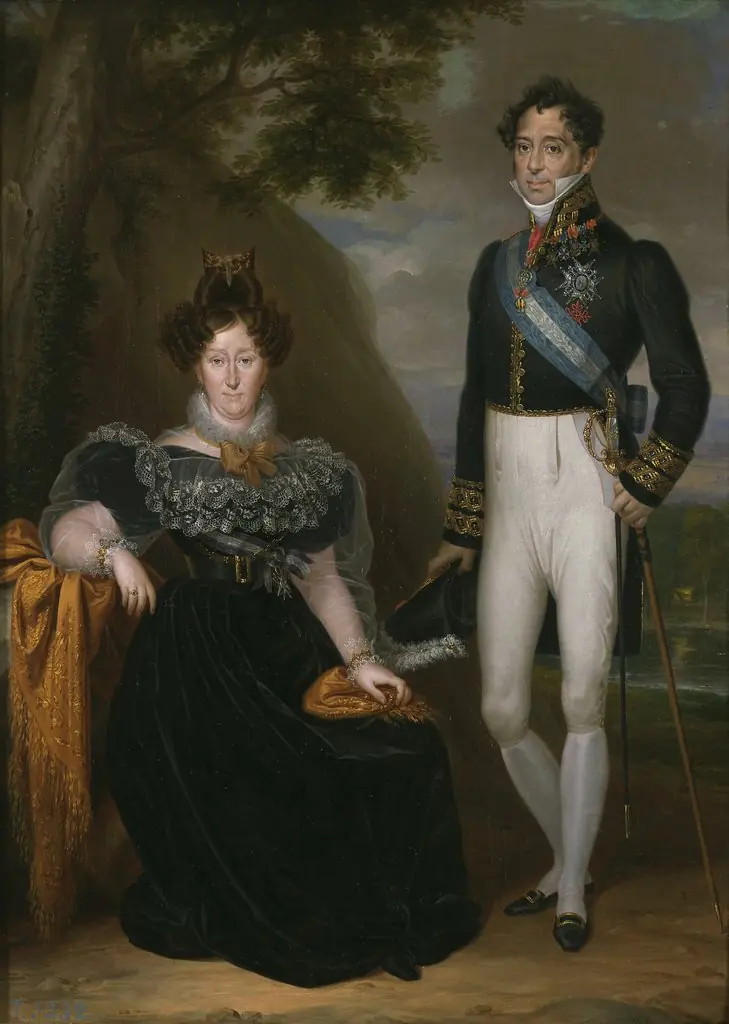 The Duke and Duchess of San Fernando de Quiroga
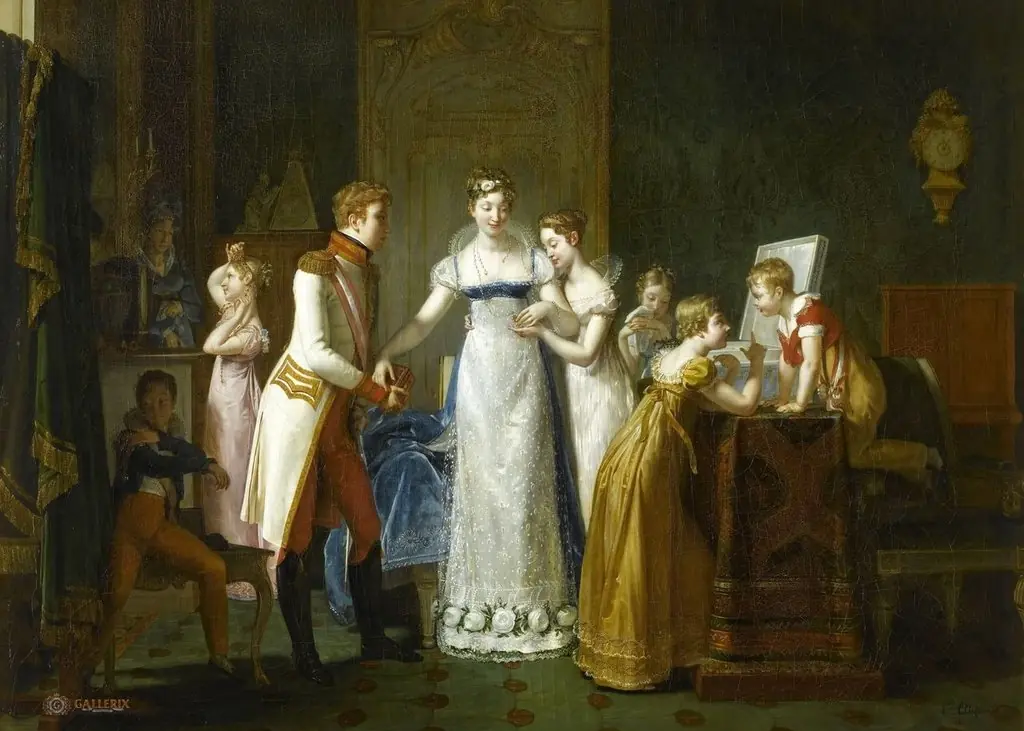 Marie-Louise of Austria Bidding Farewell to her Family in Vienna
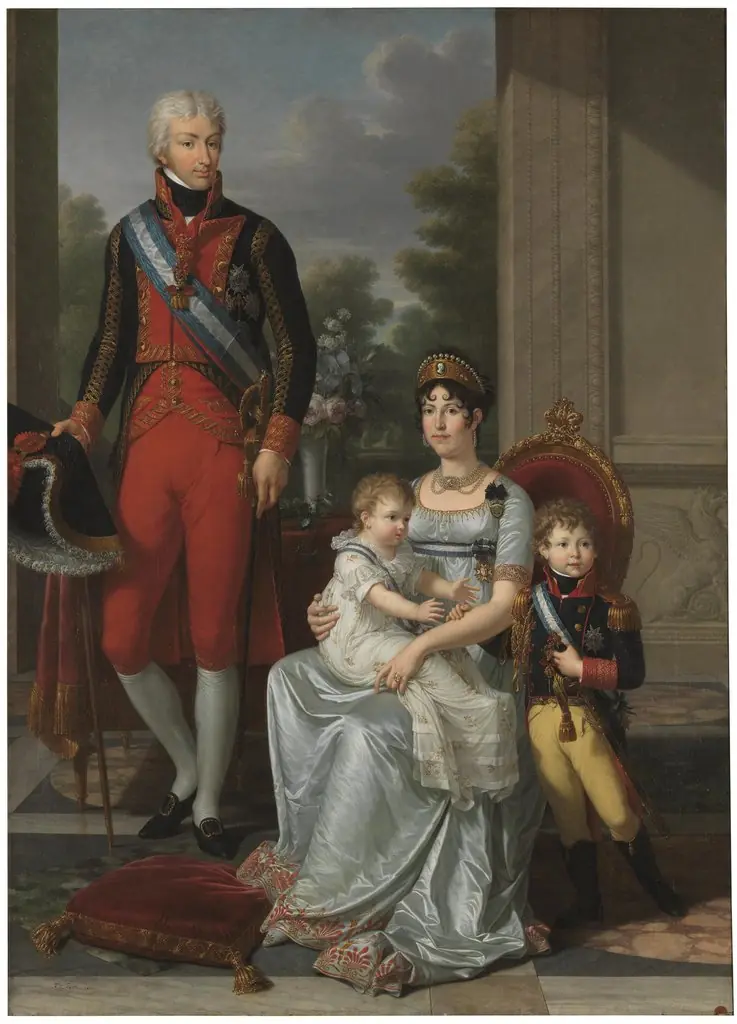 The Etrurian Royal Family
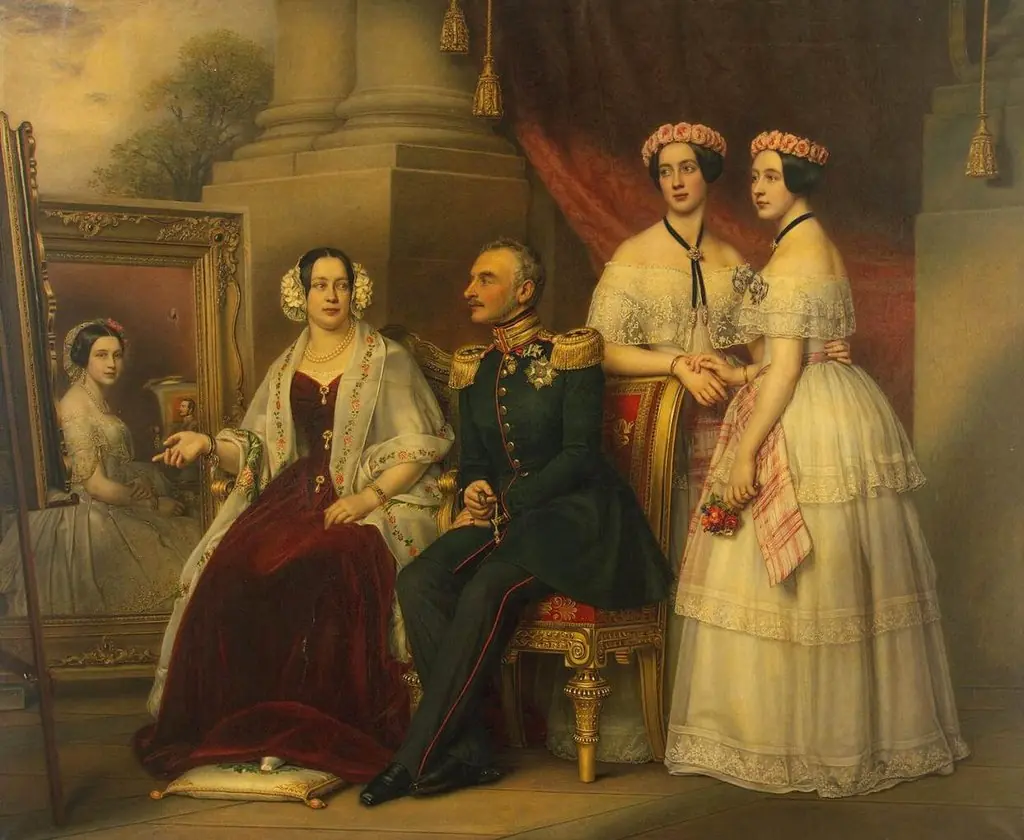 Portrait of Duke of Saxe-Altenburg Joseph's Family
 The Princess of Orange Receiving Alexander II (1818-1881), Grand Duke and Heir to the Throne of Russia, in the Czar Peter's House in Zaandam, 17 April 1839
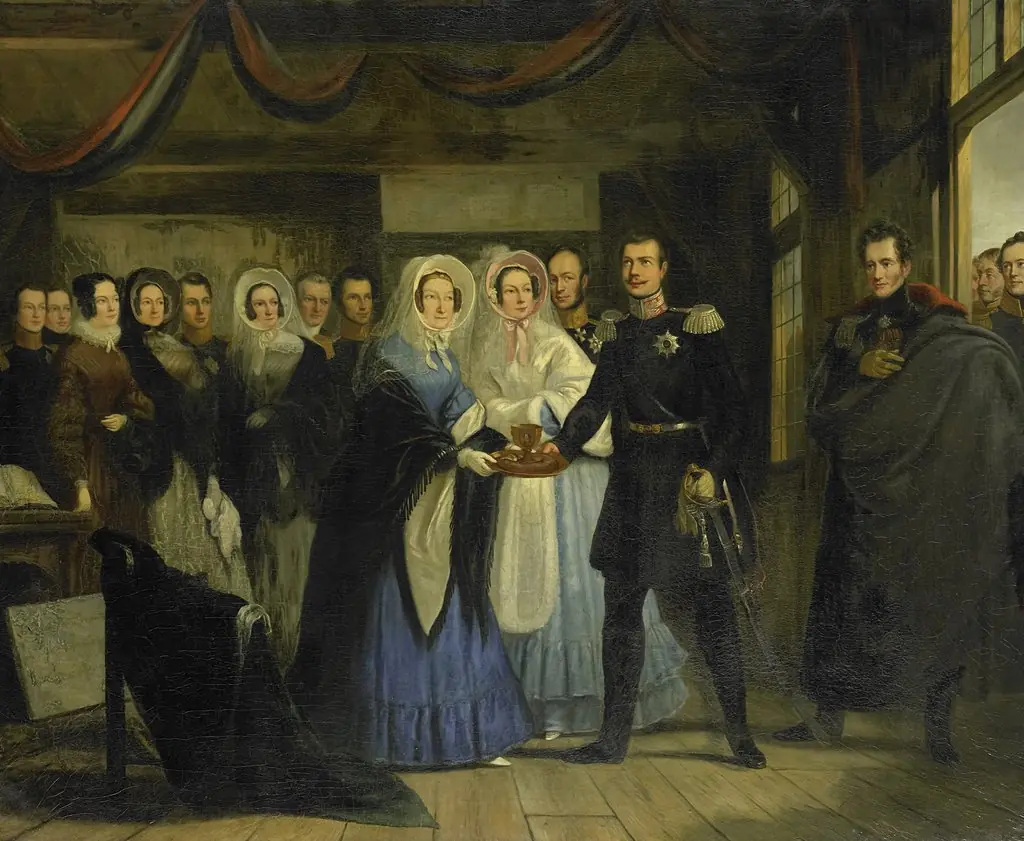 The Princess of Orange Receiving Alexander II (1818-1881), Grand Duke and Heir to the Throne of Russia, in the Czar Peter's House in Zaandam, 17 April 1839
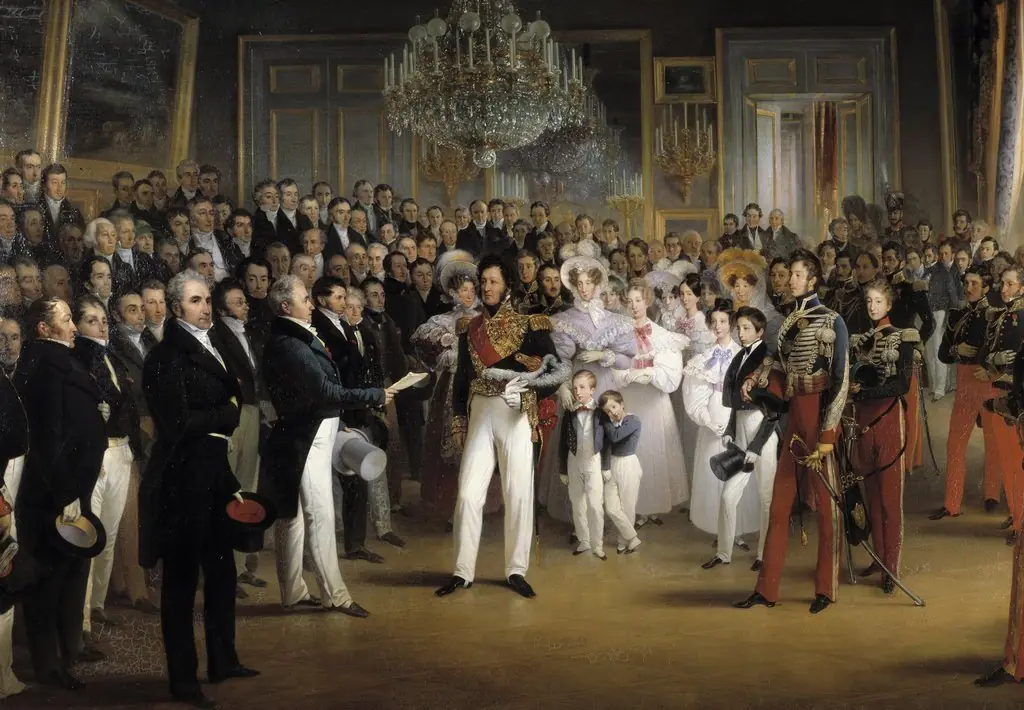 The Chamber of Deputies Received at the Palais-Royal by the Duke of Orleans
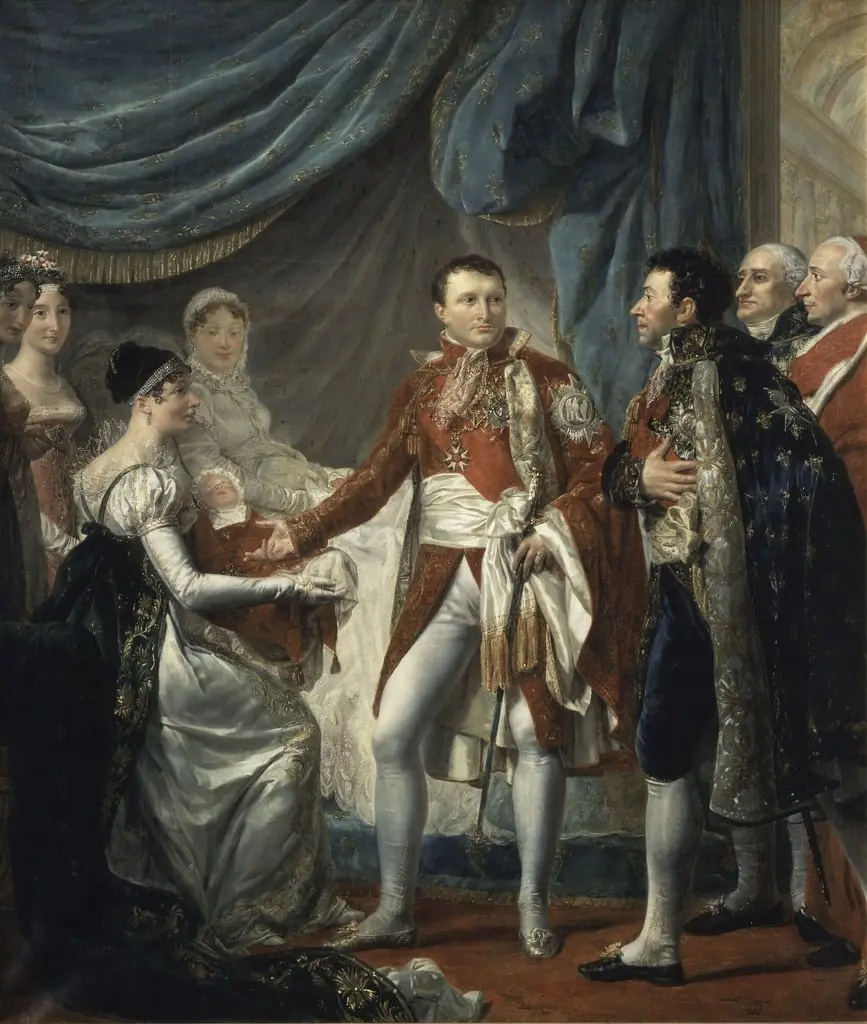 Napoleon I presents the King of Rome to the dignitaries of the Empire, March 20, 1811
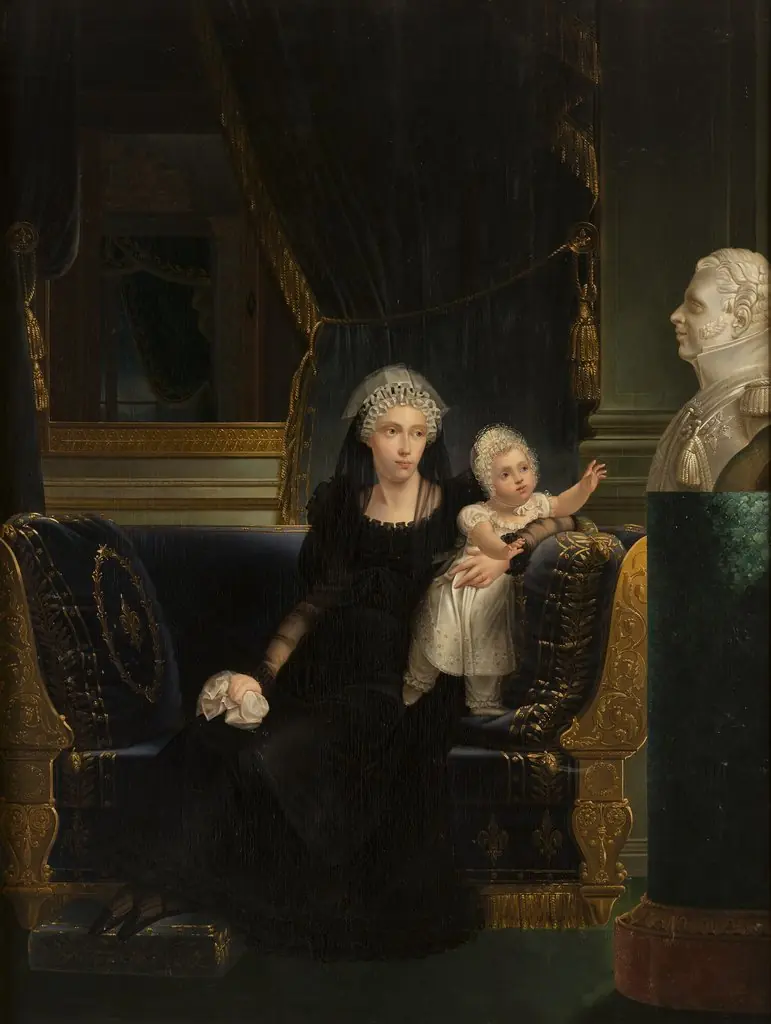 Marie-Caroline de Bourbon-Sicile, Duchess of Berry and her daughter Louise-Marie-Thérèse
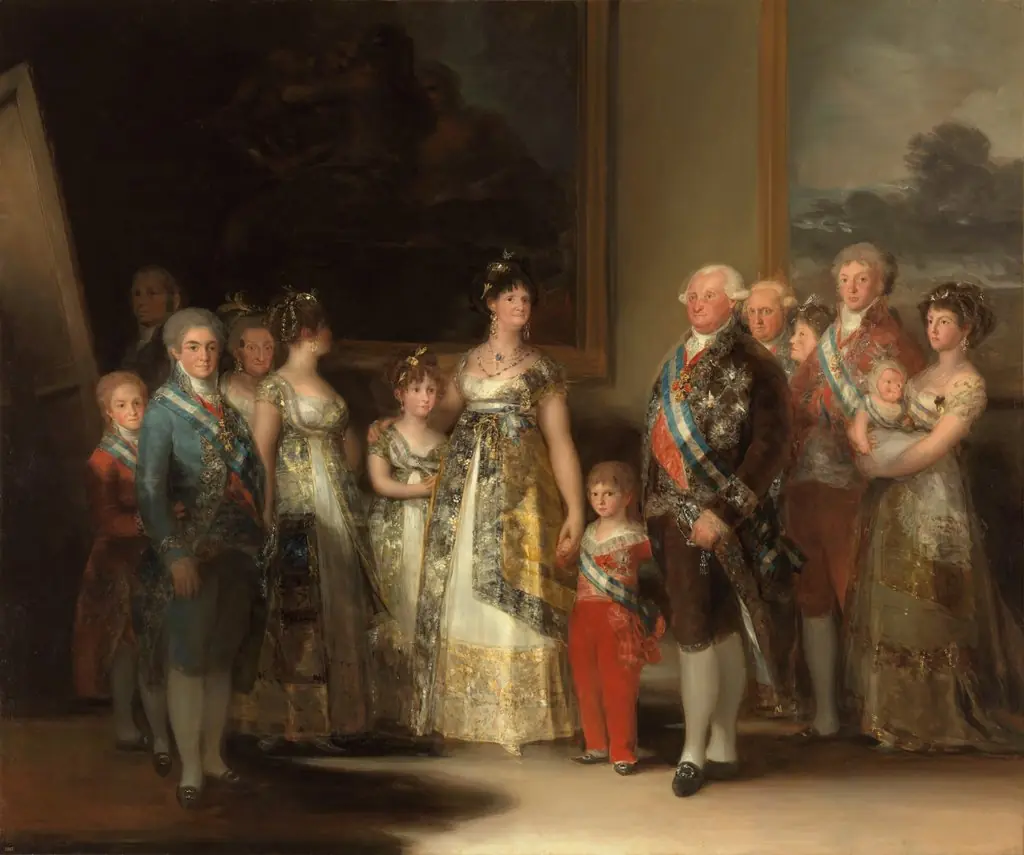 Charles IV of Spain and His Family
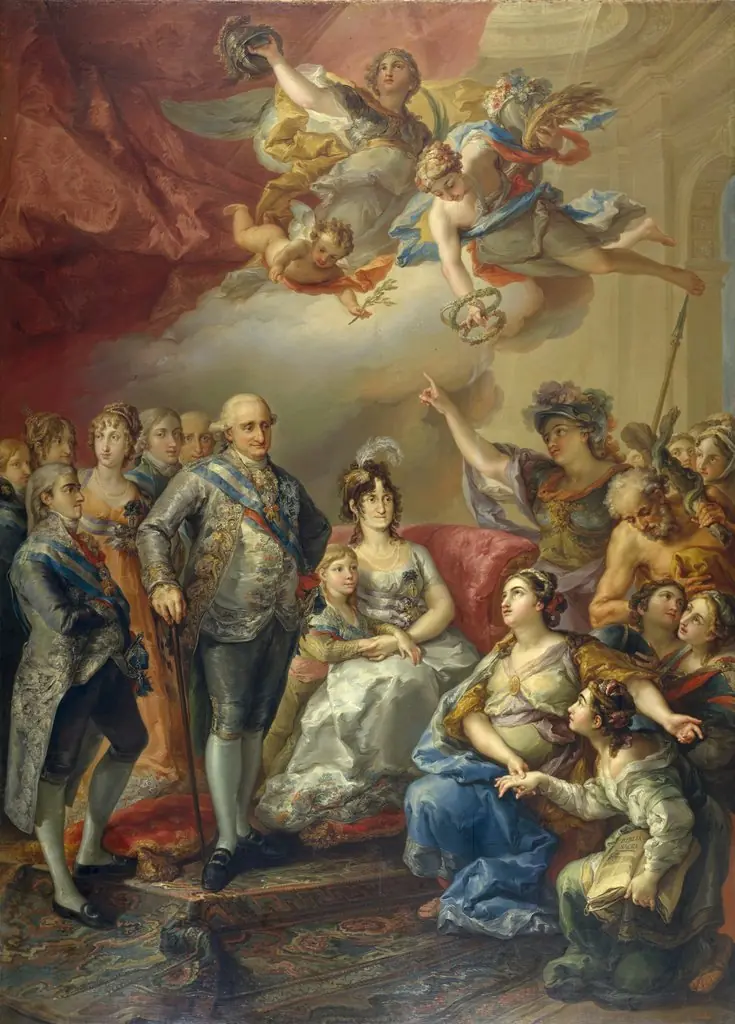 Charles IV and his Family honoured by the University of Valencia
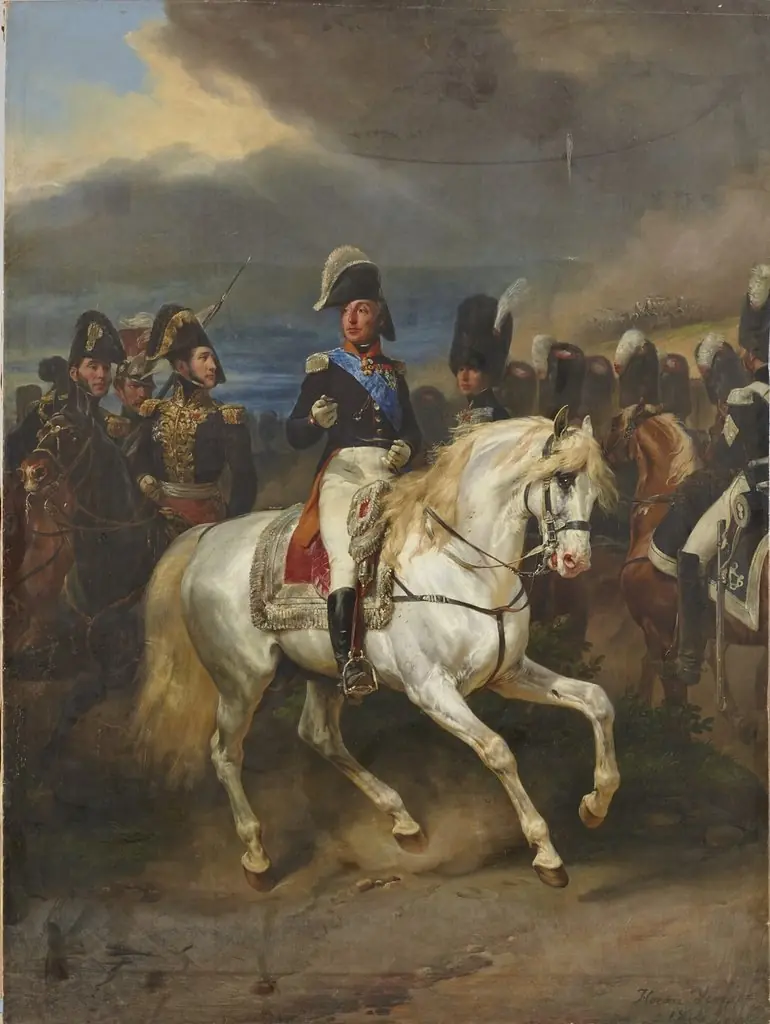 Portrait of the Duke of Angoulême