Artwork
Christ Enthroned, the Virgin, Saint Francesca Romana, an Angel and Donor
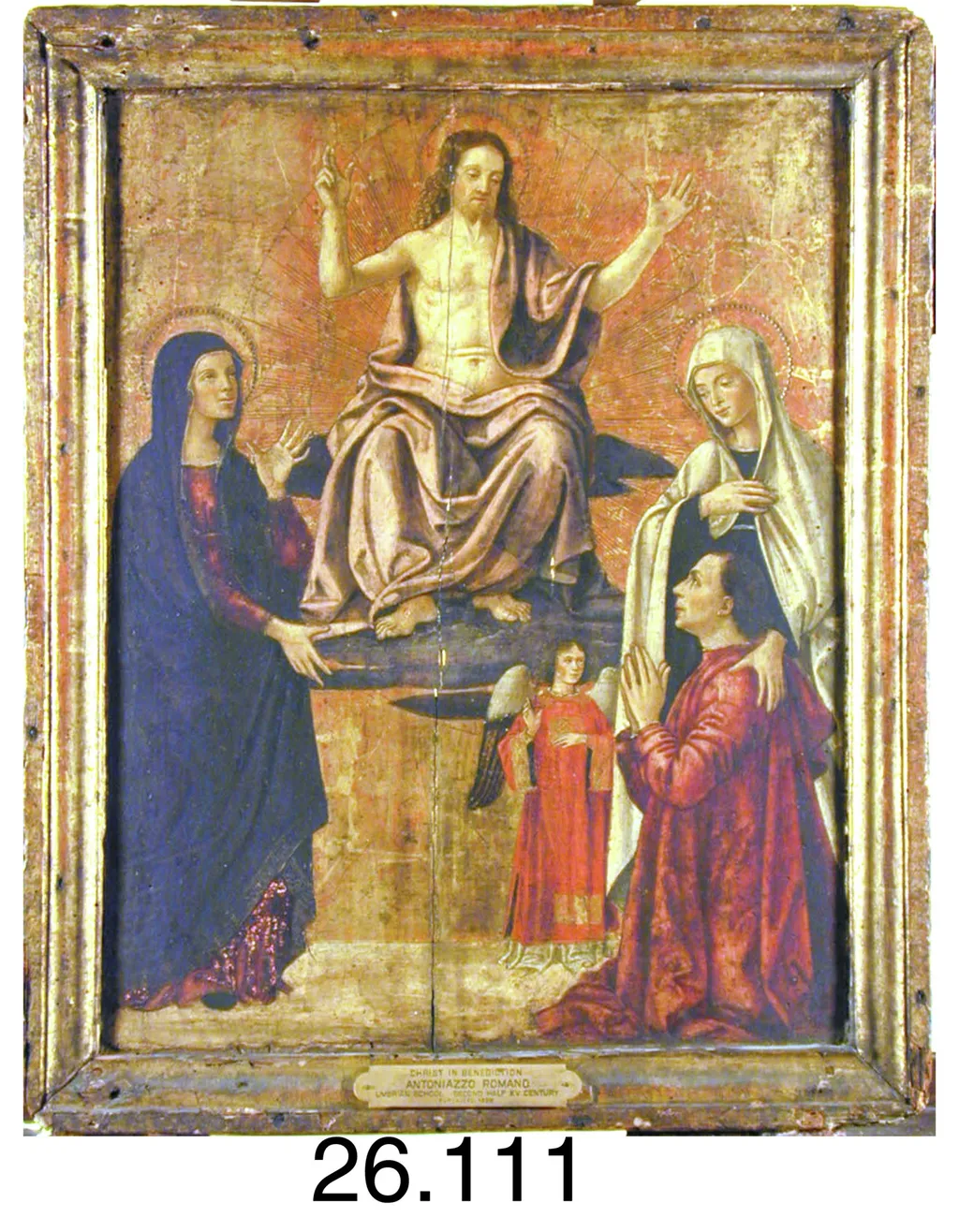
Christ Enthroned, the Virgin, Saint Francesca Romana, an Angel and Donor is an unspecified painting by the Early Renaissance artist Antoniazzo Romano. It dates from 1470 and is held in the collection of the Detroit Institute of Arts. Painted around 1470 by Antoniozzo Romano, this devotional panel belongs to the Roman school of the late 15th century.
About this work
Overview
It presents a sacred hierarchy centered on Christ seated in majesty, surrounded by the Virgin Mary, Saint Francesca Romana, an angel, and a kneeling donor.
Painted around 1470 by Antoniozzo Romano, this devotional panel belongs to the Roman school of the late 15th century. It presents a sacred hierarchy centered on Christ seated in majesty, surrounded by the Virgin Mary, Saint Francesca Romana, an angel, and a kneeling donor. The composition follows traditional iconographic conventions, with figures arranged symmetrically and set against a luminous gold ground, a hallmark of Romano’s style and a deliberate nod to medieval precedents.
Subject & Meaning
The painting functions as a sacred tableau, reinforcing spiritual authority and intercession. Christ, as the central figure, embodies divine sovereignty. The Virgin and Saint Francesca Romana, both female saints, flank him as mediators of grace. The kneeling donor, likely a patron who commissioned the work, seeks spiritual favor through devotion. The angel, positioned near the donor, symbolizes divine presence and guidance, linking the earthly supplicant to the heavenly realm.
Technique & Style
Romano employed tempera on panel with a gold leaf background, a technique common in earlier Byzantine and Gothic traditions. The figures are rendered with restrained modeling, emphasizing flatness and line over spatial depth. Rich, muted colors—deep blues, earthy browns, and crimson—contrast subtly with the radiant gold, enhancing the otherworldly atmosphere. The stylized drapery and elongated proportions reflect a transitional phase between medieval iconography and early Renaissance naturalism.
History & Provenance
The painting was created in Rome during a period of renewed interest in devotional imagery under papal patronage. It remained in private or ecclesiastical collections in Italy until entering the Detroit Institute of Arts’ collection, where it is now held. Its survival in relatively intact condition offers insight into the devotional practices of Roman lay elites in the late Quattrocento, who commissioned such works for private prayer or chapel dedication.
Context
In late 15th-century Rome, religious art retained strong medieval traits even as humanist ideals spread northward. Romano’s use of the gold ground and hierarchical composition aligns with local traditions that resisted full naturalism. Saint Francesca Romana, recently canonized in 1455, was a popular subject in Roman devotional art, reflecting the city’s veneration of its own female saints. The donor’s inclusion underscores the personal piety and social status of patrons seeking spiritual benefit through art.
Legacy
Antoniozzo Romano’s work represents a persistent regional style in Rome that coexisted with broader Renaissance trends. While not as widely influential as Florentine or Venetian painters, his panels like this one preserve the continuity of devotional aesthetics in central Italy. Today, the painting serves as a tangible record of how religious identity and artistic practice intertwined in a city still deeply rooted in medieval liturgical culture.
Artist & collection
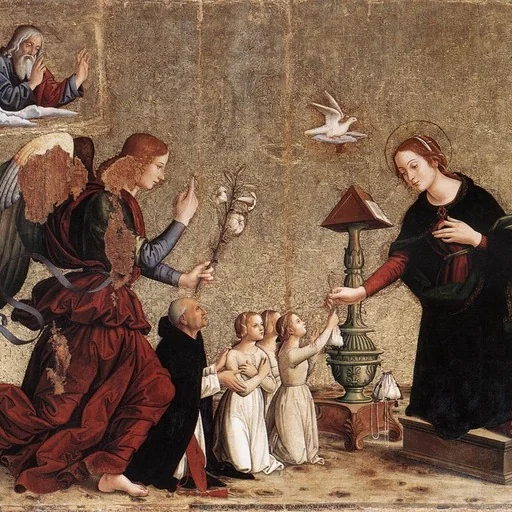
Artist
Antonio di Benedetto Aquilo degli Aquili (c. 1430 – c. 1510), known as Antoniazzo Romano, was an Italian Early Renaissance painter, the leading figure of the Roman school during the latter part of the 15th century He…

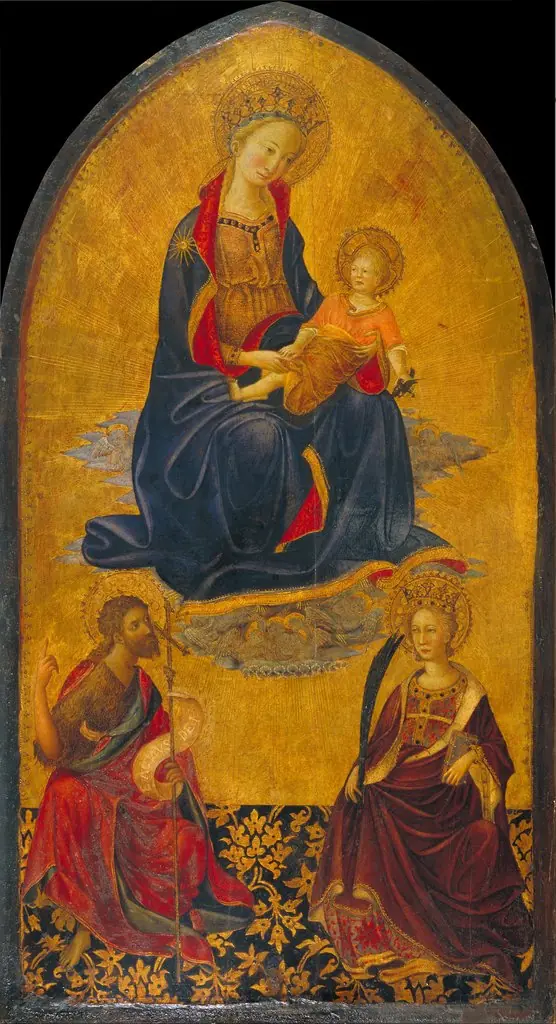 Adoration of the Virgin and Child by Saint John the Baptist and Saint Catherine
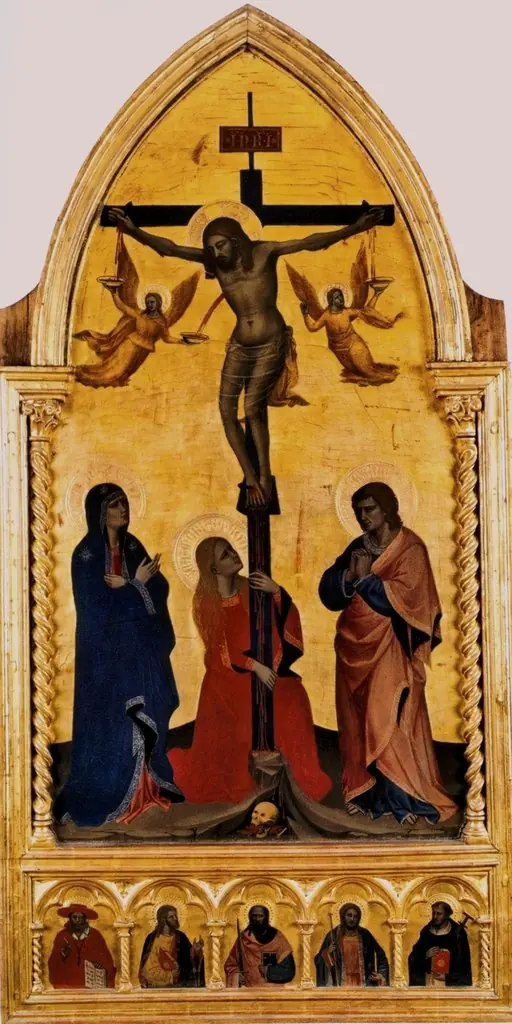 Crucifixion
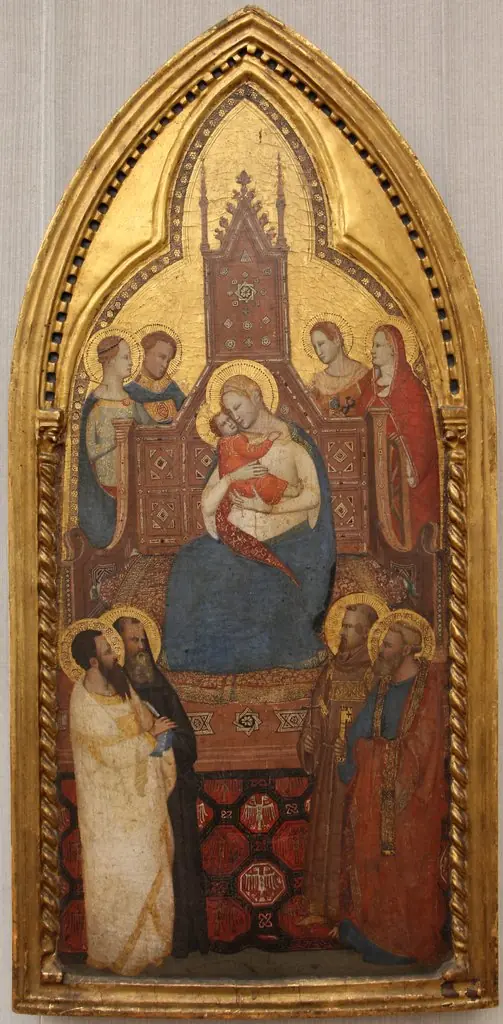 Virgin and Child enthroned with eight saints
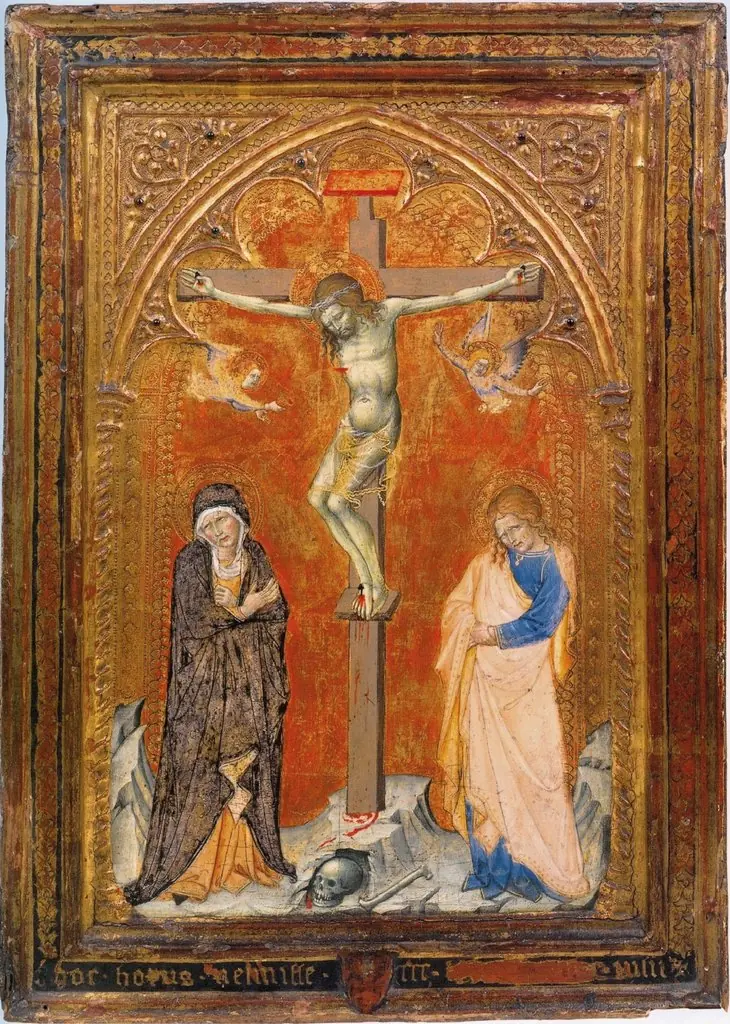 Crucifixion with the Virgin and Saint John the Evangelist
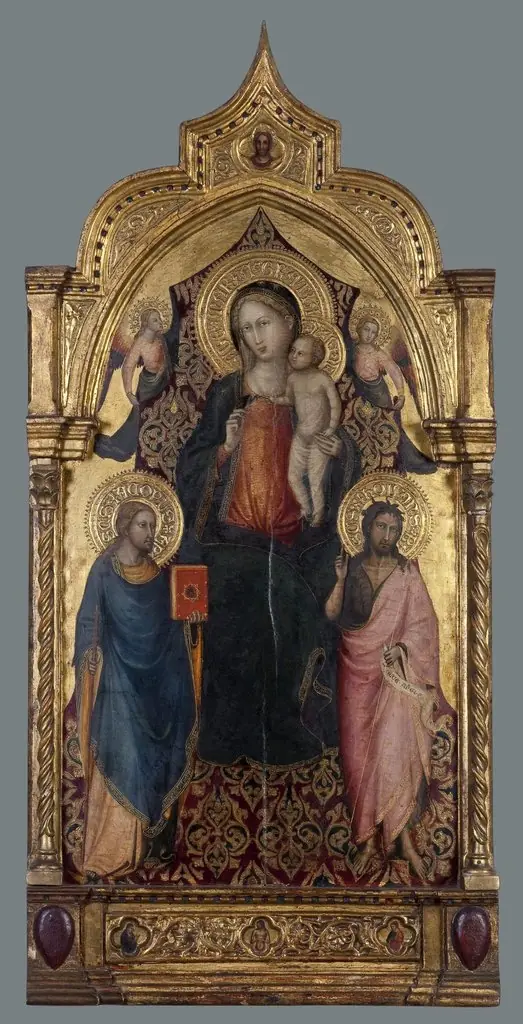 Madonna and Child, with St Jacob the Younger, St John The Baptist and Angels
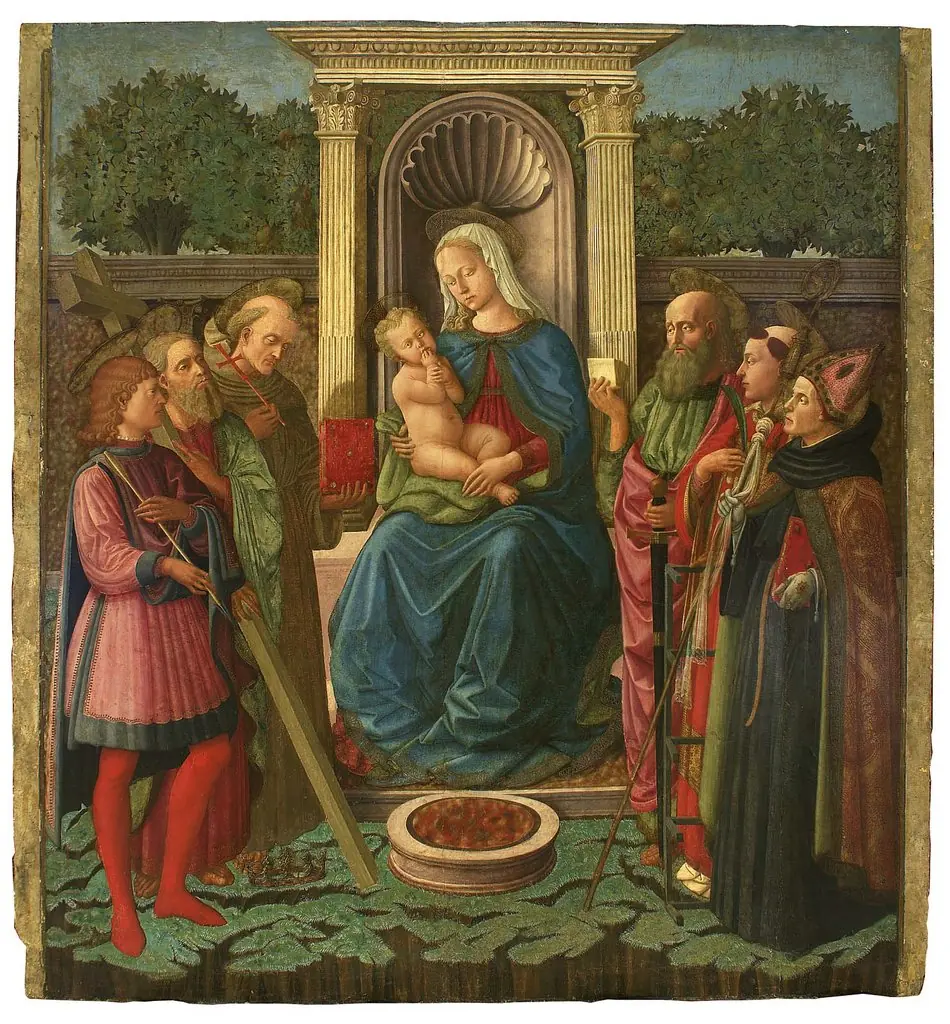 Virgin and Child Enthroned with Saints Sebastian, Andrew, Bernardino (?), Paul, Lawrence, and Augustine
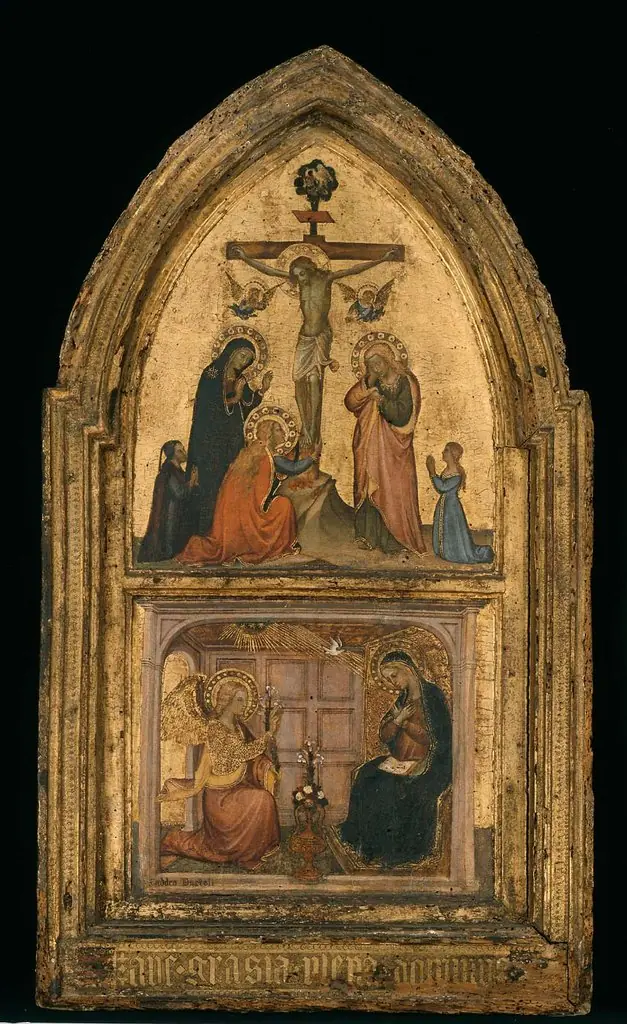 Annunication; Crucifixion
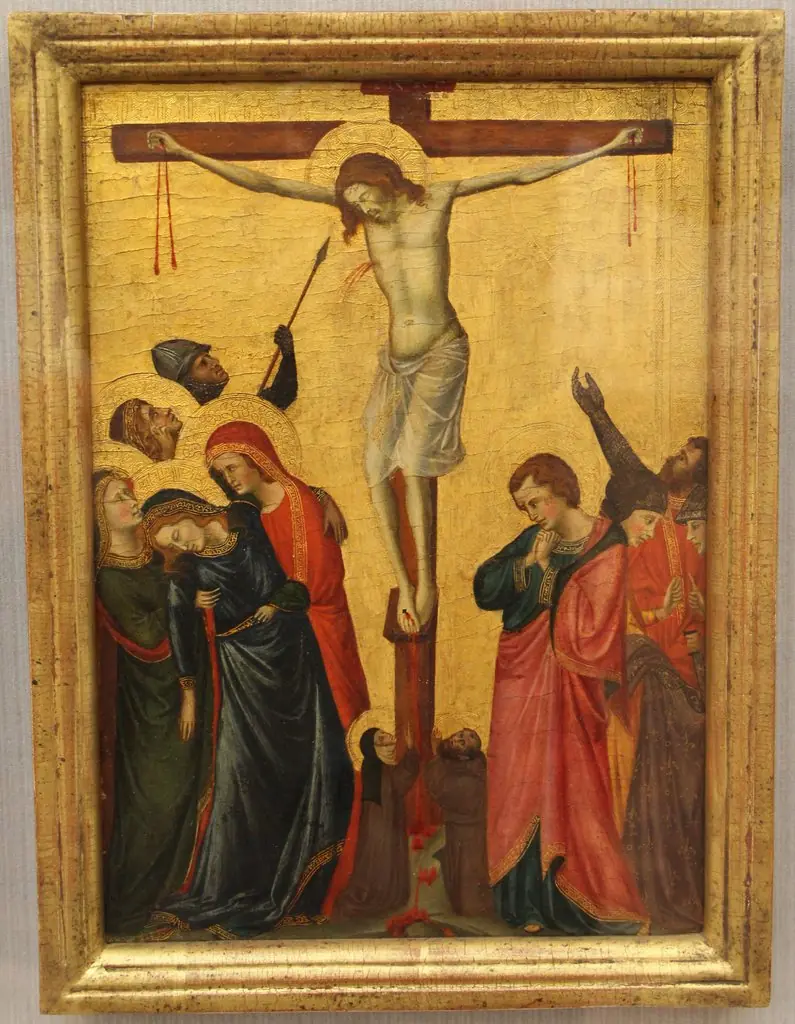 The Crucifixion
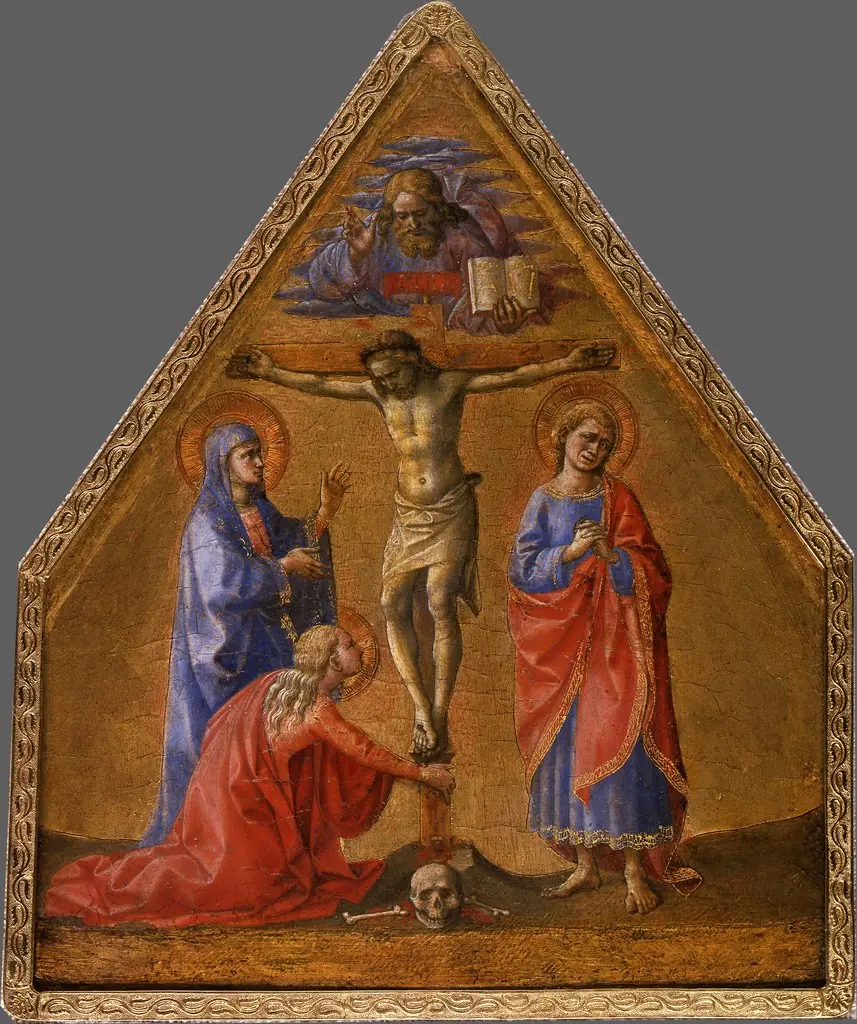 Christ on the Cross with Saints John, Mary and Mary Magdalene
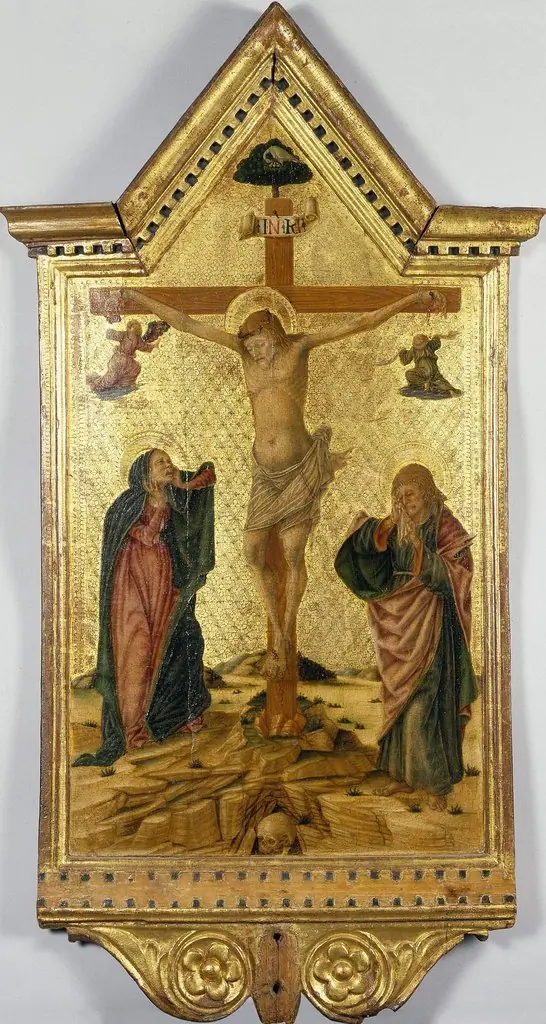 Crucifixion with the Virgin and St John
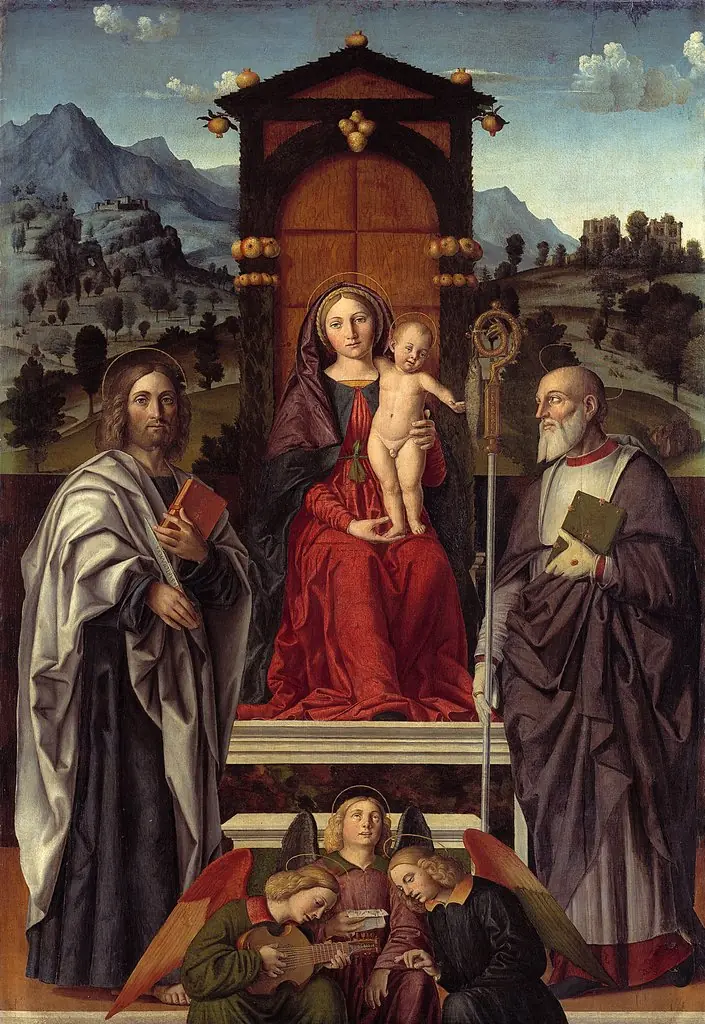 Mary and Child Enthroned with Saints
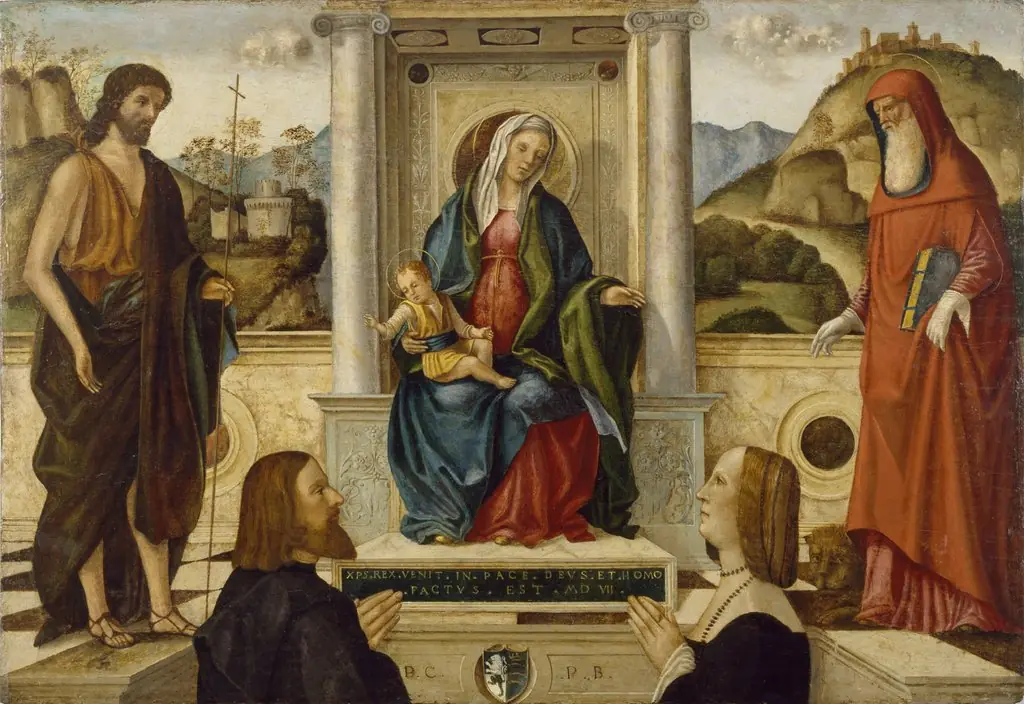 Madonna and Child Enthroned with Saints and Donor