Artwork
Large Speos - View taken from the Sand Slope (Temple of Ramesses II), Abu Simbel
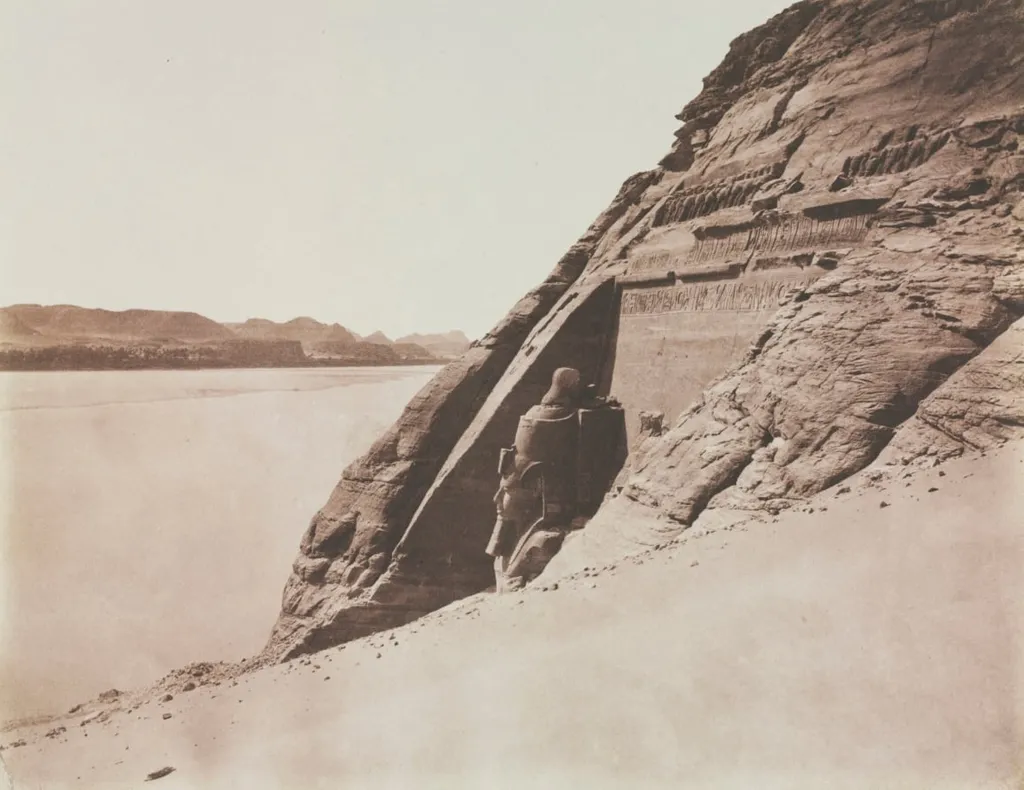
Large Speos - View taken from the Sand Slope (Temple of Ramesses II), Abu Simbel is a photography by the Impressionist artist Félix Teynard. It dates from 1852 and is held in the collection of the Cleveland Museum of Art.
About this work
You see a large temple carved into a rock face, surrounded by desert and cliffs.
The artist took a unique approach by showing the temple in its natural context. This view is special because it no longer exists in real life, as the temple was relocated in 1968.
You can learn more about this type of photography by looking up the technique of chiaroscuro.
Overview
This photograph, titled 'Large Speos - View taken from the Sand Slope (Temple of Ramesses II), Abu Simbel', captures the Temple of Ramesses II at Abu Simbel within its original desert and cliff landscape.
Subject & Meaning
Unlike other contemporary depictions of Abu Simbel, this image emphasizes the temple's integration with its natural surroundings, juxtaposing the colossal sculptures against the vast desert expanse and adjacent cliffs.
Technique & Style
The photograph employs a visually striking composition, potentially leveraging chiaroscuro techniques to highlight the contrast between the carved temple and the sun-drenched desert landscape.
History & Provenance
The depicted view is historically significant as it no longer exists in reality. The temple was relocated in 1968 to prevent submersion by the Aswan High Dam's reservoir, mirroring the relocation of the Philae temple complex.
Context
Captured by Teynard, this photograph stands out among works by his contemporaries (such as Maxime Du Camp and Antonio Beato) by prioritizing the temple's environmental context over its monumental scale alone.
Legacy
As a record of a lost landscape, the photograph serves as a valuable historical document, preserving the original setting of the Temple of Ramesses II at Abu Simbel.
Artist & collection

 Temple of Abu Simbel
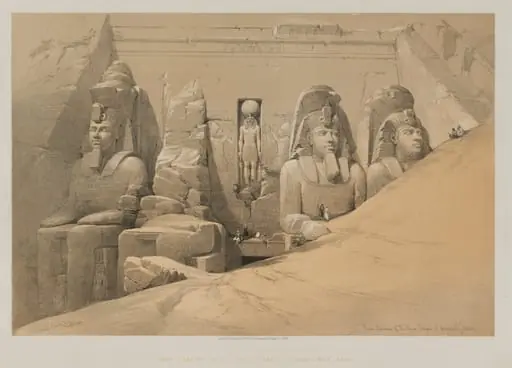 Egypt and Nubia, Volume II: Front Elevation of the Great Temple of Aboo Simbel, Nubia
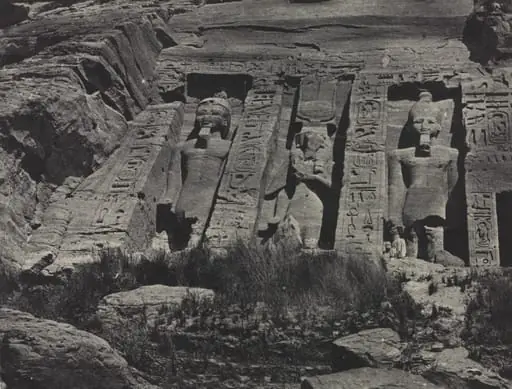 Southern Portion of the Rock-cut Temple of Hathor, Abu Simbel
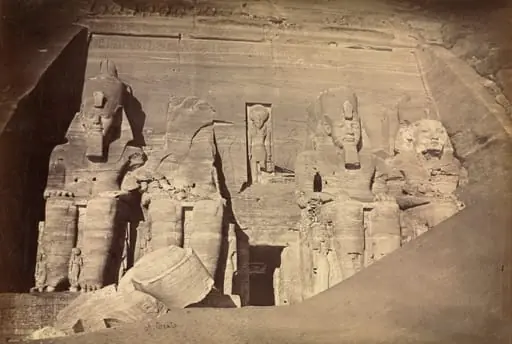 Temple of Ramesses II, Abu Simbel
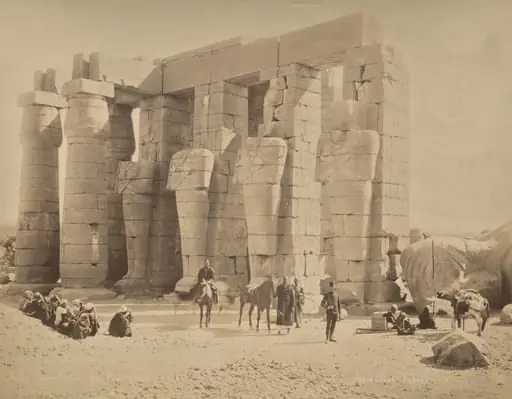 Les cariatides du Ramesseum 134
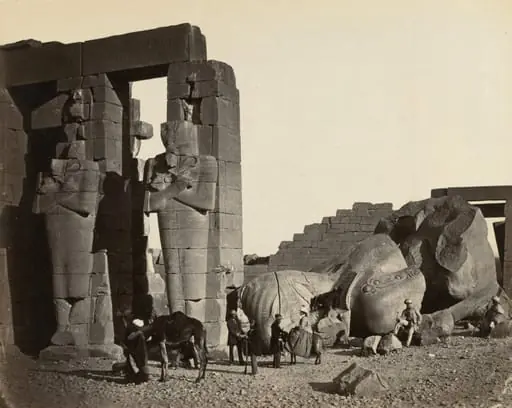 Fallen Statue at the Ramesseum, Thebes
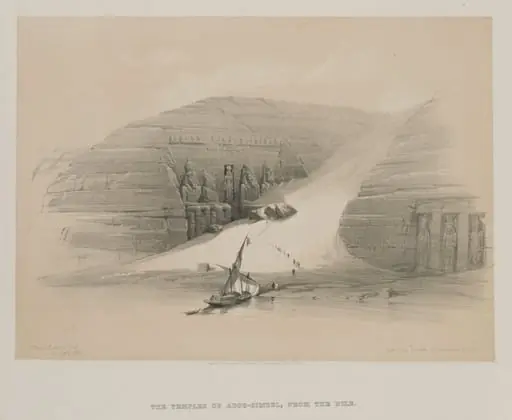 Egypt and Nubia, Volume II: Excavated Temples of Abo Simble, Nubia
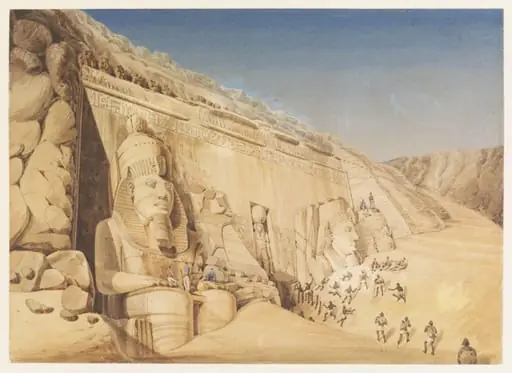 Excavation of the Great Temple of Ramesses II at Abu Simbel
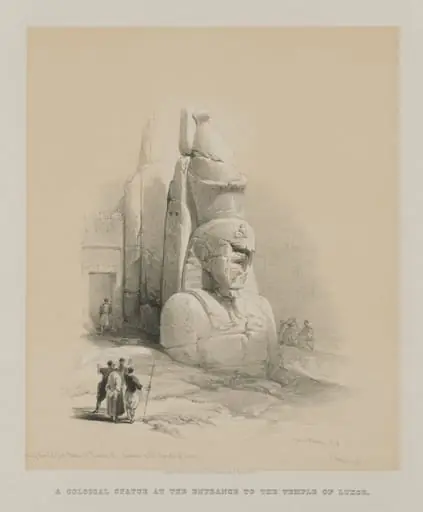 Egypt and Nubia, Volume I: One of Two Colossal Statues of Rameses II. Entrance to the Temple of Luxor
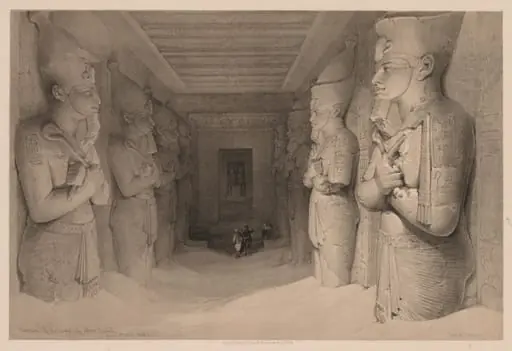 Egypt and Nubia: Volume I - No. 14, Interior of the Temple Aboo Simbel