Artwork
Zeus and Hera
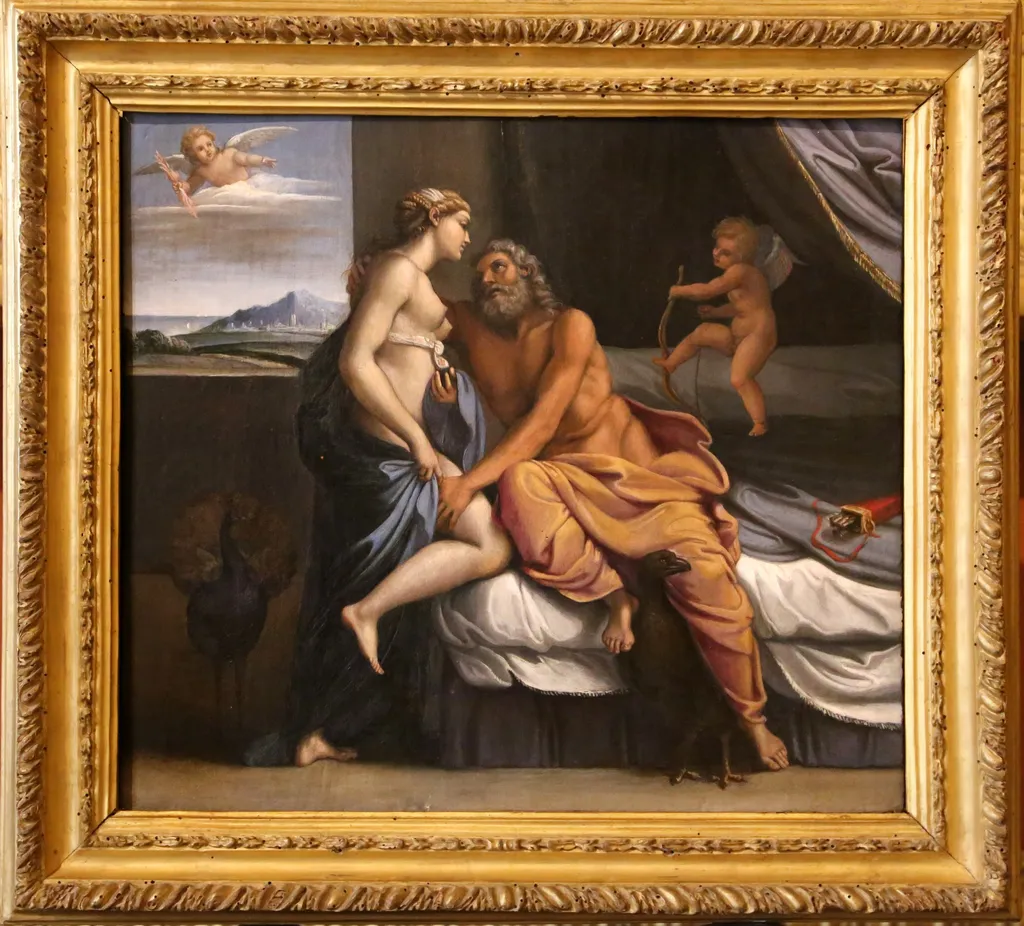
Zeus and Hera is an unspecified painting by the Early Baroque Italian artist Antonio Marziale Carracci. It dates from 1612 and is held in the collection of the Galleria Borghese.
About this work
Overview
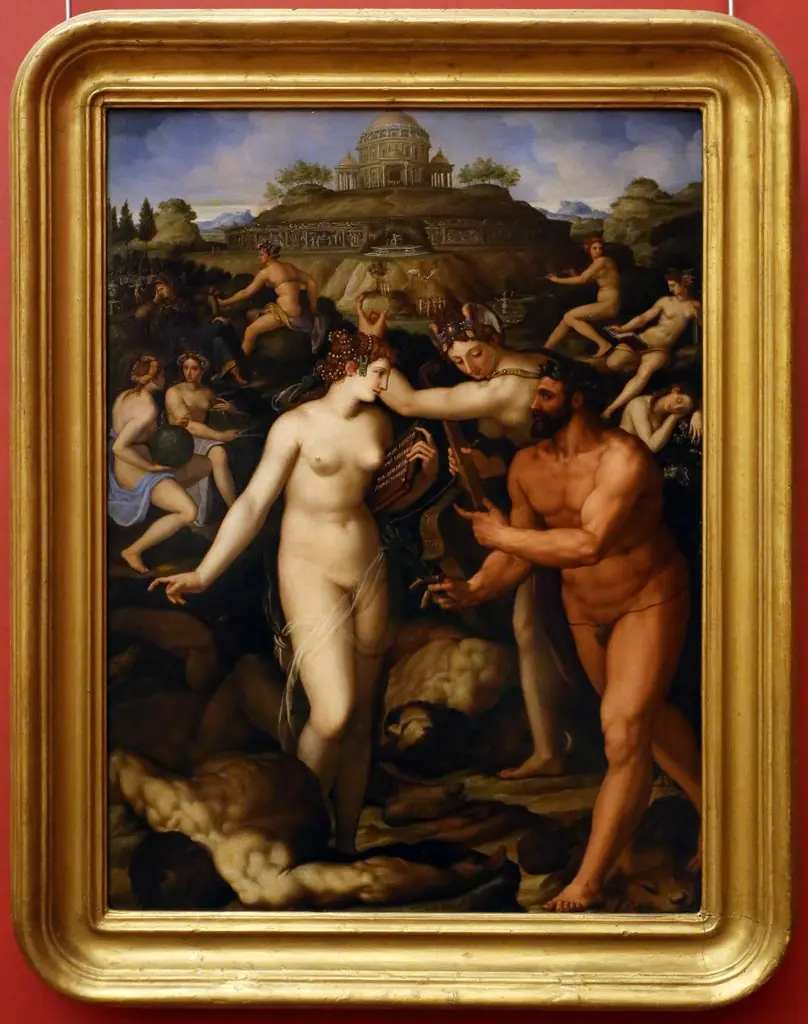
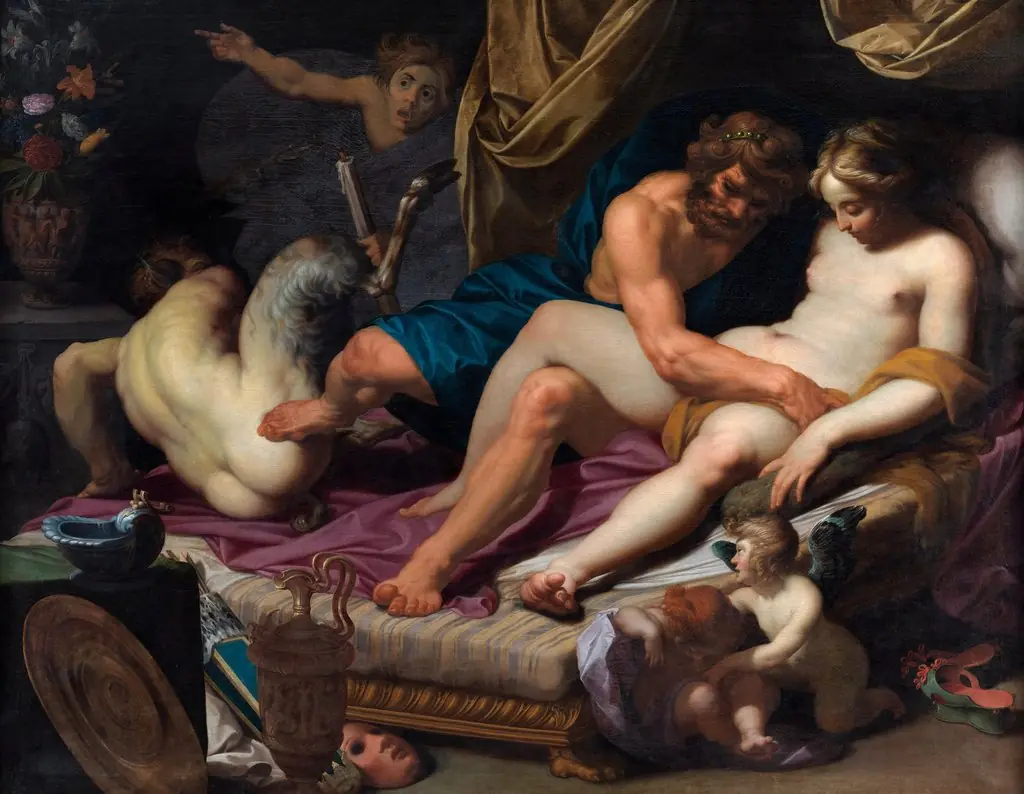
Zeus and Hera is a 1612 mythological painting by Antonio Marziale Carracci, housed at the Galleria Borghese. The work portrays an intimate scene between the two principal deities of Greek mythology within a domestic setting.
Subject & Meaning
The painting depicts Zeus (seated on a bed, clad in a yellow loincloth) and Hera (standing, wearing a blue waist cloth), engaged in a mutual gaze. A cherub above them holds a bow and arrow, symbolizing Cupid and potentially alluding to the complexities of divine love and power dynamics within the mythological narrative.
Technique & Style
Executed against a backdrop of dark walls, the scene contrasts with the brightness of a white bed and select objects. The use of gold framing complements the piece's chromatic palette, which features prominent yellow and blue garments. The overall style is characteristic of the Baroque period, with dramatic lighting implied through color contrast.
History & Provenance
Created in 1612 by Antonio Marziale Carracci, the painting has been part of the Galleria Borghese's collection, indicating its value as a representation of early 17th-century Italian Baroque art.
Context
The depiction of mythological figures in a seemingly mundane, intimate setting reflects the Baroque era's tendency to humanize divine subjects. This approach allowed artists to explore themes of love, power, and vulnerability on a relatable scale.
Legacy
While specific influences or direct artistic lineage are not prominently documented, 'Zeus and Hera' contributes to the broader legacy of Baroque mythological painting, offering insights into the period's artistic and thematic preoccupations.
Artist & collection

Artist
Antonio Marziale Carracci (1583–1618) was an artist, born in Venice.