Artwork
Altarpiece of Saint Peter Martyr
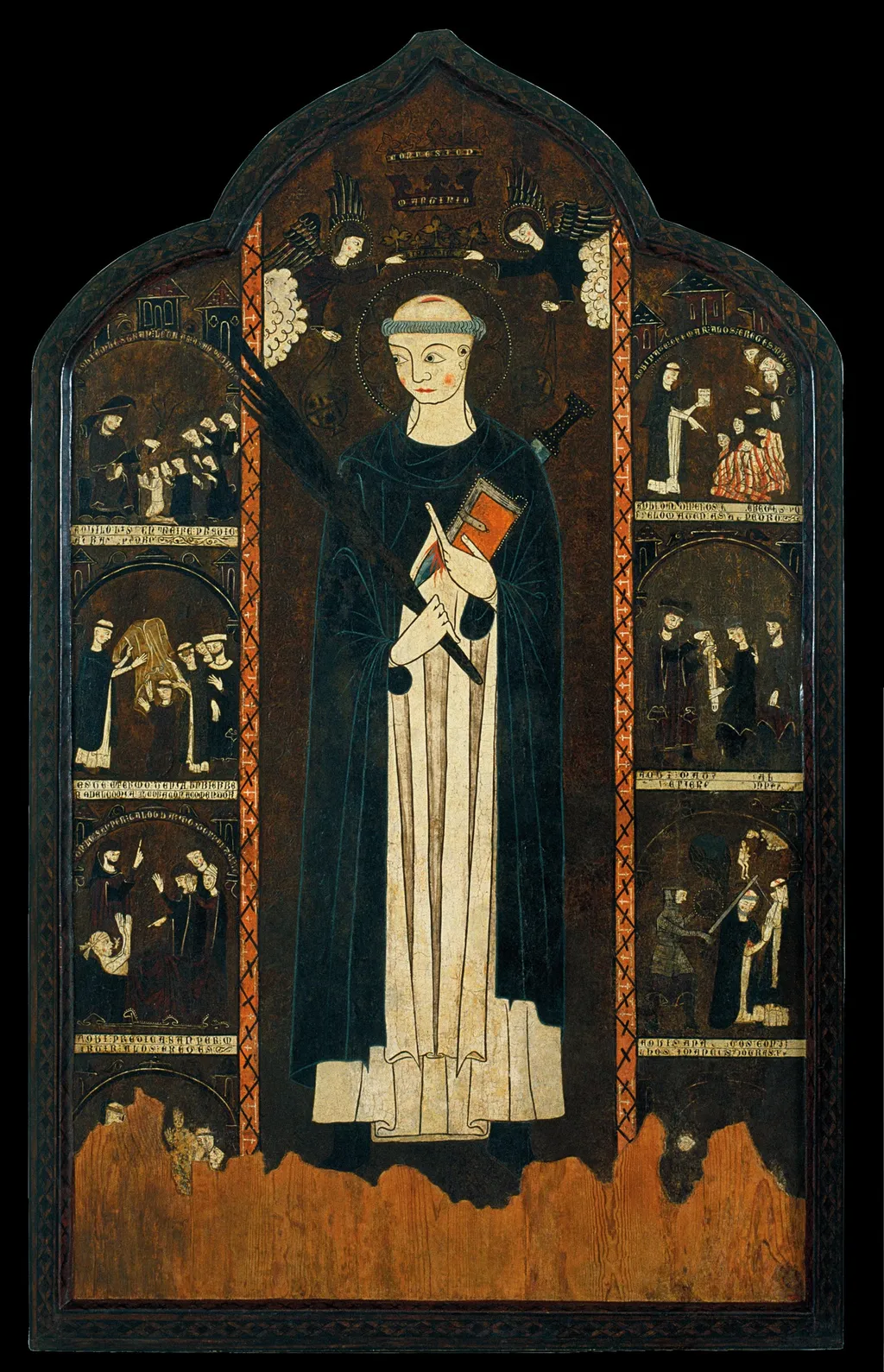
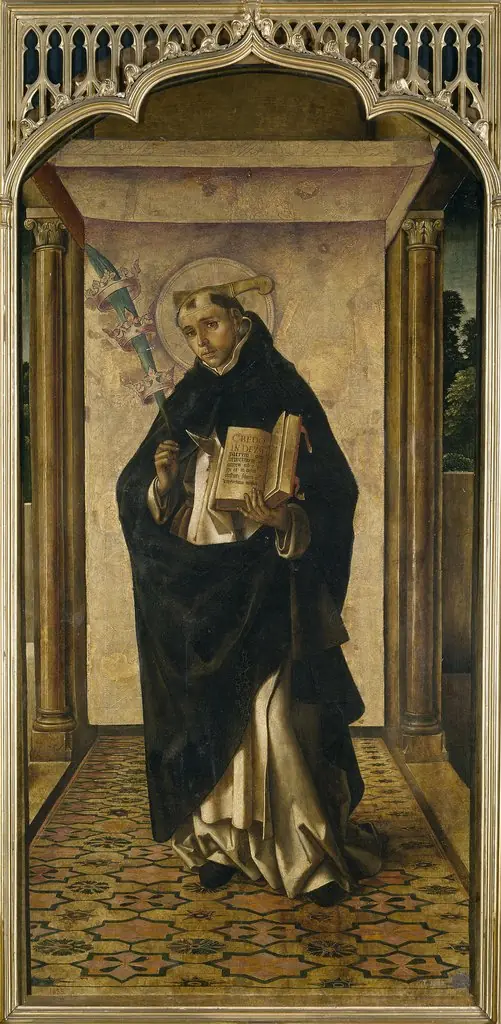
Altarpiece of Saint Peter Martyr is an unspecified painting by the Byzantine icon painting artist Unknown. It dates from 1315 and is held in the collection of the Museu Nacional d'Art de Catalunya. This altarpiece, dedicated to Saint Peter Martyr, is a devotional panel originally intended for church use.
About this work
Overview
The composition is richly detailed, with a vibrant palette of deep blues and reds contrasting against muted backgrounds.
This altarpiece, dedicated to Saint Peter Martyr, is a devotional panel originally intended for church use. It centers on the saint depicted with a halo, holding a book and a knife, surrounded by smaller narrative scenes. The composition is richly detailed, with a vibrant palette of deep blues and reds contrasting against muted backgrounds. Though the artist remains unidentified, the technical precision and compositional complexity indicate a highly trained hand working within late medieval or early Renaissance traditions.
Subject & Meaning
Saint Peter Martyr, a Dominican friar assassinated in 1252, is shown as a martyr of the faith. The book symbolizes his theological authority, while the knife references the weapon used in his murder. Surrounding scenes illustrate key moments from his life and miracles, reinforcing his sanctity and the Church’s narrative of martyrdom. The arrangement invites contemplation and devotion, guiding viewers through sacred history as part of liturgical practice.
Technique & Style
The painting employs tempera and gold leaf on wood, typical of the period. Figures are rendered with careful modeling and intricate textile patterns, suggesting familiarity with both Gothic conventions and emerging naturalism. The use of color is deliberate: the saint’s blue robe and red book create visual anchors, while the surrounding panels use varied tones to distinguish narrative episodes without overwhelming the central figure.
History & Provenance
The altarpiece was likely commissioned for a Dominican church, given the saint’s association with the order. Its original location is unrecorded, but stylistic parallels suggest production in Northern Italy or the Rhineland during the late 14th or early 15th century. It entered museum collections in the 19th century after likely passing through private or ecclesiastical hands following the suppression of monastic institutions.
Context
Created during a time when devotional altarpieces were central to worship, this work reflects the Church’s emphasis on visual storytelling to instruct the faithful. The inclusion of multiple narrative panels aligns with contemporary practices in regions where literacy was limited. The saint’s prominence underscores the Dominican order’s influence in promoting doctrinal orthodoxy and the veneration of martyred preachers.
Legacy
Though unsigned and attributed only by style, the altarpiece stands as an example of skilled regional workshop production. It contributes to understanding the evolution of religious imagery before the full emergence of Renaissance naturalism. Its survival offers insight into the material culture of medieval devotion and the role of art in sustaining spiritual narratives across generations.
Artist & collection

 Domestic Scene
 Giacomo and Cardinal Marco, investing Andrea, Abbot of San Zeno, with his Benefice
 The Nymph of Fontainebleau
 Portrait of a Woman
 Madonna and Child with Saints in the Enclosed Garden
 Venus and Minerva
 Family Group of Four on Sofa
 Wall painting from Room H of the Villa of P. Fannius Synistor at Boscoreale
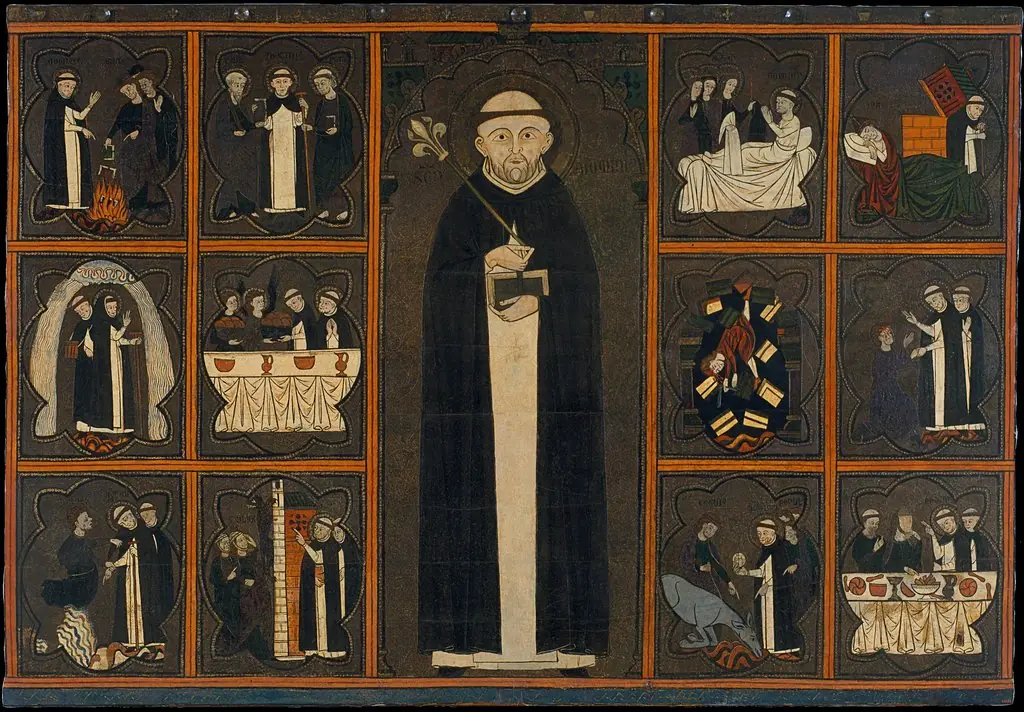 tabla de San Domenico de Guzmán
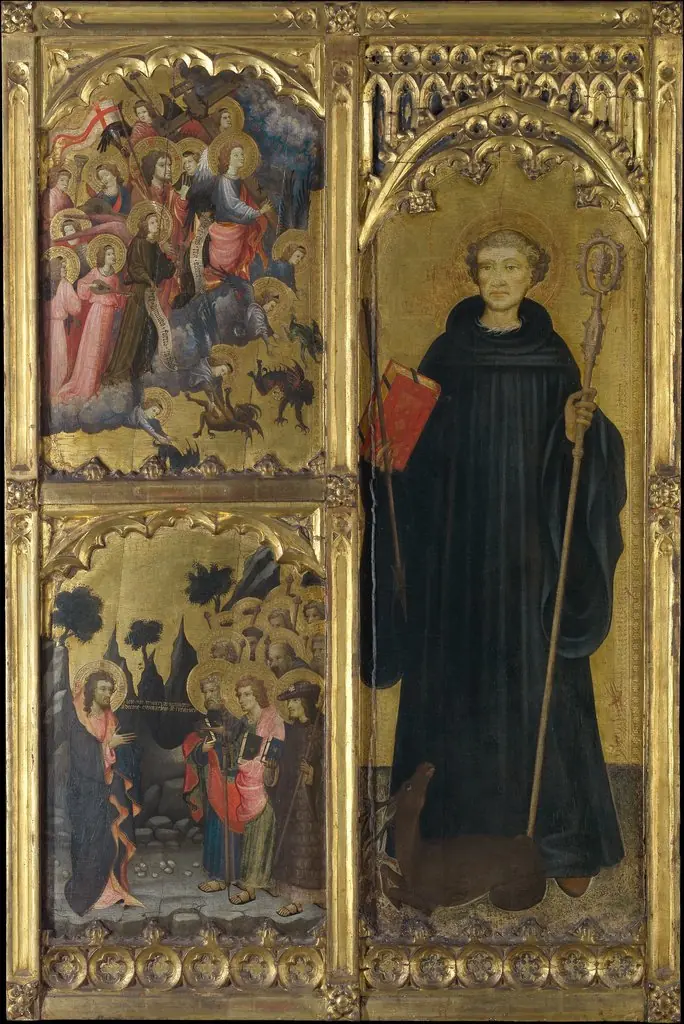 Saint Giles with Christ Triumphant over Satan and the Mission of the Apostles
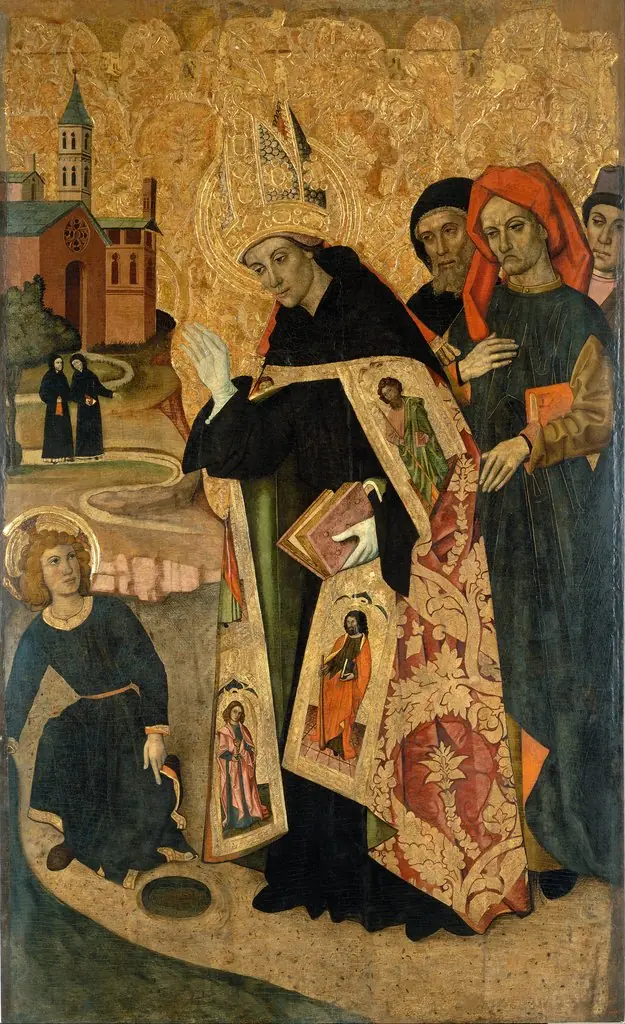 Saint Augustine Meditates on the Trinity when the Child Jesus Appears before him
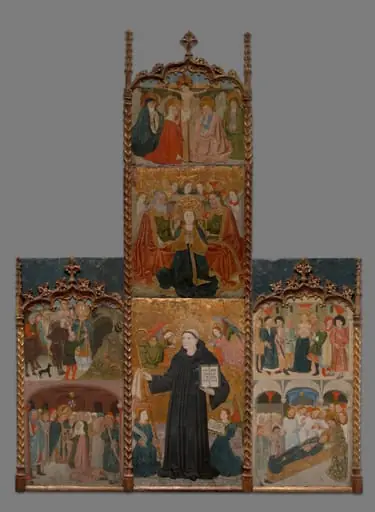 Retable of Saints Athanasius, Blaise, and Agatha
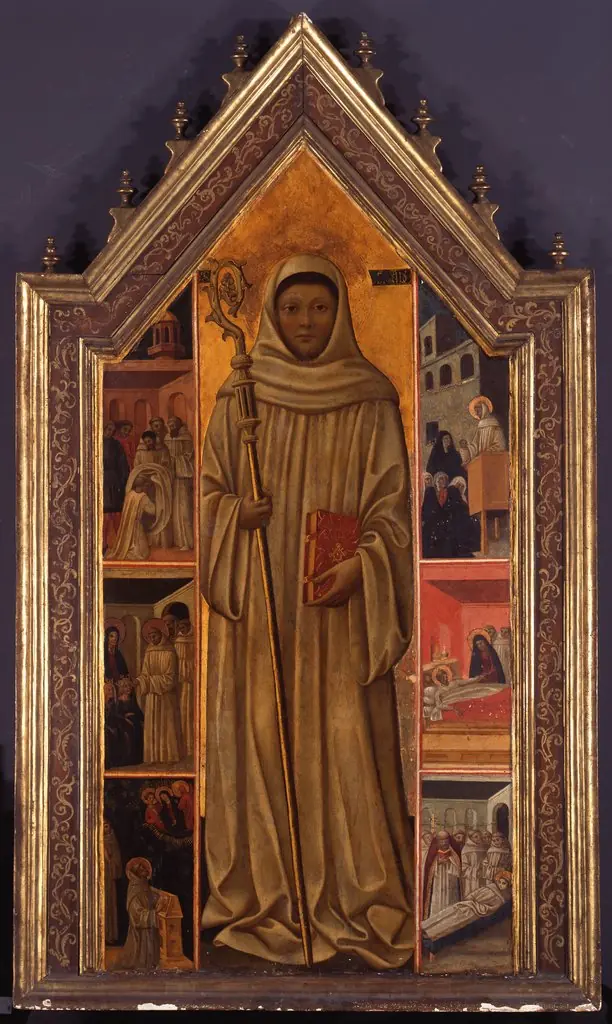 St. Bernard of Clairvaux and scenes of his life
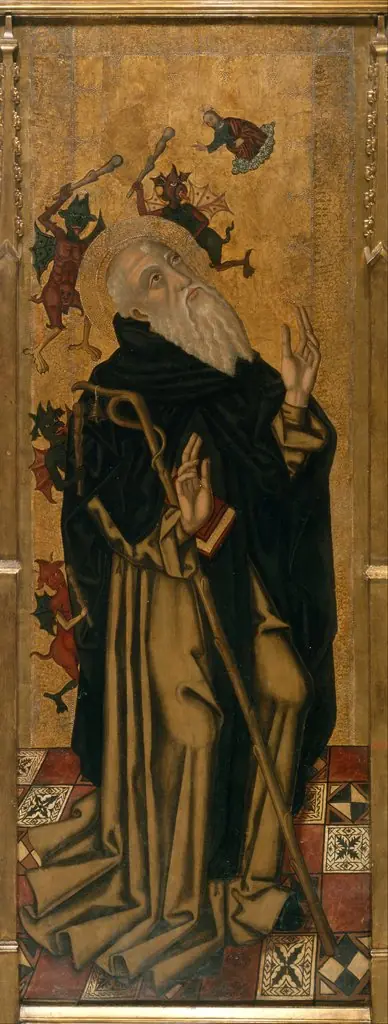 Saint Anthony the Abbot Tormented by Demons
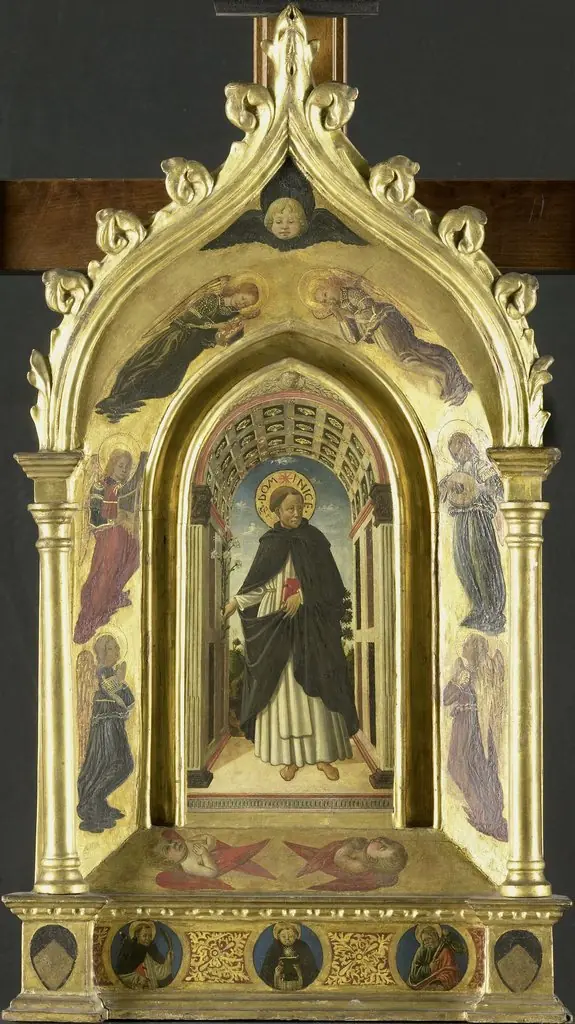 Saint Dominic
 Saint Blasius
 St. Bonaventure, pendant to St. Louis
 Retable of St Christopher
 Saint James with a Donor, Decapitation of Saint James
 Saint Peter Martyr