Artwork
Lampecia y Febe (fábula)
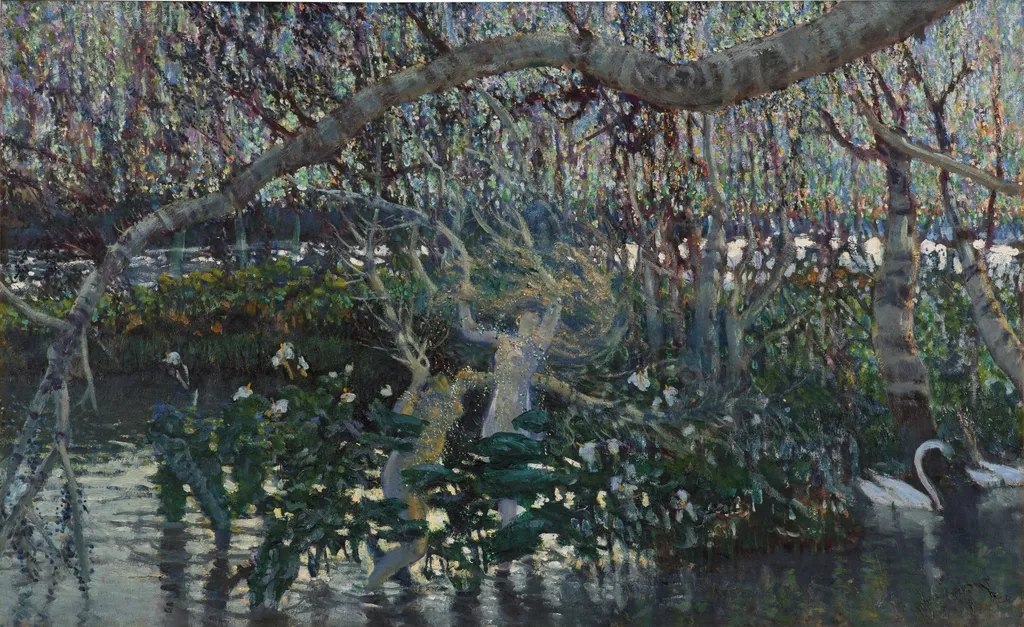
Lampecia y Febe (fábula) is an oil painting by the Post-Impressionist artist Antonio Muñoz Degrain. It dates from 1920 and is held in the collection of the Museo del Prado.
About this work
Overview
Antonio Muñoz Degrain completed *Lampecia y Febe (fábula)* in 1920 using oil on canvas.
Antonio Muñoz Degrain completed *Lampecia y Febe (fábula)* in 1920 using oil on canvas. Though rooted in earlier Eclectic traditions, the work reflects his mature engagement with light and color characteristic of late Impressionist and Post-Impressionist approaches. It resides in the Museo del Prado’s collection, where it stands as one of his final significant narrative paintings, blending mythic suggestion with atmospheric landscape.
Subject & Meaning
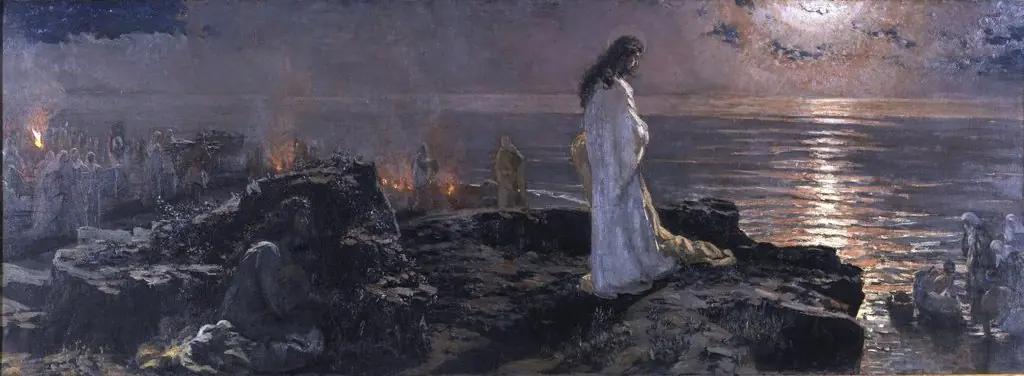
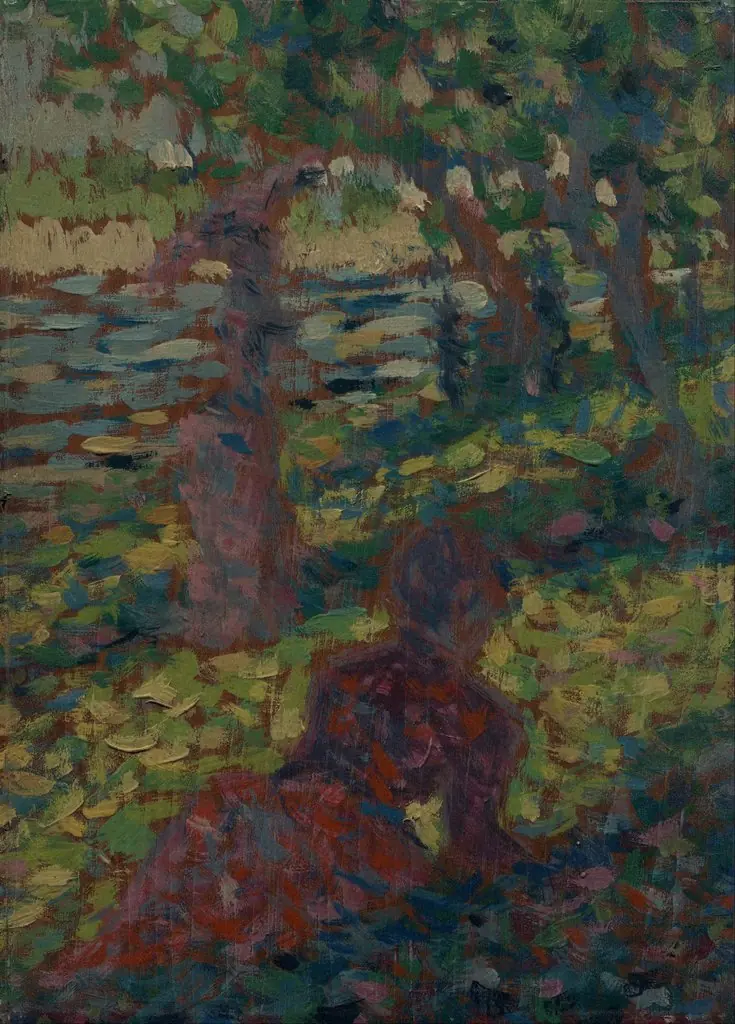
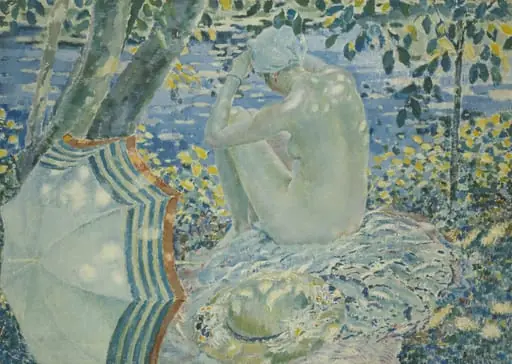
The painting alludes to a mythic or literary narrative, possibly drawing from classical or poetic sources involving water nymphs or celestial figures. A solitary woman, arms raised, stands immersed in a pond, her posture suggesting contemplation or ritual. The title hints at a fable, yet no definitive literary source is confirmed. Degrain favors mood over explicit storytelling, inviting interpretation through gesture and environment rather than narrative clarity.
Technique & Style
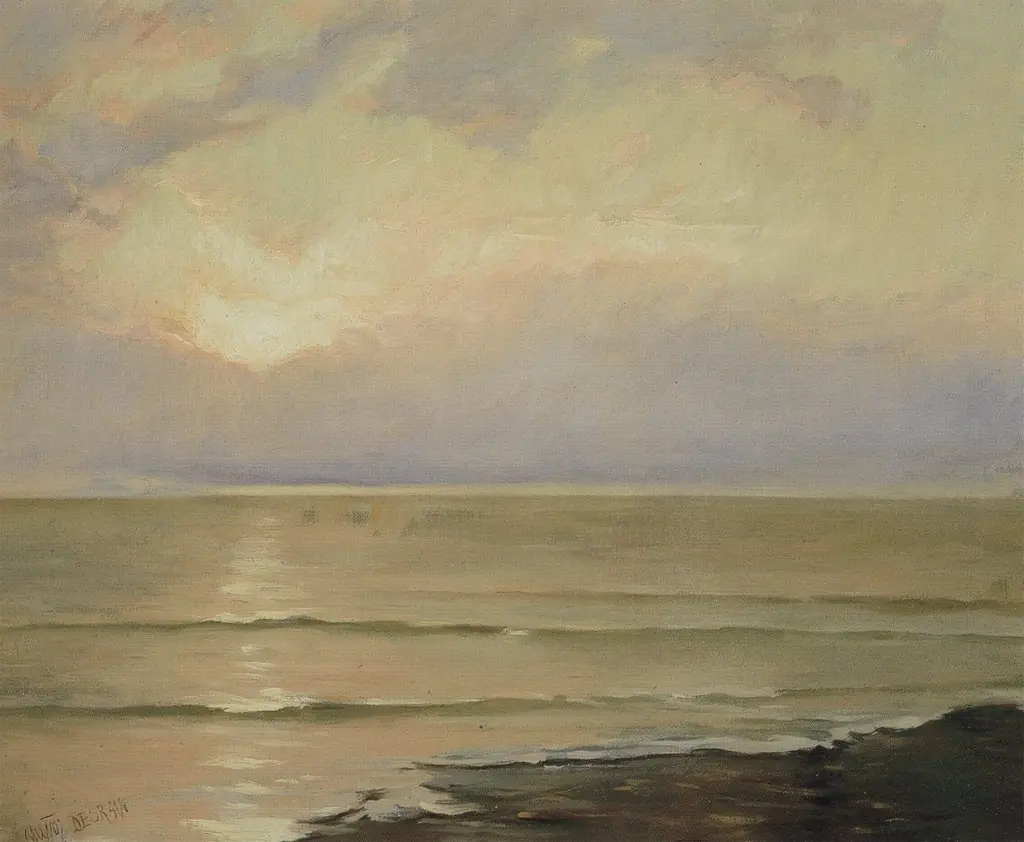
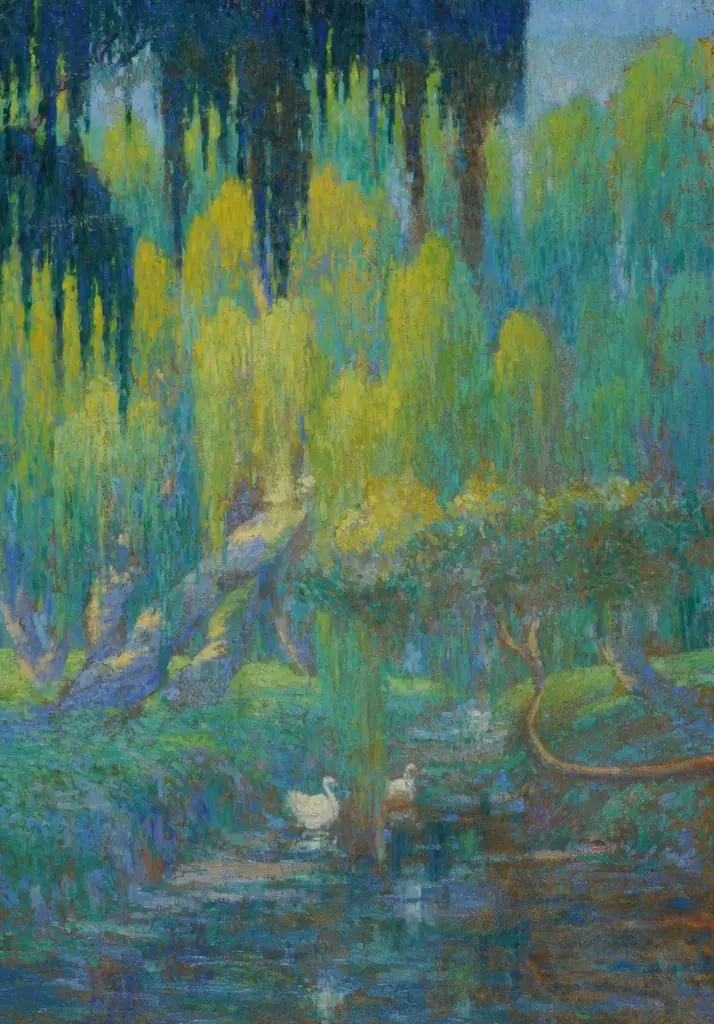
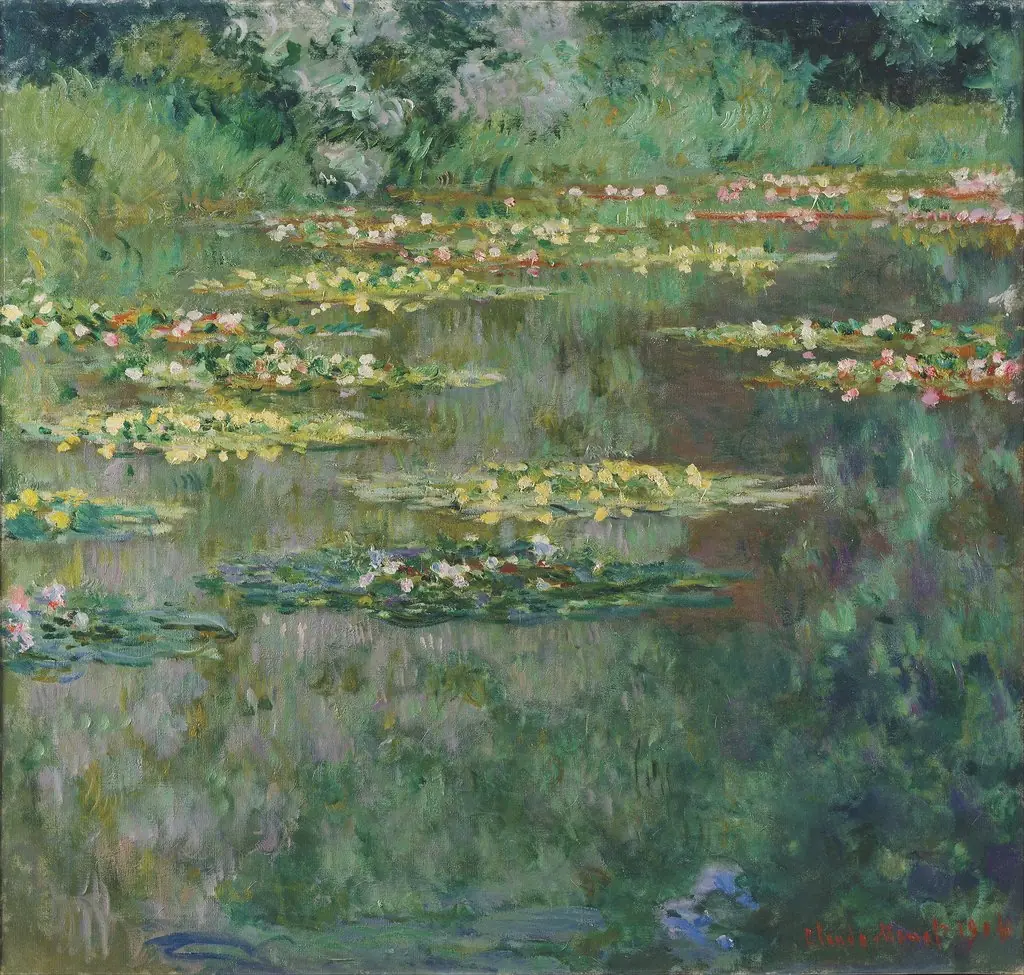
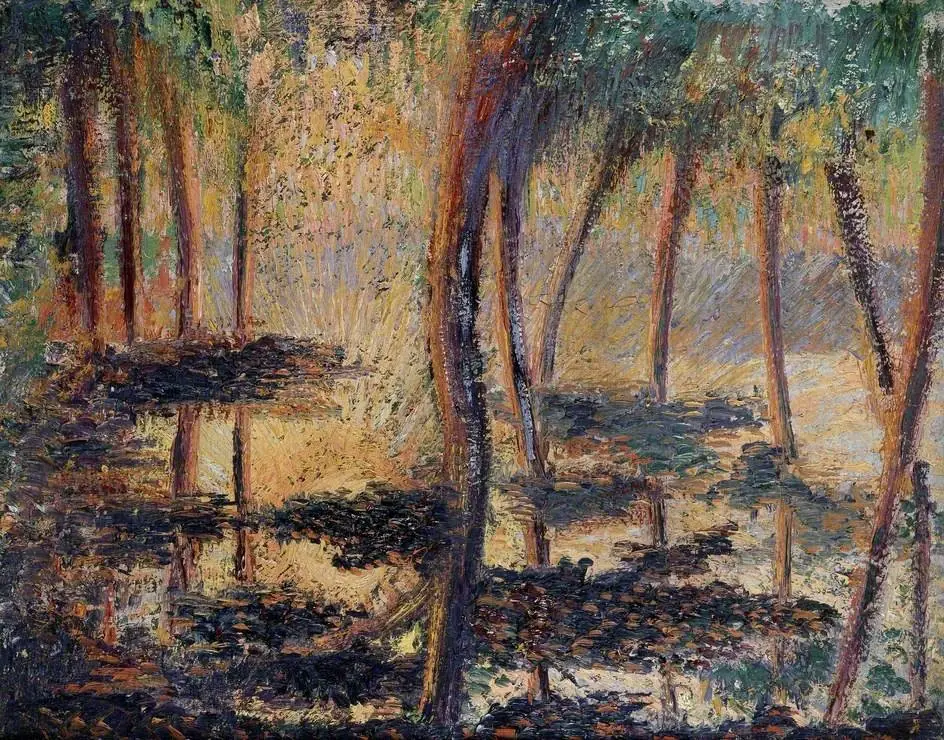
Degrain employs loose, visible brushwork and a luminous palette dominated by greens and blues, accented with warm ochres and oranges. The figure is rendered with soft edges and fluid strokes, dissolving into the surrounding foliage. Light filters through the trees, creating dappled reflections on water and skin. The technique prioritizes sensory impression over detail, emphasizing atmosphere and emotional resonance over precise form.
History & Provenance
Painted in the final decade of Degrain’s career, the work entered the Museo del Prado’s holdings after his death, likely through acquisition or donation by his estate. It was not widely exhibited during his lifetime, and its inclusion in the museum’s collection reflects a later recognition of his evolving style. No significant alterations or documented restorations are recorded for the piece.
Context
In early 20th-century Spain, artists were increasingly influenced by French Impressionism, though many retained narrative interests. Degrain’s shift from historical subjects to lyrical, light-focused scenes mirrored broader European trends. *Lampecia y Febe* aligns with a quiet movement among Spanish painters toward introspective, nature-infused symbolism, distinct from the more overtly political or social themes of contemporaries.
Legacy
The painting is not among Degrain’s most frequently reproduced works, but it exemplifies his late artistic priorities: emotional tone over literal depiction, color harmony over academic precision. It contributes to understanding his transition from traditional storytelling to a more personal, sensory mode of expression. Within the Prado’s collection, it offers a subtle counterpoint to the grand narratives of earlier Spanish painting.
Artist & collection
Artist
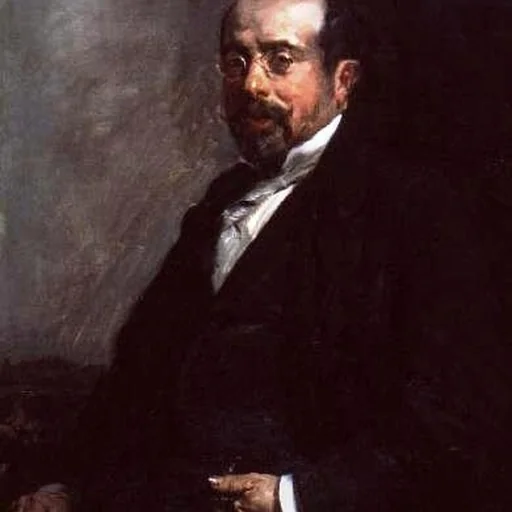
Antonio Muñoz Degrain (18 November 1840 – 12 October 1924) was a Spanish painter who began in the Eclectic style, later in his career he moved towards Impressionism.