Artwork
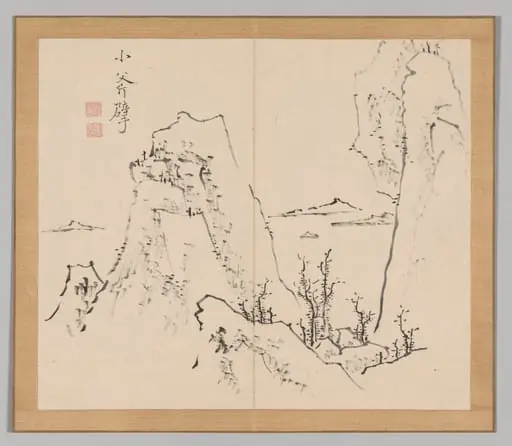
Reverberations of Taiga, Volume 1 (leaf 4)
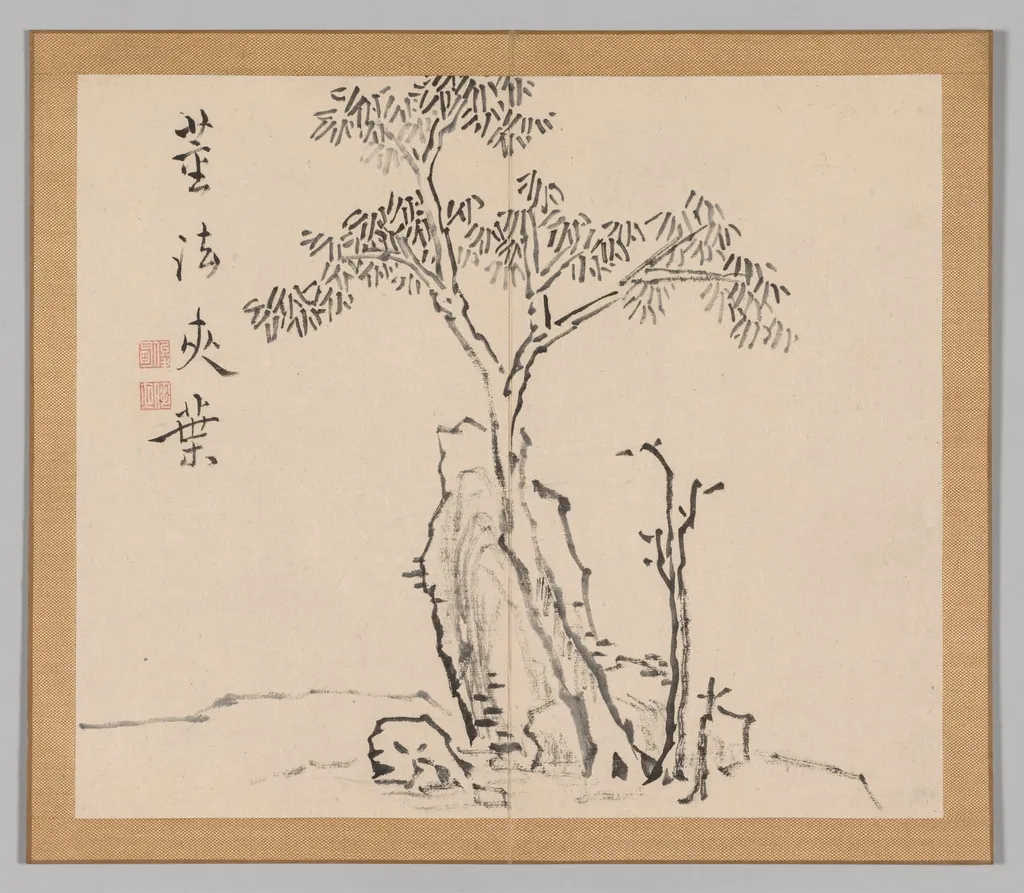
Reverberations of Taiga, Volume 1 (leaf 4) is a work on paper by the Baroque artist Aoki Shukuya. It dates from 1704 and is held in the collection of the Cleveland Museum of Art.
About this work
Overview
Reverberations of Taiga, Volume 1 (leaf 4) is one of a series of ink sketches by Aoki Shukuya, created during his training as an apprentice in Kyoto.
Reverberations of Taiga, Volume 1 (leaf 4) is one of a series of ink sketches by Aoki Shukuya, created during his training as an apprentice in Kyoto. The work belongs to a portfolio of studies focused on natural forms—rocks, trees, and mountains—executed in monochrome ink. These sheets were not finished artworks but pedagogical exercises, designed to internalize the brushwork and compositional principles of his master.
Subject & Meaning
The subject is a minimalist landscape composed of sparse, angular rocks, gnarled trees, and distant mountain contours. There is no narrative or symbolic intent; instead, the focus lies in the observation and replication of natural forms. The arrangement reflects a quiet, meditative engagement with the landscape, characteristic of literati traditions that valued restraint and direct perception over ornamentation.
Technique & Style
Shukuya employed ink washes and controlled brushstrokes to suggest texture and volume with minimal lines. The style echoes Ikeno Taiga’s approach: economical, fluid, and grounded in Chinese Southern Song ink painting traditions. Forms are suggested rather than defined, relying on tonal variation and negative space to convey depth and structure, demonstrating the apprentice’s mastery of foundational techniques.
History & Provenance
Created in the mid-18th century, this leaf is part of a larger set produced during Shukuya’s apprenticeship under Ikeno Taiga, a leading figure in Kyoto’s literati circle. Such portfolios were often kept by students as personal records of progress and later circulated among peers. The work’s survival suggests it was valued within Shukuya’s artistic network, though its exact provenance before modern collections remains undocumented.
Context
In 18th-century Japan, artistic training followed a master-apprentice model, particularly among literati painters. Students learned by copying their teacher’s compositions, internalizing brush techniques and aesthetic values before developing individual styles. Shukuya’s sketches reflect this system, aligning with broader East Asian traditions where emulation was not imitation but a path to artistic autonomy.
Legacy
Shukuya’s studies, including this leaf, illustrate the transmission of Taiga’s aesthetic within a generation of Kyoto-based artists. While he did not achieve his teacher’s fame, his work preserves the pedagogical methods of the time and offers insight into how literati traditions were sustained through disciplined practice. These sketches remain valuable as documents of artistic learning, not merely as finished works.
Own this work as a print
Artist & collection

 Reverberations of Taiga, Volume 2 (leaf 30)
 Reverberations of Taiga, Volume 1 (leaf 12)
 Reverberations of Taiga
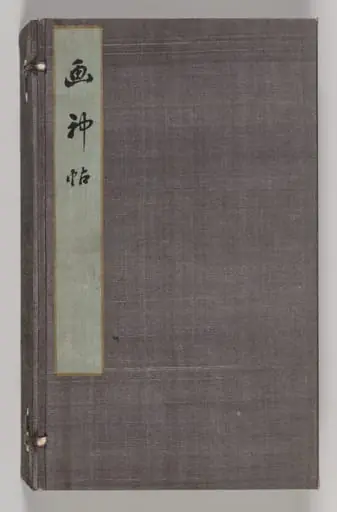 Reverberations of Taiga (Volume 1)
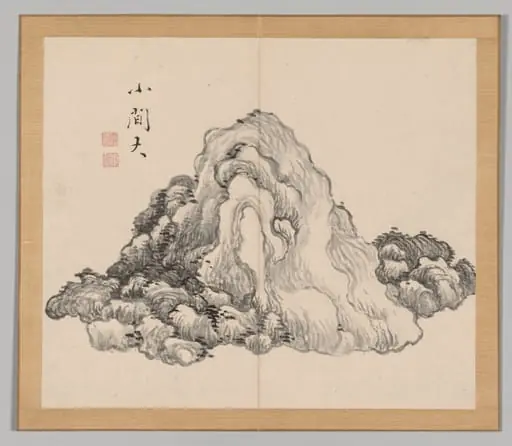 Reverberations of Taiga, Volume 1 (leaf 7)
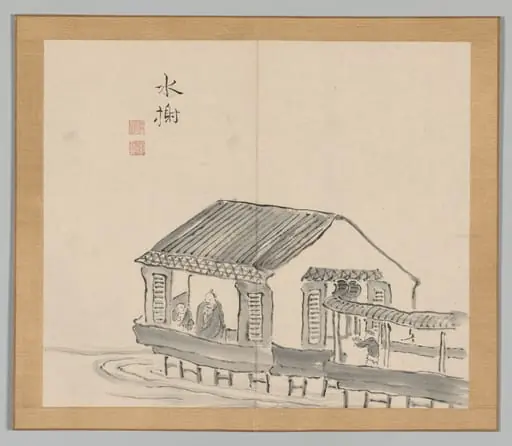 Reverberations of Taiga, Volume 2 (leaf 29)
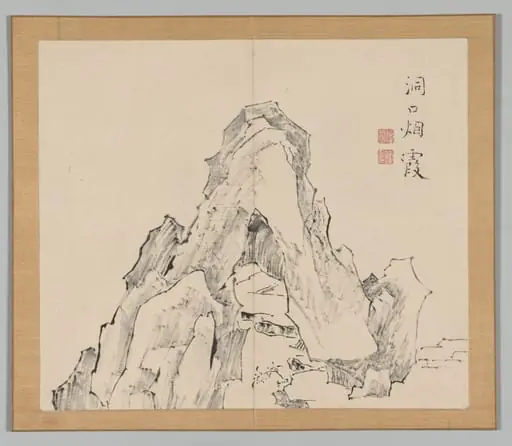 Reverberations of Taiga, Volume 2 (leaf 20)
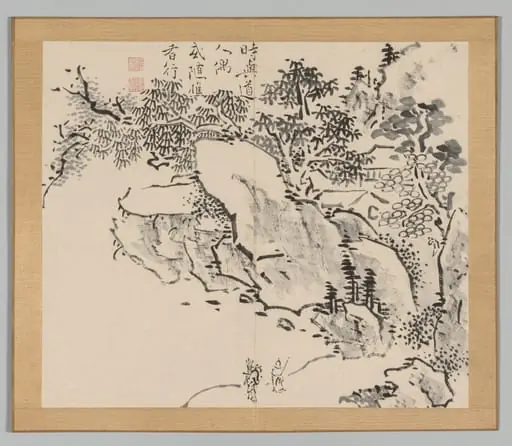 Reverberations of Taiga, Volume 2 (leaf 34)
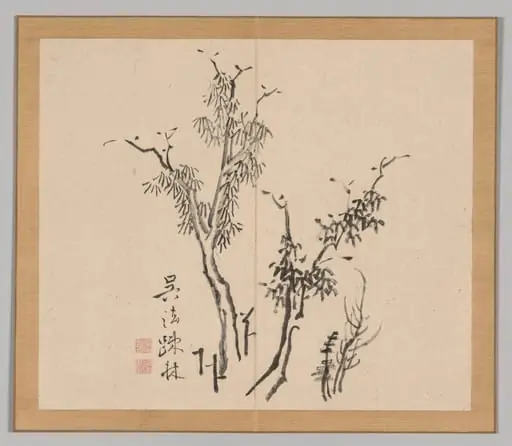 Reverberations of Taiga, Volume 1 (leaf 5)
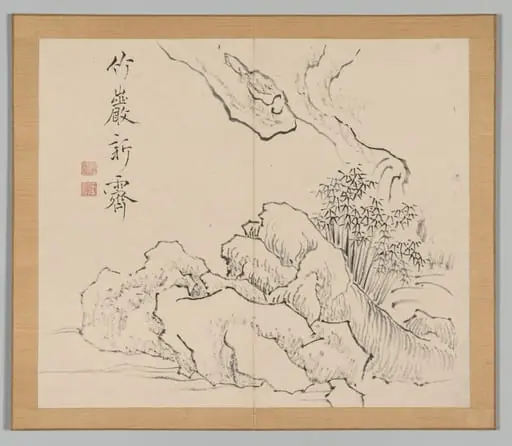 Reverberations of Taiga, Volume 2 (leaf 19)
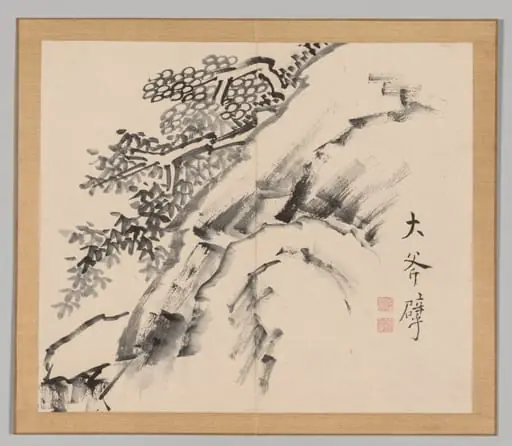 Reverberations of Taiga, Volume 1 (leaf 9)
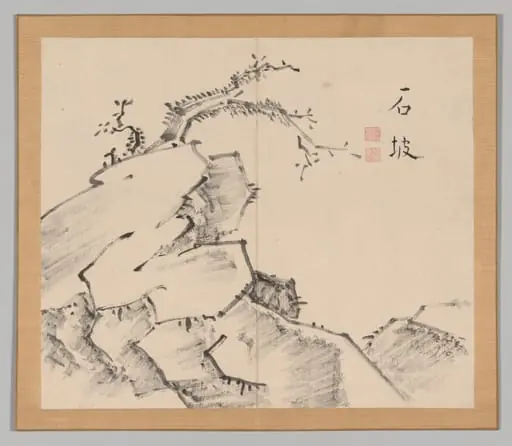 Reverberations of Taiga, Volume 1 (leaf 20)
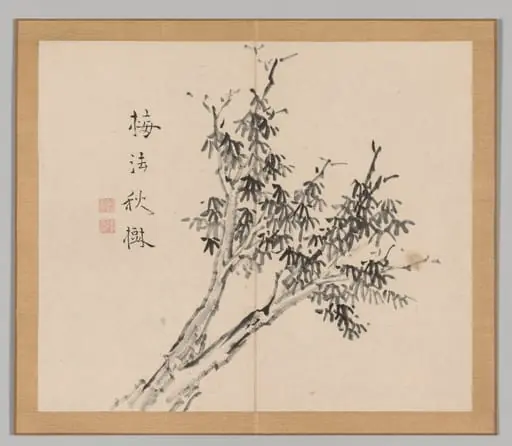 Reverberations of Taiga, Volume 1 (leaf 3)
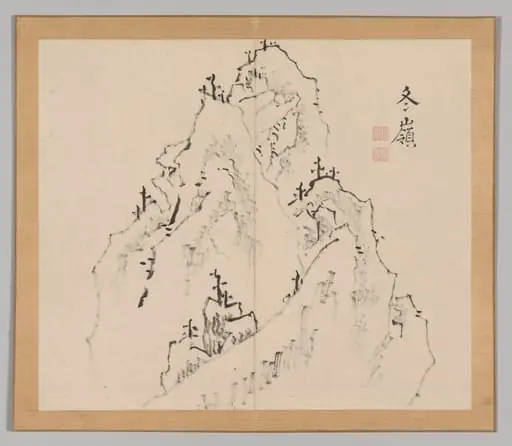 Reverberations of Taiga, Volume 1 (leaf 25)
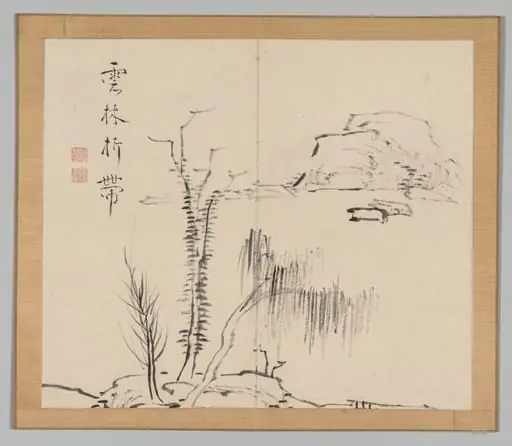 Reverberations of Taiga, Volume 2 (leaf 16)
 Reverberations of Taiga, Volume 1 (leaf 8)