Artwork
Final draft of drawing `Ja, was ist denn das?'
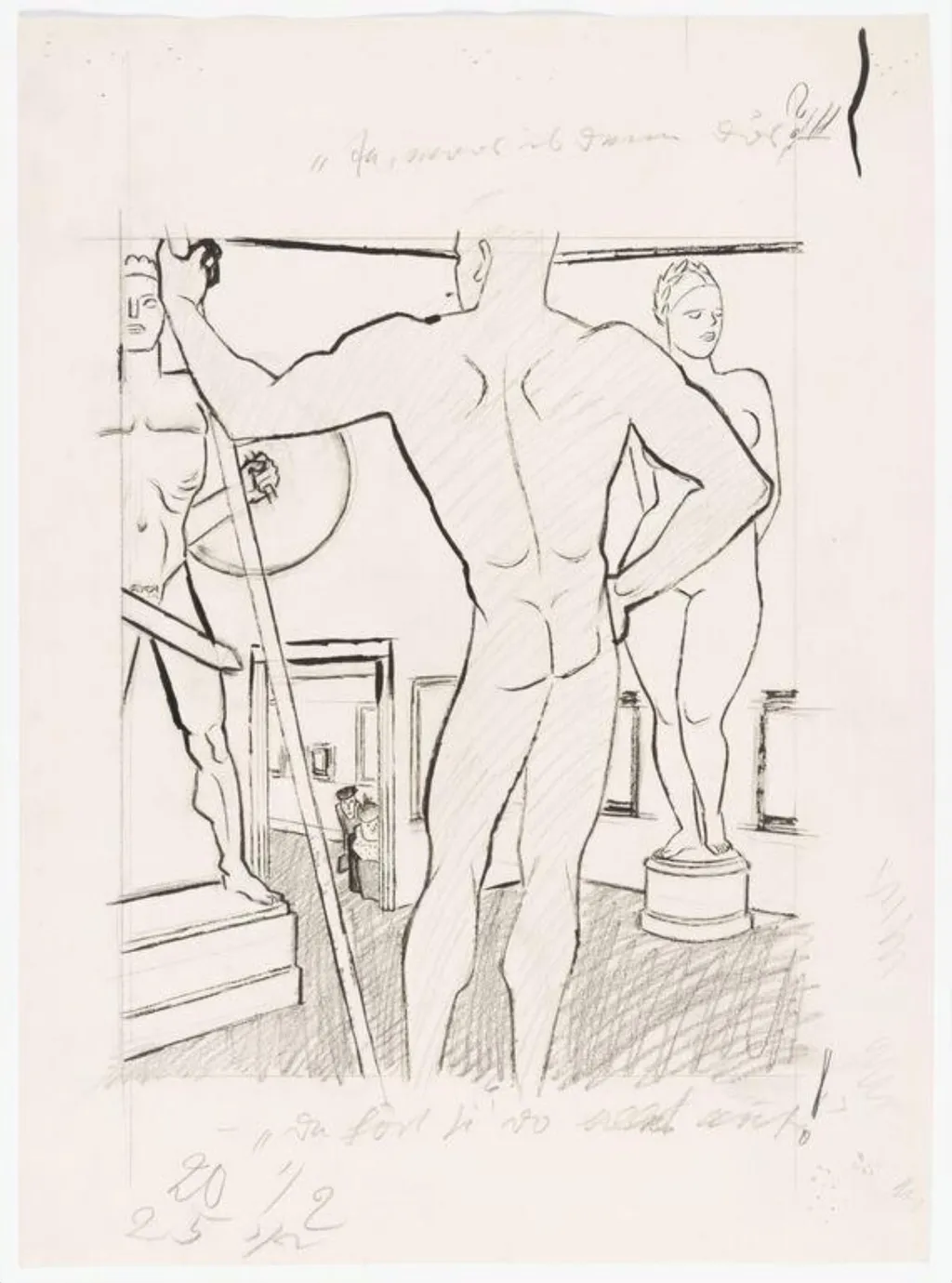
Final draft of drawing `Ja, was ist denn das?' is a drawing by Karl Arnold. It dates from 1937 and is held in the collection of the Victoria and Albert Museum.
About this work
Overview
Karl Arnold’s 1937 drawing, a final draft for a caricature, is rendered in loose pencil and ink on a stiff sheet of paper. The composition presents two elderly women standing in an art gallery, their attention fixed on a muscular nude male warrior sculpture. The work measures a modest size and includes textual annotations that reinforce its satirical intent.
Subject & Meaning
The scene lampoons the cultural climate of the era, targeting the Nazi regime’s penchant for grandiose, neo‑classical nude statues that celebrated physical strength. By placing nervous, older female viewers before the exaggerated warrior figure, Arnold underscores the absurdity and forced heroism promoted by official aesthetics.
Technique & Style
Arnold employs a sketch‑like approach, combining bold ink outlines with rough pencil shading. Cross‑hatching and stippling generate texture and a sense of depth, while the overall looseness conveys immediacy, characteristic of the satirical illustrations published in the magazine Simplicissimus.
History & Provenance
Created as a final draft for Simplicissimus, the drawing reflects the magazine’s shift from overt anti‑militarist commentary to a more cautious critique of Nazi visual culture. Its survival in a private collection illustrates the limited circulation of such dissenting artworks during the period.
Context
In the mid‑1930s, Simplicissimus served as a platform for artists who used humor to question state‑sanctioned art. Arnold’s work fits within this tradition, employing caricature to expose the regime’s aesthetic dogma without directly confronting political authority.
Legacy
The drawing remains a documented example of how German artists navigated censorship, using subtle satire to comment on the intersection of art, politics, and ideology in the lead‑up to World War II.
Artist & collection
Artist
These drawings from the 1920s–30s capture everyday scenes with sharp humor and a dash of social edge.

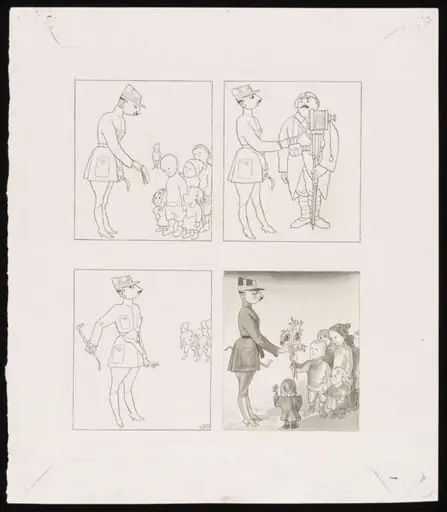 Auslandspropaganda der Franzosen am Rhein
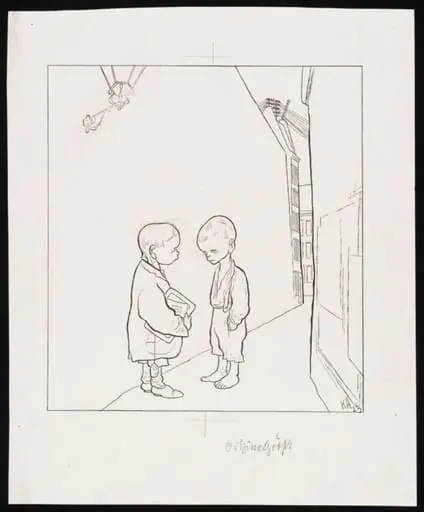 Versailles "Mich lassen sie jetzt nicht mehr in die Schule, ich bin auch unterernährt."
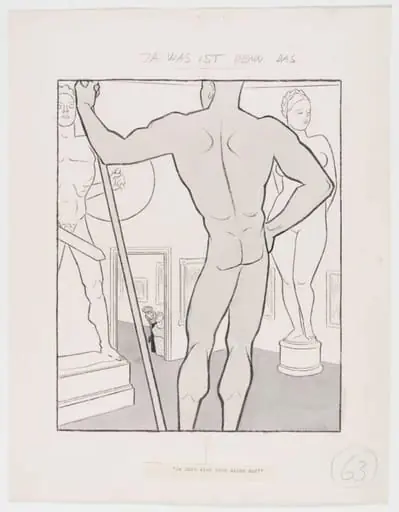 Ja, was ist denn das?
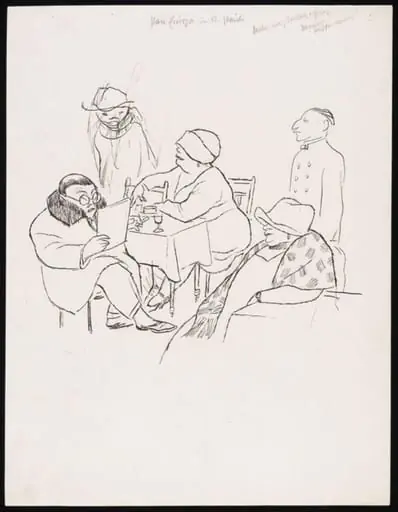 Pan Europa in St. Pauli
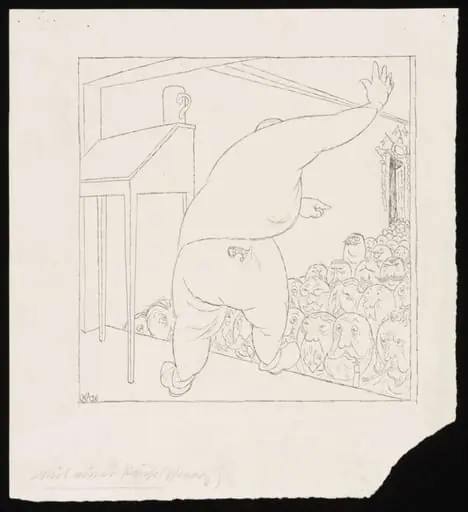 Der Volkstribun
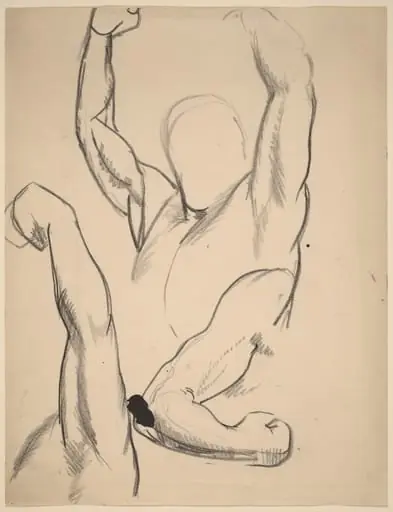
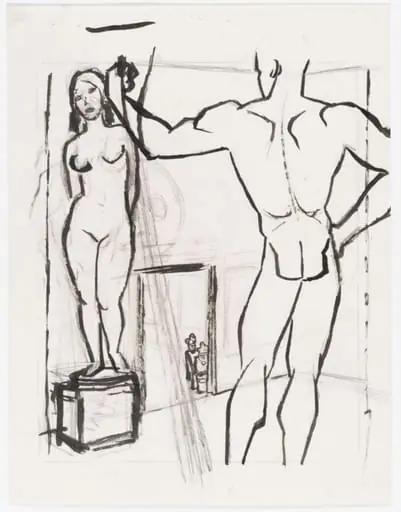 Study for `Ja, was ist denn das?'
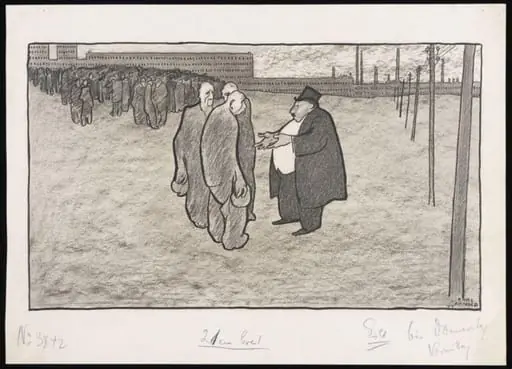 Entgegenkommen
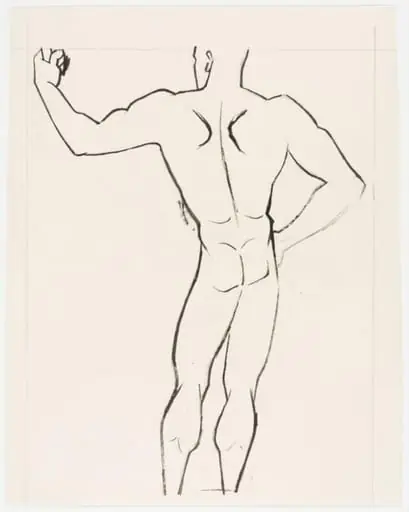 Preliminary drawing for a satirical cartoon `Ja was ist denn das?'