Artwork
Pansies
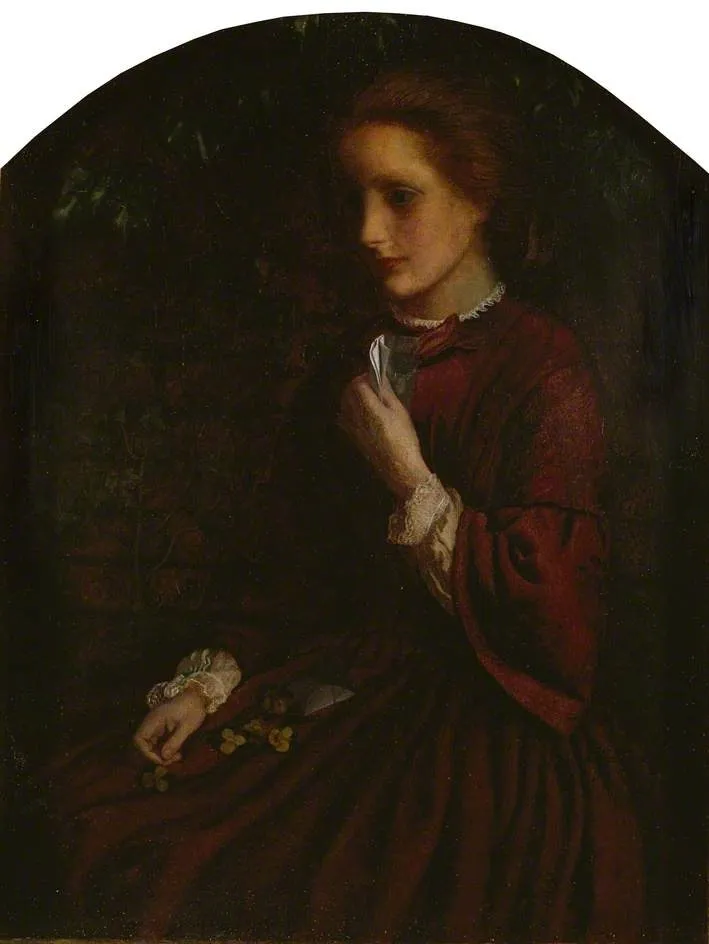
Pansies is an oil painting by the British Romanticist artist Arthur Hughes. It dates from 1860 and is held in the collection of the Ashmolean Museum.
About this work
Overview
Pansies is an 1860 oil painting by Arthur Hughes, a British artist associated with the Pre-Raphaelite Brotherhood. It is part of the Ashmolean Museum's collection and exemplifies the British Romanticism movement.
Subject & Meaning
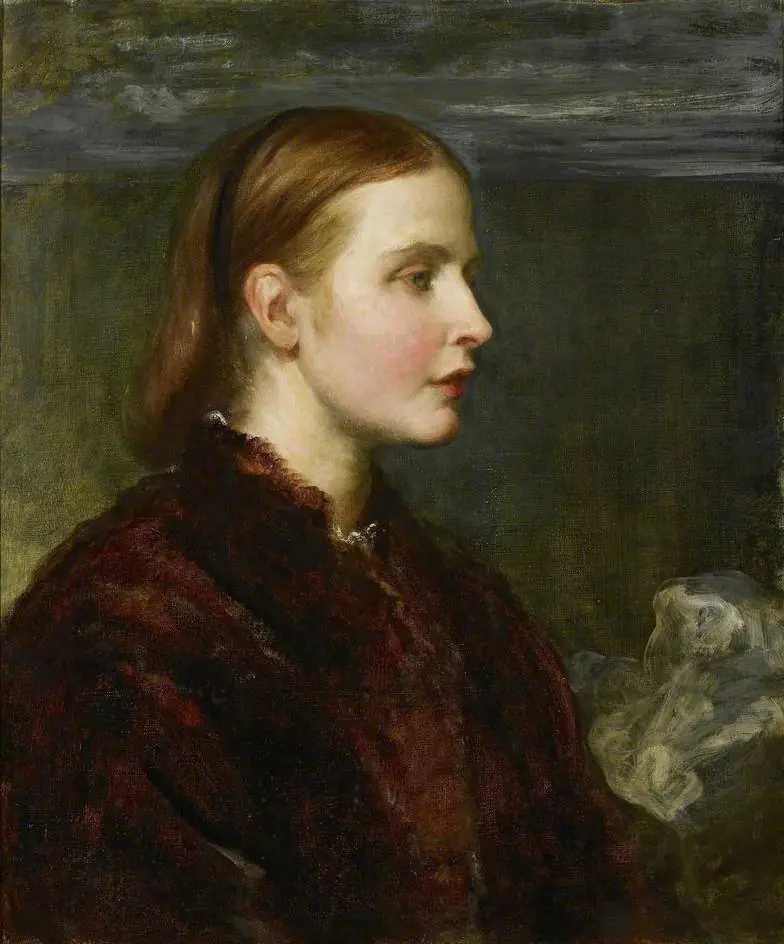
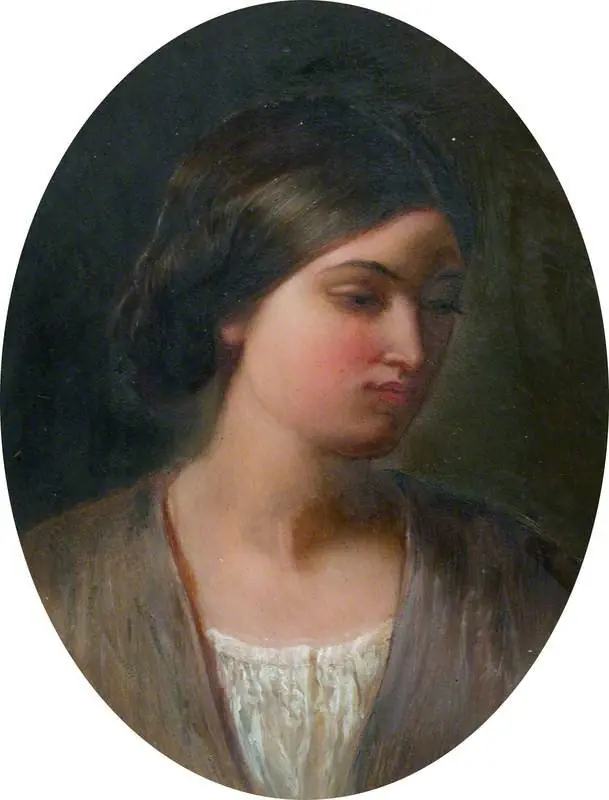
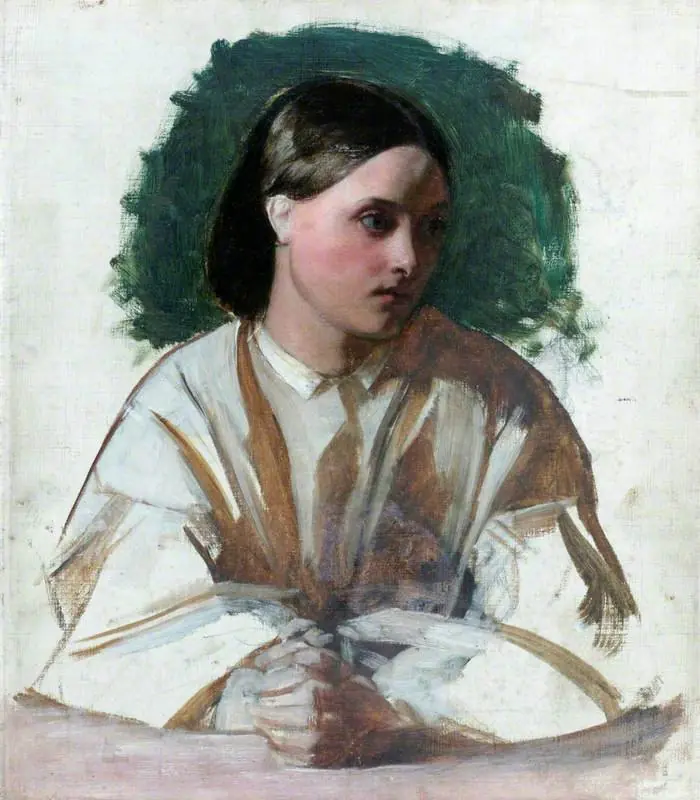
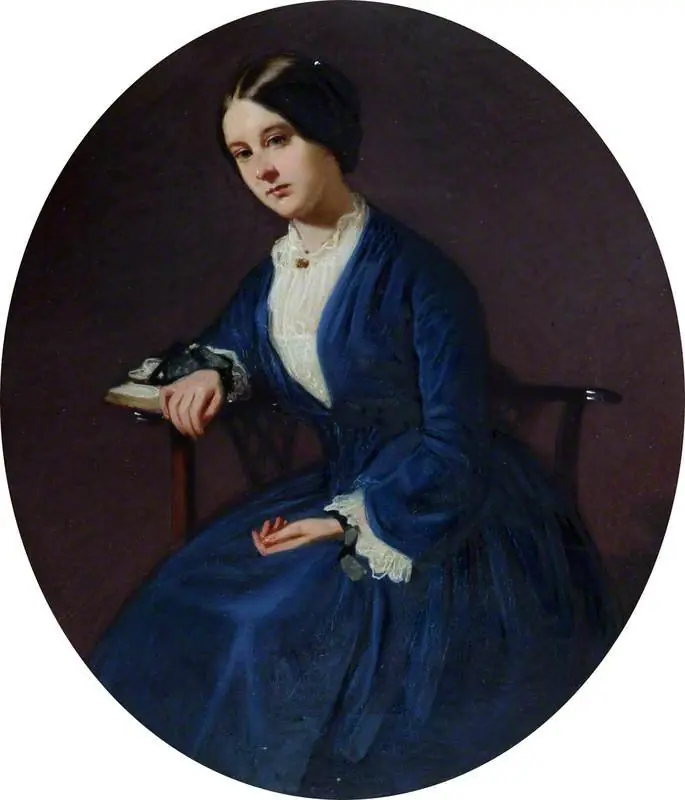
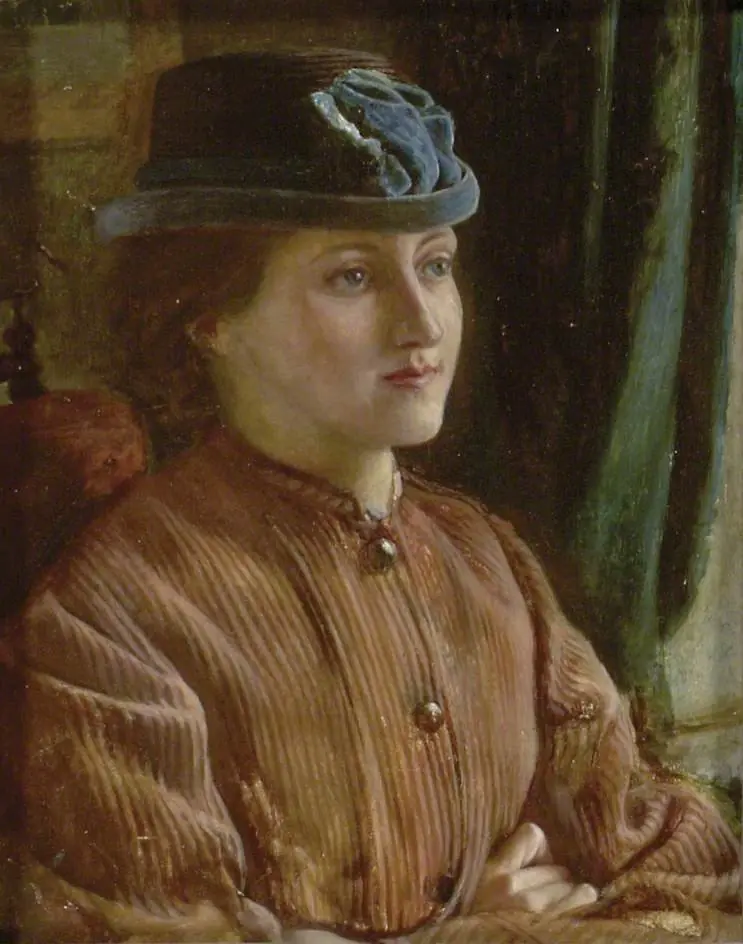
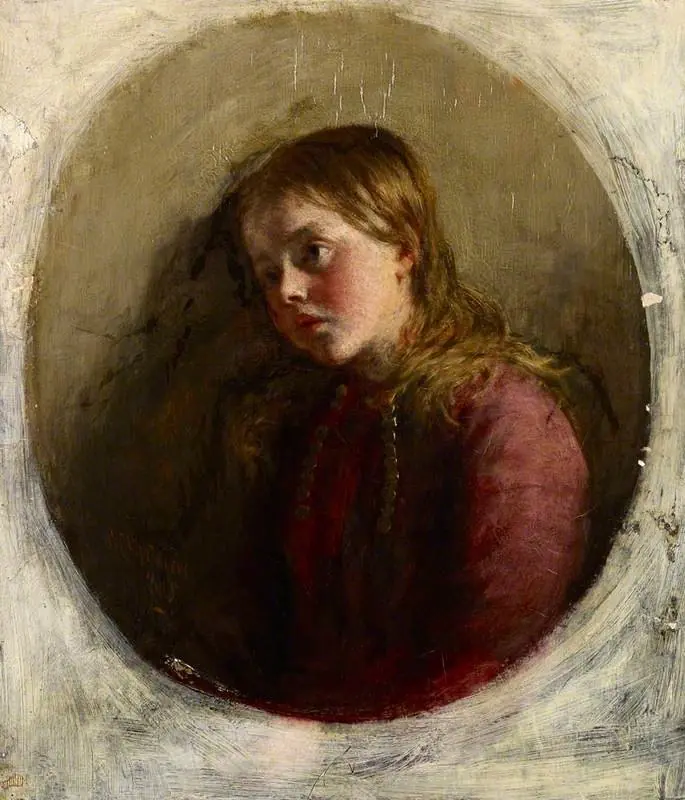
The painting depicts a serene young girl in a dark, shadowy room, dressed in a red gown with white lace cuffs. Her calm, introspective expression and gentle demeanor evoke a sense of quiet contemplation. She holds an unidentified dark object and cradles a few flowers on her lap, with partial greenery visible behind her.
Technique & Style
Hughes employs characteristic Pre-Raphaelite attention to detail, evident in the girl's expressive portrait and the intricate textures of her attire. The contrast between the illuminated subject and the dark, shadowy background creates a sense of depth and emphasizes the girl's serene presence.
History & Provenance
Created in 1860, Pansies is now held in the permanent collection of the Ashmolean Museum, Oxford.
Context
As a work of British Romanticism, Pansies reflects the movement's emphasis on emotion, detail, and often, youthful subjects in introspective states. Hughes's style, while aligned with the Pre-Raphaelite Brotherhood, contributes to the painting's distinctive, romantic ambiance.
Legacy
Pansies contributes to Arthur Hughes's reputation for crafting detailed, expressive portraits that capture the introspective nature of his subjects, resonating with the aesthetic and thematic preferences of the Pre-Raphaelite and broader Romantic movements.
Artist & collection
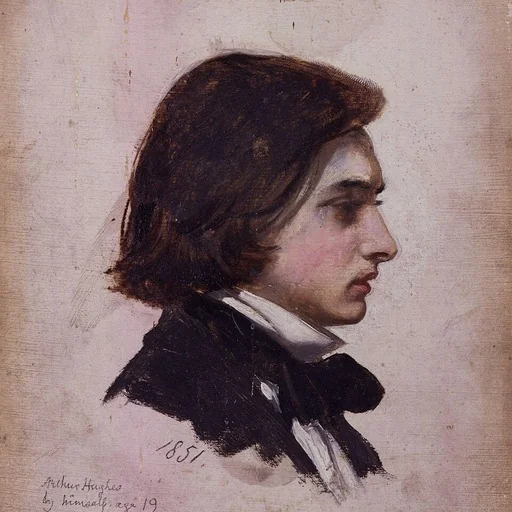
Artist
Arthur Hughes (27 January 1832 – 22 December 1915) was an English painter and illustrator associated with the Pre-Raphaelite Brotherhood.