Artwork
Rome as it was, restored after existing remains
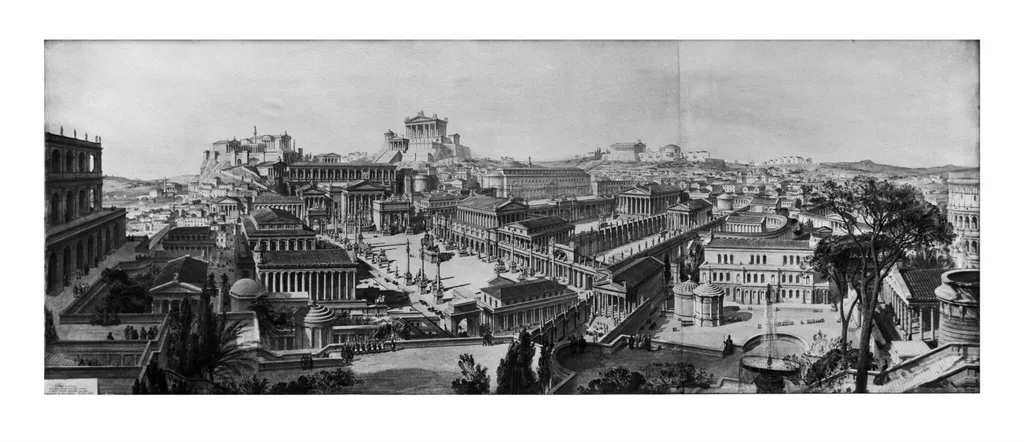
Rome as it was, restored after existing remains is a watercolor work on paper by the Biedermeier artist Arthur Ashpitel. It dates from 1830 and is held in the collection of the Victoria and Albert Museum.
About this work
Overview
Arthur Ashpitel’s watercolor, dated 1830, presents an imagined reconstruction of Rome as it might have appeared at the height of its power. Executed in the delicate medium of watercolor, the work is part of the Victoria and Albert Museum’s collection and measures the city’s grandeur through a blend of surviving ruins and speculative architecture.
Subject & Meaning
The composition depicts a densely built urban landscape, populated with monumental structures such as domed roofs, columned facades, and arched passages. Figures traverse the thoroughfares, while trees and fountains punctuate the stone environment, suggesting a harmonious balance between civic order and natural elements.
Technique & Style
Ashpitel employs the translucency of watercolor to render atmospheric depth, allowing light to filter through the city’s expansive streets. Fine brushwork delineates architectural detail, while broader washes suggest the bustling activity of the populace, creating a vivid yet measured portrayal of an idealized ancient capital.
History & Provenance
Created in the early nineteenth century, the piece reflects contemporary interest in classical antiquity and the Romantic fascination with reconstructing lost civilizations. It entered the Victoria and Albert Museum’s holdings as part of its early acquisitions of European watercolors, where it remains on display.
Artist & collection
Artist
Arthur Ashpitel lived in the early 1800s and painted detailed watercolors of Rome.

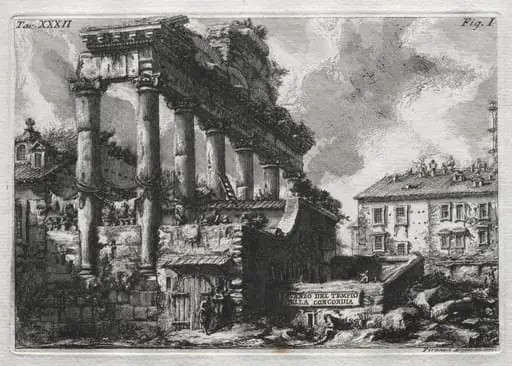 Avanco del Tempio della Concordia
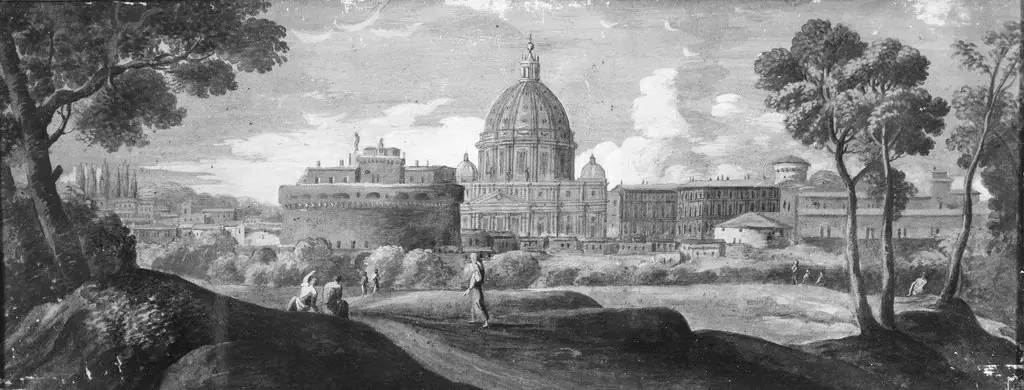 The Church of St Peter's in Rome
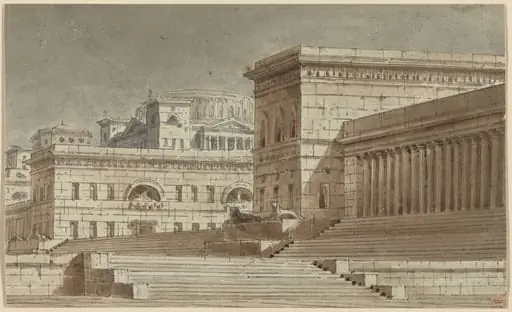 Stage Design
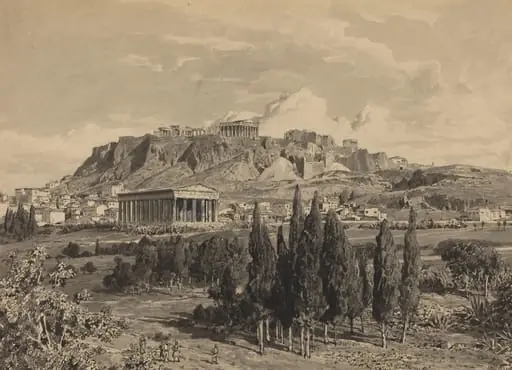 Temple of Hyphaestus
 Imaginary Architectural Monuments
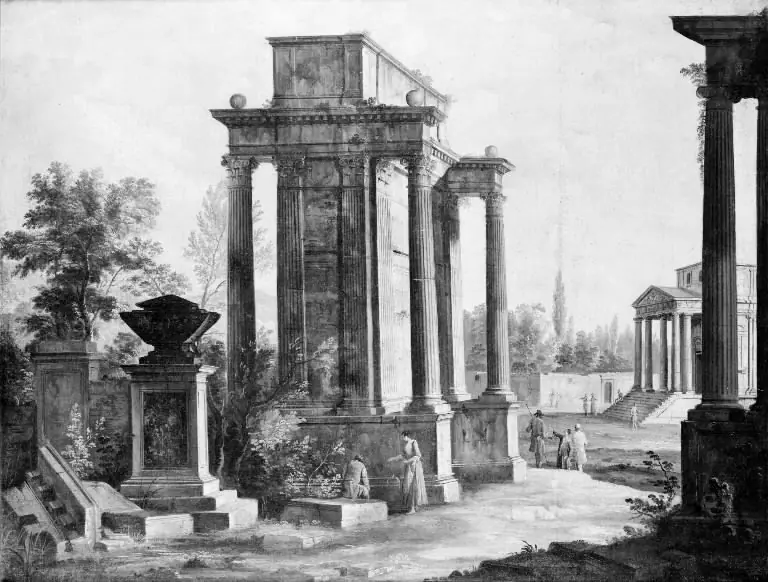 Imaginary Architectural Monuments
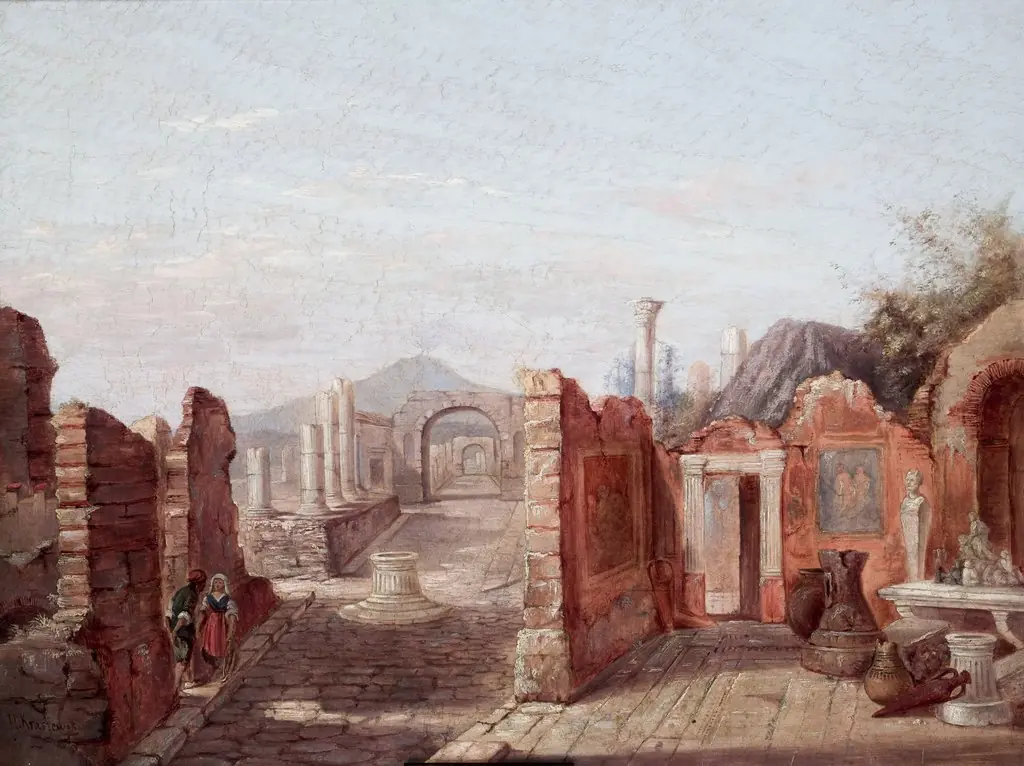 Ruins of Pompeii
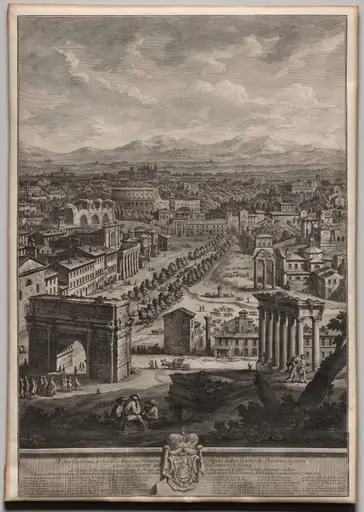 The Campo Vaccino
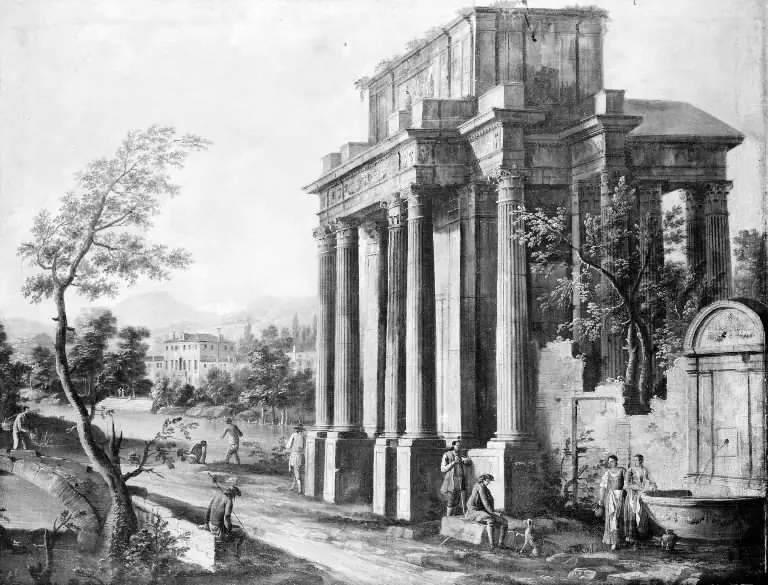 Architectural Study with Columns and a Fountain
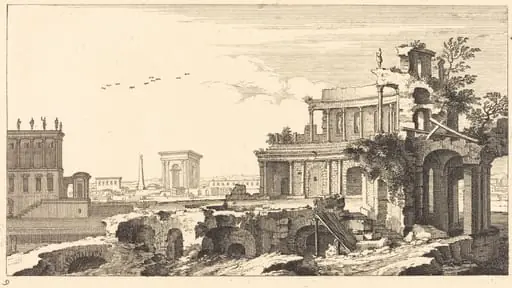 Landscape with Classical Ruins
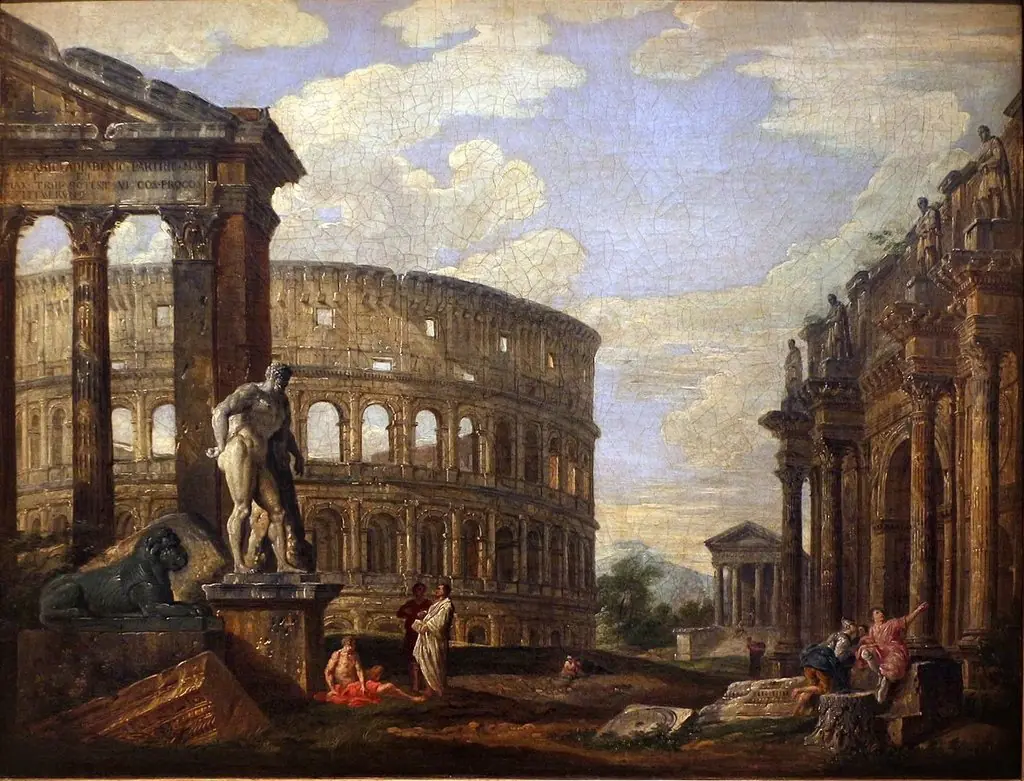 Ruins of Ancient Rome
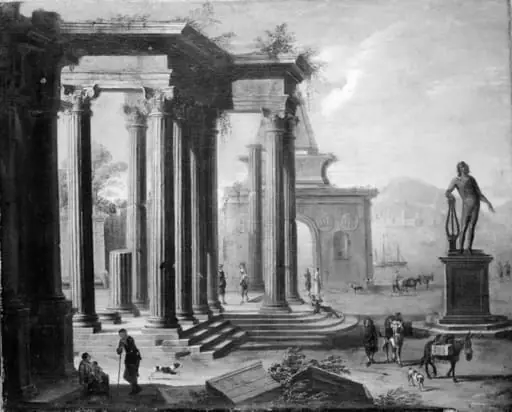 Colonade in Ruins