Artwork
Temple of Hyphaestus
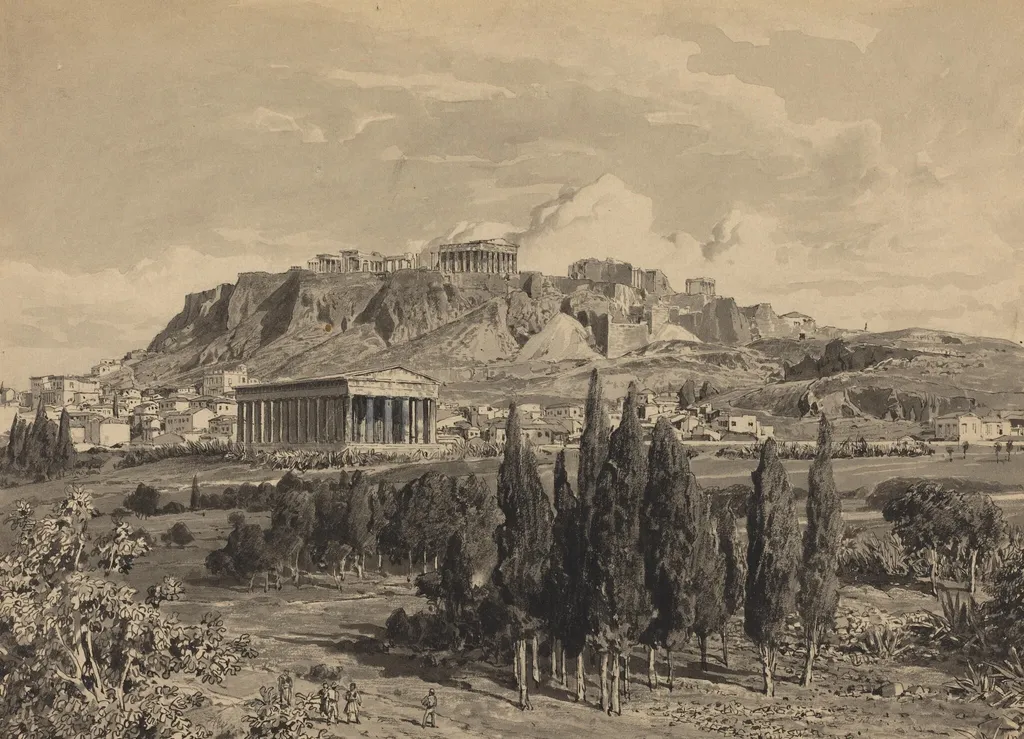
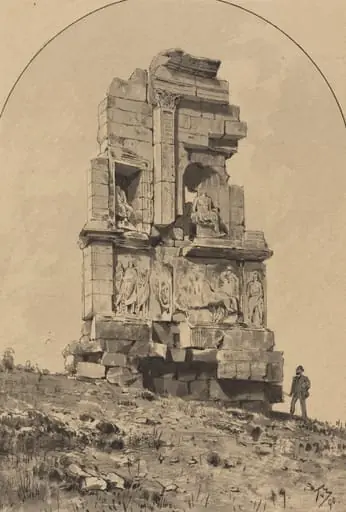
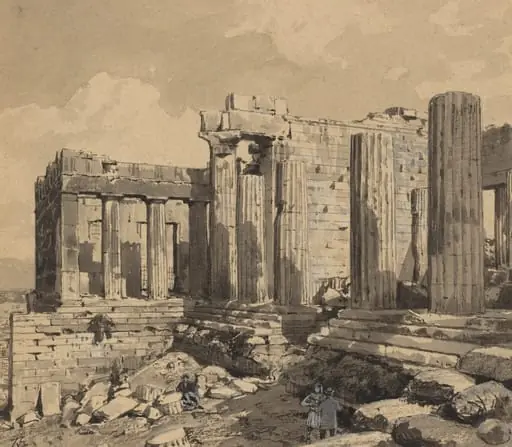
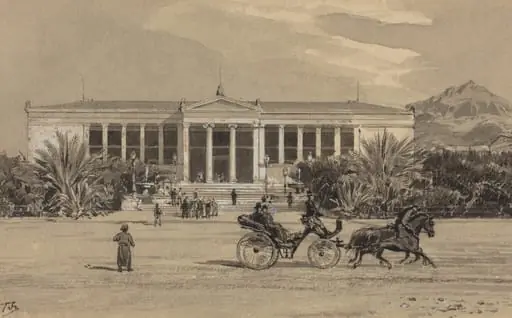
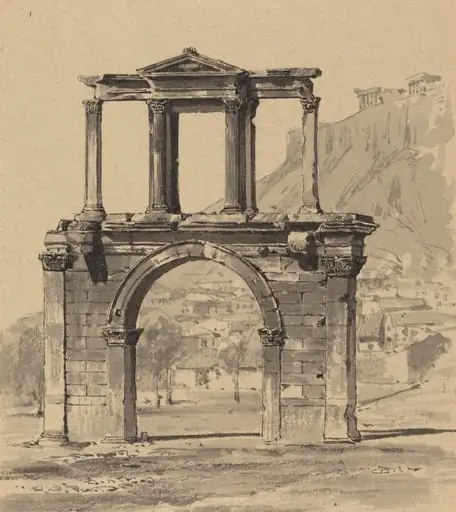
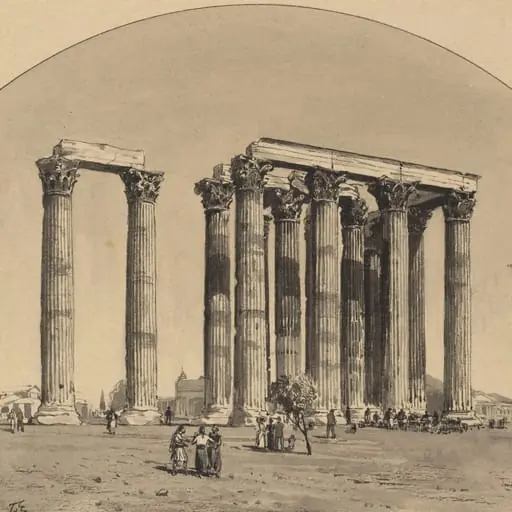
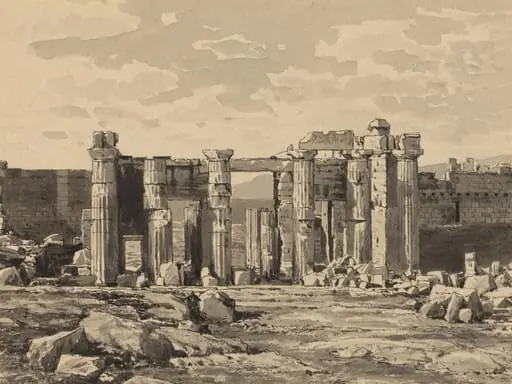
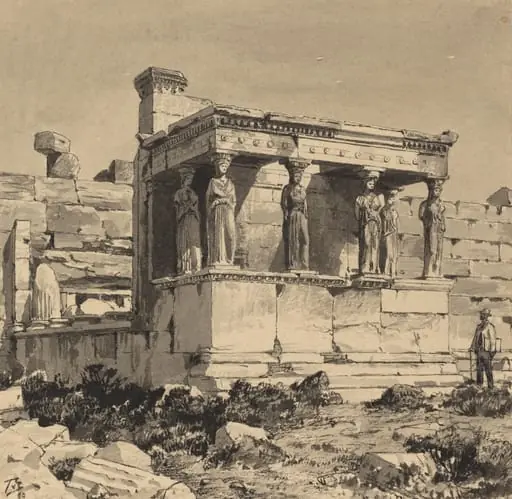
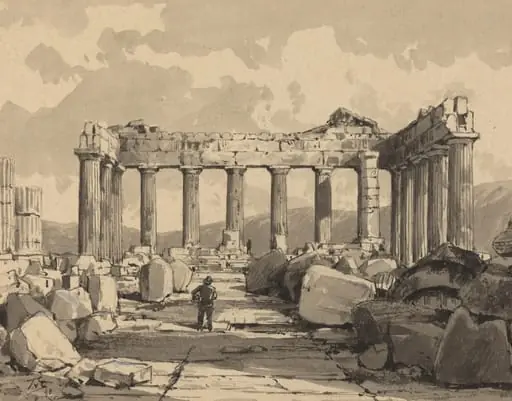
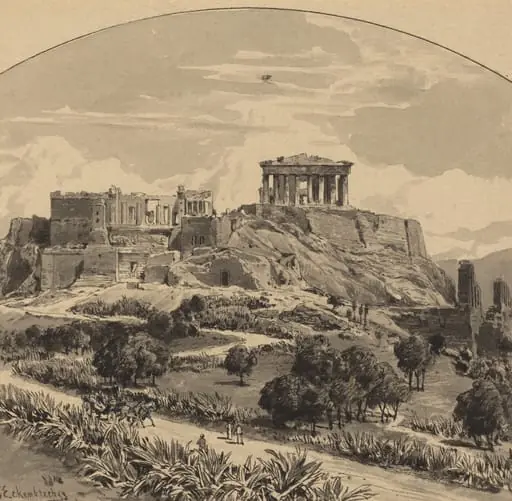
Temple of Hyphaestus is an ink drawing by the Impressionist artist Themistocles von Eckenbrecher. It dates from 1890 and is held in the collection of the National Gallery of Art.
About this work
Overview
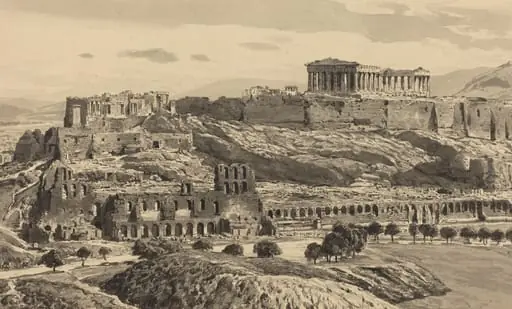
Created in 1890, the drawing titled *Temple of Hyphaestus* presents a quiet, pastoral scene centered on an ancient Greek temple. The composition balances a foreground of verdant foliage with a distant hill crowned by the ruin, all under a muted, cloud‑filled sky. The work conveys a calm, reverent atmosphere toward the historic structure.
Subject & Meaning
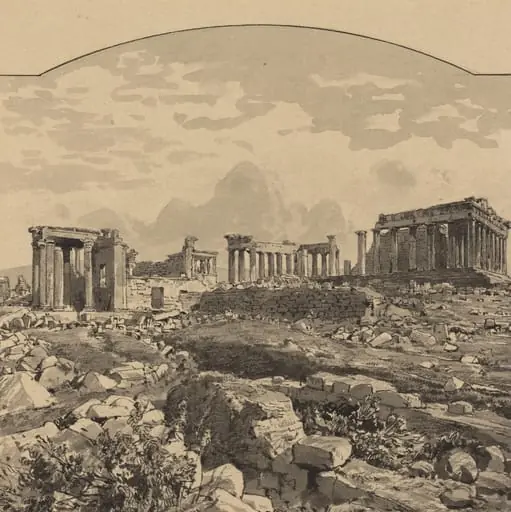
The focal point is a classical temple, its columns and ruined entablature rendered with careful attention, suggesting an admiration for antiquity. Surrounding trees and gentle hills frame the edifice, emphasizing its integration into the natural landscape and evoking a sense of timeless continuity between human achievement and the environment.
Technique & Style
Executed with pen, black ink, watercolor, and graphite on a black chalk ground, the drawing achieves layered depth through varied line work and washes. Fine ink hatching defines architectural details, while watercolor washes provide atmospheric tone. Graphite accents enhance texture, especially in foliage, producing a nuanced, late‑Romantic blend of realism and mood.
History & Provenance
The piece was produced by German artist Themistocles von Eckenbrecher, noted for marine and landscape subjects. Though primarily a painter, he applied his observational skill to this drawing, aligning with the period’s interest in historic sites. The work remains documented as part of his late‑19th‑century output.
Artist & collection

Artist
Karl Paul Themistokles von Eckenbrecher (17 November 1842, Athens – 4 December 1921, Goslar) was a German landscape and marine painter, in the late Romantic style.