Artwork
Saint John the Baptist in the River Jordan
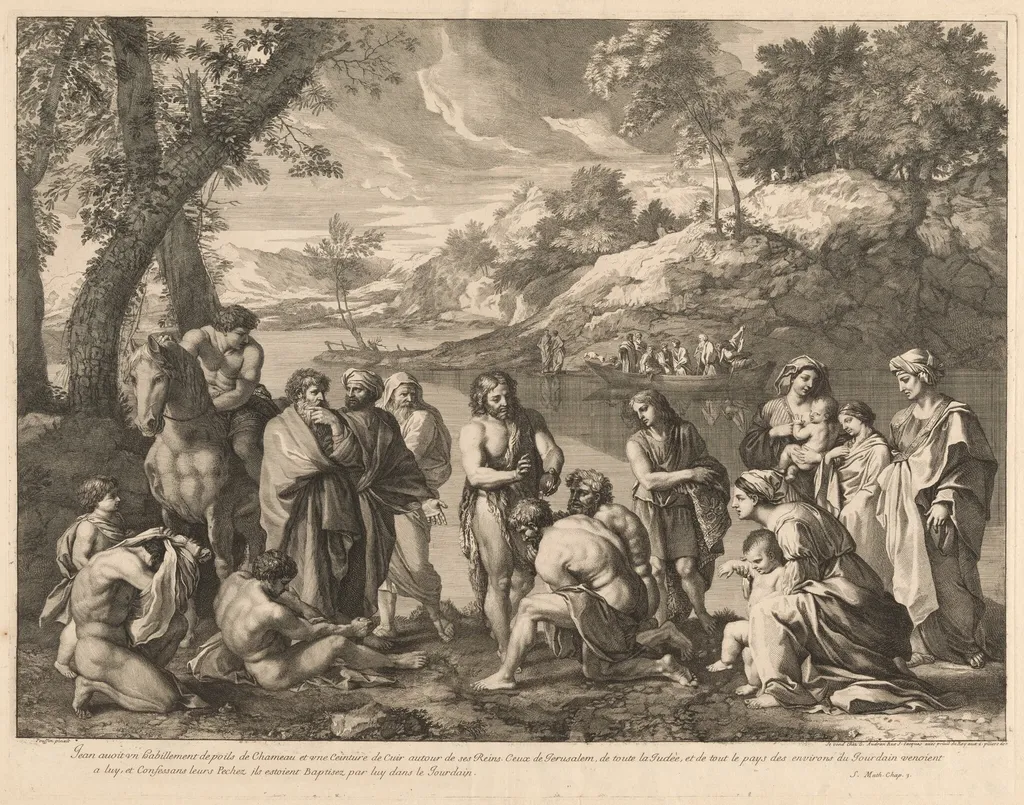
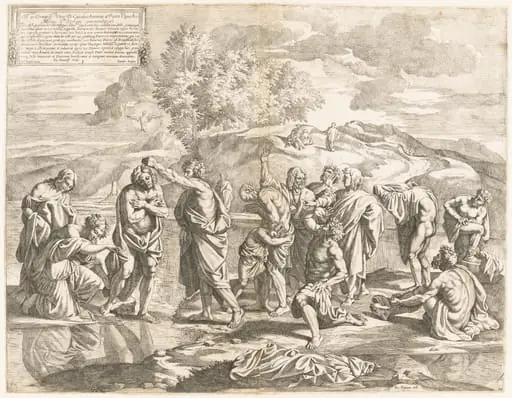
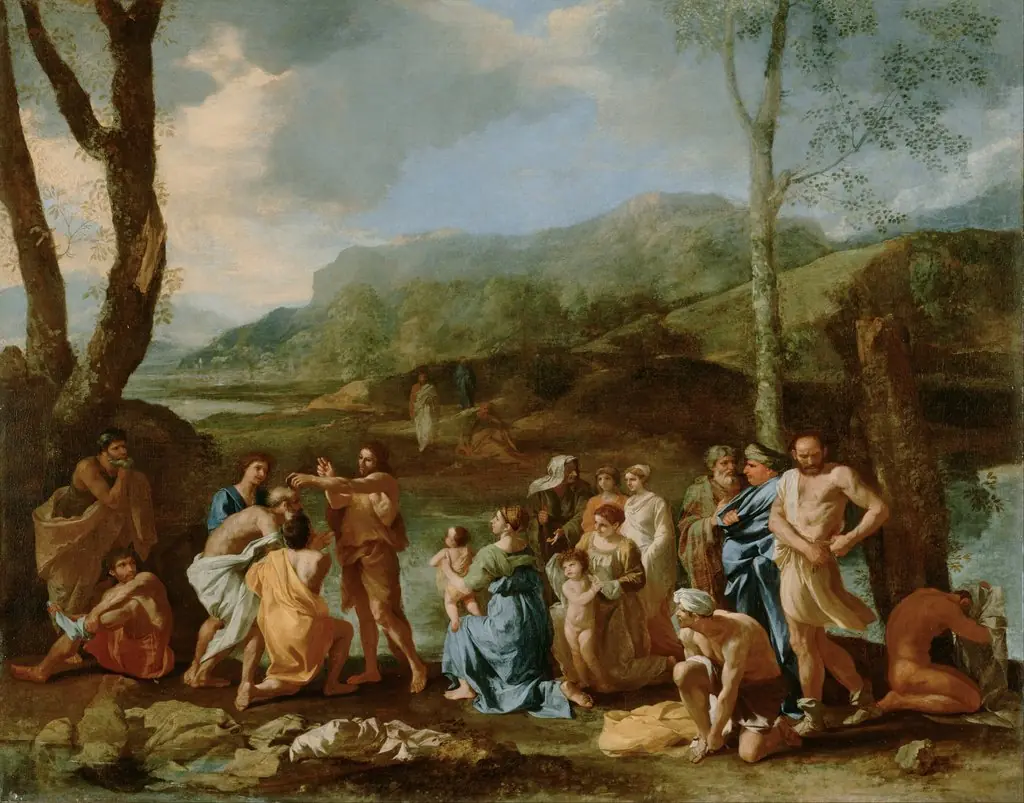
Saint John the Baptist in the River Jordan is an ink print by the Baroque artist Benoît Audran I. It dates from 1690 and is held in the collection of the National Gallery of Art.
About this work
Overview
Created in 1690 by Benoît Audran I, this print depicts Saint John the Baptist in the River Jordan using etching and engraving on laid paper.
Created in 1690 by Benoît Audran I, this print depicts Saint John the Baptist in the River Jordan using etching and engraving on laid paper. It is part of the National Gallery of Art’s collection in Washington, D.C. The work belongs to a tradition of religious prints produced in late 17th-century France, intended for devotional or educational use. Its detailed line work and tonal contrasts reflect the technical precision characteristic of Audran’s printmaking.
Subject & Meaning
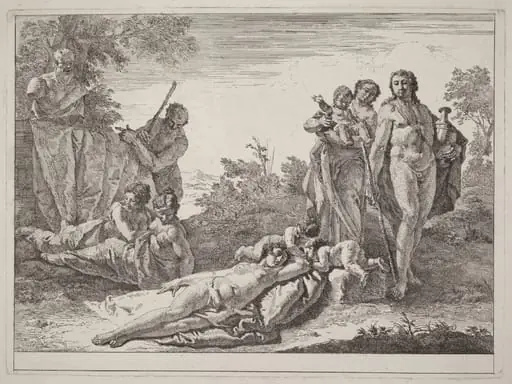
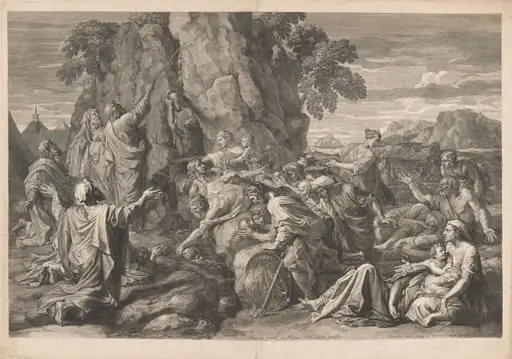
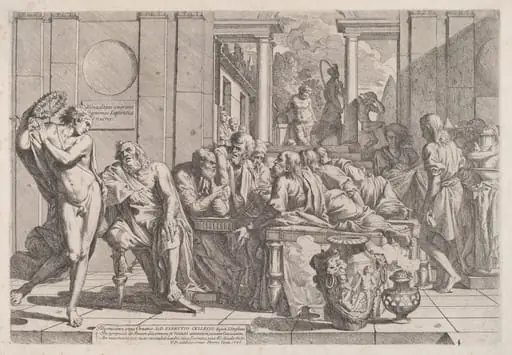
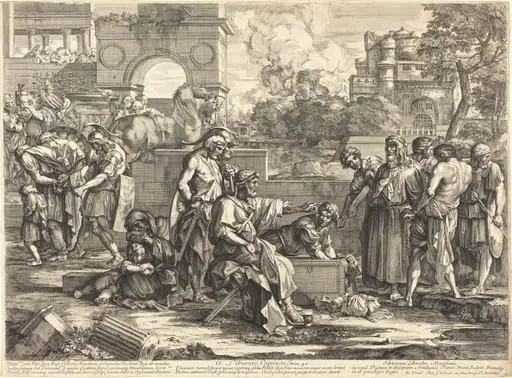
The scene illustrates the baptism of Christ by John the Baptist, as described in the Gospels. Figures gather along the riverbank—some kneeling in reverence, others standing quietly—while John stands waist-deep in water, gesturing toward a figure partially submerged nearby. The composition emphasizes spiritual solemnity rather than dramatic action. The presence of women with children underscores the communal nature of the event, aligning with biblical accounts of witnesses to the baptism.
Technique & Style
Audran employed fine etched lines and controlled engraving to define forms with clarity. Shading is achieved through cross-hatching and varying line density, creating a sense of volume and spatial depth. The foreground figures are rendered with sharp, deliberate strokes, while the background landscape dissolves into softer, blurred contours. This contrast directs attention to the central religious moment, a common compositional strategy in devotional prints of the period.
History & Provenance
The print was made during Audran’s active years as a reproductive engraver in Paris, often working after paintings by established masters. Though the original painting it may have followed is unknown, the composition aligns with contemporary religious imagery circulating in Catholic Europe. It entered the National Gallery of Art’s collection through established acquisition channels, likely as part of a broader 19th-century interest in European graphic arts.
Context
In late 17th-century France, religious prints served as accessible tools for piety and instruction, especially in regions with limited access to original artworks. Audran, trained in a family of engravers, contributed to this market by translating major religious scenes into reproducible formats. His work reflects the influence of Italian Renaissance and Baroque compositions, adapted to French tastes through refined line and restrained emotion.
Legacy
Audran’s print exemplifies the role of reproductive engraving in disseminating religious imagery before the age of photography. Though not widely known today, such works were once common in domestic and ecclesiastical settings. The piece remains a testament to the technical skill of French printmakers and their contribution to the visual culture of Catholic devotion in early modern Europe.
Own this work as a print
Artist & collection