Artwork
Peisaj la Assuan
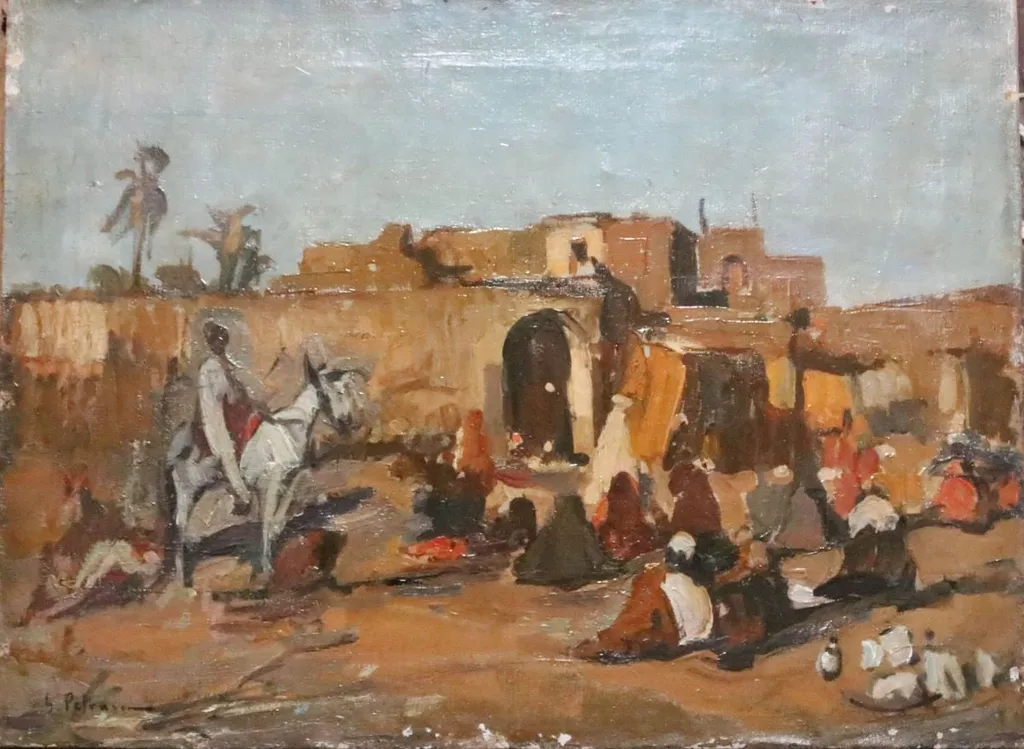
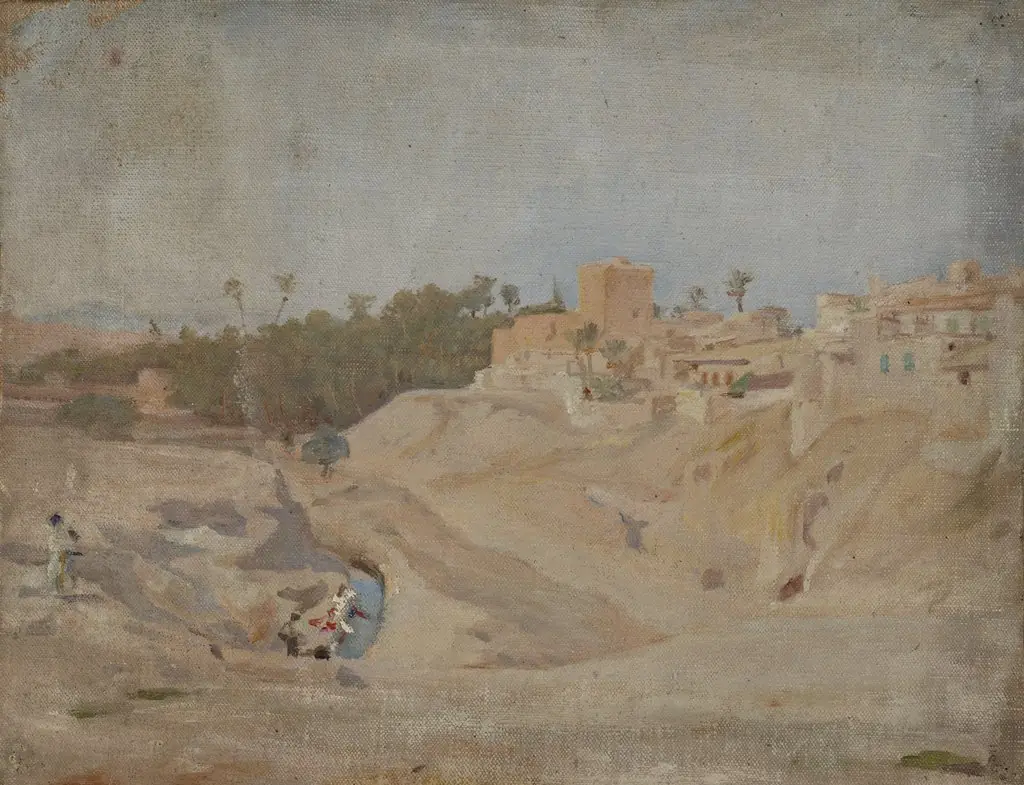
Peisaj la Assuan is a print by Gheorghe Petrașcu. It dates from 1920 and is held in the collection of the Royal Court National Museum Complex.
About this work
Overview
Though primarily known for Romanian landscapes, Petrașcu traveled extensively, and this work reflects his engagement with foreign environments.
Painted around 1920 by Romanian artist Gheorghe Petrașcu, *Peisaj la Assuan* captures a moment in southern Egypt near the Nile. Though primarily known for Romanian landscapes, Petrașcu traveled extensively, and this work reflects his engagement with foreign environments. The painting’s informal composition and restrained palette suggest a direct response to the scene before him, avoiding idealization in favor of observed reality.
Subject & Meaning
The scene centers on a solitary figure on a white horse, moving above a cluster of individuals engaged in quiet activity near earth-toned buildings. The group appears to be involved in daily trade or rest, their postures suggesting routine rather than ceremony. The rider’s elevated position and contrasting hue create a subtle visual tension, hinting at movement through a static, sun-warmed environment without overt narrative.
Technique & Style
Petrașcu employed loose, visible brushwork and thick impasto to convey texture in the walls and ground, giving the surface a tactile quality. Colors are muted—ochres, browns, and pale blues—anchored by the rider’s bright saddle and garment. The sky is thinly rendered, allowing the architecture and figures to dominate. The effect is neither polished nor detailed, but immediate, as if recorded in a single sitting.
History & Provenance
Created during a period of international travel, the painting remained in private hands until after Petrașcu’s death in 1943. It was later included in posthumous exhibitions, notably at the Paris International Exhibition and the Venice Biennale, where his broader body of work gained recognition. Its journey from personal sketch to public display reflects shifting interest in Romanian modernism beyond national borders.
Context
In the early 20th century, European artists increasingly sought inspiration beyond their homelands. Petrașcu’s presence in Assuan aligns with broader trends of Orientalist travel, though his approach avoids exoticism. Rather than dramatizing the locale, he records its quiet rhythms, aligning his work with realist and impressionist tendencies rather than romanticized depictions common in the genre.
Legacy
Though not widely reproduced, *Peisaj la Assuan* exemplifies Petrașcu’s commitment to observing place with restraint. His focus on ordinary moments, rendered with physical brushwork and minimal embellishment, distinguishes him from contemporaries who favored grandeur. The painting contributes to a quieter strand of modernist landscape painting that values authenticity over spectacle.
Artist & collection
Artist
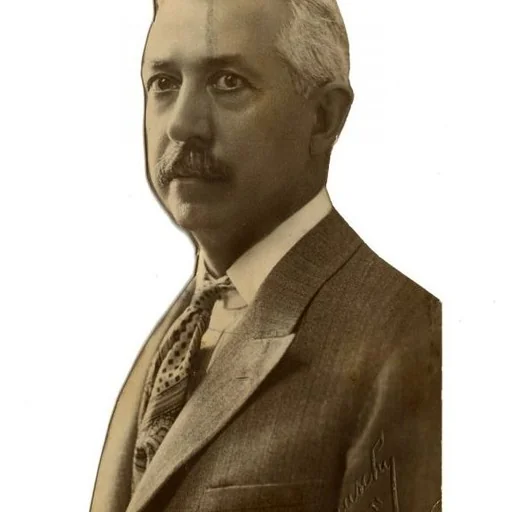
Gheorghe Petrașcu (Romanian pronunciation: ; 20 November 1872, Tecuci – 1 May 1949, Bucharest) was a Romanian painter.
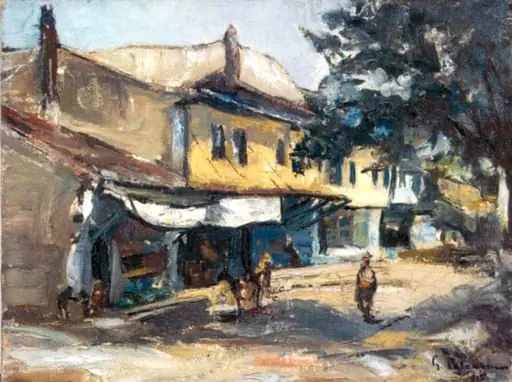
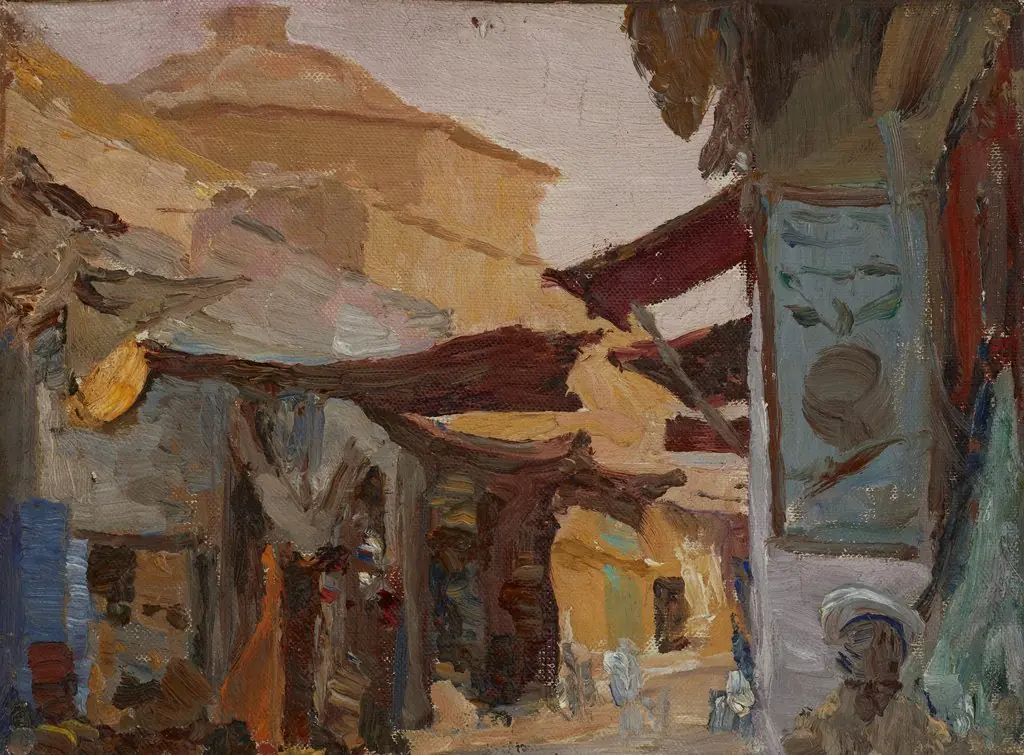 Smyrna (Bazaar)
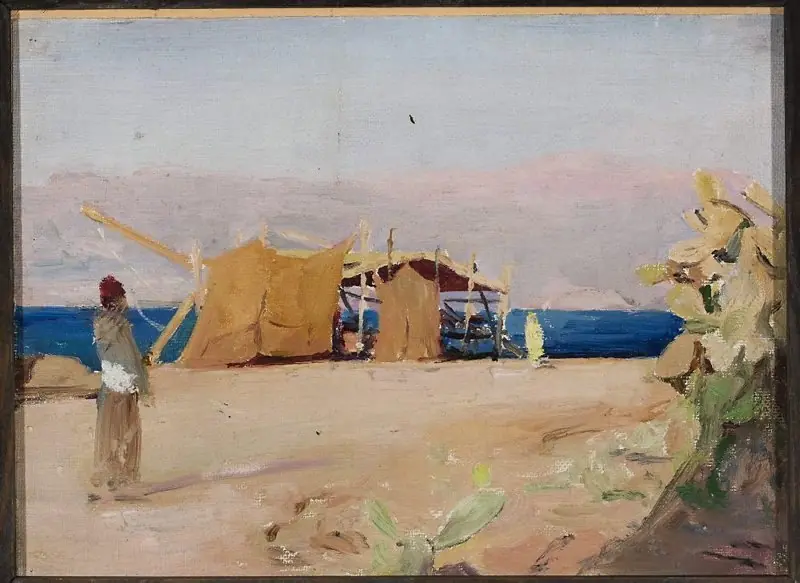 Beirut. From the journey to Palestine
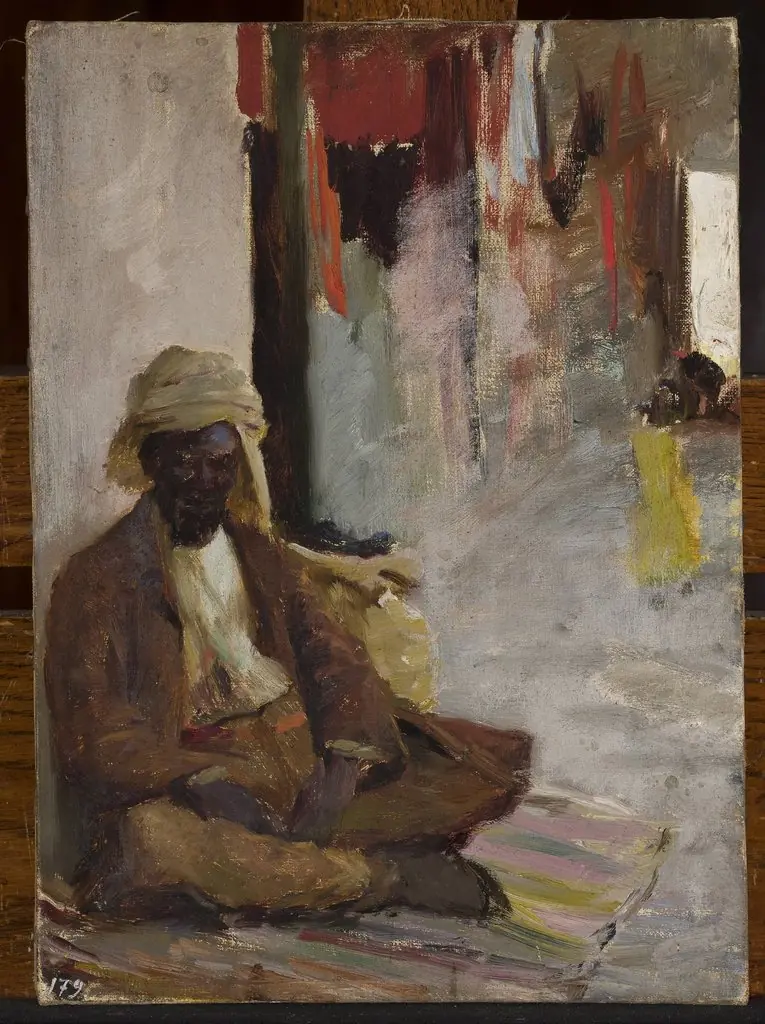 Young Tartar in Bakhchisaray. From the journey to Crimea
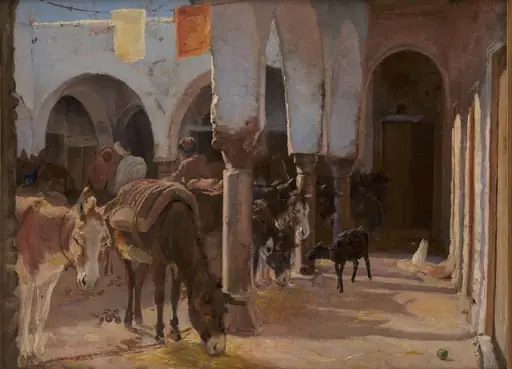 A Donkey House in Tunis
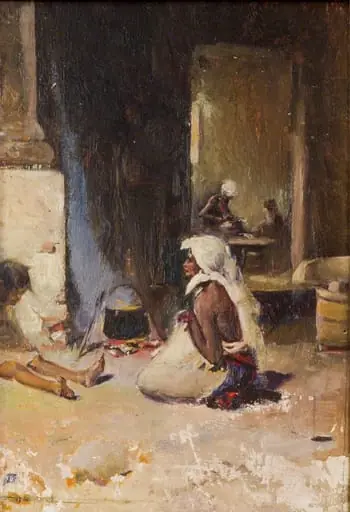 Țigănuși la mămăligă
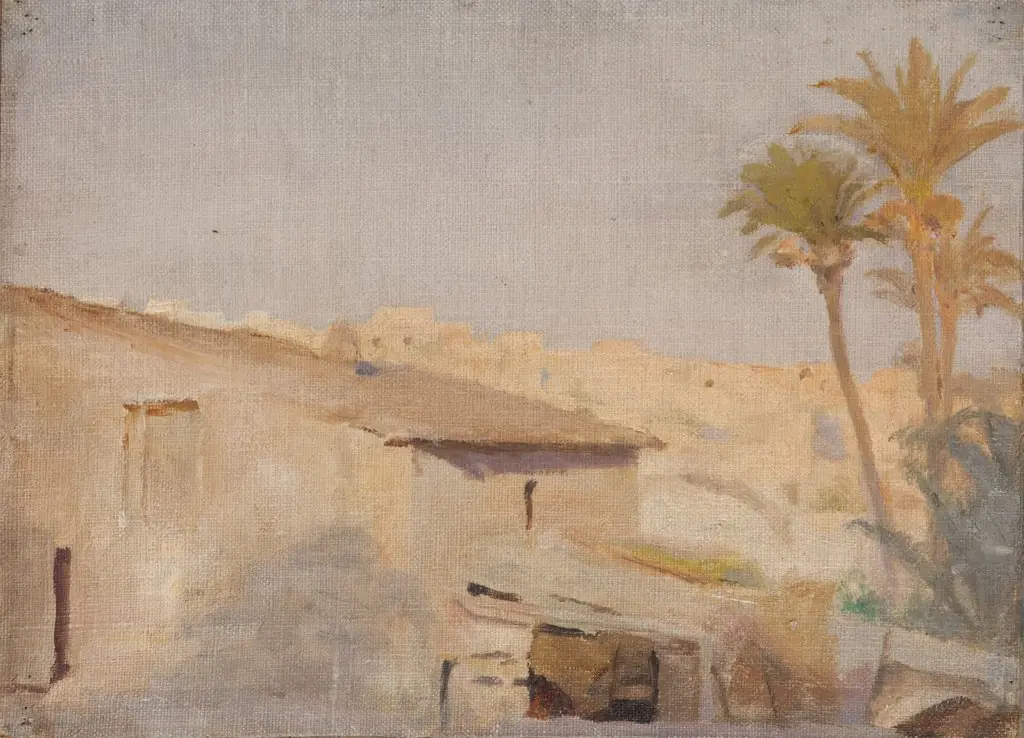 Spain (Elche)
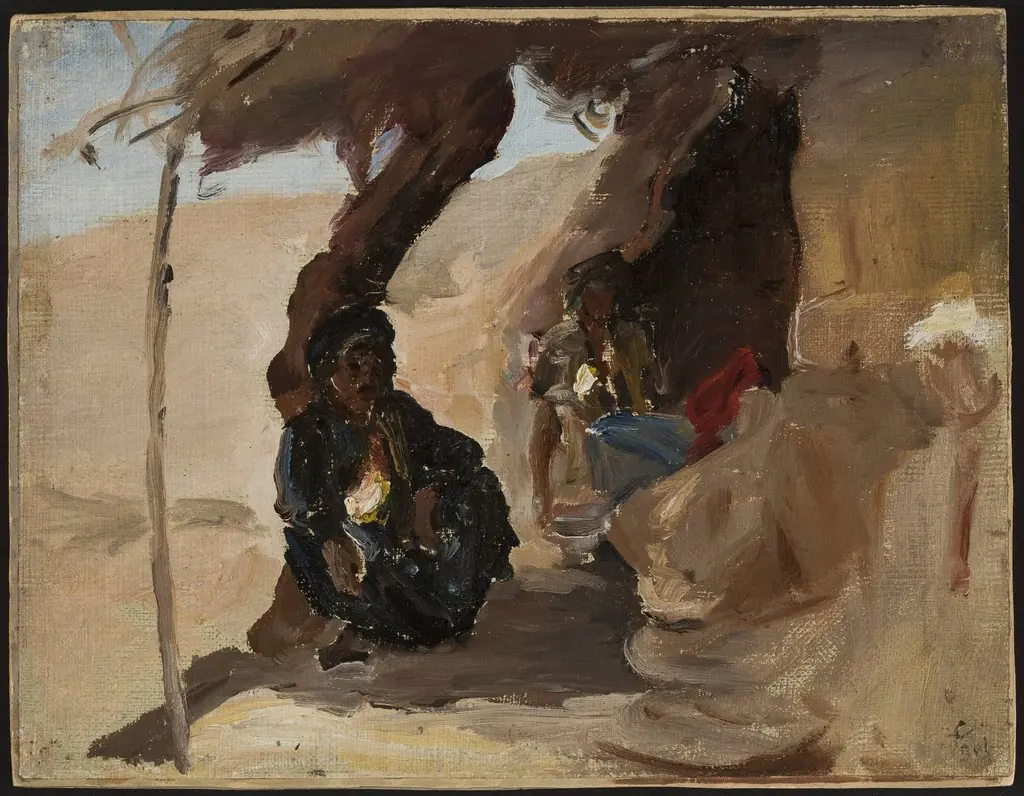 Desert - Resting in the desert. From the journey to Palestine
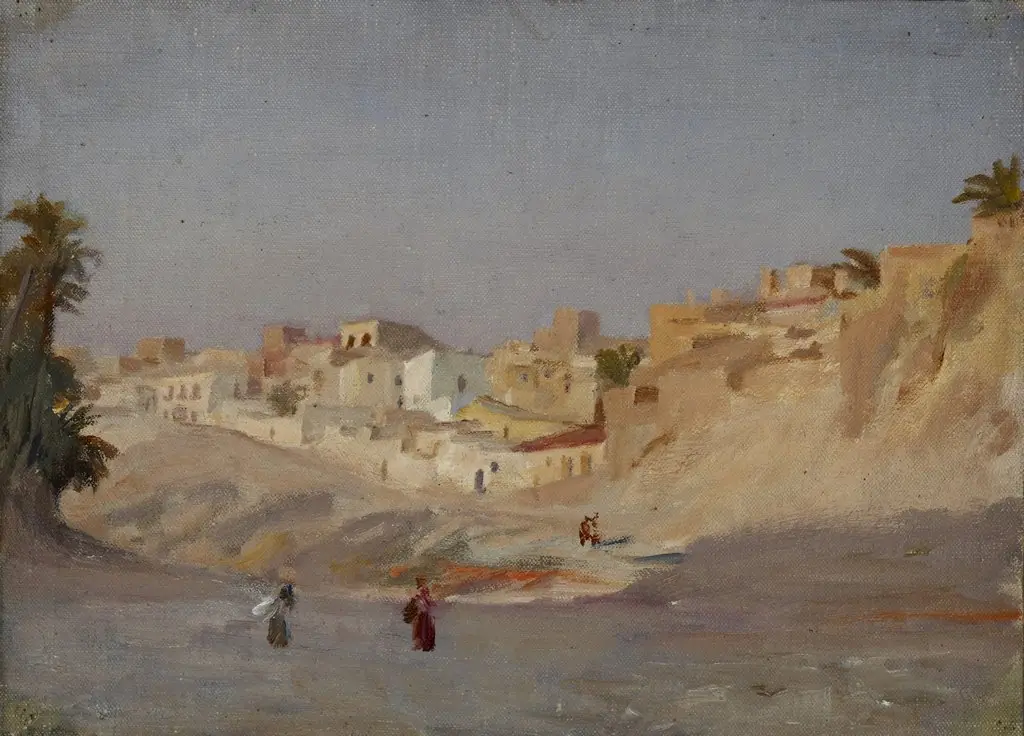 Spain (Elche)
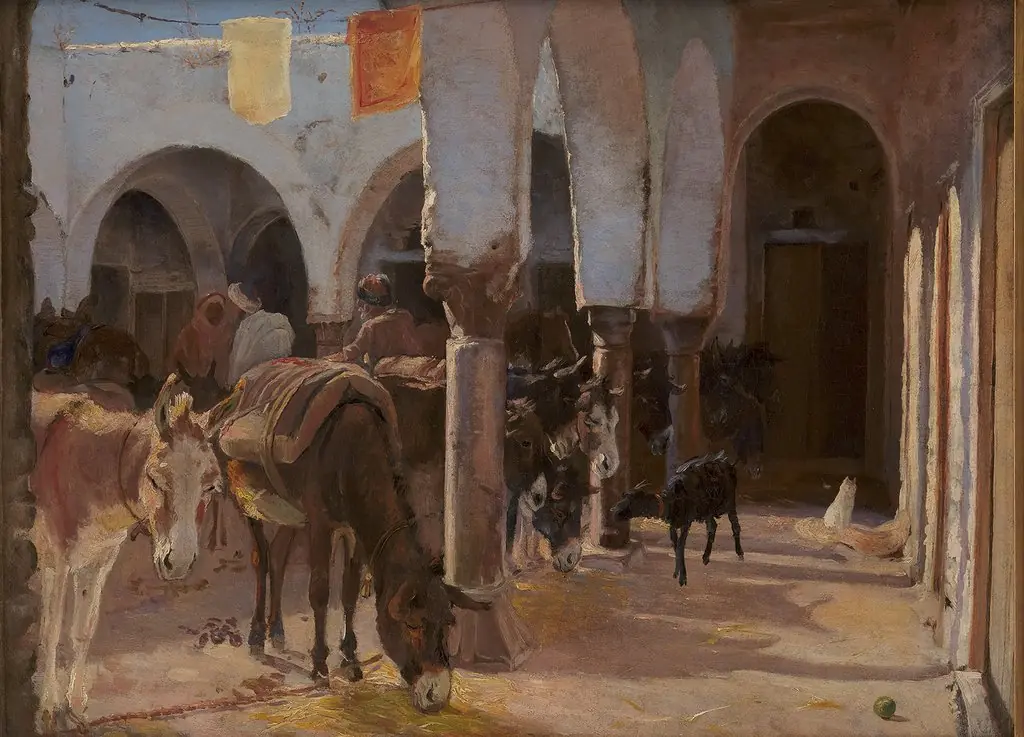 A Donkey House in Tunis
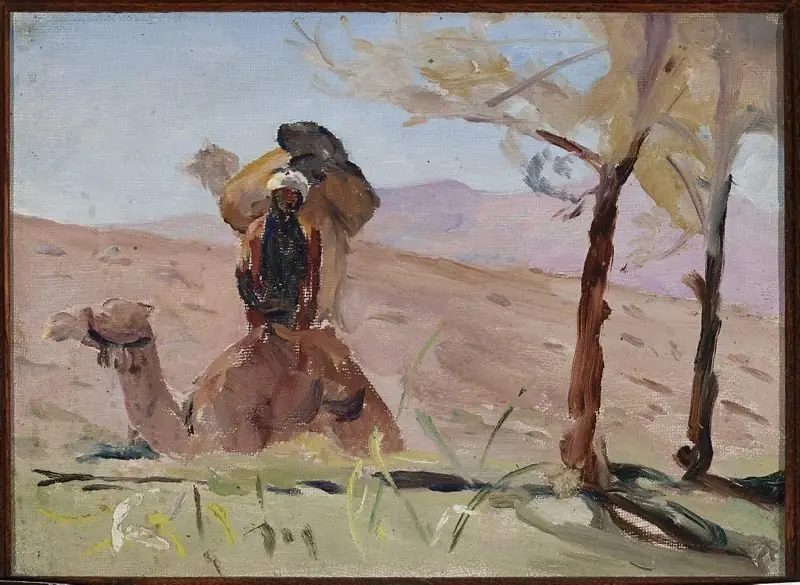 Desert. Resting in Mount Lebanon. From the journey to Palestine
 Spain (Elche)
 Marketplace in Dobruja